
Translated material
"I can't come to eight at eight ..."
At the Faculty of History of Moscow State University there is a memorial plaque with the names of students and teachers who died during the war. Until 2005, the name of Leah Kantorovich was there. On the 60th anniversary of the Victory, the board was replaced, and the name of LII disappeared from it: Kantorovich was a student of Ifli and died in August 1941, before the merger of Ifli with the Estacle. This turned out to be enough for the officials to cross out the name of the girl who in the battle near Smolensk raised the battalion from the list of heroes
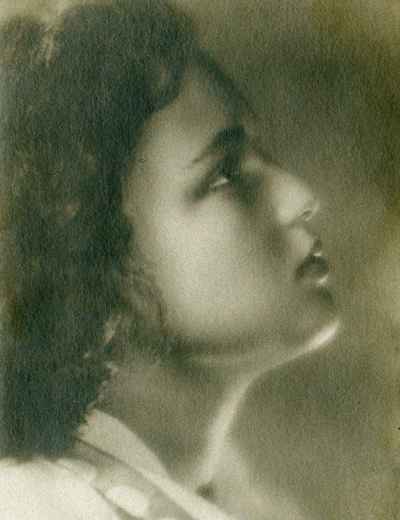
Lia Kantorovich, Moscow, 1941
Hot September 1938. The girl froze on the Arbat sidewalk of extraordinary beauty. In Izhevsk, from where she recently came to study at IFLI (the Institute of Philosophy, Literature and History, which existed from 1931 to 1941, in December 1941, united from Moscow State University Lomonosov), she did not see anything like this: the hundred thousandth crowd flowed, the whole of Moscow came to say goodbye to her idol-26-year-old Wahhangian Dmitry Dorliac. Fantastic charm, amazing appearance, incredible kindness and generosity made Dorliak a universal favorite and a hero of numerous oral short stories and amazing jokes. The order of the People's Commissar of Voroshilov is an unprecedented case! - Special Vagon delivered a coffin with the body of an artist from distant Irkutsk, where he died of typhoid fever during a tour, for farewell to Moscow. Два дня в траурном фойе театра, заполненном до отказа, играли Ойстрах и Гилельс, пели Лемешев и Барсова, сменяли друг друга цыганские ансамбли… Нашей героине отпущены неполных три года на то, чтобы в 21 год стать такой же безукоризненной легендой довоенной Москвы: оказаться в центре обожания и поклонения, быть музой юных поэтов, артистов, музыкантов и Artists from his native Ifli to the theater studio of Arbuzov and, finally, be honored with a wonderful fairy tale about how the golden-haired girl-sanctorator became the first at the front the hero of the Soviet Union, awarded posthumously.
Girl from the school museum
Lie was 17 years old when she came to Izhevsk from Austria with her mother and stepfather. The work of her stepfather was somehow connected with the military industry. They said that he was either a diplomat or underground. It is known that Leah perfectly owned German.
In the Izhevsk school museum No. 30, its portrait hangs in a place of honor - next to the banner. Thick hair, correct facial features, smart, calm, slightly mocking look: “In 1938, Lucy (as her relatives called) graduated from school with honors. They did not give medals then, but she had the right to enter any university in the country without exams, ”says the director of the museum Lilia Bogatyrev. “She enrolled in two Moscow institutes at once: to the IFLI Literary Faculty of Literary.” “Such greed”, probably, could be explained by youthful maximalism - the desire to embrace the immense. But apparently, the decision was conscious.
From a letter to Lucy:
“On February 22, I turned 17 years old. The age, as you see, is venerable ... I am very sorry that I am not five instead of seventeen ... In addition, I am now interested in the theater. I am intensely looking for materials on the history of the theater, the work of the actor, director, etc. ” 
Alexander Galich, an excerpt from the book “General rehearsal. Autobiographical Tale ”:“ A few days after the first appearance of this girl on the patriarchal ponds, Yashka Kheifitz informed us in the locker of the rink everything that he managed to find out about her:
- The name is her lia ... surname - Kantorovich. They lived in Austria for many years, her father worked there in a trade distribution ... They live in that house - opposite the rink ...
On the same day, after the Yashkin message, we met Lia. We just drove up with the whole company to the bench on which she rested, stopped and said in chorus:
- Hello, Lia, we want to meet you!
“Very nice,” Lia answered seriously, “and who are you?”
So, naturally and calmly - and she did everything naturally and calmly - Leah became a full member of our company.
The blizzard went to the porch, the stupid raven flew under the window and dirms my phone numbers that fell silent for a long time. As if the poles moved in the darkness of the pole, as if the axes had stitched above the fire - they come to life in the silence of the voice of the phones of the pre -war pore. And suddenly gaining features, whispering a mischievous voice: -Five to twelve-frenzy three, is that you? Exactly at eight come to the rink! ”
The fact that the author of the piercing song “Number” himself puts its text into the head of his memoirs about Lie, allows us to conclude that the song is written just about it. Let the dedication of the mysterious I. B. not deceive us. 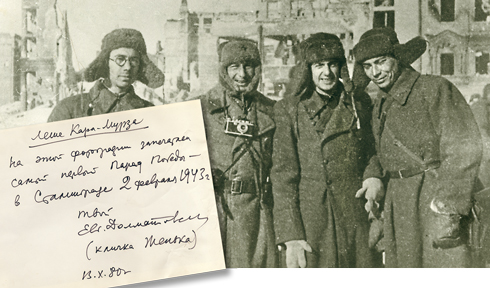
Somewhere near Smolensk
Galogo traces are dancing in the snow, the wind is knocking on the run, exactly at eight I can’t come ... And I can’t come at nine! You do not breathe in vain on the phone, on an abandoned skating rink, and for a long time I gave my “run” to the junior man for pennies.
The premiere of the play “City at the dawn” of the Arbuzov studio took place on February 5, 1941, this is how Galich recalls that evening:
“Leah stood aside, completely alone, leaning her elbows on the windowsill, some incredibly beautiful and sad, in a dark dress, in high-heeled shoes.
“Leah,” I said, panting, “let's go with us, okay?!” Now we are all going to Sevka Bagritsky ... let's go? ... and I left. And we never met again. ... Two weeks after the start of the war, my mother said that an unusually beautiful girl came to me to say goodbye to me, asked me to tell me hello and say that she was very sorry. And why and why it was a pity Lie, did not understand either me or even more than my mother. Leah went to the front with a nurse. For her short military service, she carried out more than fifty wounded from the battlefield, and when the company commander was heavily shell -shocked under Vyazmoy, Leah dragged him to the medical battalion, returned to his position and raised the fighters in a counterattack.
I am sure that she did not scream "for her homeland, for Stalin!" or "Death to German invaders!" Of course, no! She said something very simple, something like what she usually said in those long-standing times when we left the locker room to our patriarchal ponds, and Leah, tapping the ice on the ice, cheerfully threw us:
- Guys, after me!
Already in September, the forty -first year Lia was killed. She was posthumously awarded her the title of Hero of the Soviet Union. ”
In fact, she died on August 20 in battle for one of the villages near Smolensk.
From a letter from the assistant chief of the political department for Komsomol, the 30th Army of the senior political instructor Tsygankov of September 7, 1941:
“The secretary of the Komsomol organization IFLI.
Within the walls of your institute, a Komsomolskaya Pravda is brought up - the heroine of the Great Patriotic War against the brutal gangs of Fashism Leah Kantorovich.
As a fiery patriot, the faithful daughter of the Lenin-Stalin Komsomol, Leah on August 1, 1941 came to one of the parts of our Army of the Western Front as a nurse. From the 7th to the 20th of August, Leah Kantorovich showed herself to be a fearless, brave warrior on the battlefield. On August 20, during the attack, Leah was released with the commissar of the N -sk Regiment by the senior political instructor Comrade. Guryanov on the front line and led the fighters forward to the defeat of the enemy. During the battle, a fragment of the enemy shell of Lei was very wounded and after a while she died among combat comrades in the unit. Leah died a hero ... "
Leah was buried on the outskirts of the village of Baturino, in a large apple garden. Later, the remains of all those who fell near Smolensk were reburied in a mass grave, in the central square of the city. She was not awarded the title of Hero of the Soviet Union, as Alexander Galich wrote. Not awarded a medal or order. 
From the last letter of Lucy Mom:
“... I have already completely settled here and feel in my dugout like at home. I live very well to me here, I work at the headquarters of our regiment, I am flying with might and main. I have enough of my medical knowledge so far, and then I constantly replenish them in practice. In a word, everything is in order. My mood is very good ... "
“But in the history of Lucy there was not enough another, perhaps the most important, details. Why was she so stubbornly striving for the front? Why did you sacrifice life? Knowing the character of Lucy and her dedication, we thought that the whole thing is in her desire to help as many people as possible, ”says the director of the school museum. -And only in the 1980s we learned that the reason was not only in this. Shortly before the start of the war, Lucy married. Her wife was called to the front in the summer of 1941. Neither letters nor telegrams came from him. Lucy could not find a place for herself. Apparently, it was then that she decided to go to the front line - perhaps she hoped to find her beloved or at least find out what's wrong with him. ” This is also confirmed by the memories of her mother, Julia Markovna Kantorovich: “The war found Lucy in a period when this life was filled with work to the regions - she was the editor of Ifli’s newspaper, the organizer of interesting evenings, she studied precisely what she always had to journalism, literature ... And at the same time, love entered her life: Lucy became a man who loved her, who really loved her. In the very first days of the war, he went to the militia to the front. Only one of his desperate letter in the name of Lucy, in which he begged to report where she was with her ... Lucy at that time was no longer alive. ”
Alexei Kara-Murza became the chosen one of Lia. He was 6 years older than Leah, managed to work on the Komsomol ticket in the famous Polezhaev brigade on the construction of the first branch of the Moscow metro. The intellectual and wit, he openly said what he thought. In 1937, this was enough for arrest.
The short period between the return from the Gulag and the departure to the front was released for the dizzying novel by Alexei and Liya. In June 1941, he became a Komsomol of the militia, who almost completely died in battles on distant approaches to Moscow. The volunteers went to the front and his older brothers-professor of painting Andrei Goncharov and a professor-military, George Kara-Murza.
The girl, how many times driving the boys crazy , so many times seemed empty for us, leads a platoon to the attack and falls in the blood. And the regiment stands above it, bowing the banners of tall silk. And the boys cry, whom this girl was driving so many times.
So writes about Lia poet, the Yiflian Leonid Shersher, who died a year later.
The Physician who returned from the war solemnly introduced the name of Leah Kantorovich in the book of the military glory of the faculty. Here, at the Eastfacing, - next to her husband, she was going to continue her studies after victory. It is symbolic that according to the alphabet, two surnames were adjacent to the marble of the Faculty memorial plaque - “L. Kantorovich ”and“ G.S. Kara-Murza. " The elder brother of Alexei, the professor, died at the front in 1945. Near this board, courage lessons took place. Flowers who knew the front -line soldiers were laid here. This went on for 60 years. So far, some meticulous letter-eater, when moving the historical faculty to a new building and the manufacture of a new memorial plaque, has not removed its name from the wall of glory. “Student Kantorovich did not go out on September 1, 1941 to study and was not a day of the Faculty of History,” so the blasphemous bureaucratic motivation sounded.
And yet - one of the beautiful legends of the pre -war Moscow is alive. On the pages of new books, traces of the presence of our heroine in the spiritual life of the capital of the pre -trial time are scattered. Contrary to the unconsciousness of bureaucrats, Leah Kantorovich and her feat is remembered. And in the national memory, the immortal motive of Alexander Galich’s ingenious song “Blizzard on the porch has gone.”
Photo: from the personal archive of Vladimir Kara-Murza