
Translated material
Pictures from the exhibition
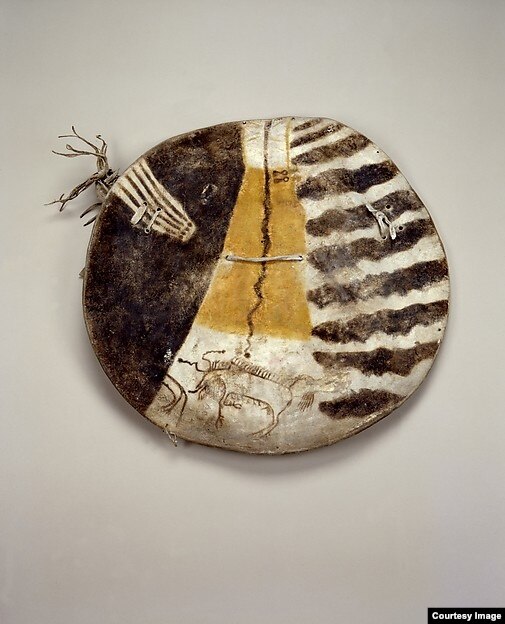
Indians - to the metro and in Russia
Alexander Genis: Today, our heading “Pictures from the exhibition” will go to the main museum of New York and America Metro, where with deafening success an extremely unusual one is for this - by no means ethnographic - the museum of the exhibition. It is dedicated to the art of the prairie Indians.
(Music)
Alexander Genis: At the exhibition in the metro, more than 150 exhibits are represented, created by the Indians of different tribes who inhabited the middle west of the North American continent.
Among them were ritual tubes (smoking tobacco accompanied all religious ceremonies), wooden shields, decorated with images of protector spirits painted with abstract figures, vividly resembling Kandinsky’s paintings (as it recently turned out, the shamanistic tours of the northern peoples of Russia had a decisive influence on his work).
A special place is occupied by bison skins. They served as universal clothes, often - gifts, sometimes - the chronicle of the tribe. For those who did not know the writing of the Indians, the icon chronicle, covering carefully finished skin, served as a kind of mnemonic device. Stylized drawings of the High Warriors, supplemented by oral stories, always, like the northern sagas of Europeans, told the stories of battles and strife. The everyday, peaceful life did not deserve to remain in history, the war only made it up.
So on one of the oldest exhibits made in 1740 in the territory of the current state of Arizona, the battal adventures of the tribe warriors in their clash with the enemy are detailed. Reading the skin (from right to left), we will learn about the number of fighters and their weapons - silicon rifles and Togonets, but it is best for lovingly depicted horses.
Since the Spaniards brought horses to the New World, horses have changed the life of the entire continent. The Indians began not just to hunt for bison, but to roam with them. Accordingly, the status of the horse became mythical: it was waiting for the same afterlife as the owner. The most touching exhibit at the exhibition is the “portrait” of a particular horse, which died in battle from ten gunshot wounds, scrupulously marked on a statuette. Depicted in a desperate jump, it seems to be carried away from the ground to the sky.
(Music)
Alexander Genis: In order to understand how the natives of the New World differed from the image of the Indians who developed in the Old World, you can recall Chekhov’s story. That America, where the Chekhovsky Chechevitsyn dreamed of escaping, was a country where they “drink jean instead of tea”, where “the earth is trembling when a herd of bison runs through the pampas”, where “Mustangs kick and laugh”. Mine Reed opened all this to Russian children, the American adults were westerns. Long before they appeared not only in the cinema, but even in books, artists took up the image of the Wild West, or rather, sculptors who captured the Indians in bronze figurines stored in the American wing of the subway.
At first, this plot was hardly given to Western art. Those who have passed the European (usually Italian) school did not know the language who was suitable for describing the fresh, not yet exhausted by the art of the reality of another, as if that had fallen from the heaven of the continent. Faced with a new challenge, the artists were forced to retreat back and change the west into an ancient outfit.
“Opening America,” the art of pale -faced ones announced, “we went back on our own history.” The Far West is a tunnel into the past. Through it we can fall to the origins of our world. Indians are the Achaeans of the Iliad. Mighty, fearless and sad, like all epic heroes, they again leave the arena of history. The task of the American artist is the same as Homer: to capture the appearance of the disappearing world into edification for future generations.
If we compare the exhibits of the Indian exhibition with the creations of pale -faced masters, we must admit that she could not cope with her task. Their Indians are more likely to recall museums than prairies. Bronze Indians, committed as ancient gods, are combed in renaissance fashion. They shoot from onions like Apollo, hunt like Artemis, fight like Achilles, and die like a hector.
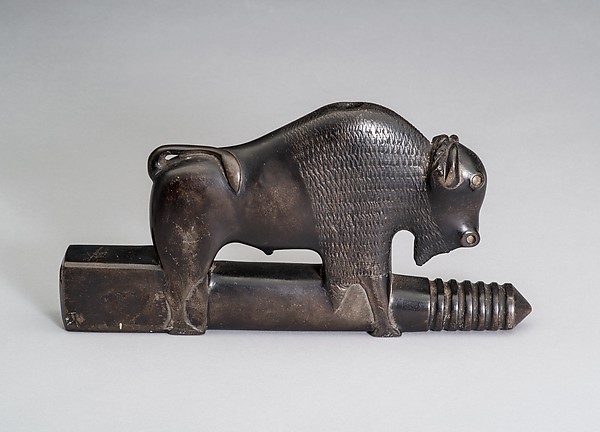
The animals of the New World were better than the natives to European sculptors, especially the bison. And it is clear - why: they amazed fantasy. Once, when I was driving along the northern outskirts of the state of New York, I happened to see the steep snowy hills, wandering along the fence of a farm trying to breed bison for meat. Near and at the open air, the bison seemed prehistoric creatures. Like dinosaurs in the barn, they did not fit into agriculture. It was such that they were depicted by a sculpture. Having discarded smooth antique models, the artist created an expressionist portrait of the Native American West, to which the furry mountains of bison served as a temple and an idol.
But here I would prefer Indian artists presented at the exhibition in the metro. Their bison carved from polished stone is much more expressive: they consist of an outline and movement. Without caring about boring details and naturalistic details, the Indian cutter created not the image of the beast, but the idea of power and pressure that delights artists in cave art. Reducing the distance of us by tens of thousands of years, the exhibition of Indian artifacts allows the audience to immerse themselves in the common prehistoric world for all people.
(Music)
Alexander Genis: Living in America, we can afford what is not given to the inhabitants of the Old World - to get acquainted with the Indians not only in the museum. Suppose that in New York I knew only one Indian. Once I asked him straight to if he had a complaint to the whites.
“Only to Hollywood,” he answered peacefully, “they often show how the Indians fall from the horse, but this is simply impossible: we grew up in the saddle.”
Although it seemed to me that my 200-kilogram Indian would not fit into any saddle, I did not argue, learning the first lesson in political correctness. Others demanded not to call a man “leader”, a woman - “SKVO” and never hooting, slapping himself on the lip. Having dealt with etiquette, I went to visit the Indians to get to know the nee, and not “who came in”, like me, by the Americans.
Just for this, there is a museum “Plymouth Plantation” in the state of Massachusetts, where living natives show and tell how well they lived before us and without us.
In their village, everything moved, smoked and smelled. A ferocious warrior with a real (what else?) Mohavok burned a canoe from a mighty trunk of a tulip tree.
“Another day,” he explained, “and it will be possible to catch acne on it.”
- Delicious? I asked with envy, remembering the Baltic states.
- I have not tried, I am a vegetarian.
But another Indian, who called Tim Gray Clin, dined to Olenina.
- We eat different animals: roe deer, beavers, raccoons, protein, but not predators, including bears. After all, they feed on raw meat with parasites. This is the whole infection. Therefore, the Indians were never sick and were healthy - there are six feet, no less. Previously, we never walked, only ran, miles a hundred per day. And they lived up to 120 years, well, maybe up to 80 - no one counted.
“Is it true,” I gathered everything he had read into one question, “that, as usual, the captive warrior sang his farewell song when he was fried at the stake, filmed scalp, covered the wound with coals and, finally, cut out his heart to eat him, and become the same daredevil?
“Men,” Tim said dreamily, “but do you think it is better to fight, as in Congress: for years they are fighting and not a single corpse?”
I did not dare to answer, because the next presidential campaign just began and I had no idea who the Indians usually vote for.
We will continue our program on the culture of American Indians along with Solomon Volkov.
Continuing our conversation about the exhibition of Indian art in the metro, I want to pay attention to one important circumstance. This exhibition is composite, it gathered from the expositions of three museums. This is partly a metro collection, which is rich in all respects. Since the metro is an encyclopedic museum, there is everything, including Indian artifacts. Another part of the collection came from Kansas, from the rich Museum of Atkins, which, among other things, is very famous for its Far Eastern collections. But the third part of the exposition came from Europe, from the Paris Museum. In my opinion, this is a significant fact: to bring Indian values from the Old World to a new one is very curious.
And this allows us to open a new topic. The fact is that the Indians in the Old World were more popular than the Indians in the New World. Indians for Europe were mystical and mythical creatures. The old, coming from Rousseau, the concept of a “noble savage” in the person of the Indians found a very grateful audience. I don’t know if you remember, but in our youth in the Soviet Union they constantly showed Gader films about the Indians, among them were “Winnete, the leader of the Apaches”.
Solomon Volkov: After all, Dean Reed, an American actor, performed there.
Alexander Genis: No, you confuse, Goyko Mitich, Yugoslav actor, who played the Indian, performed there.
Solomon Volkov: That's right. But Dean Reed also performed.
Alexander Genis: Goyko Mitich was definitely there. All these films were set according to the books of the classic of the German adventure literature of Karl May.
Solomon Volkov: I first heard about Carla May in Prague. I did not even know that there is such a popular German writer who specializes in the Indians. I was surrounded by Czech youth when I arrived there, I tried to interpret them about the advanced, from my point of view, Voznesensky and Yevtushenko, they looked at me with contempt and answered me: that’s what, Karl May.
Alexander Genis: Karl May is, in essence, the XIX century, he died in 1912. He had a bad reputation, especially because he had dubious fans. The main among them is Hitler, he was reverent in front of Mai. Already now, relatively recently, I found the works of May. I must say that the author is a very dubious personality, something was wrong with the law. It is more important that he has never been to America and never saw the Indians. All that he wrote about the Indians is generally written off with Cooper, but with a German accent. The main character of these works is a kind of German cowboy who is friends with honest Indians and fights against bad Americans. But when the Soviet Union showed Gadera’s films, it was nowhere to say that it was in Karl Maya. On the screen is simply Indians, and why the Indians from the GDR - no one understands. By the way, Karl May is still very popular in Germany, there is his museum where visitors constantly come. This is such a strange phenomenon of culture that fits into our plot about the Indians in the Old World.
Solomon Volkov: I also reflected on this topic, and was surprised to find that in Russian culture about the Indians did not particularly say, they are not mythical figures. Where does the figure of a “noble savage” appear, in what classic work of Russian literature or even later Soviet?
Alexander Genis: “Dersu piss” Arsenyev!
Solomon Volkov: Is this an Indian?
Alexander Genis: These are the inhabitants of Eastern Siberia, they are close to the Indians, they are close both in culture and origin.
Solomon Volkov: I can say that there are works about the Chukchi, in large quantities were produced in the Soviet Union.
Alexander Genis: And these are also noble savages. But “Dersu Uzala” is a great, classic example.
Solomon Volkov: But in this case I am talking exclusively about the North American Indians. Since childhood, it was in my mind, and this is the first thing that came to my mind, a wonderful poem of the poet, which is not so often remembered about now, his name was Alexander Polezhaev, he was born in 1804 and died in 1838, 33 years old in a military hospital in Moscow. It was a terrible death, Herzen tells about her that when they went to look for a corpse, they found him littered with other bodies, and he was already half -goggled. The life of Polezhaev is very tragic. I, if we started talking about him, will say a few words. When he was still a young man. At 20 years old, he was a student of Moscow University, wrote a poem about which our listeners can also know something, under the name “Sasha”-this is one of the most scourbled, obscene poems in Russian literature.
Alexander Genis: Simply put, the obscene poem, about which Herzen wrote in “Past and Thoughts”.
Solomon Volkov: It is also politically opposition, this is since then a fairly common combination of political opposition and extreme indecent. This is the type of provocative, if you like, political and erotic art. So, the poem reached Nicholas the Great, who, being in Moscow, read it and was so angry that he called the Minister of Education and Polezhaev, a student of Moscow university at night, and forced to read his poem to this minister out loud to this minister, who was listening and shaking with fear.
Alexander Genis: This episode is described in detail by Herzen and causes me a mixture of surprise with indignation: did Nikolai really have nothing more to do than to listen to the Sashka poem at night?
Solomon Volkov: He was a big actor and loved to arrange such scenes. It was such an indicative flogging. Polezhaev was sent to soldiers for four years, by the way, to Chechnya and Dagestan, where he fought heroically, but began to drink very much there. His career of the poet ended prematurely. He was a typical, extremely Russian romantic. Similar to the type of Apollo Grigoryev, one of my loved ones and poets, and writers, and critics of literary and theatrical. Polezhaev may not be such a scale as Apollo Grigoryev, but he has a lot of bright romantic poems, wonderful translations, in particular. And there is a poem called "The Song of the Palette Irrozets." By the way, it is nowhere to indicate whether this poem is a free translation of a foreign original, because it is given as an original poem of Polezhaev. I doubt it and think that the source of this poem has not yet been found. One way or another, the poem is wonderful, and is certainly autobiographical for Polezhaev. It was written in 1833, when he was not another 30 years old.
So, “The Song of the Palette Irrozets”, Alexander Polezhaev.
I will die! to shame the executioners
I will give a defenseless body!
They are indifferent
For fun of children
Remove from the bones
My veins will become!
Scold, kill
And my corpse will be torn!
But I endure! I will not say anything
I will not mumble my brow!
And, like an oak of a century,
Motionless from arrows
Motionless and bold
Meeting of a mate of fatal
And, as a warrior and husband,
I will go to the country of shower.
I will sing in front of a host of shadows
I am my fearless death.
And my story captivates
Their attentive hearing
And a warlike spirit
The elderly will revive;
And pass through the mouth
Glory to loud valleys.
And they are reckoned alone in the voice:
"You are a worthy great-great-grandfather!"-
Combined crowd
We will go to the ground
And in your family we will spill
The ardor of enlightenment of the combat;
We will win, hit
And we will take revenge on the enemies!
I will die! to shame the executioners
I will give a defenseless body!
But, like an oak of a century,
Motionless from arrows
I am motionless and dare
Meeting a vorous moment!
In my opinion, a wonderful poem.
Alexander Genis: typically romantic verses of that time that were written about any exotic - about Scottish patriots or Corsican robbers. In principle, I did not find anything Indian except the word “Iroquois”.
Solomon Volkov: I do not agree with you here. Firstly, I believe that this is a wonderful guessed spirit, this is a song of the prisoner Iroquois-this brave, uncompromising, here and conversations with spirits, the warlike spirit of the elderly. Therefore, I think that here the source can be some kind of folklore or some poet who wrote about the Indians, who remained unknown. I even think, maybe it was Longfello, who was very popular.
Alexander Genis: Yes, Longfello had a huge impact on later Russian poetry with his Indian verses - the poem “Gayavata”. And this was remarkably written by Mikhail Leonovich Gasparov, who made a literary discovery. He was the first to prove that Velir Khlebnikov was a very attentive reader Longfello. Extremely curious rapprochement, - Futuristov was interested in the sound in Gayavat. "Song of Gayavat" was translated by Ivan Bunin in 1898. By that time, there was no longer a romantic image of the Indians, such as that of Polezhaev. And the main thing in Gayavat was not ethnography, but a poetic laboratory. Because all incomprehensible words, and there are a lot of them in the poem, were perceived by the futurists like an um.
See what is happening. Here is the famous poem of Khlebnikov:
Bobeobi sang lips,
Waeomi sang eyes,
PEEEO sang eyebrows,
Lieei - a dream sang,
Gzie-gzi-gzao sang a chain.
So on the canvas of some correspondences
Outside the length, the face lived.
And now the line from the Gayavata Longfello translated by Bunin:
Take your bow, Gayavata,
Take sharp arrows with you,
Tomagauk, SOGGEVIEN,
Mittens, Minjikevon,
And a birch boat.
Yellow fat Misha-nams
Lubricate her sides to make it easier
She was swimming in the swamps,
And kill you a sorcerer
Revenge on the enemy of the NOCEMISS,
Avenge the enemy of the people!
One cannot help but hear the similarity. This, of course, is a very curious connection. I think that it never occurred to anyone to use Indian art.
Solomon Volkov: In general, this is very curious, such intersections on the air routes of various influences. The same Longfello, for example. For me, at one time, it was a surprise to find out what for him the “Gayavata” was a “Kalevala” stimulus for composing the “Gayavata”. «Калевала» появилась в 1835 году — это псевдофиннский эпос, сочинил его на самом деле врач и филолог по имени Элиос Леннрот. Когда «Калевала» появилась, она произвела очень сильное впечатление на европейских деятелей культуры, потому что это было время национального возрождения и поиска всевозможных национальных корней. И в поисках этих национальных корней люди очень часто эти корни создавали.
Александр Генис: У нас в Латвии тоже есть нечто подобное - «Лачплесис», который был сочинен латышским поэтом и российским офицером Пумпурсом примерно так же как «Калевала» на основании фольклорных мотивов, но это был опыт XIX века.
Соломон Волков: Это были поиски своей национальной идентичности.
Александр Генис: В Америке тоже шли поиски собственной идентичность. И индейцами можно было пользоваться как раз для того, чтобы обнаружить такую идентичность. Именно это сделал Фенимор Купер, который был самым знаменитым писателем своего времени. Он был первым американцем, которого по-настоящему полюбили в Европе. Он -то и принес туда миф “последнего из могикан”. В книгах Купера нашла воплощение мечта Руссо о благородном дикаре.
Соломон Волков: Согласитесь, что фигура Бунина, как переводчика Лонгфелло, тоже интересное и парадоксальное явление. Потому что Лонгфелло довольно рано начали переводить в России, но переводили его в основном поэты совсем второго ряда, их можно условно отнести к шестидесятникам, но шестидесятникам не ХХ века, а XIX века. Это поэты 60-х годов, все как один демократы, с прогрессивными политическими убеждениями и неважной стихотворной техникой, они не стали большими поэтами. Но вдруг является Бунин, который владел изумительно стихотворной техникой, я считаю, что создал произведения, на мой взгляд, превосходящие по своим поэтическим достоинствам оригинал Лонгфелло.
Александр Генис: Лонгфелло, так скажем, “хорошист” английской литературы, на четверку. Он английский поэт, а не американский, потому что ничего американского в нем нет, несмотря на «Гайавату», несмотря на индейские имена, нет. Это чисто английский поэт, как и вся литература того времени - вплоть до Уитмена, до Марк Твена. Давно замечено, что американские поэты без конца пели в своих стихах о соловьях, которых в Америке не было. И Лонгфелло был одним из подражателей британской поэзии, собственно американская поэзия возникла, начиная с Уитмена.
Соломон Волков: Но он пришелся по душе русским шестидесятникам, его довольно активно переводили. Потом вдруг возникла некоторая тишина вокруг имени Лонгфелло, и вдруг является Бунин. Он не демократ, он - прямая противоположность, он позиционировал себя как дворянина: такой накрахмаленный воротничок, сюртук.
Александр Генис: Но кроме того, Бунин был язычником, и ему больше всего нравилась яркая экзотическая жизнь. У Бунина это есть и в стихах, и в прозе. Преклонение перед жизнью - я думаю, он нашел это в индейцах. Я думаю, только этим можно объяснить его выбор.
Соломон Волков: Занятно, что Хлебников учился по его же переводу «Гайаваты», но Бунин же Хлебникова ненавидел, он считал его настоящим безумцем.
Александр Генис: Он говоил, что с футуристов начинается каменный век литературы.
Соломон Волков: Бунин ненавидел Хлебникова не только как поэта, но еще и как личность. Ему казалось, что это придурки какие-то, которые изображают из себя поэтов, позорят русскую литературу.
Александр Генис: Совершенно верно, именно так Бунин относился ко многим своим современникам, особенно талантливым. Он никогда не выбирал выражения. Вы помните, как Бунин написал в дневнике: «Вчера я слушал Ленина. Господи, какое это животное».
Соломон, а что вы скажете о музыке? Давайте завершим наш разговор музыкой, чтобы не упустить музыкальную составляющюю нашей программы.
Соломон Волков: Музыкальное творчество индейцев тоже удивительным образом не присутствует в современной так называемой академической американской музыке. Нет никаких значительных опер, посвященных благородному облику индейцев, как было в американской литературе. Все, что есть на эту тему — это довольно проходящего значения вещи.
Поэтому я решил показать подлинную индейскую музыку - как она записана этнографами. Она нам дает представление о том, что, да, индейская музыка, как она существует, вероятно, в резервациях, в тех местах, где живут индейцы скученно по сию пору. Как у всех народов этой ступени развития, музыка эта непосредственно связана с ритуалами - с ритуалами труда, с ритуалами игры и с ритуалами любви. Это три основных социальных функции, которые сопровождались музыкой и присутствуют в жизни общества в специальных обрядах этой повседневной жизни.
Александр Генис: За этими обрядами не нужно ездить в резервации. В Америке постоянно происходят фестивали индейской культуры - пау-вау. Это очень распространенное явление, крайне живописное и интересное, оно обязательно сопровождается танцами и песнями. Я не раз бывал на этих фестивалях, с наслаждением смотрел на танцующих индейцев. Наш балет появился как развлечение для аристократической публики, которая смотрит, как другие танцуют. Но когда танцуют индейцы, вы понимаете, что должны танцевать вместе с ними, только тогда вы поймете, что такое индейская пляска. Для индейцев это - молитва ногами. На наш слух вся эта музыка очень похожа. Так, наверное, и индейцам кажется, что Хачатурян и Моцарт — это тоже одно и то же.
У нас здесь, на Радио Свобода работал индеец, однажды мне нужна была музыка для передачи об индейцах и я его спросил: вот эта годится? Дал ему послушать. Он сказал: «Вы что, с ума сошли, это же поют луговые индейцы, а это - степные, а это - лесные, а это - болотные.Вы все перепутали». И он после этого от меня не отходил три дня, приносил все новые пластнки: “вот это может быть ближе походит для наших целей”.
Соломон Волков: Ну а теперь поставим фрагмент, как раз записанный на одном из тех фестивалей, о котором вы говорили: народный индейский танец.
(Music)