
Translated material
Five books about the Second World War
Mouse, diaries, underground, psychosis and war - in the review of Galina Yuzefovich
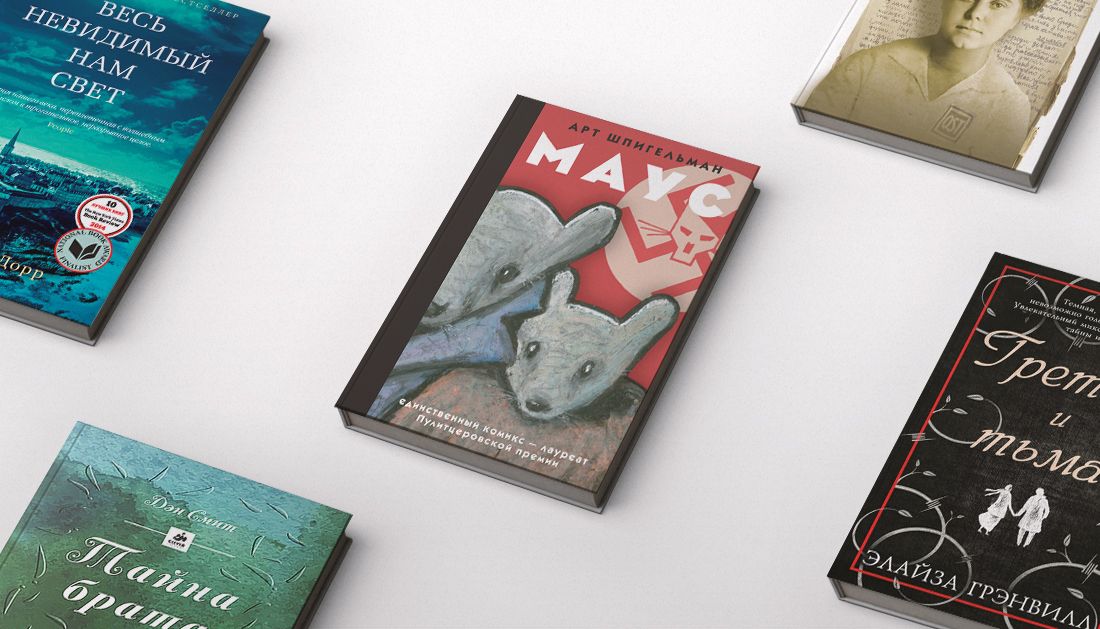
A weekly literary critic Galina Yuzefovich tells at Medusa about interesting and important books published in Russia. The current review includes five new (or relatively new) books about the Second World War - “Mouse” by Art Polimelman, “Where are you, my relatives ...” Alexandra Mikhaleva, “The Secret of Brother” Dan Smith, “Gretel and Darkness” by Eliza Grenville, “All the Light invisible to the world” Anthony Dorra.
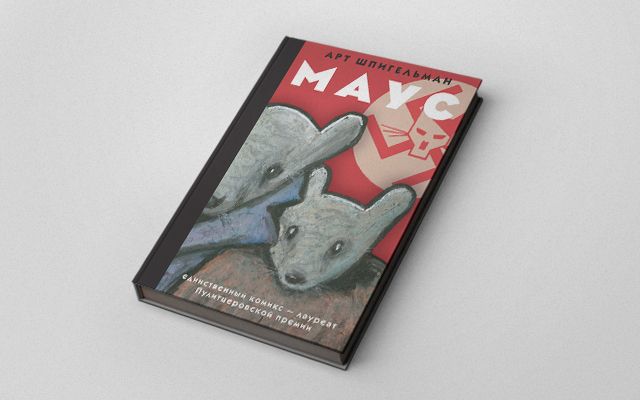
Art Spiegelman. Mouse. M.: Corpus, 2014
What: Graphic novel about Holocaust
For whom: for all
Summary: in the image of the small mouse Mouse, the author brought his father - the Polish Jew Vladek Spiegelman, who managed to survive the Holocaust. The story of Vladek-starting with a peaceful pre-war life with his mother, through Hell Ghetto and a concentration camp, up to the relative post-war well-being in a New York suburb-not so much written as painted. The Jews of Spiegelman look like mice, the Germans - like cats, Poles - like pigs, and so on, and representatives of the same species differ only in clothing. Despite the detached manner of presentation and intentional simplicity of graphics (and possibly precisely thanks to this), Mouse makes a completely deafening impression on the reader - it is no coincidence that the comic book received the Pulitzer Prize in America, was transferred to eighteen languages and entered the school program on history in many countries.
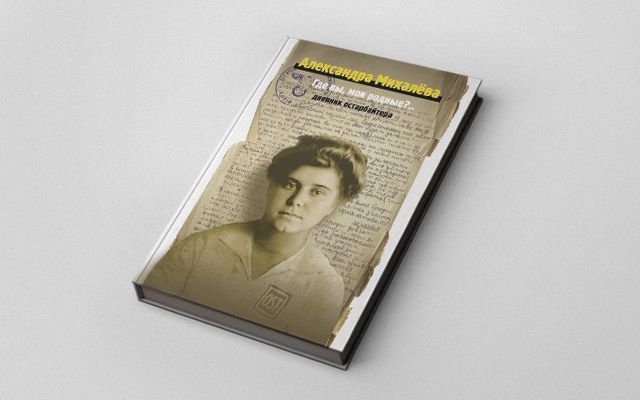
Alexandra Mikhalev. Where are you, my relatives ... M.: AST: Editor Elena Shubina, 2015
What: the diary of the girl stolen to Germany for forced work
For whom: for lovers of documentary prose
Summary: in June 1941, Shurochka Mikhaleva, a resident of the city of Kursk, was sixteen years old, and she had just entered the pedagogical institute. However, instead of the institute, Shurochka first went under the escort to the station, and then in a tighter warmth with a couple of hundred Kursk girls - to Germany, to the factory, where she spent two years as an Ostarbeter (or - if you call a spade a spade - free labor). The diary that she led all this time was preserved with her son and was first published only now - with small bills. Live, observant and clearly very talented (during the time spent in Germany, the girl learned not only German, but also Italian and French languages), Shurochka writes not so much about horrors and deprivations as about “normal” life in pathologically abnormal conditions - about the first love for the young Italian, about the rage of girlfriends, about how she wants to go home and a shockwood ... In a word, almost like “Anna Frank's Diary”, only with a happy ending.
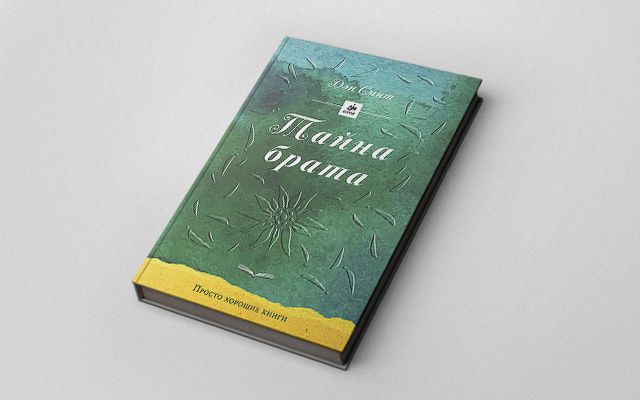
Dan Smith. The secret of the brother. M.: Clever, 2015
What: action
For whom: for teenagers and youth
Summary : “Young Guard” by Alexander Fadeev, only the other way around. The heroes of the American Dan Smith are young German underground, opponents of Nazism from the secret society of the Edelweiss Pirates, and Stephen is at the head of them, the older brother of the protagonist, twelve -year -old Karl. The Edelweiss beat the muzzles of the poor Hitler Jugns, write anti -Hitler slogans on the walls of buildings, help Jews and feed prisoners of war. Gestapo hunts for them, but for the time being to young heroes (I want to write-the heroes-heroes) manage to leave the chase. It is not God the news that deep, but dynamic and fascinating reading in the best (amazing) traditions of Soviet literature for teenagers. And besides - very therapeutic: no, not all Germans were bad, they met among them very good, brave and noble.
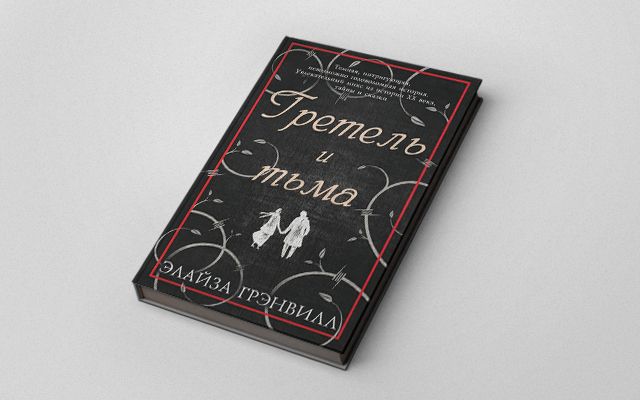
Eliza Grenville. Gretel and Darkness. M.: Phantom Press, 2015
What: an intricate romance with elements of a terrible fairy tale
For whom: for those who like the “Boy in Striped Pajama” by John Boyne
A brief content: in Vienna of the beginning of the twentieth century, a famous psychiatrist, teacher Freud Joseph Broier tries to cure an unknown girl from a strange psychosis, who claims that she is not a person, but a special kind of living machine, and she has an important mission: to find and destroy evil in Vienna. Forty-five years later, a little German girl and a little Polish boy, in a destructive and exploding world, flees from a very strange zoo, where for some reason people are kept instead of animals, and evil adults put different experiments on them. Two stories, at first autonomous, are gradually approaching and, finally, invest in each other, fueled along the way with folklore (in the most terrible, I must say, its manifestations) and the ideas of psychoanalysis. In short, the war for Elisa Grenville is a dream with nightmares.
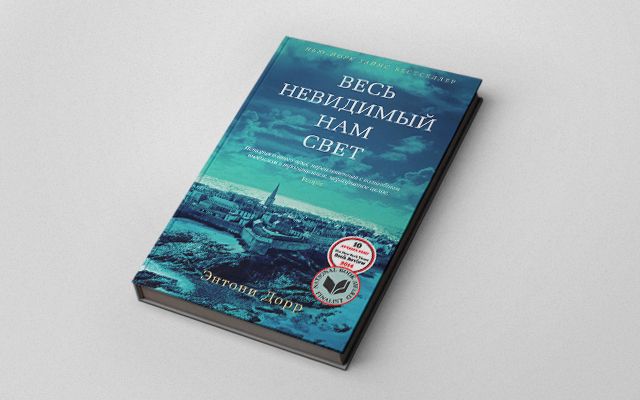
Anthony Dorr. All the light invisible to the world. M.: ABC, 2015
What: a gentle novel about the vicissitudes of fate
For whom: for lovers of intelligent female prose
Summary: Young Blind Frenchwoman and Lopoil German Technic-Wunderkind are found for one day in a picturesque town, just a few hours before the artillery of the Allies will turn this pearl of the Atlantic coast of France into a bunch of charred stones. She is a refugee from Paris, he is an orphan from a German hinterland, in love with the radio. She is an innocent victim of the war, he is an involuntary accomplice of the invaders. It would seem that there is nothing in common between them, but in reality their fate has intertwined many years ago, and since then they have been steadily moving towards each other, not suspecting it themselves. Following each of the heroes, Dorr demonstrates the war to us in all its catastrophic scope - from the atrocities, repaired by the Nazis, to similar atrocities of the Red Army, from the suffering of German mothers to the eyes of people, in whose eyes the hometown turns to the ashes.
Galina Yuzefovich
Moscow