
Translated material
There is no oblivion. Victory. Nikolai Litvinenko
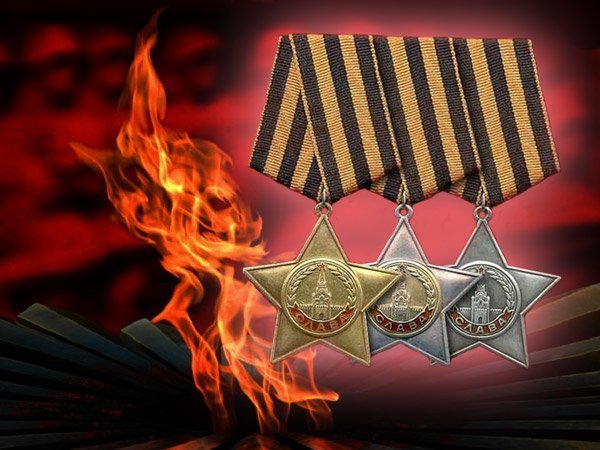
 Hall of Glory Polit.ru
 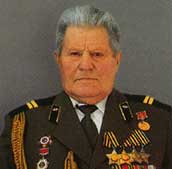 Nikolai Litvinenko
 Full gentleman of the Order of Glory Suggest Nikolai Litvinenko
Nikolai Evgenievich Litvinenko (91 years old) -telephone operator of a communication platoon of the 3rd rifle battalion of the 904th Infantry Regiment of the 245th Infantry Division of the 59th Army of the 1st Ukrainian Front. One of the few full gentlemen of the Order of Glory, awarded the four orders of glory.
The Order of Glory was established in the midst of the Great Patriotic War - in November 1943. They were awarded not officers, but ordinary fighters - ordinary and sergeants of the Red Army. He was awarded only for the feat on the battlefield.
The Order of Glory, in its statute and color, almost completely repeated one of the most revered awards in pre -revolutionary Russia - the St. George Cross.
The Order of Glory had three degrees, of which the Order of the highest degree - gold, and II and III - silver (the second degree was gilded by the central medallion), were issued sequentially - from the lower degree to the highest.
Full gentlemen of the Order of Glory have 2674 people, among them are four women.Personal business
Nikolai Litvinenko was born on January 8, 1924 in the village of Pokrovka (now the Emelyanovsky district of the Krasnoyarsk Territory) in a peasant family. He ended the 7th grades of high school, and when the war began to leave for Krasnoyarsk, where he got a job as a loser (prepared shells for explosives) for a military plant in a foundry workshop - mines and shells were produced.
Upon reaching the age of 18, in 1942, Nikolai was called up for military service from the village of Minderla Sukhobuzimsky District of the Krasnoyarsk Territory and was enrolled in the Kiev Military Communications School, which by that time was evacuated to Krasnoyarsk. He passed the accelerated training course in six months, after which he got into the Chkalov (now Orenburg) region now on sergeant courses, at the end of which he asked him to determine him to the front by a petty frost, because he well took possession of the ABC Morse. In 1943, he was sent by a signalman to the communications company of the 1253rd Infantry Regiment of the 379th Infantry Division of the Kalinin Front. He took combat baptism under the city of Pustoshka.
Order of Glory of the III degree
At the beginning of 1944, Litvinenko pulled the line of communication in the famous Nevelsky bag - a narrow corridor, which was shot by the Germans through and through the squad fire. During a heavy battle on January 31, northwest of the city of Nevel of the Pskov region, the telephone operator of the 379th Infantry Division Nikolai Litvinenko, under enemy fire, eliminated over twenty gusts on the communication line. For the courage and courage shown in these battles, on February 9, 1944, he was awarded the Order of Glory of the III degree.
In January 1945, Litvinenko already freed Krakow as part of the 245th division, forced the Vidue and Oder. On the Oder, Nikolai was included in the mobile breakthrough group and went in the forefront. On the other side of the river, his platoon was under cross shelling - both the Germans and ours beat him.
Litvinenko wrapped one end of the wire around his own body, his partner punished the coil to hold and slow down so that he would not get confused, and swam in ice water to the other side. When there were three meters to the shore, his legs brought his legs with a cramp and he went to the bottom. Almost lifeless Nicholas, who had not left the cable, caught their own, connected the wire, and the connection earned.
On February 7, 1945, in the area of the city of Pencih (Germany), under the difficult conditions of the battle, Litvinenko provided uninterrupted communication with the command, eliminating more than one and a half dozen gusts on the line under enemy fire, in the battle he destroyed about ten enemy soldiers.
On February 11, 1945, Nikolai Litvinenko for the courage manifested in the battles was rewarded with the Order of Glory of the III degree.
Order of Glory of the II degree
In the battles for Riga, the Litvinenko division already participated as part of the 2nd Baltic Front. “Under Riga, an offensive began and there were very hot battles - a real massacre. On the first day, they lost half of the personnel of the regiment. The soldiers died almost everything, ”Litvinenko recalled. In that difficult battle of the 47 signalmen, only two survived - he and his friend Boris Rokotov, with whom they were called to the front. Both have come home alive.
During the battles, Litvinenko eliminated 56 damage to the communication line of the battalion commander, while personally destroying 12 German soldiers. For courage and courage, manifested in the battles of the liberation of Riga, on December 16, 1944, the Red Army, Nikolai Litvinenko, was awarded the Order of Glory of the II degree. However, while the documents went to the authorities, the Litvinenko division was transferred to Poland, after which he was already fought as part of the 1st Ukrainian Front. As a result, the reward was never awarded then.
On March 5, 1945, near the village of Rosengrund, in the Oppelic direction (Germany), the younger sergeant Litvinenko restored the damaged line of communication over fifteen times, and, when repelled by the counterattack, destroyed four enemy soldiers and officer. For courage and courage, manifested in battles, on March 29, 1945, the Red Army, Nikolai Litvinenko, was re -awarded the Order of Glory of the II degree.
Full gentleman of the Order of Glory
More than 20 years after the war, the military commissar of the Krasnoyarsk Territory, Pavel Kashinov, once entering the hut of Litvinenko, drew attention to the photograph in which he was in a tunic with two orders of fame. “Eh, what did you not reach,” the military commissar stood, “it was necessary to earn all three.” Litvinenko showed the military man his order book, in which three orders were recorded. Kashinov made a request to the archive of the Ministry of Defense and it turned out that the signalman was indeed awarded at once by two orders of glory of the III degree.
By a decree of the Presidium of the Supreme Soviet of the USSR of June 7, 1968, Nikolai Litvinenko was overshadowed by the Order of Glory of the 1st degree (No. 2992) instead of the Order of Glory of the III degree of February 11, 1945.
However, he still had two orders of glory of the II degree. In 1999, a message came from the archive of the Ministry of Defense that Litvinenko was awarded another Order of the II degree. This turned out to be the one who could not find him during the war - for the liberation of Riga. He was awarded to the hero 55 years later.
Life after the war
Nikolai Litvinenko met in Germany. After the war ended, he served two more years and only in 1947 he returned home. He settled in the village of Minderla 50 km north of Krasnoyarsk. It still lives there. For 28 years he worked as a ranger in the hunting farm, was a thunderstorm of poachers. The regional authorities allocated Litvinenko an apartment in Krasnoyarsk, but Nikolai Evgenievich did not want to leave his native village.
Until recently, despite the advanced age, he led the farm, held a cow and bees and even got an ATV. Only a few years ago he abandoned the cow, because it became difficult to take care of her.
In 1990, Nikolai Litvinenko was held in the ranks of veterans along Red Square in Soldier's uniform. In 2000, he also walked in a column of veterans, and at a festive reception with the President of Russia sat at the same table with Vladimir Putin. Last year he celebrated his 90th anniversary.
This year, Nikolai Litvinenko also arrived in Moscow for a parade dedicated to the 70th anniversary of Victory.