
Translated material
Quiet nineties

 . . .
. . .In the last year or two, an unprecedented surge in interest in quiet, calm music has been observed-in the range from Chillstep to the new emboss. The current fashion for calm is an obvious flashback from the mid-1990s, when chillut music reached, perhaps, the highest point of development. Then Chillaut went side by side with Raywa and was, surprisingly, the music that was listened not only at home, but also in clubs.
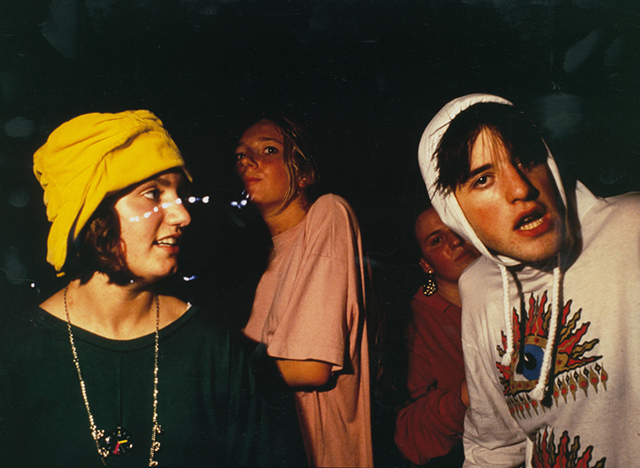
Now it sounds strange, but the godfather of Chillout music has become DJ Paul Oxenfold. In the late eighties, he launched a series of parties Land in the Heaven London Club of OZ , where the public came not so much to dance as to communicate and penetrate the atmosphere. In this sense, Okensfold's party was direct heirs of psychedelic chapnings of the seventies. For turntables on Land of OZ "shaman" future stars of the embedent scene-Miksmaster Morris ( The Irresistible Force ) , Alex Patterson Orb ) , Jimmy Couti ( The KLF ) and others. And among regular visitors of these events was, for example, Bjork. Following London, Chillaut-Vozda, began to take place in the Konspiracy Manchester, Birmingham Oscillate , then joined San Francisco, Berlin, and by the middle of the nineties “Chillaut-room” with the corresponding music was the obligatory belonging of any self-respecting club from Moscow to Tokyo. The development of the stage contributed to the development of the scene and the fact that well -ventilated halls without loud music were prescribed by the British clubs of security rules - this is how the authorities tried to protect the clabbers from dehydration caused by continuous dances against the backdrop of ecstasy and “accelerators”.
At first, the DJ repertoire in Chillauts consisted of a “classic” emboss (Brian Ino, Steve Hilllege, Robert Fripp and others), Daba, Regg and classical music, diluted with quotes from science fiction and documentaries about space. All this was passed through an echo and reverb, and a psychedelic collage was obtained at the exit. Little by little, having exhausted the set of plates suitable for this, the DJs began to compose themselves; It was then that chillout electronics arose as a direction. Chillaut of the nineties differed from the amorphous sound landscapes of Brian Ino and his colleagues, first of all, by the number of events per unit of time. Remaining extremely dispersed, this style nevertheless absorbed many features of club music of that time. Often (although not always) there was a rhythm in the tracks, or at least a tangible inner pulse. Hence the not too accurate, but nevertheless clearly denoting the clearing of the “youth” (at that time) of the emboss, the term “emphyentine-techno”. Contrary to popular belief, the Embipant-Techno is not a hybrid of technology and the emboss at all. “Techno” here means not at all the current, quite narrow, understanding of the genre, but the collective image of the entire club electronics of that time.
One of the important differences between chillout electronics and her older brother Riva was that the embedient-techno artists initially chose an album format for themselves. In this sense, they again inherited forecasters and psychedelic groups of the seventies. Further-10 of the most important Chillaut-albums of that time.