
Translated material
Paradise in a pistol
What is the trial of Johar Tsarnaev
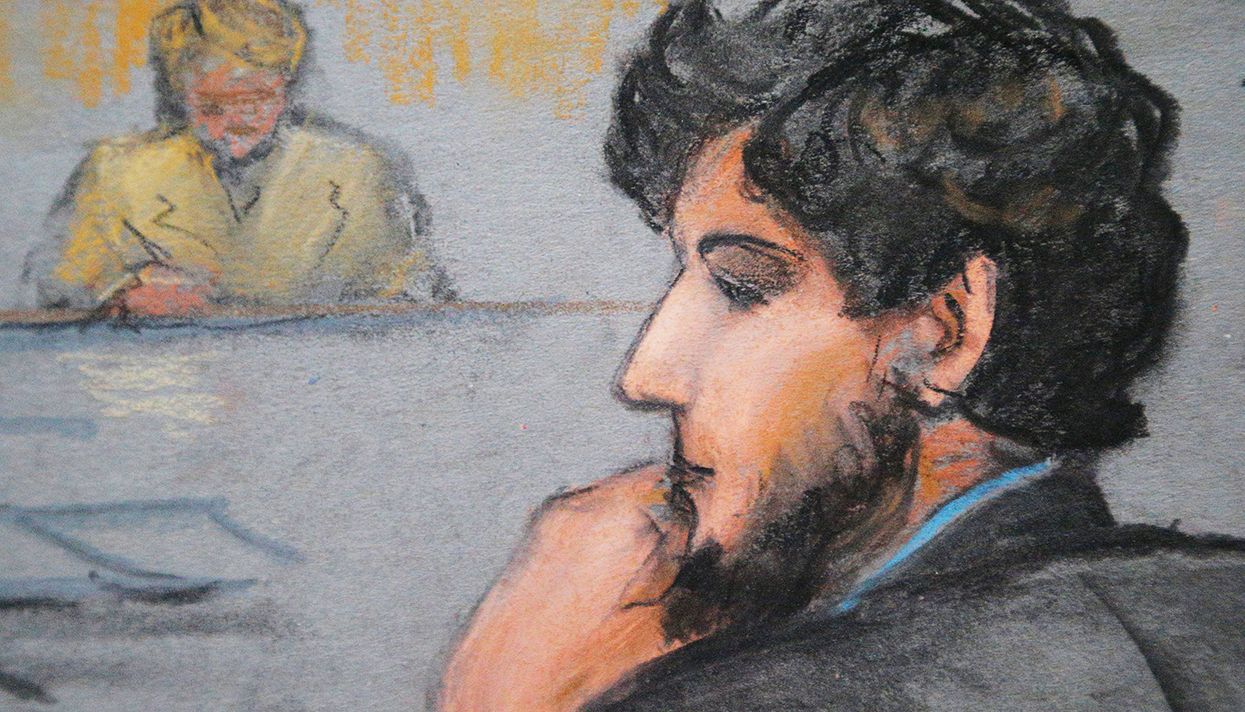
On May 15, the jury unanimously sentenced Johar Tsarnaev to the death penalty, found guilty of organizing a terrorist attack during the Boston Marathon in April 2013. The defense of Tsarnaev tried to achieve a less severe sentence, introducing Johar a confused quiet teenager who succumbed to the influence of his older brother. The jury believe that Johar perfectly understood what he was doing, and consciously decided to make homemade bombs with his brother and put them into effect during a marathon; And if someone influenced him, then only the ideologist of Islamic radicalism Anvar al-Avlaki. "Medusa" talks about the main events of the trial of Tsarnaev.
19-year-old Johar Tsarnaev was detained on April 19, 2013-four days after the attack, which died three people. The police shot his older brother Tamerlana. Johar was wounded in a shootout and hid in a boat parked in the courtyard of the house, in the suburbs of Boston. Tsarnaev was sent to the hospital, and then placed under arrest.
Terrorist-recognition
Even before the start of the trial, Johar Tsarnaev turned into a real star - young and pretty, a Chechen with American citizenship did not look at all as bearded fanatics, which it is difficult to experience at least a share of sympathy. Johar got a lot of fans, and the page in support of Tsarnaev on Facebook scored several tens of thousands of likes. Moreover, the court of the court in Boston during the process was picked up by Johar's supporters who believe that Tsarnaev is innocent, mostly women.
Star status best confirmed the cover of Rolling Stone magazine, which Tsarnaev hit in August 2013. The magazine was then greatly criticized for giving the celebrity status not yet convicted by terrorist and the “glamorization” of terrorism - despite the fact that Tsarnaev’s photograph several months earlier adorned the advanced woman The New York Times. A picture published during the trial of Tsarnaev, where he, dressed in the orange prison overalls, demonstrates the middle finger of video surveillance, only complements this image of a pretty “bad guy”.
Message
During the trial of Tsarnaev, it became known about the message that he wrote with a pencil on the wall of the boat before arrest. It clearly demonstrates both Tsarnaev’s motives and his thoughts before arrest, and is one of the key materials of the process, which undoubtedly influenced the jury. Here is its text completely:
“I envy my brother, who was awarded the Paradise Garden (Inlala) before me. I do not mourn him, because his soul is alive. God has a plan for everyone. Mine is to hide in this boat and shed light on our actions, I ask Allah to make me a shahid and let me return to him and be among all the righteous in heaven.
The one whom Allah directs cannot be mistaken. [Illegible] Akbar!
I testify that there is no God except Allah, and that Mohammed is his prophet. [The text is illegible due to the trace from the hit of the bullet].
The US government kills our innocent brothers, but most of you already know that. As m [inaudible, probably a Muslim ] I cannot calmly look at how evil remains unpunished, we Muslims are a single whole, and if you hurt one of us, then you injure everyone. At least, Mohammed wanted to do so for us. Ummma raises his head, the Mujahideen is awakened. Know that you are fighting with people who see a paradise in a pistol’s bath, how can you deal with them. We are promised victory, and we will undoubtedly achieve it. I do not like the murder of innocent people, it is forbidden by Islam, but taking into account all that has been said, this is permissible.
All merits are due [inaudible because of the trace of the bullet]. ”
Chechen traditions
Nobody believed in an acquittal, even the defense of Tsarnaev, who focused on ensuring that the defendant could avoid the death penalty. Lawyers tried to prove that Tsarnaev was actually not convinced of the Islamist, but simply a teenager who fell under the influence of an authoritative older brother. All funds were used - from the stories of the classmates of Tsarnaev to the testimonies of his relatives and conversations about the Chechen adats.
During all this time, Tsarnaev only once showed tears - when his aunt Patimat Suleimanov, who lives in Russia, gave his testimony. The elderly woman burst into tears when she saw Johar, and could not give any testimony; Seeing the tears of the Patimat, he gave free rein to emotions and tsarnaev. In total, five relatives flew to Boston (the American state paid for the flight and accommodation), they saw Johar only small-and described him as an emotional and kind child who cried over the cartoon “King of Lev”. According to relatives, the mother of Tsarnaev Zubeidat was not particularly religious, but in the early 2010s was carried away by radical Islam-close Tsarnaevs took such a transformation negatively.
The court repeatedly discussed Chechen traditions, and the witness of the defense Michael Reynolds, Princess University, a specialist in the North Caucasus spoke more about them. From him, the jury learned that in Chechnya until the 19th century there was neither the capital nor centralized power, but Chechens lived according to the sets of moral and ethical rules - the adams. Reynolds said that the adats prescribe to the Chechens to obey the elders, including the father and brothers, reminded of the post -war deportation of the Chechens, the first and second Chechen wars and the strength of traditions in Chechen society. Whether the testimony of Reynolds had the benefit of Tsarnaev, it is difficult to say: speaking of the adats, the professor called the smoking of marijuana - Johar, who used the “grass” and even, according to some reports that traded it, as a result, appeared in the form of not too committed to the traditions of the Muslim, unambiguously.
Death penalty
Johara Tsarnaev’s lawyer was Judy Clark, a famous American lawyer who defended many famous criminals, who was threatened with the death penalty (including Teda Kachinski's “Unbum”). This is the first death penalty in her career - earlier she always managed to achieve a less severe sentence for her customers. In addition, Tsarnaev turned out to be the first criminal for several decades sentenced to the highest degree of punishment in Massachusetts. In this state, the death penalty has not been used since 1984, but the terrorist attack in Boston was not only directed against the inhabitants of Massachusetts - they come to the marathon annually from many other states and even countries. Thus, the case received the status of the federal, which made it possible to bear the death sentence to Tsarnaev.
Tsarnaev has the right to appeal and will probably use it how almost all the sentences sentenced to the highest degree act. Prior to the execution of the sentence, the years that Johar will spend in prison with high security measures. On average, in the United States, 15 years take place between the death sentence and its execution.