Translated material
Uranium friendship brought to arbitration
Mongolia is fighting off the multimillion -dollar claims of the Canadian company, deprived of uranium in favor of friendship with Russia, and promises to annul the decision of the international arbitration
Mongolia is fighting off the multimillion -dollar claims of the Canadian company, deprived of uranium in favor of friendship with Russia, and promises to annul the decision of the international arbitration
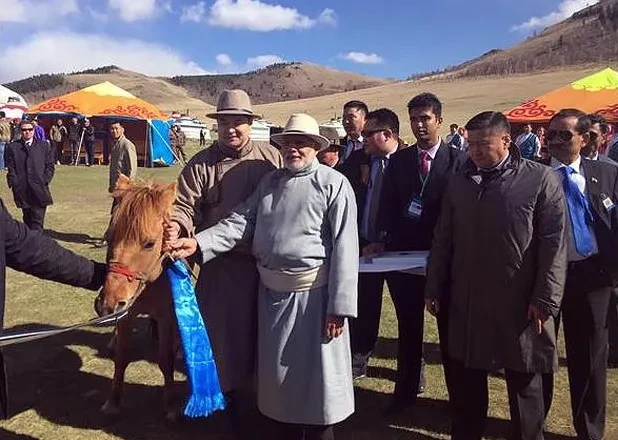
On May 15, the Financial Times published an “informal” interview with the young Mongol Prime Minister Chimedenic Saykhanbileg. Behind the fragrant lamb, the head of the cabinet tried to prove that Mongolia is glad to Western investment, and its laws and about about a year more and more favors investments in the mining sector. The question is "Well, Chinese investments in Gobi?" He caused a very frank answer: “The threat of Chinese expansion has existed for 1000 years, it’s good that our people are concerned about it - while we are concerned, we are in good shape ...”.
The Mongols are afraid that Western companies will sell their licenses and production to Chinese colleagues. They are afraid of heir - the oil industry of Mongolia in the recent past was entirely sold by American owners of the powerful Gina National Petroleum Corp. It may be therefore, when the journalist asks an innocent question about the payment of compensations for the selected uranium mines in the Dornod, Saikhanbilee, who was born in this province, as if exploding: “Why are all you attached to this unfortunate arbitration for 100 million-as if it were some kind of earthquake!”
It is useful for those who, on the eve of the signing of the trilateral “road map of cooperation”, are interested in knowing why, with the phrase “Dornod-Uran”, Mongolian officials spoil ...
The Mongol government on the eve of the May holidays stated that he would try to “annul” the decision of the UN arbitration court to recover more than $ 100 million in favor of the Canadian Junior Khan Resources mining campaign. The implementation of the decisions of this court as a final instance manage to avoid only a few countries that do not at all consider themselves connected by international law.
This refusal looks quite ominous, given that on the morning of April 24, the chairman of the board of directors of the Khan Resources company, the cavalier of the Order of the Legion of Honor, 59-year-old Jim Doak was found dead in the hotel room in Ulan-Bator. He suddenly died a few hours after the end of fruitless negotiations with representatives of the Mongol government and the release of the company’s press release according to their results.
In this release of April 23, Canadians harshly stated that they would hire legal consultants-sofas specializing in the withdrawal of the property of non-payer states abroad: aircraft, steamboats, buildings and not only. It was DOKA who insisted on the need for such extreme measures, but he would not see their result. Diabetic Douca felt badly after difficult negotiations, went into the vacation room and, according to media reports, he had a fatal “bout of diabetes”. Mongol experts did not find traces of violence on his body.
The death of the Canadian, nevertheless, is obvious, unprofitable to the authorities of Mongolia, which go to the extreme, places of counter -productive measures in the hope of returning the trust of foreign investors to the country on the verge of economic collapse.
As the Canadian media notes, Jim DOK, apparently, simply could not withstand nervous tension during the six -year struggle with the Government of Mongolia and the Russian “Atomredmetzolot” (ARMZ) for the property of his company selected in 2010.
The trouble began with the fact that in 2009, Russian President Dmitry Medvedev came to Mongolia and signed an agreement on cooperation on the development of strategic uranium deposits in the Dornod province. This was part of the large geopolitical equation “China - coal, the West - copper, Russia - Uranus”, capable of ensuring the prosperity of Mongolia among the neutered gifts of neighbors. And it seemed logical that Russia would “inherit” the deposits developed under the USSR, only 200 kilometers from the capital of the Russian Uranus - the city of Krasnokamensk. But in these global designs they did not take into account a trifle: 58% of uranium assets in Dornod belonged to the then little -known Khan Resources and the company had its own, other development plans.
In 2009, Khan Resources just completed the technical and economic justification of the annual production of 1150 tons of uranium for 15 years and, being a junior company, was preparing to resell this asset with decent profit. The company of 21% of the assets company Atomredmetzoloto (daughter of Rosatom) tried to buy a Canadian share for a shamely low price, but Canadians quickly demonstrated an offer from a Chinese state company, ready to invest almost twice as much. From the point of view of the Mongolia, drawing into the argument of the Chinese, the miners encroached no less than geopolitical stability. The great Khural in response adopted a new law about the nuclear sector and seized the license from Khan Resources without a free-no one, simply blocking their activities on the basis of inconsistency with the new law and the absence of previously not required documents.
Since the rebellious Canadians expropriated all their property, they had nothing left but to sue with offenders. At first, Khan Resources tried to sue ARMZ and in revenge to remove the assets of the uranium company belonging to the Russians. After failure, the Canadians turned to the Hague arbitration with a lawsuit against Mongolia, and during the exhausting almost five -year process, $ 80 million with percent of 320 million, requested initially. Now 7 thousand dollars are added to this virtual amount daily. Now she has reached 104 million dollars.
The uranium fields of Dornod turned out to be unclaimed by the new hosts-the High-Human Science Mining and Chemical Association (Daughter of ARMZ), which, due to the fall in demand for uranium last year, fired two thousand workers in Transbaikalia. They are now not up to the development of new mines in a strange waterless steppe. It does not seem that Russia and ARMZ, in particular, felt at least the Yota responsible for everything that happened to the Canadian and Mongolian colleagues.
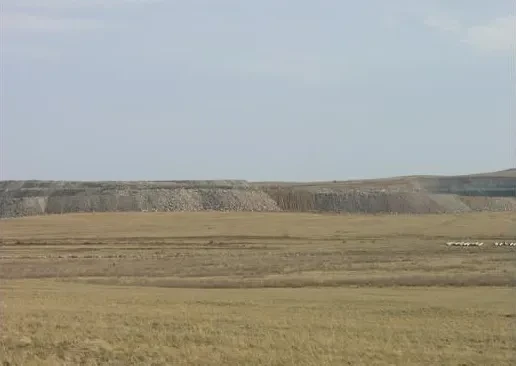
The local population in the areas of uranium deposits and environmental organizations of Mongolia actively protested against the activities of foreign companies to create uranium mines. The most stringent protests caused an attempt to French AREVA to obtain uranium to the Gobi Aimaki. Ecologists can be hoped that at least in the Dornod this issue is seriously closed and for a long time, and one muddy pond-Carrier, forgotten in the steppe from Soviet times, will remain a source of radiation danger. Although the danger that Dornod-Uran will master some other “strategic partner” by friendship.
On May 17, India Prime Minister Narendra Modi visited Mongolia on a friendly visit, during which the politician announced the strategic partnership of the two countries and his readiness to issue a billion dollars to the Mongolian colleagues for the development of infrastructure, which, in particular, to ensure the export of uranium and other raw materials to India.