
Translated material
The most draconian law yet
Everything you need to know about Russia's new legislation against ‘undesirable organizations’
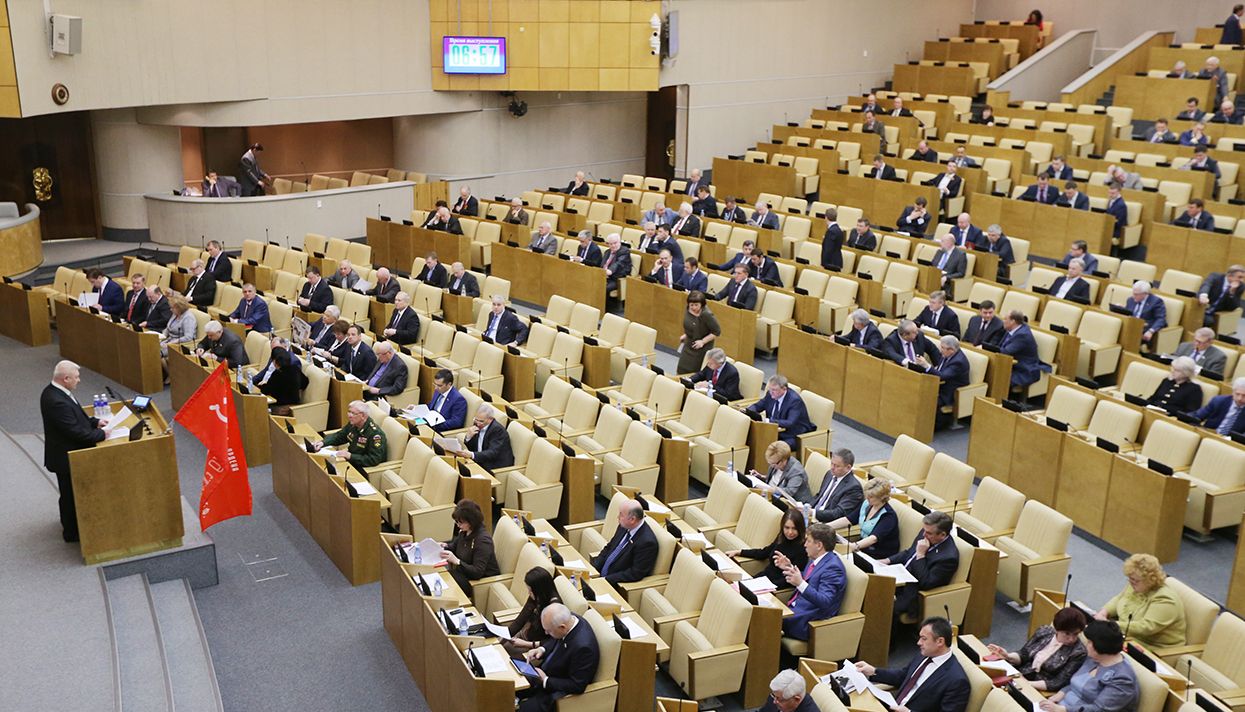
On May 19, the Russian Duma approved a third and final draft of legislation that criminalizes “undesirable organizations.” If the Federation Council and President endorse the bill, any foreign or international NGO that the government declares “undesirable” will be banned from working in Russia. All an organization’s subsidiaries will be closed, its accounts frozen, and its supervisors and staff can even face civil and criminal penalties. For all Russia’s recent laws in this vein, the “undesirable organizations” bill is still unprecedentedly draconian, and the power it grants authorities to ban NGOs is extrajudicial. Meduza breaks down the most important facets of legislation that is likely to change Russia's NGO landscape dramatically.
How does the Russian government justify this law?
Not without confusion. Some Duma deputies believe that certain destructive organizations—supposed platforms for terrorist, extremist, and nationalist ideas—are threatening the country with “color revolutions” and attempting to sow interethnic and sectarian conflict.
The legislation’s authors admit that the state already has instruments to combat terrorist, extremist, and nationalist organizations, but they consider them insufficient. In the future, deputies are certain, Russia will need to prevent even the “emergence of conditions that facilitate the activities of such foreign organizations,” which threaten the country’s “fundamental values.”
How do officials decide which organizations are “undesirable”?
It’s hard to say. The law states that foreign and international organizations can be declared “undesirable” for “presenting a threat to the basic constitutional order of the Russian Federation, its defense capability, or its state security.”
The Attorney General’s office would play the main role. It will be tasked with deciding when and if to add an organization to the list of “undesirables,” while working in conjunction with the relevant law enforcement agencies. These decisions will likely be made in cooperation with the Ministry of Internal Affairs, but the specifics of this process remain unclear. The procedure could boil down to the Attorney General’s office simply notifying the police of its decision.
An organization becomes “undesirable” just as soon as the Justice Ministry makes the announcement on its website. In other words, the Justice Ministry will need to create a special list, similar to the list of “foreign-agent NGOs” is operates now.
The Russian government can’t close down foreign and international organizations. An “undesirable” organization’s Russian subsidiaries are shut down and the parent group is not allowed to establish new ones.
Blacklisted organizations can appeal the decision in court. The Attorney General also has the prerogative to exclude an organization from the list itself.
Can commercial organizations be labeled “undesirable”?
Yes. After the bill’s first draft, lawmakers declined to clarify its language, leaving the it ambiguous about whether commercial organizations are vulnerable. In other words, there is nothing to stop the authorities from applying this law to businesses.
The law is, generally speaking, surprisingly vague. The term “foreign non-government organization” is not defined under other Russian laws and it’s not entirely clear what it means here, either. Many believe that “non-government” and “non-commercial” organizations are one and the same. It is also not entirely clear why the lawmakers didn’t use the term more common term in Russian legal language: “foreign non-commercial, non-governmental organization.”
Will an organization be able to work without being legally incorporated in Russia, through the use of freelancers, for example?
No. Anyone working for an “undesirable” organization—including in an unofficial capacity—faces fines of up to 15,000 rubles (about $300) for ordinary citizens, up to 50,000 rubles ($1,000) for officials, and up to 100,000 rubles ($2,000) for the organization itself. Criminal proceedings will be initiated against repeat offenders and the punishments can be even harsher, with fines of up to 500,000 rubles ($10,000) and prison sentences ranging from two and six years.
“Undesirable” organizations are also forbidden from holding public events (which can mean anything from seminars to protests) and from possessing or distributing promotional materials, including via mass media. It’s not entirely clear from the text of the law, but it appears that the ban on possession and distribution affects not only members of the organization, but also ordinary citizens.
In addition, all Russian banks and financial institutions are forbidden from cooperating with “undesirable” organizations and they are required to inform Russia’s financial watchdog agency about any such organizations that attempt to contact them.
Will foreign employees also be held responsible under the law?
Yes. The civic and criminal codes don’t apply to Russian citizens only. For foreigners who take part in the work of “undesirable” organizations, the authorities can fall back on additional measures: they can be ban these people from entering Russia.
Who can end up on the list?
No one really knows. Judging by the legislation’s memoranda and the transcripts from discussions of the bill, Russian lawmakers are relying on the same logic they used to create a registry and additional regulations on so-called “foreign agents.” Noncommercial, foreign-funded organizations can, according to the Duma, threaten Russia’s security insofar as they “act at the beck and call of their masters overseas.”
The law against “foreign agents” affected a large number of NGOs, including those that criticize the policies of the Russian authorities, defend human rights, or monitor elections. Clearly the law against “undesirable” organizations is directed at NGOs with similar mandates, but in this case it targets foreign and international groups, not merely Russian outfits.
What is the likelihood of this law being passed?
Extremely high. Judging by other highly-politicized initiatives in recent times (such as the ban on US Citizens adopting Russian children and the ban on “propagandizing non-traditional sexual relations”), laws of this sort rarely raise questions in the Federation Council (the upper house of Russia’s parliament) or with President Putin, both of whom need to approve the bill, in order to make it law.