
Translated material
What is bad iPhone
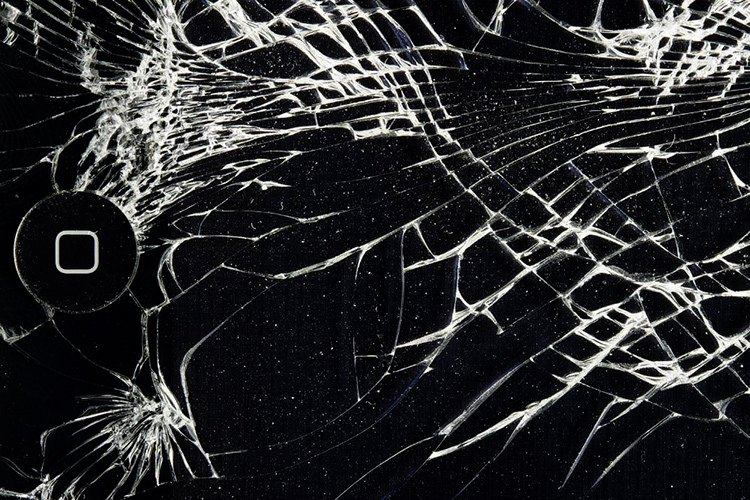
David Rose is an employee of the media laboratory of the Massachusetts Technological Institute and one of the theorists of the Internet of Things. COLTA . Ru He publishes fragments from his book “The Future of Things”, which is published in the Russian translation at the Alpina Non-Fix.
The world of terminals: despotism of glass plates
Before plunging into the world of magical things, we should more deeply investigate the future that other technological concepts can lead us to the world of terminals. Today we are in the world, obsessed with the merger of different things and functions in the same tool with the prefix "AI". How did it happen? Why did the glass plate become a jealous despot in the world of things?
This is partly explained by the action of Newton's third law - “the force of action is equal to the power of counteraction” (in this case, whenever one company produces the next plate of a new generation, its competitors meet the release of even more similar ones), as well as financial considerations. Production of devices with screens, whether it is iPod Nano , smartphones, electronic books or flat TVs, like a huge wave, swept the market of consumer electronics and entails it.
The entire Hai-Tele Industry-from analysts and investors to entrepreneurs and applications stores-cannot break away from the screens. Acute competition boils at all levels of creation of terminals. The volume of the pixel market is amazing. Samsung , LG , Sony , Sharp , hundreds of suppliers and intermediaries engaged in the assembly of components and the maintenance of industry giants produce millions of screens every year and receive multi -billion dollar revenues.
When the company manages to catch such a grand wave, any attempt to convince the boss or the board of financing something else in addition to glass panels becomes a serious risk-each defending revolutionary technology actually performs professional suicide. According to the legendary Clayton Kristensen from the Harvard Business School in their "Dilemma of the Innovator" , "the authorized authorities are not inclined to finance revolutions." Various companies and institutions that have invested in the development of the world of terminals should constantly fight for a competitive advantage. Any industry (screen production is not an exception) always encounters a drop in retail prices, which has to be compensated by or increasing the volume of products, or its modernization - by the addition of a moderate number of new gadget functions, which are then sent to the market, ahead of competitors. The development of glass plates goes so violently that the world of the world of terminals will have enough things to do for years to come. The next generation of technology, which they will bring to the market in the near future, will become the screens even thinner and noticeably larger than the previous ones, with even greater resolution. They will be followed by organic LEDs ( OLED ) , capable of giving a more saturated black color. They will squeeze modern inorganic LEDs ( LED ) , which themselves took the place of plasma panels a few years ago.
The smartphone has no predecessors in folklore or relatives in ancient fairy tales.
Colors will become brighter, the screen renewal frequency will increase, the ends will be narrowed again, and the contrast will grow, which is why the image will stop fading in bright light. We will get acquainted with the screens of unusual properties and shapes - folding and flexible, they can be put in a pocket or wrapped around the building, the technology of the quantum point will develop - there will be displays consisting of fluorescent nanoparticles. The image will become even more lively, brighter, clearer, with more wealth of shades and details.
I spend a lot of time working with large companies (especially with the Massachusetts Technological Institute) like Cisco , Panasonic , LG and Samsung , and I see how difficult it is for them to change the approach and go beyond the world of terminals. By selling pixels, it is difficult to imagine something that is not a screen. For these companies, there is nothing to say about the future of technology - screens, screens and screens again. If your company with billions of revolutions sells TVs, tablets, projectors or applications for them, it is difficult to reflect on some other future for it; What can we say about changing the course of the industrial giant, which is moving in a different direction at all pairs with a huge super -tank.
As a result, the world of terminals will grow further, absorbing everything in its path. The point is not only in huge volumes of the market and the associated commercial obligations of various companies - there are other factors that push its growth. The cost of pixels is constantly falling. Today, for any surface, there is a suitable “smart” screen, and the choice of information that can be brought to it is completely unlimited.
In addition, the fact that the volume of information that we is able to perceive from the screen is also plays a role is also unlimited. Even if we currently do not look at the screens of mobile phones or TVs, our peripheral vision can be filled with a rich, bright, quick stream of information - what Google technology is striving for. Glass .
This is already happening right before our eyes. Not far from my office at the Cambridge Center for Innovation on the Kendall Square is the Microsoft building. At first, it was a relatively anonymous tenant, but then they had a new entrance twice as high as the previous, with a huge, ten meters diagonally, a screen located inside the lobby, but looking into the street. The outer wall is glass, so now in the vicinity of this building, it is primarily striking that they twist on the screen, which is why the appearance of the street has completely changed. Despite the fact that in this area there are offices of technological companies, startups and institute buildings, screens of this scale here are still new.
Does the onset of the world of terminals are concerned about me, especially in such a direct proximity? Oddly enough - no. Why? Because it was inevitable and predictable in all its clumsiness. Is it worth it to be surprised that Microsoft I put a large screen in my building, on which they twist the commercials for a general review? It is unlikely. As a means of reporting information to the consumer, the screen is a rather ax.
By selling pixels, it is difficult to imagine something that is not a screen.
The screens will continue to spread as a forest fire, appearing in those places where it was difficult to encounter them before. This is the result of the desire of advertisers to influence our consumer habits or optimize infrastructure costs. In the field of healthcare, for example, companies like United , Cigna , Humana and Blueshield will subsidize the pixelization of surfaces in your house: images and texts will be broadcast on them, which, in the idea of advertisers, will push you to a healthier lifestyle, which will reduce the costs of insurers for healthcare. Your living room, kitchen, bathroom and bedroom will turn into a kind of stadium hung with advertising shields. At the Northern Station, one of the largest suburban stations of Boston, the screens are already hanging almost everywhere, as if the very view of the surface on which nothing is displayed, to someone seems old-fashioned. Screens are often found in elevators, their number will only increase in places with a large flow of visitors, such as shopping centers or bus stops. Screens began to appear even in public toilets built into mirrors, walls above the pussuar and booths. The gas station does not lag behind the trend and try to monetize the three minutes that you used to spend on aimless wandering, filling the tank. Now the column has a screen that invites you to enjoy an expensive cocktail with frozen juice and a huge amount of fructose. On some of these screens, a camera is installed that reads your behavior and external signs: do you look at the screen, what sex, age and ethnicity you are. Based on this data, they demonstrate the advertisement that you should like more.
Microsoft and many other companies are constantly trying to come up with new ways of interacting users with a glass plate, for example, inventing new gestures for touchscreen, but their efforts are still concentrated precisely on the screens. To understand how much the corporate culture of Microsoft is focused on this and how the company sees the future, just look at the commercials in which it sets out this vision (you can find links on the Enchantedobjects . COM website). You will see that the displays with the Microsoft interface Surface will be all sizes and shapes, adapted to any context - from schools and airports to museums and bedrooms. There are versions the size of a palm, there are screens in the form of newspapers for traditionalists, screens the size of a table, or even in the entire wall.
Such a vision of the future can hardly be called a forecast - there is absolutely nothing new in it. This is just the development of the same familiar and obvious line: the use of old technology, but in different sizes and different places. For large business, the world of terminals is easily predictable, the path to the future seems clear and clear, making a forecast for the next quarter is easier, and following this forecast will help to avoid any difficulties with product promotion. Your career is safe.
However, in all this scheme, from my point of view, there is one significant flaw. Screens do not contribute to the development of our interaction with computers and do not keep up with the growth of computing power, which, as you know, doubles annually. These devices are passive and fluffs, they are simply waiting for your instructions. The world of terminals instills its cold and dull aesthetics of our daily life, not adopting anything from her in return. Even the most exquisite and fashionable Apple products It has features of a cold masculine principle in comparison with the pliable nature of wood, stone, traffic jams, fabrics - those surfaces that we prefer to see and feel, equipping our house and buying clothes. Few people would like clothing from a smoothly polished anodized aluminum.
The world of terminals is alien to charm. The smartphone has no predecessors in folklore or relatives in ancient fairy tales. I do not know a single magical object whose owner would be constantly staring at him like a zombie, playing a meaningless game or sending off, insecure messages. The smartphone is not able to realize any fundamental human desire with the effect of charm.