
Translated material
Secret readers of letters
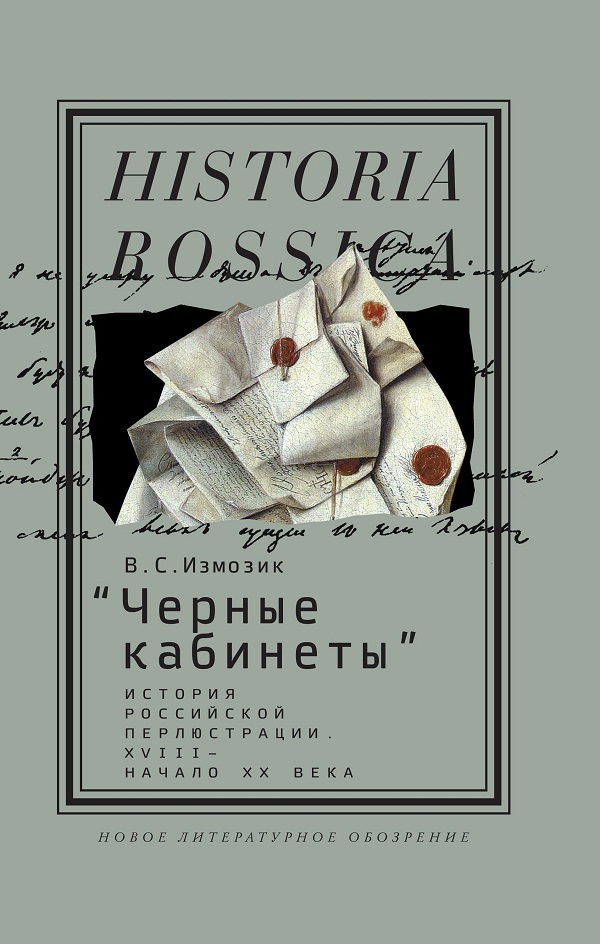
The publishing house "New Literary Review", in the Historia Rossica series, was published by the book of the famous St. Petersburg historian Vladlen Izmozik "Black Cabinets": History of Russian Perlyustration. XVIII - beginning of the XX century. "
The word "perlustration" comes from the Latin verb perlustro - I observe. This is a viewing of a personal sent correspondence, committed secretly from the sender and recipient. The book "Black Cabinets": The History of Russian Pervistations "Vladlena Izmozika is the first and only Russian monograph on this topic.
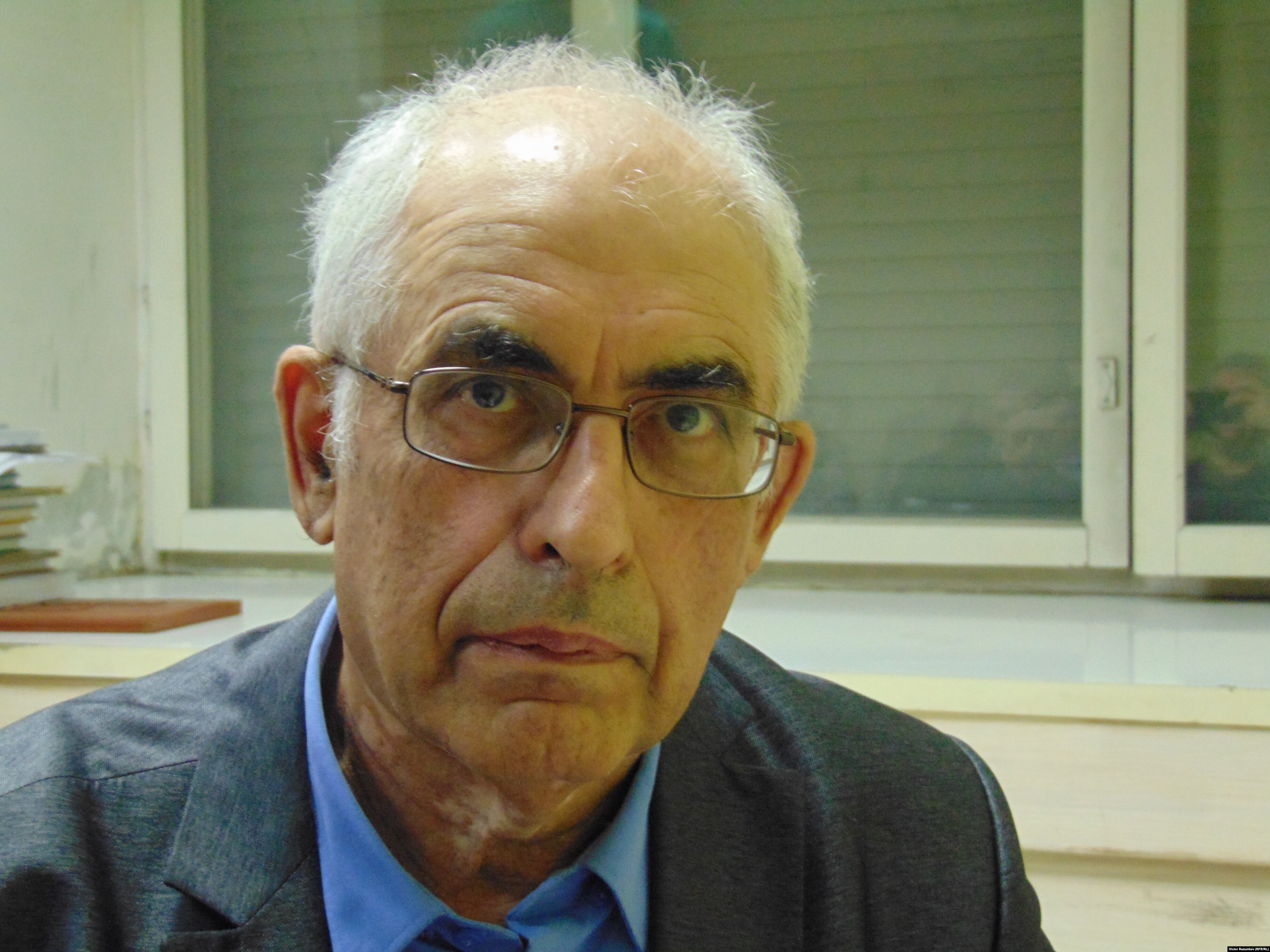
- Vladlen Semenovich, what has moved you to such capital work? More than seven hundred pages ... more than twenty years of work ...
- First of all, the fact that in 1995 I defended the doctoral dissertation, its topic was first declared in post -Soviet historiography - "Political control over the population of Soviet Russia from 1917 to 1928." Naturally, I ran into the topic "Perlustration". And, of course, I had to see the materials on pre -revolutionary per lustration. Because it never stopped, and smoothly flowed from one social system into another, with a short interval of the Provisional Government. Since it was impossible to engage in further Soviet perlustration due to the closed archives, I came to the conclusion that the Bolsheviks did not come up with anything new, they only gave the scale and scope to those phenomena that existed before them. Moreover, the creation of the III department was a qualitatively new phenomenon. If before that there was a political wanted list, then with the creation of the III department, along with the political search, political control has appeared. That is, the authorities wanted to know the real mood of the subjects, and not only for their study, but also for their formation. And I turned to the topic of pre -revolutionary perelustration. Happiness, since the topic was closed, there was not a single monograph here, there were articles. These are, of course, articles by Zinaida Ivanovna Peregudova and a number of other historians. The topic required, of course, a huge work in the archives, especially in Moscow archives. This work dragged on for many years. This, of course, is the Russian State Historical Archive in St. Petersburg, it is the State Archive of the Russian Federation, the military-historical archive, the archive of foreign policy and a number of others.
-If we talk about the pre-revolutionary period, it is known that per lustration was corresponded to all major writers of the 19th century. And who else fell under the close attention of officials of the "Black Cabinets"?
- Perlustration begins with the invention of the mail. In Europe, systemic per lustration was founded by Cardinal Richelieu, in the 17th century in France. In Russia, its traces have been traced from the end of the 16th century, it has been present in the 17th century, under Peter I, but systematically it begins in 1742, with an ascent to the throne after the coup Elizabeth Petrovna. The empress loved to dance, have fun, but since she ascended the throne through the palace coup, she understood that this could happen to herself. And it was very carefully monitored. The diplomatic mail was especially perlustrated at first, then gradually it begins to apply to the correspondence of subjects. And ends with the creation of systemic perelustration under Catherine II. And this, of course, first of all, for many and many decades - per lustration of the correspondence of the highest layer of Russian society, i.e. nobility, officials, officers, dignitaries. Until 1917, the letters of peasants and working attention were paid little. A special "alphabet" was created, a list of people whose correspondence was definitely read. The alphabet was constantly changing, new faces were included in it. There was also a random sample of letters, according to which, from a small number of letters viewed, the so -called memorandum was compiled, that is, extracts from the letters that were sent either to the provincial gendarme management or to the security departments. In the case of corruption of officials, the reports were sent to the ministers, but it was never indicated there that it was perelustration, but it was indicated: "by unofficial sources." Perlustration existed in a number of cities of Russia. These points opened and closed. By the beginning of the 20th century, there were eight of them, then in Kazan was closed and seven left them - in St. Petersburg, Moscow, Kyiv, Kharkov, Odessa and Warsaw. Since 1829, Black Cabinets have worked under the “roof” of censorship of foreign newspapers and magazines. Really in St. Petersburg, for example, a number of officials were engaged only in the censorship of foreign media, and most of the officials combined two classes. And the main thing was, of course, perlustration. When admitting this service, two main conditions were required: knowledge of at least two or three European languages and necessarily reliability. Therefore, family ties were very strong, whole labor dynasties existed. And they looked at the person for several years. For example, Mikhail Georgievich Mardaryev, who officially managed this service since 1914, and informally, a few years before, due to the very advanced age of Alexander Dmitrievich Fomin, showed at the interrogation in 1917 that within three years he was looking at him at the St. Petersburg post office, then a conversation was held with him and he was connected to this matter. With an increase in the number of letters from the beginning of the 20th century, if earlier the censors themselves selected letters for viewing, indirect participants appeared, postal employees who were presented with lists, and they selected letters on these lists and transferred them to the Black Cabinet.
-The theme of per lustration was closed until the 90s of the last century. How do you explain this?
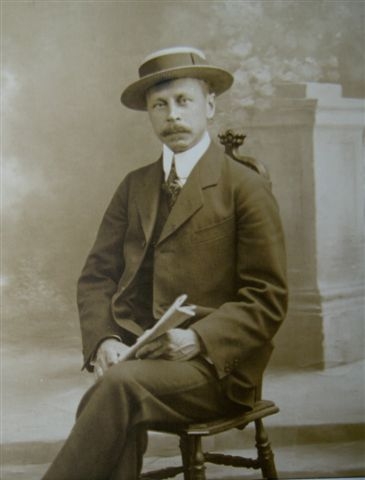
-It should be noted that newspapers and magazines in 1917 wrote a lot about per lustration, then in the early 1920s two articles of the young historian Kantor appeared. The historian of the pre -School published a very interesting correspondence of the Minister of Internal Affairs Osip Kozodavlev and the Moscow director of the posts of Dmitry Runich on this subject. Then this topic was practically closed. It arose only in separate works. The term "per lustration" itself was not even present in the Soviet historical and Soviet military encyclopedias. I think that this was connected, first of all, with the fact that the Bolsheviks gave this business a tremendous scope and generally tried so that the population would not remember perelustration. After all, you see, per lustration was the most closed institution. If the existence of the III department, if the existence of the police department, the existence of the Cheka, the OGPU, the NKVD, the KGB, etc. The population knew that the population should not even guess about per lustration. Because the population was supposed to trust the mail. The person had to be sure that the letter that he lowered into the mailbox would reach the addressee unchanged. Moreover, according to the official laws of both tsarist Russia and Soviet Russia, the autopsy of letters was punishable by criminal punishment. From here - this closure of the topic.
- How much have the scale of perelustration in the country increased with the coming to power of the Bolsheviks?
- To a great extent. If a million letters were over a year before the revolution, then 5 million letters and 8 million telegrams were already perlustrated in the hungry, poor, ruined Russia in 1924. And the numbers only grew. Unfortunately, the archives on this subject are still largely closed. There are memories of the former Censor of the MGB Avziger "I read your letters", emigrating to Israel. It is important to note that censorship is not perelustration. In a number of works there is confusion on this subject. The population knows about censorship that a stamp is put on the envelopes on the envelopes, etc. It is also not perelustration reading of the letters of prisoners. It is not perelustration and official reading of letters by court decision. This was both in tsarist Russia and in the Soviet. Perlustration is a secret reading of correspondence.
- Can you give examples of how perelustration was carried out in Soviet Russia? What public groups did it apply to?
- Foreign correspondence was subject to 100% perelustration. In the 1920s, per lustration intensified in some periods. For example, when collectivization began, the letters of the Red Army began to actively perlustrate because the peasants would be about the greatest part of them. In some periods, the focusing attention was paid to one or another regions of the country where the authorities experienced distrust of the local population. As it was in tsarist Russia, of course. This service held a hand on the pulse of the country. She had to inform the leadership about the real mood of the population, and at the same time, the leadership should extract some conclusions from this and strive to form the public mood at the desired angle.
- Do you think there is perelustration in Russia now?
- About what is very close
We better keep silent.
It happens to go in a squallice
On the pebbles other ...
Let's hope that it is limited. Today, per lustration in its old form has lost its technical significance. Listening to telephone conversations, reading computer correspondence, email, etc. The usual mail in this regard has lost its meaning. Any special service is necessary for the state. The state should know what is happening under the roof of sports societies, in cultural societies, etc. Another thing is that all this should be accountable to society, should be carried out in accordance with the law, because illegality leads to very serious consequences. Any structure seeks to go beyond its authority, and the lack of public control, media control leads to abuse. This is practically inevitable.