
Translated material
His English
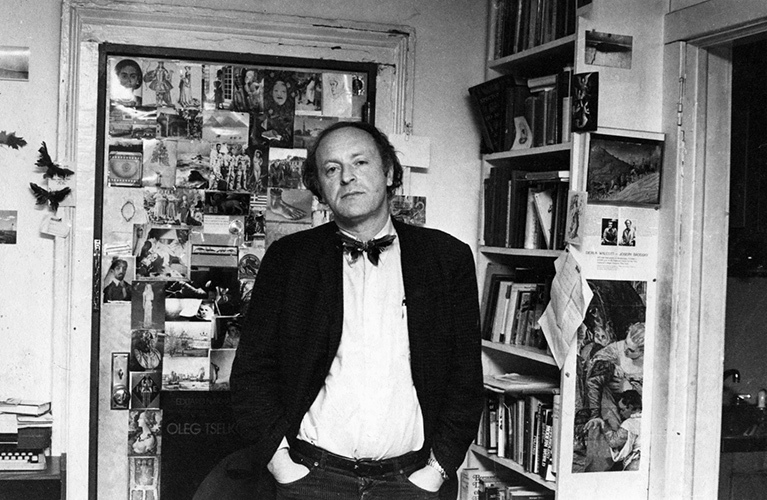
A series of publications dedicated to the 75th anniversary of Joseph Brodsky, Colta.ru begins to publish an article by the former literary secretary of the poet and one of the leaders of the Styropendes of the Memory of Joseph Brodsky Ann Shelberg. Shellberg's text is a replica in an acute polemic conversation, not the first year lasted in the world of English -speaking literature - about the quality of Brodsky’s English poems and the significance of his contribution to English -speaking poetry.
Poetry, generally occupying a not too large place in our reader life, deserves more than a conversation conducted from a defensive position, but the authors of several recently emerged books, in which Joseph Brodsky is considered in the global perspective, raised the question of how well he translated himself to English - and it seemed to me that this was a good reason to understand the issue. Brodsky was born in Leningrad in 1940 and ended up in the United States in 1972-in forced exile. By the time of death in 1996, he translated many of his poems into English-the language in which he wrote and taught nearly half of his life. Being made by the author himself, these texts are somewhere between conventional translations and original works. The question of whether their language is autonomous in a poetic sense or whether we are dealing with a distortion of form as a result of an incestive connection with the Russians, is discussed since Brodsky first spoke out loud in the language of his reception of his homeland - in a literary sense.
To make it easier for us to navigate in the future, here we should say a few words about Russian prosodies. The Russian language allows three unstressed syllables in one word - unlike English, for which the norm is the alternation of unstressed and shock syllables. This provides Russian unimaginable flexibility in the metric sense. While English -speaking poetry uses almost exclusively Yamba, Russian uses different meters on equal terms, using many combinations of shock and unstressed syllables besides iambic. Moreover, the Russian language has high inflectiveness, the word order in it is flexible, and rhymes are extremely numerous. As a result, we observe the heyday of complex musical schemes already in the early stages of the development of Russian poetic tradition. The instrumentation of formal means of expression in Russian poetry is very, very rich and constituted an integral part of poetic experience. This flexibility also made it possible to arise a rich tradition of formalized translation from other languages. Shakespeare's Pasternaki translations say that they are superior to the original, because - at least, partly - that Pasternak had such a variety of funds. Since many large writers (including Brodsky) were forced to elect classes in Soviet times as a quiet harbor, the translation canon became even richer - and this influenced Brodsky himself about the possibilities of formalized literary translation.
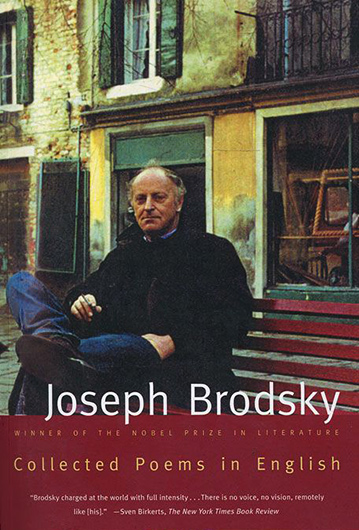 © Farrar, Straus and Giroux
Brodsky, formed outside the educational institutions and the Soviet poetic establishment, very early received the glory of a person among his colleagues, incredibly gifted in the sense of form. It was the rumor that distinguished him in the circle of numerous young ambitious poets, who was formed around his mentor Anna Akhmatova, - hearing, and not wit and not the ability to philosophize. Today you can often hear that he updated the Russian prosodia more than anyone, since its forms stabilized in the 19th century.
For Brodsky, the musical measurement of the poem was difficult and inextricably woven into its semantic core: each form had coloring and valer for him, figure and duration - like the keys for the composer or shades for the artist. He often talked about the grayness or monotony of certain sizes (for example, amphibrachia) as a cure for poetic self -love: such a playing of self -abasement against self -confidence is very important for its texts. The rhyme and solving poetic problems by means of metric are also very important for wit in his verses - undermining the poetic authority of power and giving the poem deep overtones. With the help of rhythm set through a poetic form, he created a counterpoint to logic and a plot basis of the poem. The forms themselves - their shading, pathos, their modulation of energy, their originally inherent proportionality - all this for him was an absolutely integral part of both poetry itself and poetic practice.
Moreover, in the text on the translation of the poems of Osip Mandelstam (“son of civilization”), he convincingly writes that for the poet his generation, the form had a large value than just musical: it was a lively connection with the values of civilization, the development of which poets took place in secret rooms and basements. The form was an echo whispering from the past, a method of dialogue with other poets who were inside the books or abroad - with those whose commitment to the values of pure aesthetics was ridiculed by the ruling Soviet orthodoxy. To bring to perfection the music of the poem meant to despise the Soviet commandment that art should be limited by purely utilitarian tasks; If the poem had a “meaning”, which succumbed to literally retelling, then it was the least valuable part of it.
This is what the same emigrants as he, poetic forms, was taken away from the homeland in literary luggage for Brodsky and the same emigrants.
In America, where Brodsky arrived in 1972, the rhyme-meter-meter verse, on the contrary, was in damage. Traditional forms were equal to the rejected authoritarianism as such, the all -pervasive influence of the Betniks was supplemented by continental surrealism, which formed the work of John Ashberry and Language School poets. A generation, the bright representatives of which are, for example, Robert Lowell and Sylvia Platt, moved towards a more personal, idiosinocrazic statement.
Brodsky quickly joined the struggle for the work of a poetic form, while defending his beloved poets and striving in his own poems - to most fully use his capabilities, which by that time he had already knew. Richard Wilber wrote a sad letter to the newly arrived, in which he thanked him for his support and complained about how difficult it was to write with a regular verse at such times. The knightly defense of Brodsky regular meters was perceived while the continuation of its predictably anti -communist views and the expression of unconventional conservatism.
Brodsky’s efforts to expand the metric tools of the English language, which then met significant resistance, today can definitely be considered as successful.
The above trend, if not replaced by another, then at least fragmented. Today we have a more diverse musical environment in poetry - for reasons, possibly close to the fact that they underlie the revival of figurative painting, tonal music and realistic prose. Brodsky's influence here is quite obvious. Brodsky, like U.Kh. Dress, turned to Thomas Hardy as a form -forming figure - and most modern poets recognize a strong line in our poetry, leading from Hardy and Denu for Philip Larkin, Sheimas Hini, Derek Walcott, Brodsky and Forest Murrey, and then further to Paul Malduna , clay Maxwell and, for example, Gertrude Schnakenberg . Many of those who do not write strictly by regular verse tend to turn to this tradition today more often than in 1972.
Nevertheless, the period of oblivion of the form greatly changed us. Few American readers can, not having difficulty, prostrate the poem. The idea of the existence of the binary opposition of the “regular” and “free” verse is still widespread - while the big and the best part of what we consider with a free verse has shades of regular sizes (the shadows of the five -stage iambic, the blocking of the sillabic lines of Moore and Bishop), and there is a difference between the poetry following the colloquial, conversational language, and poetry, and poetry, and poetry, - poetry, and poetry, and poetry, and poetry, and poetry, and poetry, and poetry, and poetry, and poetry, and poetry, and poetry, and poetry relating to the language as a found thing (Found Object) . In the same way, a regular verse is not just a product of poetic conservatism, adhering to familiar structures, but an evolving means of communication, a growing, developing and constantly providing us all new opportunities. RIPHM and sizes in the work of Maldun alone alone are enough to prove that a regular verse can be modern.
Brodsky’s efforts to expand the metric tools of the English language, which then met significant resistance, today can definitely be considered as successful. Nevertheless, critics continue to argue that the specific musicality of his English is too “foreign”. I suppose this assumption deserves a more attentive consideration.
The English language is perhaps one of the most flexible in the world, and it has been influenced from the outside since its occurrence. Our own sacred and inviolable poetic forms are borrowed from French and Italian. Many of our great poets worked to instill in English musicality, for example, classical antiquity. There is no reason for this process to stop today, or in order for our poetry to cease to be updated through external influences. The idea that it is enough to brand the poet’s intonations “foreign” in order to reject these intonations is seemed to be an groundless and unnecessarily narrowing circle of potential sources of growth of our verse.
But let's get back for example Brodsky. The artist, the master comes to us from another language. He accepts our culture and our poetry. He devotes most of his short life to serious attempts to rewrite his own texts so that they are read and understood by compatriots. (In contrast with Brodsky Nabokov, they are often compared-not just grew up in the English-speaking environment of the aristocratic house in St. Petersburg; he, having ceased to write in Russian, switched to English to become an English-speaking writer. Brodsky remained mainly a Russian poet, sometimes crossing the border of languages, but returning back, and thus accepted bilingualism.)
Should we reject this effort on the basis of the "unusual" of its results? Or, perhaps, on the contrary, we must assume that Brodsky has important news for us that can enrich our tradition, of course suffering from a lack of expressive means today? Would we not perceive the difficulties that we encounter when reading Brodsky’s English -speaking texts, as an indicator of how much our language and the range of perception have narrowed? Is it worth it to look for hidden cadents and inner harmony in what scares us? Is it worth asking yourself as obvious violations of conventions can create stronger or more flexible poetic means of communication?
I am talking here mainly about Brodsky’s innovations in part of the poetic form, since the argument directed against his English verses is often tied to argumentation against formalized translation in general. But readers should remember that Brodsky is a complex poet in any language. Working with him on translations, I more than once became a witness to how he remade the line proposed by the translator in such a way that she became not only musical, but also deeper in the intellectual sense: For him, in a pair, music - the meaning of one entailed another. In a recent review of Tablet , Adam Kirsch notes that some “non-poetic”, subscription translations of Brodsky’s poems, published in the reviewed book, sound “poetically” for him. But we do not think that “poetry” is a single category that can be turned on or off. There is a danger of giving preference to transfers that appeals to our ideas about “poetic” or justifying our expectations from poetry-not asking the question of whether they have any attitude to the results of the author’s intellectual efforts. So we, like Alice, discover ourselves in an increasingly narrowing literary corridor.
In the same connection, it makes sense to turn to a frequent argument, which consists in the fact that Brodsky’s English is “not idiomatic”. You should think about prejudices underlying this judgment. When, at what point, “idiomatic” became the decisive property of poetry? Our language has a long history of addressing conversational speech. From Chaser to Shakespeare and further, to the vodsvort and dress, our great poets reminded us of the colloquials. But in other traditions, another happened. Many poets have high and spoken languages involved in strategic conflict. Brodsky and Soviet critics themselves accused of mixing high and low. Other poets made language innovations, undermining the expectations or throwing an open challenge to them, creating new or idiosinocrazic rhetorics. We are with our habit that the conversational language and vernacular are in the very core of tradition, we may not want to hear beauty and recognize the value of innovation of this kind.
Brodsky often complained that critics of his English texts use the same arguments as the ill -wishers of Russian texts. The difference, perhaps, is that the challenge of literary orthodoxy was easier for him when it was Soviet literary orthodoxy.
The simplicity of digestion is a great value in our speed of speed reading. We are more often looking for reasons not to refer to what requires effort from us than the opposite. However, given that modern Americans grow people with undeveloped poetic hearing, as well as the fact that the number of studying Russian (as, however, other languages) melts day by day, we could think before the processing of the works of a recognized genius corresponding to local tastes. Brodsky’s English poems come to us, twice prevailing in his artistic personality. They are twisted twice - once, and then again - for us. We receive his difficult message after double distillation. We arrange a place that he created for himself inside one civilization, and then taken from there and transferred to another. This is a very difficult task. And we may well find the reasons for her not. A thoughtless translation gives us the opportunity to solve the problem by creating Brodsky easier. But this may not be the Brodsky we need.
Translated from English Stanislav Lviv