
Translated material
"We will say everything as it is"
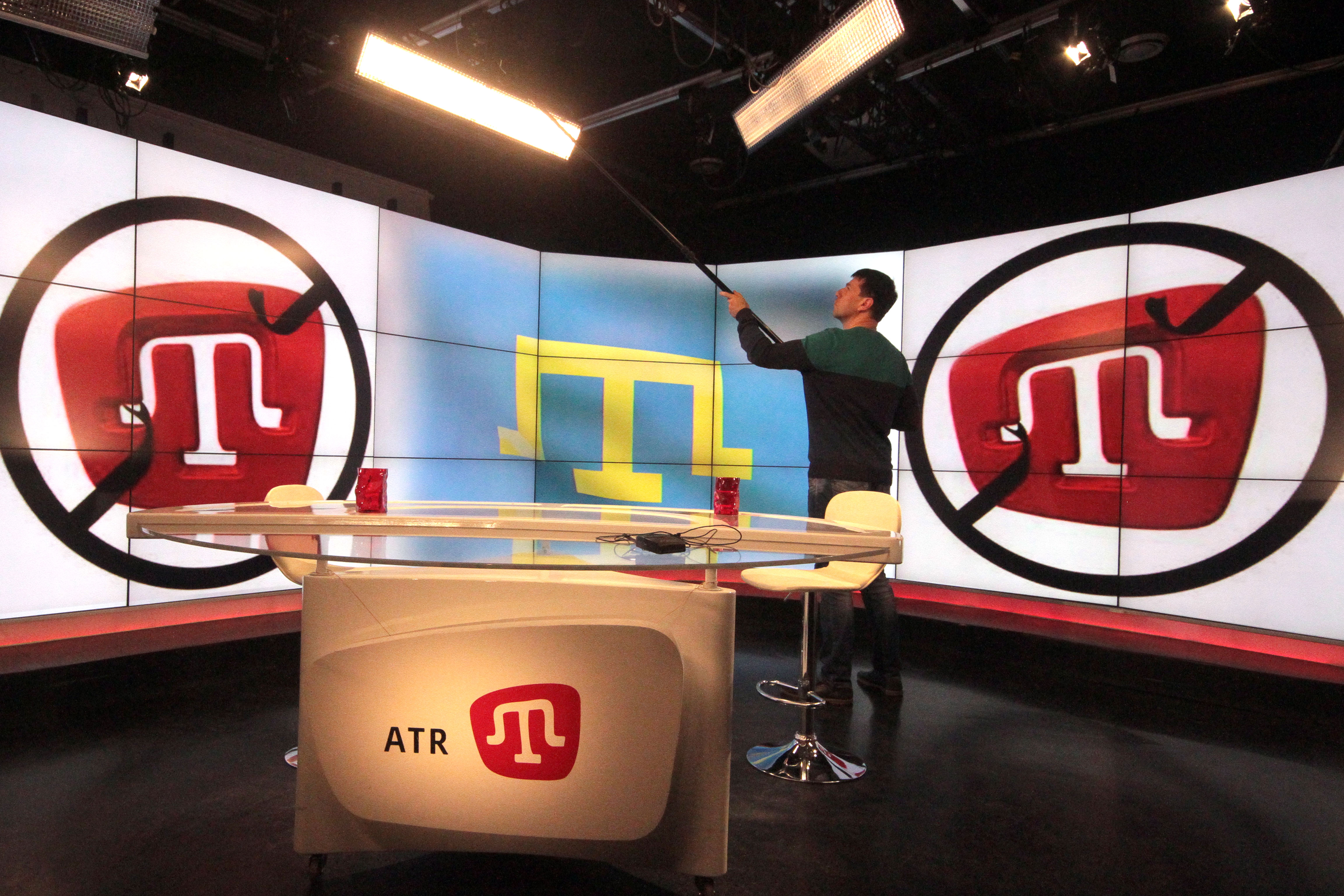
The Crimean Tatar television channel ATR continues to work, despite the opposition of the Russian authorities
The Crimean-Tatar television channel of ATR, disconnected on April 1 from the air broadcast due to the fact that it has not passed re-registration in accordance with the requirements of Russian legislation, continues to work on the Internet.
The Executive Director of the Televket Televket TV channel says: while there is an opportunity, the channel will work. On the table of Memetov there are 6 flags: the European Union, the Crimean Tatar, Ukrainian, as well as three flags of media holding organizations (ATR itself, the Meydan radio and the Lale children's television channel-now they are all formally closed).
- The channel officially does not work, but the broadcasting continues. What format do you work in?
- We do not have an etheric broadcasting, the Live option is disabled on the channel’s website, because under Russian law we have no right to produce an information product as a television company, that is, to make editorial materials and say that one plot was created by ATR. But at the same time, we have a civil right to disseminate information. By law, we can publish separate stories on the site, shot by private citizens. And the fact that these materials are very similar to ATR plots is just the spread of information, facts and events.
- How has your audience changed after you turned the etheric broadcasting?
- It is difficult to say for sure. In addition to Atr, Lale and Radio Meydan, our media holding includes the information site "15 minutes". He received registration as the Russian media and acts officially. Thanks to this resource, we have the opportunity to show event things, and there our audience reaches 20-25 thousand visitors per day. It will be fair to assume that about the same audience is following the news that appear on the website of the ATR channel. Most of all I am worried about the fact that the work of the Lale children's television channel was stopped in the current path situation. He had a large audience and an important mission-to spread the Crimean Tatar language.
- According to the statements of the Ukrainian authorities, including President Petro Poroshenko, Ukraine is ready to provide you with the opportunity to broadcast on the mainland under the Ukrainian license. Why do you disagree with this option?
- We want to stay in the Crimea, we never had a goal to broadcast throughout Ukraine or Russia, although this sounds tempting. In other words, we just do not have to go there. The number of Crimean Tatars living in Ukraine and Crimea is incomparably with their number in their homeland. We are here on our land, and certainly we are not going to leave anywhere, even given the current problems. True, if Ukraine wants to relay our programs, then there are almost no obstacles for this.
- How has the editors changed after the cessation of ATR broadcasting? Do you have any problems with journalists and editors due to the fact that the Crimean authorities began to create Crimean Tatar public television?
- Not a single employee of ATR quit, none of our employees went to work on public television. This applies not only to journalists, but also by operators, technical specialists, editors. We are pleased to realize that the team is developing even in such difficult conditions, because over the past month and a half we began to do projects that we had never done before.
- How do you plan to protect the TV channel, to defend the right to public broadcasting? The content of the channel costs a lot of money, and now you bring the investor to the investor.
- We went a difficult path. They sold the shares of the channel to make it truly folk and facilitate the financial burden of the main investor, the Russian businessman Lenur Islyamov. Now we are trying to coordinate this with Russian legislation. The channel has about 3,500 shareholders and a certain margin of safety. We hope that a fast arrival in the Crimea of the head of Roskomnadzor Alexander Zharov will help us defend broadcasting. We continue to write to the president, the Russian government, in the same Roskomnadzor and the Government of Crimea. Sooner or later, we will succeed.
We have people for whom ATR is a whole life. We raised everyone, made real professionals, there are no more people in Crimea
- And what do local officials tell you?
- "The Minister of Information and Communications of Crimea" Dmitry Polonsky accuses us of being delaying the registration process ourselves to look like a victim. This is that we have already passed four packages of documents. In addition to our lawyers, they were also prepared by Moscow professionals.
- Imagine that all your resources will be exhausted. Will you close as a TV channel, if so, under what conditions?
- We will do as much as we can, until the last day, while at least the slightest opportunity will remain. In truth, now it’s even difficult for me to imagine what should happen that our hands drop. We have not just a team of journalists. We have people for whom ATR is a whole life. We raised everyone, made real professionals, there are no more such people in Crimea. For example, operators were trained by Moscow specialists who specially came to us and made master classes.
-Are you not afraid of competition from the Crimean Tatar public television that the authorities support?
-I would say differently. It is not clear why to destroy what is and works so well and try to build a new house on these ruins. Among other things, few people need public television today. There are many television channels, so it is not clear, due to which another channel, loyal power, will conquer the audience.
We said and will say as it is, and not what they want to hear from us
- From the side it seems that the channel has no conflict with the Moscow authorities, but with local officials you are in constant confrontation. What is it connected with? Was the confrontation with the local authority the fact that ATR has not yet been able to receive registration?
-The local authorities at different times treated us differently. Apparently, they wanted to integrate us into their information system, which now includes all the main media of the Crimea: journalists say what the government says. And we said and will say as it is, and not what they want to hear from us. This fundamental difference caused a conflict. But after all, we made concessions. In Crimea, it became unacceptable to talk about annexation - we stopped using this word. We stopped interpreting the events of last spring in black colors. The leaders of the Mejlis Mustafa Dzhemilev and Refat Chubarov, because of their fundamental position, fell into the disgrace of local authorities-we also practically ceased to make stories about them in order to be able to work calmly.
- Mustafa Dzhemilev and Refat Chubarov were banned from entering the Crimea. How does the channel relate to them?
- No government has the right to prohibit a person to live where he wants. Mustafa Dzhemilev, like hundreds of our prisoners of conscience, went through prisons, camps, and special settlement. But this topic is too politicized.
- And what is the attitude of the channel to Ukraine?
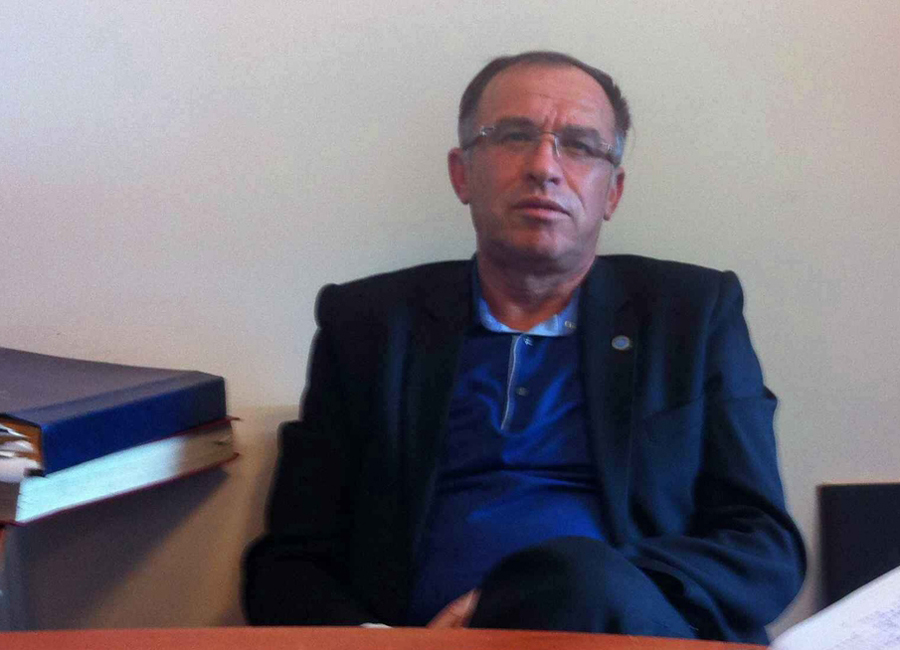
- Ukraine goes through a difficult path of democratic formation. When a real state appears, it is always very difficult, and Ukraine has recently been a continuation of the Soviet Union. Ukraine has a chance for decent development, in the power or next to it there are people with democratic immunity. True, a lot of time was wasted. And the problem of Crimea is a direct confirmation of this, ”said the Executive Director of the ATR television channel Shevkek Memetov in an interview with Radio Liberty.