
Translated material
From here to there
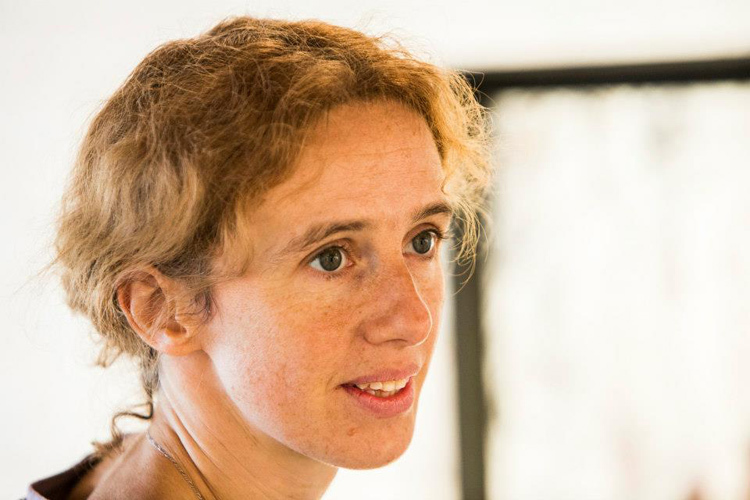
The publishing house of Ivan Limbach published the book of the artist and essayist Ekaterina Margolis “Traces of the water”. On the same days, in the Moscow “Gallery of the 21st Century”, her exhibition “Brodsky’s landscapes” opened. At the request of Colta.ru, Masha Slonim talked with the author about a long journey from Moscow to Venice and how the text correlates with reality.
Masha Slonim: Katya, your book is hard to call autobiographical, although you write about what happened to you. For example, you talk about how you found your Venetian house and there was a walled gate in the kindergarten, from which you did not have a key, and you write: you see, you will have to ask for permission to leave the wall from here to there. It seems that you now went out through the wall from here to go there and ended up in the vast world that you tried-and, in my opinion, with success-to put in the book. This is your life, but not just such a dull autobiography, but this, as you see, hear, reflect this life. And in general - tell me: what kind of book is this?
Ekaterina Margolis: It is also strange for me to call her autobiographical. I have an autobiography more associated with official papers, somewhat single-line: I studied and gotten away. I never had a special idea of writing a book. And at some point, the image of the book is unexpectedly-not ready, but simply what needs to be written-it appeared very clearly. And when such things appear, as it were, from nowhere and contrary to what you have outlined, whether it is a book, a graphic series or moving is exactly what needs to be done by postponing everything else. And it’s easier to do what to think about, to do or not to do it and why. It is not for nothing that the idea is called that. He is behind the thought. Earlier than her. Before. He precedes. And this differs from a project that is etymologically thrown into the future, but semantically very rational. In addition, this is from an excess: it was simply very lucky to find an incredible number of amazing people, events, plexuses from early childhood, to hear some iridescent melodies and rollbacks, as in the orchestra: in different parts of life, in different parts of the Earth. And this music, when you start to hear it, is insanely beautiful, I want to broadcast it, pass it from hand to hand, capture. So that you have met that you see and hear you could see and hear someone else. And, of course, this is on the material of our own life, which, as you know, we have only one and only our own, and it requires understanding. But the book is a much greater extent transcription - what happened to be a witness, let's say. Traces that disappear on the water and remain in us.
Slonim: The title “Traces on the water” exactly determines what the book is about. Because we know that traces on the water spread and disappear, and you have these traces in the form of wonderful words, in the form of photographs, pictures and installations, which, by the way, are also washed off on the beach, but they remained.
Margolis: The name is the gospel call for walking through the waters, and the image of Venice, and the reference to afterlife, and hidden quote. Sometimes there are periods of life when you do not want visible traces from your work. When the whole point is not in “why?”, But in the unrequited “why?”. And this is the scripture of words - step by step, the letter behind the letter - the opposite and at the same time is very similar to my mosaics from pebbles and shells in the sand, which you dug out of sand and simply shift in a different order and which after a couple of hours is washed away. By the way, initially the book was to be called differently. Its working name "see Higher ”: above in the text, in horizontal time - into the past and higher - as an imperative, the inevitability of a look and access to a vertical dimension. But suddenly it turned out that a few months before the publication, a collection of poems by Timur Kibirov with the same name was published. Random coincidence. I had to change horses at the crossing. And the new name was even more precise in some ways.
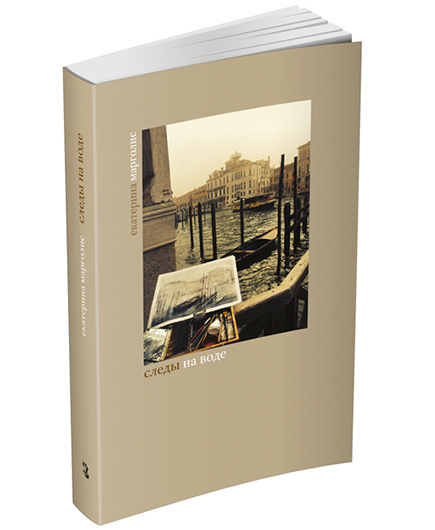 © Publishing House of Ivan Lumbach
Slonim: Yes, this is still a polyphony, because you have a word, a drawing, a photograph, and almost poetic texts. But the outputs are outside what? You dedicated, for example, an exhibition for the anniversary of Brodsky: this time “Brodsky’s landscapes” in Moscow, and last time for the dates in the Akhmatova Museum in a fountain house, in the garden of which we are now writing this interview. And although in the book you write about different periods of your life, but, of course, there is a lot of Venice there. And many intersections with Brodsky. I have the impression that you have one common Venice with him. How do Brodsky and Venice sound in the book?
Margolis: Even in the name there is a hidden-and not even very hidden-reference to Brodsky, because, as you know, his essay, which is called “Inexhaustible embankment” in the English original (the essay was written in English, then immediately transferred to Italian, as it was custom-made work for Consorzio Venezia Nuova , and then it was already added and then additional Translated into Russian Grigory Dashevsky) is called “Watermark” - i.e. "watermark". But if this word is divided literally, then in general, just a trace of the water, the trace of the water will turn out. Often you have to hear that Brodsky wanted to be buried in Venice, because "Venice is nowhere." And this is close to the traces of the water. Although for me, rather, Venice is just everywhere. Which, however, in a sense, the same thing. “The unrealizable is the thing, the more correctly that it once existed, and the more it is everywhere.” Venice, of course, is not a place, and the chronotope is something completely real, where the present, history and eternal dimension without time are present at the same time, without interfering with each other. And this is what struck me on the first visit. I was not going to Venice at all. I got there absolutely by accident. I was 19 years old. Moreover, I resisted for a long time and did not want to go there, believing it with a common place - both on a map of a geographical and a cultural map. It was more interesting for me to go to Pompeii and see the frescoes of the villa dei Mrili, go down to Roman catacombs and go to the Appievo Road, go to Paday to see Giotto. And Venice was two steps. I stopped with my parents' friends, in the family of my father’s colleagues in Padua, and they all persuaded and finally persuaded me to go to Venice. And when I left the steps of the Santa-Lucia station (and I must say that I had not read Brodsky’s essay), then about the same thing happened to me as with Joseph Alexandrovich. The smell of frozen algae, a synonym for happiness hit him in his nostrils, and the smells, as we recently spoke with you, are the most powerful and high -speed transport, the time of time, smells transfer us to where we came from, completely instantly, to any thought and even feelings. So I had a similar sensation, but not from the smell, but from the light, from the illumination of water, from some kind of opposition to everything; The perfect feeling that I was in Peredelkino of my childhood, on the Pasternakovsky cottage, where I grew up, on this field, which is "a field in the snow and a graveyard." And not literally, of course, but just this feeling of childhood returned, I found out everything. At the age of 19, like many, I had a lot of dramatic events in life, I was quite unhappy, it seemed that the best was left behind, and it was such a discovery that life was possible - and completely different, but continuing, continuous, no less complete, no less real. Such an adult childhood. Here we were talking about the door. Venice itself became such a door. Here you can talk for a long time about the symbolism of the doors and the gate, about the metaphors of the garden, childhood and paradise. But I will not.
Slonim: And you did not ask for permission from anyone. You somehow took this key and went through the wall.
Margolis: Well, I have the feeling that they gave him more likely to me. They even gave many times. I lost - they gave me. And the book is about it too. There is almost no deadline, that even when the street rests against the wall, there is a door somewhere, and there is a key from it. Life is such a huge diverse ligament with many keys from paradise. They may seem to be a completely different shape, from another castle, but to lead there. There, where you were not going to find yourself, where you will find out everything and where you are returning with all the experience of wanderings, with all that you acquired and lost in the process of these wanderings. As a picturesque plot, this can be represented by a kind of hybrid: exile from paradise on the contrary and the return of the prodigal son. And if literary, then Odyssey Penelop, probably.
Slonim: Why did you still want to write a book in words? You, of course, drew in Venice, since it is impossible not to draw there. You wrote some kind of philological work there. But the book is because you ended up in this field of almost paradise freedom and now the time has come - I will not say to “take stock”, rather - to share?
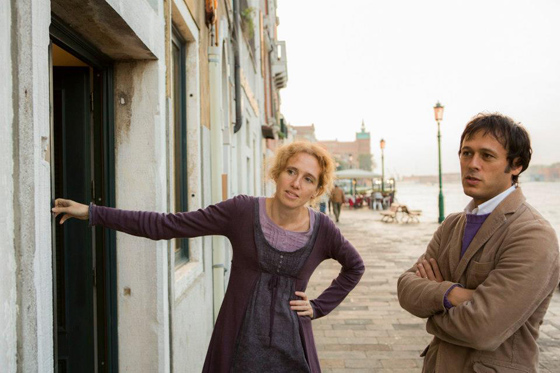 © Katia Margolis
Margolis: Dante was 35 years old, yes, when he said about the middle of the earth's path? But, of course, this is not about the ages and terms of life, which from this middle need to be mechanically doubled. It can happen more or less. But the middle is about the vector. As if you went up to the pass, and let the other passes, slopes, peaks be much higher, but on this pass you have the need to look around and see at once everything that you went: all the pebbles, thorns, dust on the sidelines, shrubs, some villages, random trains, bends of the river and paths-everything is seen with this point. a single landscape. And then you can shift to the other side of the ridge, go down and take away the memory in yourself, but from there, from that point, all this panorama will no longer be visible. This is such a stop frame at once, bewitching the landscape, beautiful, despite all the thorns, stones and knocked down legs: generally walking in the mountains is a rather tiring business. And, on the one hand, you already want to go to the other side and move on, and on the other, beauty calls to stop, stop, leave. A similar story with a transformation on Mount Taborskaya. And so - an ordinary dilemma, the choice between “be” and “have”. But the choice between visual and verbal is no less painful. And when what. And in what proportion. Probably, this visual chapter was born in the book (and I insist that what is usually called “colored gluing” is not a kind of decorative or illustrative element, but enters the body of a book completely on equal rights with the text) and this chapter, where photographs are transferred to typography. And it is impossible to say by what principle you can choose. They, of course, are not interchangeable. It’s like if you play a batch of cello on the organ - it is possible, but most likely it will turn out to be awkward.
Slonim: To some artists are quite simply visual.
Margolis: They were lucky. And they are, of course, the best artists. When I was just thinking about what to do, in early youth I chose linguistics (and the element of the language even in its scientific refraction seemed completely inexhaustible), it did not interfere with training in an art school, although then it seemed to me that every fool could draw, but to learn the science of the language is a serious matter. And in the sense of education, I still think that I was right, and I do not regret that it was in this order. And then you again understand that it is still impossible to choose. Just for happiness and completeness, both are necessary. And the ratio can change even within one day. I want something about something, but I don’t want to do something at all.
Slonim: You didn't have time to see Brodsky in Venice? There were no intersections?
Margolis: In time we coincided there. And in space - only to a certain measure. And moreover, one of the main characters of my book, a native of the Venetian, says: “Oh yes, Brodsky, we know such a poet. He comes here in winter. Often we meet him on the streets. ” Venice is generally a city of meetings. So her topography is arranged. Channels, waterways, bridges - both metaphor, and the immediate most likely place of random meeting. Especially the bridges over the large channel, which are few.
Slonim: At the same time, he somehow all the time sounds in your Venetian life. Moreover, it is reality, not a reflection.
Margolis: On these anniversary days, a lot about this is said. That Brodsky is a huge world that goes beyond both his own biography and beyond his own texts; Someone says “comet”, someone is “planet”, but if you return to the image of traces on the water, it seems to me that in the space of Venice it was not such a huge ship. Here's the point. He is not one of these monsters, giant liners who enter the city through the lagoon, many times higher than its scale, overlapping small houses (by the way, these steamers are the subject of very fierce political discussions and violent protests in Venice). Russian travelers always ask in Venice: here, they say, the city of Brodsky - and where he was, where he stopped, where he lived, where he went, where he was eating? As for the attitude of the Venetians to Brodsky, then he is one of. Yes, there was such a wonderful poet. We love and appreciate very much. He came, wrote about her. Among many artists - from Dante to Byron, from Canate to Turner. Venice is generally royal consciousness. And it goes without saying that they come to her, and they write about her, that she conquers, captures (in every sense - hence the whole history of the Venetian Republic), therefore, while Brodsky was there, he remained one of. A person who has connected his life (and in the case of Brodsky - even more death) with this city. Venice is traditionally the intersection point, the meeting of the West and the East. Therefore, during his lifetime, Brodsky was not such a noticeable figure. Moreover, he came here, he did not live.
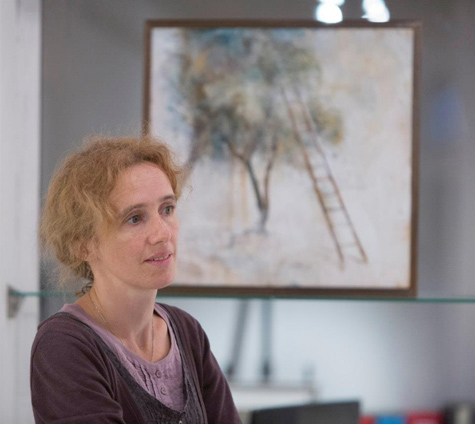 © Katia Margolis
Slonim: and left his mark on the water.
Margolis: And the traces of the water are still remarkable? That you do not need to be a huge ship. Any shuttle, any boat, any small barcass leaves the stern at first a narrow trace, and then this water path alls down, expands until the waves hit the shore. How they break, how thousands of reflected glare play on the water, how the sun is crushed in them and how a big voice sounds in echoes and echos. And this picture with diverging traces on the water - when the boat has already passed - we often see when we think about departed people. With Brodsky, perhaps, in a different way: the scale of the diverging waves was noticeable during life, in Russian and global culture. And about many, this is noticeable only when the ship has passed, it is no longer visible. When Haron moved over the horizon, and the waves all diverge.
Slonim: And even any abandoned pebble ...
Margolis: ... and even pebbles, but from him circles on the water. And if a boat passes, then the path diverging behind its stern is like a reverse prospect. He does not narrow, but diverges, expands. And this reverse perspective generally includes everything and changes its view of life radically. If in the direct perspective the gathering point is a certain imaginary point on the horizon, then in poetry and in art in general, and in life in its metaphysical dimension, everything only expands. The gathering point is you yourself, looking, passing all lines through yourself. And when you look at the icon or at the early Dozhottov painting, pre -inspective images, the gathering point is you, and from you and towards you the world is revealed where you are offered to enter. And the further you go, the wider this world. And therefore, any human life, any biography is a story with a reverse prospect, and I want to write it as an icon, and not as an obituary with a gathering point at the end.
Slonim: So this is “a landscape that can do without me” or not?
Margolis: The question is just that. In the case of Brodsky in Venice, its absence in the landscape and therefore inseparability from it is especially interesting. Brodsky is generally a singer of absence. “Now I'm not there. // The indicated disappearance is marked, maybe only vases in the Hermitage. // Lack of my large hole in the landscape // did not make; trifle; The hole, but small ... "
Or “Draw an empty circle on paper. This will be me: nothing inside. Look at him and then sod. ”
Well, software: “What, in essence, is a self -portrait. // Step towards your own body, // Turned to you in the profile of a stool, // View from a distance that flew by. // This is called “skill”: // The ability to not be afraid of the procedures // Non -existence - as a form of its own // absence, writing it off from nature ” ("At the exhibition of Karl Weilinka").
This is to the question of visual and autobiography. A very capacious and universal answer, by the way. The absence of Brodsky in Venice in something is much more clearly than his presence. It is consonant with him, his poetry and poetics. It is like a negative, Negative Space , the reverse space where the memory occupies all the scope between material forms. Therefore, by the way, I think that all monuments and boards of Brodsky are unsuccessful and illustrations too - all artists suffer here fiasco. These are also traces on the water, and attempts to freeze salted sea water and preserve these traces in specific forms, in marble and bronze are doomed to failure. “Laguna splashes, a hundred // small glare dull pupil of the execution // For the desire to remember the landscape capable // to do without me.”
Slonim: And without you, by the way?
Margolis: Of course, she would have cost calmly. But I'm just an ordinary resident. For me, Venice has long ceased to be a landscape. But she just did not interior. This is a fabric of life, its beating, this is a house and grapes in the corner of the garden, these are my children, these are voices and faces, it is a speech, it is paper and spreading paint, these are letters, these are tides and flows, it is high water that enters the house of an uninvited guest. Без всего этого уже нет какой-то отдельной метафизической Венеции, есть свет повседневности, говоря словами Пастернака. А для нее — это ее надо спросить.
Слоним: У тебя в книге действительно много повседневного, но как бы совсем нет злободневности, нет политики. This is on the one hand. А с другой — в жизнь она просачивается, и невозможно без этого обойтись. У тебя есть и про Pussy Riot , у тебя есть и про итальянские актуальные вещи, и про политическую историю.
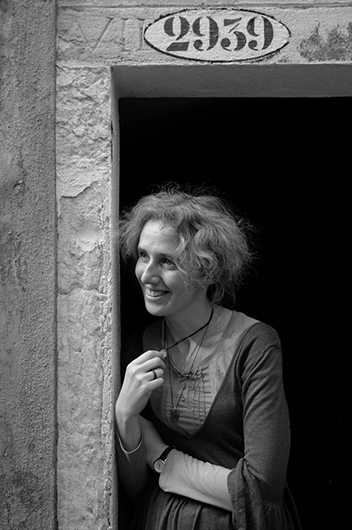 © Katia Margolis
Марголис: Я вообще не верю в такие отсеки. В то, что жизнь устроена как подводная лодка, где для того, чтобы попасть в соседнее помещение, нужно сначала глухо закрутить вентиль в предыдущее. Выйти и забыть. Не думаю, что политика — это какая-то отделимая составляющая, что-то, в чем можно участвовать или не участвовать. Особенно для людей, говорящих по-русски, — и не важно, где они живут. Да и в европейском мире вопросы так называемые политические, как нити, прошивают жизнь каждого отдельного человека. В конце концов, многое сводится к вопросам сочувствия, чести, великодушия. Многих категорий, для которых даже слова подзабыты.
Слоним: Да, «великодушие» — точно подзабытое слово.
Марголис: Вот мы сегодня обсуждали с тобой то, что сказала Чулпан про Путина, фонд и больных детей, и моральную дилемму, с этим связанную. Но гораздо более поразительное и пугающее явление — не кто что сказал и зачем, а реакция на это. И каким образом ведется эта дискуссия. Это политика или нет? Да, это, конечно, политика. И особенно тяжело, когда единомышленники, близкие люди становятся твоими оппонентами. Я еще застала этот кусок черно-белого мира, когда были «мы» и «они». Они — это власть. А мы — это те, кто сидит на кухне.
Слоним: Как это было прекрасно и просто, да!
Марголис: Именно. И нас растили в этом мире и кроили формы существования для этого мира. Потом все открылось. Потом все перевернулось. И наша сегодняшняя ситуация, в том числе политическая, призывает каждого человека немножко порыться в словаре и вспомнить забытые слова с пометкой «устар». То же слово «великодушие».
Слоним: Ты же тоже занимаешься благотворительностью, больными детьми, даже живя в такой прекрасной Венеции. Тебя же это тоже касается как-то.
Марголис: Люди болеют, умирают, уходят, страдают всюду.
Слоним: Страдают — да. А сострадают не все и не всюду.
Марголис: Мне кажется, что это просто вопрос воображения, в конце концов. Настолько легко представить себя, своего ребенка, свою маму, своего друга на этом месте. Потому что тут нет никаких закономерностей. Меня невероятно злит, когда начинаются разговоры о высших карах, возмездиях, испытаниях. Я считаю такие разговоры глубоко безнравственными. Примо Леви в какой-то из книжек говорит, что он сидит на нарах в бараке и там идет отбор, селекция тех, кто сегодня отправится в газовую камеру. И забирают соседа, молодого мальчика. А рядом сидит правоверный еврей, который, как только все заканчивается, всех отбирают и уводят и дверь закрывается, начинает возносить горячие благодарственные молитвы, что Господь его пощадил. Примо Леви говорит, что если это такой Господь — то мне такой не нужен. Потому что никакой справедливости в том, что только что был послан на смерть молодой прекрасный юноша или, наоборот, дряхлый старик (какая, в сущности, разница — это ж не вопрос арифметики), нет и быть не может. И то, что ты оказался не там, а здесь, — это чистая игра слепого случая. Есть сообщество, солидарность, сочувствие. Это такой кристалл, который имеет совершенную, очень красивую форму и при этом еще самую устойчивую. Только человеческие отношения, поддержка друг друга и прямые связи могут противостоять этой стихии слепого случая, который приводит к страданиям — будь то политическая злая воля или эпидемия болезни — мне кажется, что эти явления имеют одну природу: темного, произвольного хаоса. И только кристалл, связи, формы могут ему противостоять. И в этом смысле искусство, любовь, дружба, солидарность, благотворительность — называй как хочешь — это тоже, конечно, явления одной природы.
Слоним: Ты про это пишешь, когда рассказываешь поучительную историю о том, как в конце концов расформировали психиатрические больницы в Италии?
Марголис: Да, в том числе. Эти события, о которых мы говорим, происходили в Италии в 70-х годах. В 78-м году был принят так называемый закон Базальи, который отменял и запрещал закрытые психиатрические заведения в принципе. Как мы знаем, любое закрытое сообщество, будь то тюрьма, интернат или больница, неизбежно ведет к стратификации, к возвышению одних и унижению других, к усилению власти какой-то малой группы, злоупотреблению этой властью и насилию. И чем более закрытое это сообщество, тем более острые и чудовищные формы это принимает. Такова природа стаи, животная часть человеческой природы. И когда был принят этот закон в Италии, то, разумеется, были опасения, что это рискованно для общества...
Слоним: Ну да, что психи выйдут на свободу и будут создавать угрозу безопасности здоровой части населения. В Англии было то же самое.
Марголис: Да, охи и ахи, как это опасно. А оказалось, что ничего подобного. Спертый воздух несвободы, который существовал даже в таких малюсеньких островках (потому что что такое психбольницы, какую пропорцию занимают их пациенты в обществе — ничтожную, да?), эти закрытые учреждения — как какая-то раковая клетка с мутацией, которая начинает неконтролируемо размножаться, или очаг любой болезни — пока он есть, он отравляет весь организм. И когда закрытые заведения были запрещены и распущены, а люди стали лечиться в стационарах, были созданы открытые структуры поддержки, оказалось, что это радикально переменило не только участь больных и их семей, а все общество в целом. Подул другой ветер — ветер свободы. И многое стало меняться. Это один из нагляднейших примеров того, что нет отдельных закрытых зон, где можно (из соображений безопасности, целесообразности или еще по каким-то очень убедительным причинам) то, чего вообще-то нельзя. И насколько это благотворно, как оздоровляется жизнь, когда воздух свободы питает весь организм, когда нет этих закрытых особых учреждений, заборов, колючей проволоки, вахт, КПП и всего того, чем испещрена наша родина.
Слоним: И можно без разрешения пройти через стену...
Марголис: Да, из отсюда в туда. Независимо от того, как понимать это «туда». Понимать ли это как выход за границы географические, политические или конвенциональные. Догмы, теории и установки. О чем можно говорить, а о чем нет. Или как связь мира видимого и невидимого. Ушедших и живущих сейчас. Мне кажется, что попытка выйти из очерченного периметра и найти калитку — одна из важных задач, стоящих перед человеком и художником в каждом возрасте. В каждом возрасте, в каждых обстоятельствах эта калитка другая, и не бывает так, что ты нашел ее, подобрал ключ — и теперь спокойно ходишь туда-сюда и можешь на этом успокоиться.
Слоним: Так что будет еще одна книга?
Марголис: Может быть. Эта одежда всегда на вырост. Следы на воде расходятся, словарь расширяется, появляются новые слова, возвращаются устаревшие и забытые, ну а угол объектива неизбежно становится шире. И человек старается соответствовать. Чтобы вместить. Что остается делать? Дорастать до обратной перспективы.