
Translated material
Arbat was silent
The police make it clear to Arbat musicians that if they continue to play without permission, they will be detained. The musicians' community decided to leave Arbat.
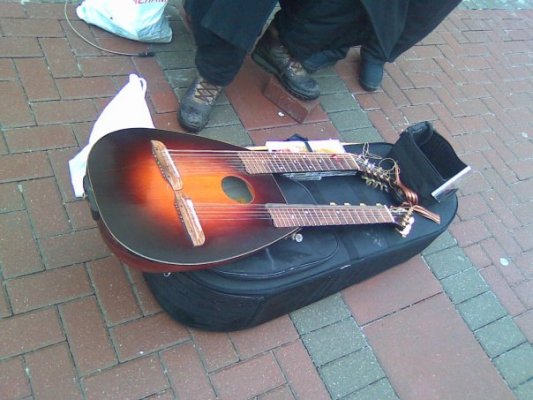
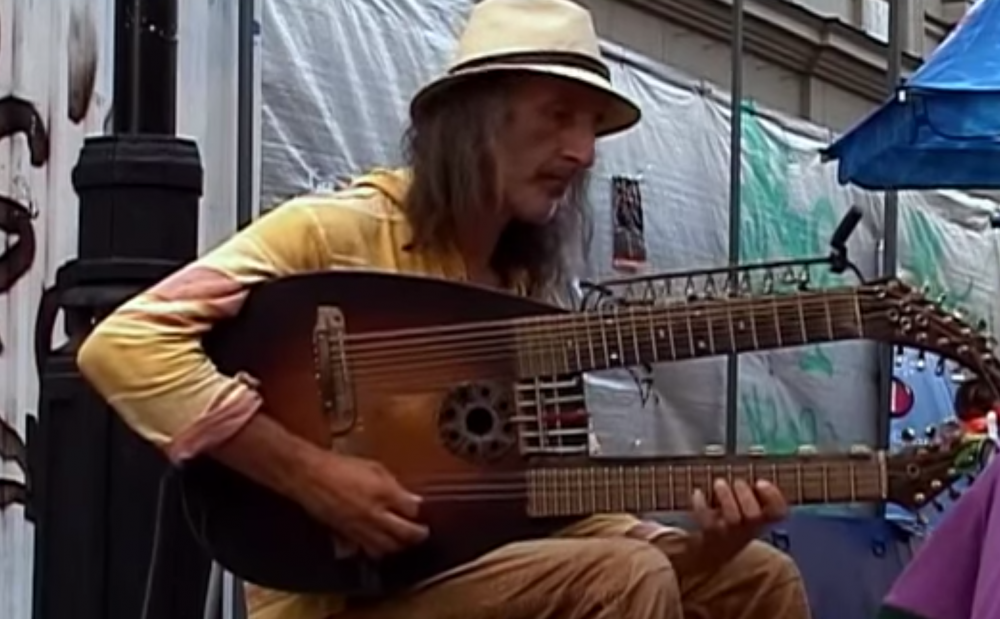
On May 25, Sergey Sadov was detained on Arbat, the chairman of the Moscow Public Organization of Street Culture Workers (the organization also appears under the name “Arbat Stars”), a musician playing a unique string instrument of his own invention called Sador. A protocol was drawn up on it under Article 20.2.2 of the Code of Administrative Offenses (“Organization of mass simultaneous stay and (or) the movement of citizens in public places that entailed a violation of public order”). The police were blamed for him that he organized "the simultaneous stay of citizens in a public place in the amount of about 10 people, while playing the guitar, thereby creating interference with pedestrians and access to social infrastructure objects (shops)." Sadov insists that he did not even play at the time of the detention, but simply talked with friends. A unique instrument and sound equipment - a column - remained in the police department (the police explain that these are material evidence of the offense, which are seized before the court decision). The musician emphasizes that no documents like a receipt for accepting for responsible storage were compiled.
The musician told the ATS-Info that when he went out that day to play, he was "already waiting." “Seven police officers of the new unit-tourist police (established in July 2014 to ensure the security of guests of the capital and assistance to tourists-ATS-Info). They came up and say: “And we do not see violations.” Then Lieutenant Colonel Kotsur (deputy chief of the Arbat ATS-OTD-info), who organizes all this on the Arbat, presses the musicians, they called him. He called the car, said: “Take it!” They say: “Well, what can we do? We must take it,” and they took it away. ” Sadov explained that the reason for the detention was the statement of local residents. According to the musician, this cannot be considered a legal basis, if only because it is located in the place of Arbat, where there are no residential premises, opposite the Vakhtangov Theater.
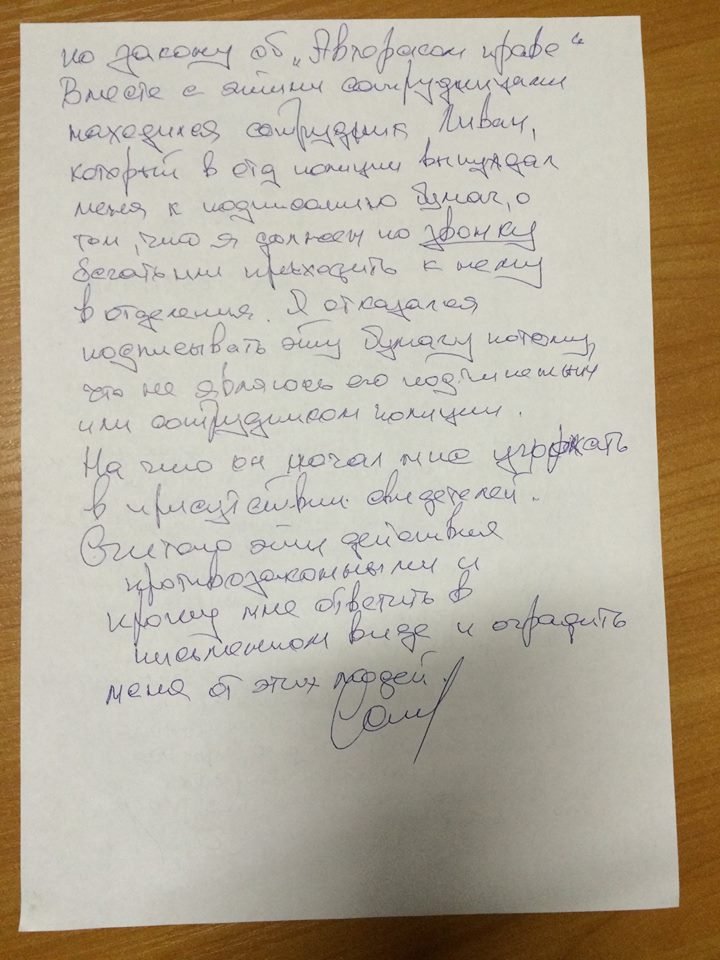
“They mocked me in the department. It was necessary to climb the sixth floor, and I had heavy equipment. I say to the police: “Help, you are younger.” And they: “We will call you an ambulance if you feel bad!” And I dragged everything upstairs, down - Gestapo, ”says Sadov. According to him, he was demanded to sign the paper that he would have to come to the police department on the first call. The musician refused, saying that he could appear only if he received a summons.
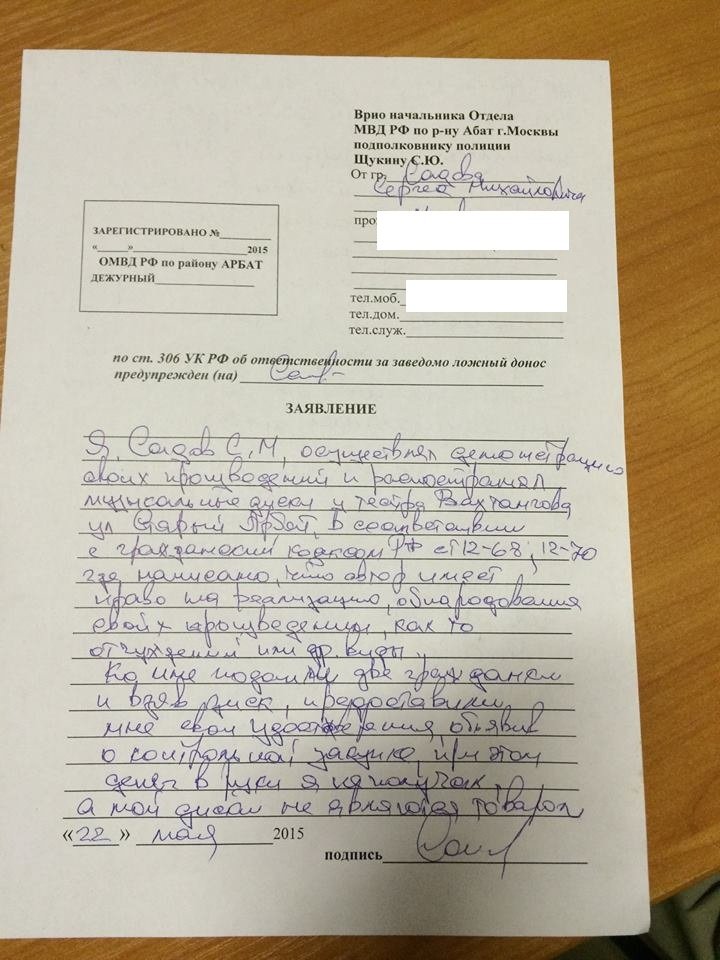
A few days earlier, gardens were also detained and delivered to the Arbat police department. This happened as a result of the so -called control purchase: according to the musician, the police sent “two schoolgirls” to him so that they bought discs from his music, which he, according to the police officers, illegally sells. “They took the wheels, but they forgot to give money! - Sadov tells. - And at that time I only landed, and I had no money. It turns out that they detained me, brought me to the department, took the discs from me, they say: get the money. I say: “So I don’t have money!” They sat down. It turned out that they took a person, took everything away from him, and there is nothing to present. Then they released me, did nothing. And at the same time, the discs were not returned, no one is going to return them, they pulled them out for souvenirs. ”
 The story with Sergey Sadov is only one episode of many years of struggle, which Arbat ATS and several local residents conduct street musicians - both amateurs and professionals, including teachers of music schools and schools, laureates of international competitions. According to the musician Timur Tsurkawa, who, like Sadov, plays unique instruments (Vitara and Satur), the secretary of the organization led by garden organization, the pressure on the musicians was exerted in different years, but with renewed vigor it was activated in 2011.
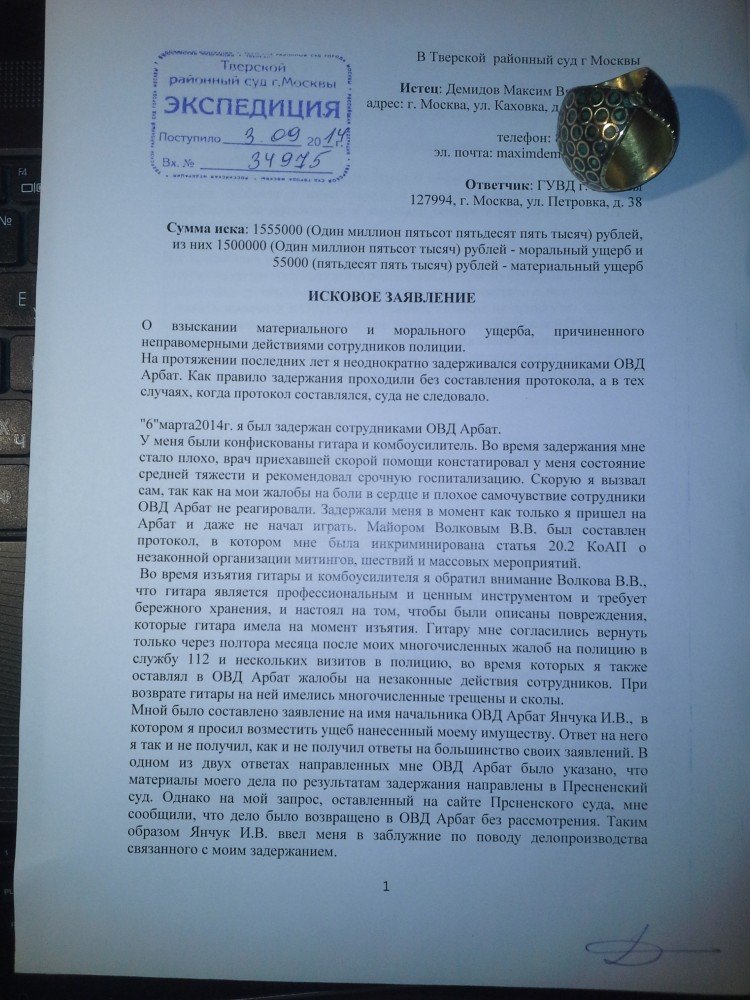
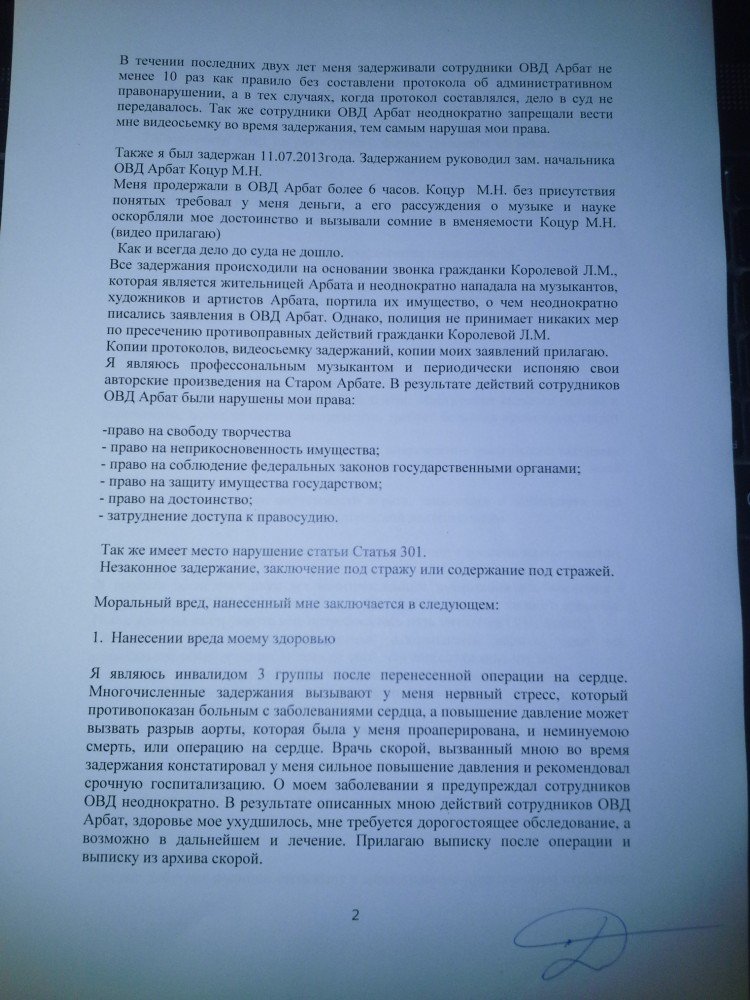
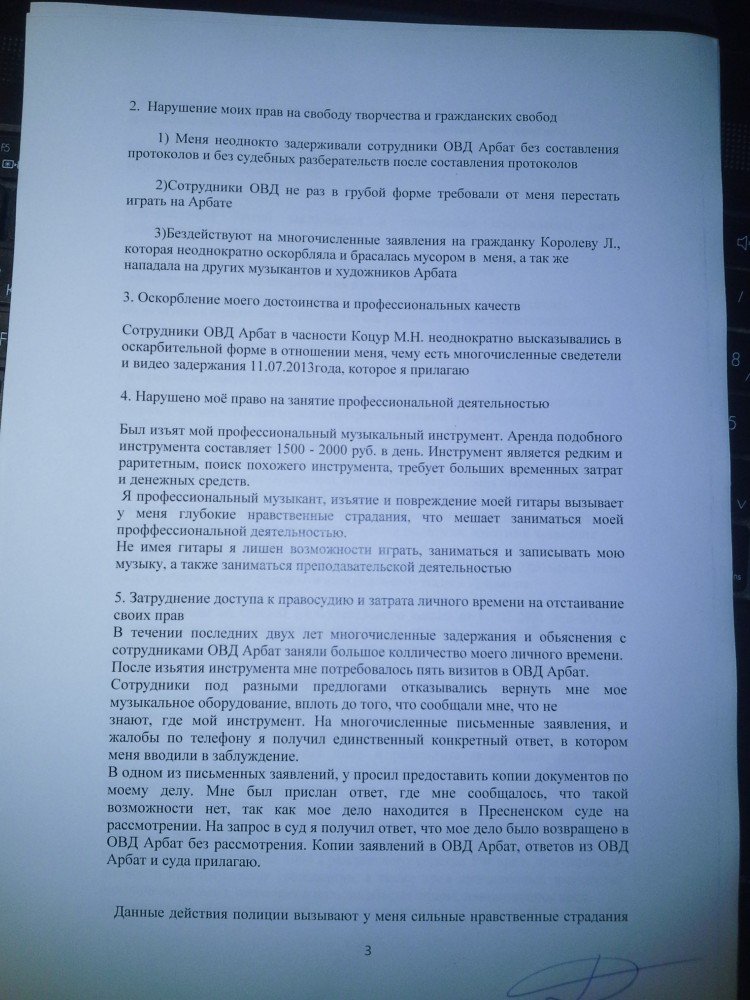
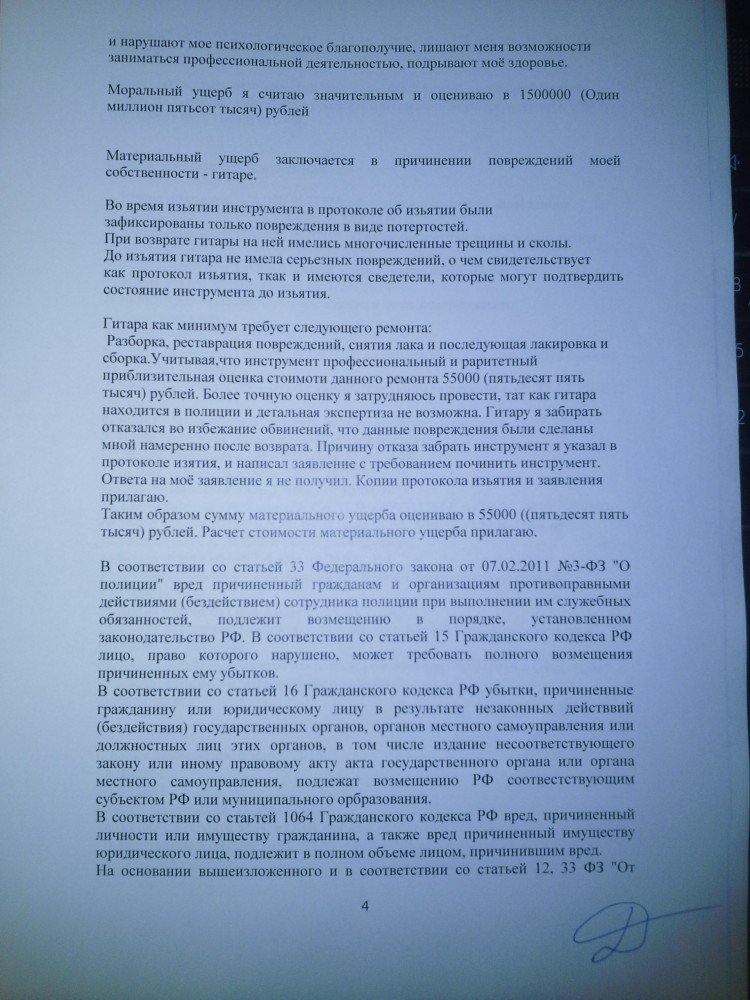
Currently, the Tver court is undergoing a trial in the suit of the guitarist Maxim Demidov. He requires the police compensation for material and moral damage in connection with the detention on March 6, 2014. A protocol was drawn up to it under Article 20.2 of the Code of Administrative Offenses, accusing the organization of an inconsistent public event. He also had a confiscated tool. In addition, Demidov, a disabled person of the 3rd group who had undergone heart surgery, had an attack in the police department, he was called an ambulance. The musician estimated moral damage at 150 thousand rubles, material at 55 thousand. Demidov wrote in a claim that the police returned the guitar to him only a month and a half, and then after numerous complaints, and he found numerous cracks and chips on the instrument. In the protocol on the seizure, it was only written that there are scuffs on the guitar. At the trial, according to him , it turned out that the ATS officer who compiled the protocol was “tired” and “didn’t pay attention to cracks and chips”, so he did not describe them in the document, but a few days later he saw the injuries unnoticed on the guitar and drew up a new protocol. “Now there are two protocols of seizure,” concludes Demidov (on the contrary, in one of the other administrative cases instituted on him, the protocols were supposedly accidentally destroyed with archival documents). Sergei Sadov was supposed to be a witness in his case, and Demidov does not exclude that his detention was connected with this. Demidov did not take the guitar from the police and for a year he has not played on Arbat.
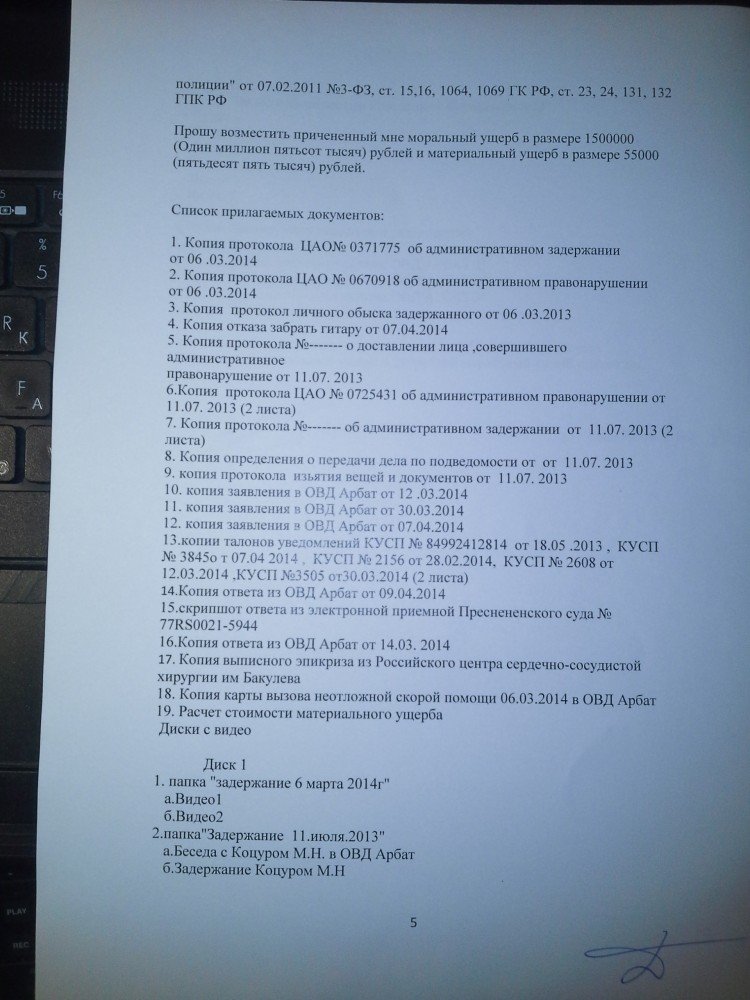
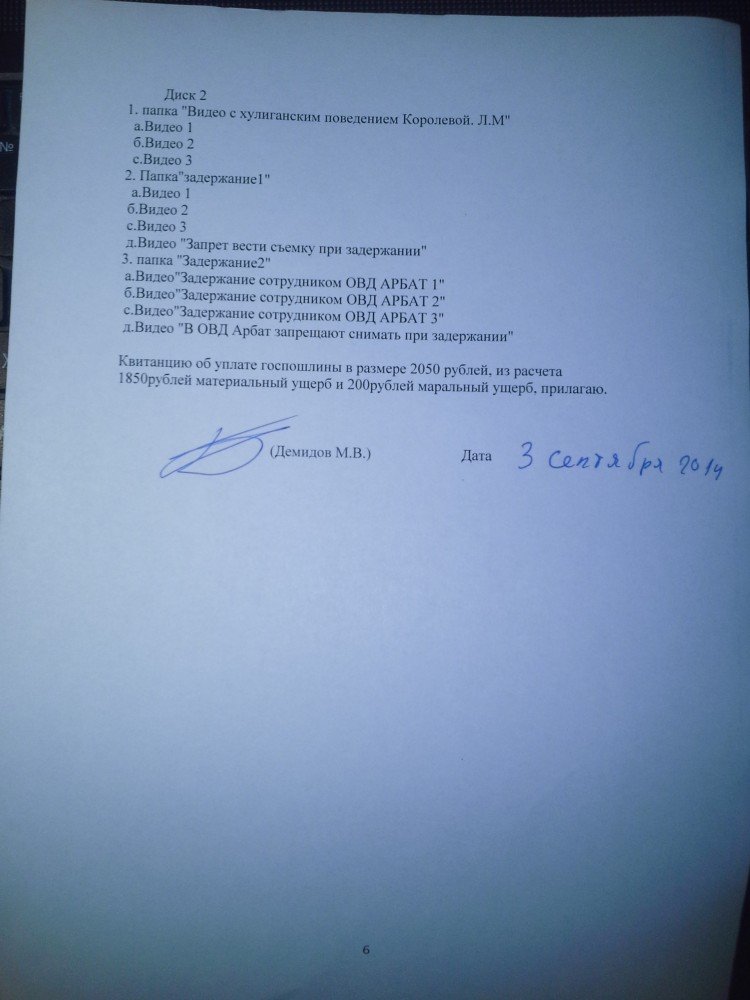 Demidov told the OVD-Info that in the spring of 2014, at the same time, he “took the instruments in Moscow from the musicians from eight, just many did not inflate the scandal, and as a result, their instruments for three months lay in the police department. Now all this is repeated. ”
Musicians explain that most often detention occur in the same scenario. The police, mainly the same local resident, Lyudmila Koroleva, director of the Arbat -Making souvenir store, appears to the police with a complaint about the musicians. The queen collected 60 signatures from residents opposing the musicians on Arbat. “They have 60 signatures, we have thousands: from the guests of Arbat and from the residents,” says Timur Tsurkawa. The musicians note that she behaves aggressively, attacks them, spoils the instruments. They themselves submit statements to her, but to no avail. In an interview with the OVD-Info, Tsurkawa emphasized that the deputy chief of the police department of Kotsur and Korolev work in a bunch, carry out joint raids in arbata and put pressure on the musicians. They complained about Kotsur, contacted the prosecutor’s office, but, as Sergei Sadov says, the prosecutor’s office redirects their complaints back to the police department.
The musicians were accused of illegal trade due to the fact that they sell their discs (the same Maxim Demidov was detained as a result of the “control purchase”). The musicians in response defend their right in accordance with Article 44 of the Constitution on the freedom of creativity and Articles 1268 and 1270 of the Civil Code to publish their own works by publishing and public execution, reproduction and distribution by sale. They print the discs themselves, they recorded exclusively their own music. “This has nothing to do with trade. If I sold Jackson's wheels or Bitles - then yes, probably, - explains Sergey Sadov. “We are not passing under the article“ Trade ”, because our discs are our property, there is no additional value, as with goods, they are not a product, they are a sound visit.”
The police were recommended to register a private enterprise, after which there will be no complaints about their “trade”. "But you can’t engage in trading on pedestrian areas!" - the gardens retorted. At the same time, he refers to the order of the Department of Culture of Moscow No. 210 of March 13, 2014, according to which artists have the right to speak on pedestrian zones. According to Sadov, now, after leaving the post of head of the Department of Sergei Kapkov, who issued this order, the queen and her supporters (he calls them “false priority”) are again activated, “to ban cultural workers in pedestrian zones and survive them from there.”
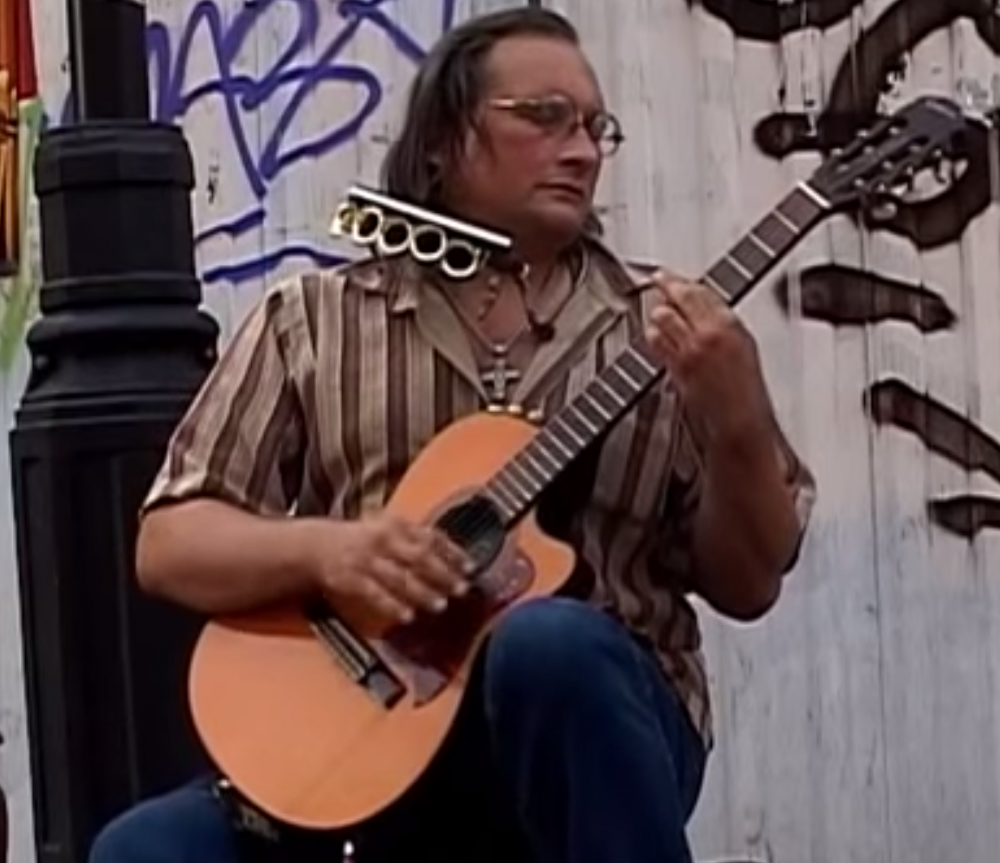
The fact that musicians are charged with a violation of articles 20.2 and 20.2.2, most often used in relation to participants in political events, raises even more questions. At a meeting with the musicians, the then head of the Arbat ATS Igor Yanchuk explained that the police have no complaints about the musicians, "who play the violin or on the pipe." But, according to Yanchuk, those who are “already with electrihites, excuse me, with drums, with electric columns, with microphones, they correspond to a public event.” As a result of the game of the musicians, Yanchuk claims, “a certain number of people gathering that prevents the passage of citizens”, as well as the musicians themselves, “setting their columns, guitars, seats” (the meeting video was published on YouTube, but is currently not available).
At the same time, the police refuse to take into account the fact that the musicians do not call anyone in advance, they do not announce their exits to the street, do not give out invitations, so that their game can be called either a performance or a concert. However, Article 20.2 here, apparently, is not at all applicable, since it is not about performances, concerts, or even more so the game on the street that can attract the attention of passers-by, but about meetings, rallies, demonstrations, processions and pickets for expressing opinions and nominating requirements on external and domestic policy issues.
Article 20.2.2 was included in the Code of Administrative Offenses in June 2012 as part of a law that tightened the rules for conducting mass events in order to legalize the struggle with the currently protest walks and “occupiers”. However, the article is formulated so that any accumulation of people can actually fall under it. Street musicians often suffer from its use. In July 2014, the guitarist Sergei Khavsky was sentenced to a fine of ten thousand rubles (also on the complaint of a local resident), and in September of the same year, his colleague Mikhail Adamauskas threatened his colleague.
One could understand if the claims against the musicians came down to the fact that they play too loudly. However, they argue that the noise they produce does not exceed the level permissible by law. (The correspondent of the Russia 1 television channel also came to the same conclusion, during a report on the conflict between musicians and the police, the volume measurements from the window of one of the neighboring houses.) It should be taken into account that although local residents complain about those who yell and sing songs with obscene abuse, at least some of the persecuted musicians play exceptionally instrumental music, moreover Not aggressive. However, Lyudmila Koroleva called the police when an acoustic duet of flute and harp played on Arbat, and even when the clown, nicknamed, painted cartoon at passers -by. At the disposal of the ATS-INFO there is an audio recording of the Arbat ATS in February 2015 before the population for work for 2014, where the queen was present: it turned out that she was also not satisfied with the presence of the juggles on Arbat: “The clown saw that he could be juggled today-he didn’t remove him, and his friend was coming to him,” he said, ”he said,” said it, ”said it,” said it, ”said it,” said it, ”said she.
The police at the meeting demanded to be harder with the musicians: not just asking to leave - this is ineffective, because they return - but to detain, “punish the ruble”, and withdraw tools.
At the same time, the musicians themselves are not against the fact that creative activity on the Arbat is regulated-but not by the police in conjunction with residents, but by the professional musicians in conjunction with the Department of Culture. “So that they are responsible for this culture, so that they find new people or projects, so that the artists are the link that regulates the activities on the streets. So that they can say about someone: “He sings obscenities, children are bad, we don’t need such a person, he will disgrace our culture.” And from the department or council to come and this person was asked from here. Not taken! No repression, ”says Sadov. Timur Tsurkawa believes that on Arbat, as a significant place of the cultural and historical center of the city, “only professionals should represent our culture” (which should be paid a social package), but there should be places, parks in the city, “where any, even the most beginner, inept artist and musician would have the right to perform.” The level of the speaker, in his opinion, should determine commissions consisting of professional artists.
Tsurkawa believes that the Department of Culture should work together with street artists to work on the creation of special art zone in the city, places of performances on pedestrian streets, for artists, for exhibitions, for artists, so that musicians and artists perform in all parks. ” According to him, for example, the musicians do not let the musicians into the Sokolniki park, “they are set by the police and local security, they are delayed and taken away, but there are a huge number of empty alleys, where students of musical, acting faculties can be located, try their strength where music can sound.”
On May 28, three days after the detention of Sadov, representatives of the Arbat police department and the Department of Internal Affairs of the Central Administrative District of Moscow arrived at Arbat, local residents dissatisfied with them met with them, including the queen. There were musicians there. According to Timur Tsurkawa, he was directly stated that the musicians were "unlawfully located on Arbat Street." If they have permission to conduct entrepreneurial activities, then “we ask for mercy”, otherwise they will be detained. Arbat Stars decided not to play on Arbat anymore.
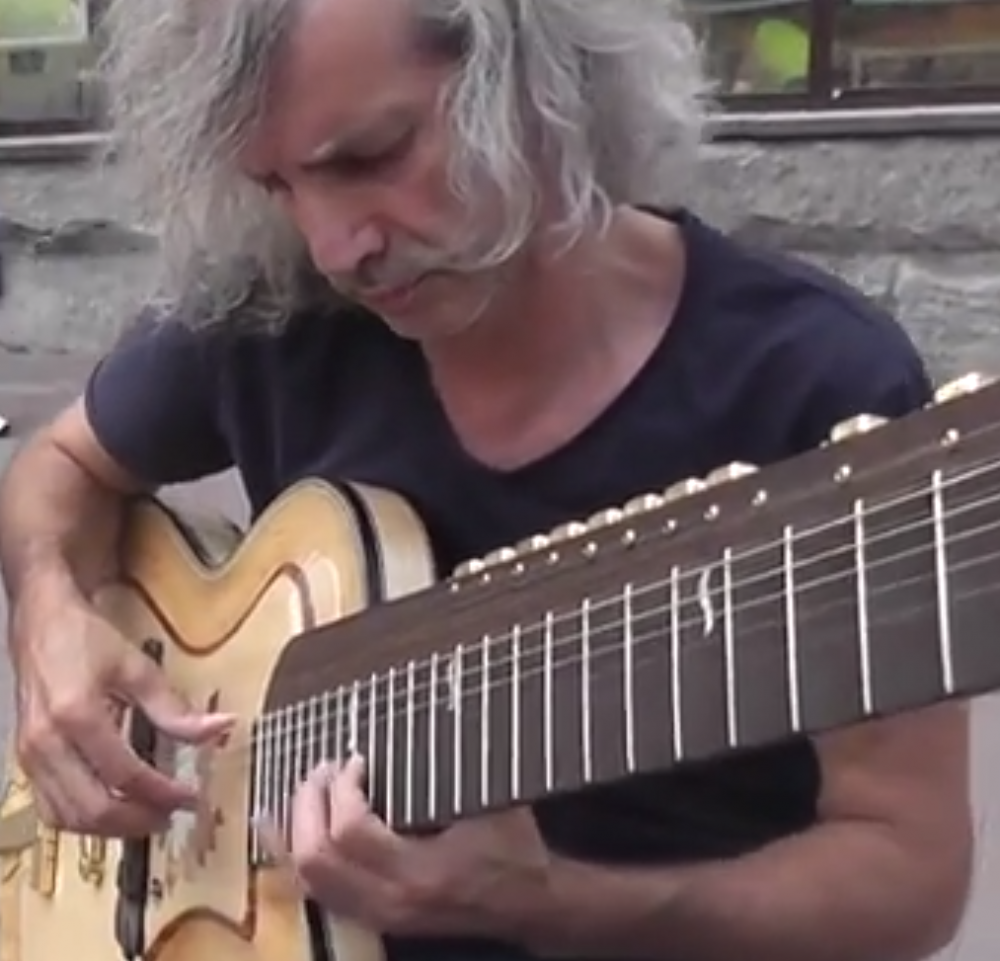
“We stood on Arbat not because we were holding on to Arbat. For five years we have been seeking that there is a street culture in Russia, ”explains Tsurkawa. - Its center is precisely Arbat. Music is our main activity, we are trying to earn our living. We are charged with this that we live anticipally. What is the point of losing tools? How much can we terrorize? We cannot go against such a system. ”