
Translated material
Buddhists celebrate Buddha's birthday
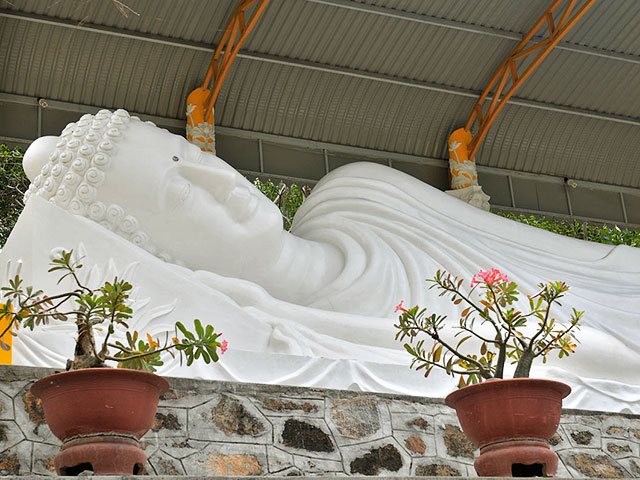
Followers of Buddhism celebrate their birthday, enlightenment and departure to Nirvana Buddha on June 2.
The holiday is celebrated on the day of the full moon of the second month of the Indian lunar calendar, which falls at the end of May - early June of the Gregorian calendar . The name of this month - on Sanskrit - Vishakha, fell a vehicle - fixed for this holiday. It is dedicated to the three most important events from the life of the Buddha Shaky Muni: his birth (Jayanti), Enlightenment (Bodhi) and the departure of Nirvana (Parinirvana). Since most Buddhist schools believe that these events occurred on the same day of the year, a single celebration was established in their memory.
Tradition describes the birth of the Buddha - Prince of Siddhartha Gautama (Shakya Muni): Tsaritsa Maya, the wife of the ruler of the people Shaky Shudddodnaya, a dream was a dream in which she saw a young white elephant with six tusks went down the sky and entered her bosom. The gods opened to her that she would give birth to a son, who will become a Buddha (enlightened). When the time of birth came, the queen went to her parents. Along the way, she visited a beautiful garden, called the "grove of Lumbini", which was full of flowers and singing birds. Suddenly, the queen began childbirth, and she gave birth to a Buddha right among the flowers. Two streams of water poured from the sky: one was cool and refreshing, the other was warm and fragrant. They washed the Buddha and his mother. The baby got to his feet immediately after he was born. The white umbrella covered from the sun, which the gods held over him, he turned to face the north and took seven steps. Then, casting a glance at the other three sides, he said: "I am the master of the world and the best in it. This is my last birth and I will not be born anymore."
Having spent 29 happy years in the palace of his father, Siddhartha Gautam left him and went in search of the truth, which he discovered at the age of 35, sitting under the Bodhi tree. Having become enlightened (Buddha), he began to preach the truth that he had opened (dharma) and founded the monastic community (Sanghu). When Buddha was 80 years old, he decided to complete his earthly existence and moved into Nirvana - the eternal and higher being, in which there is no chain of degenerations.
Vishakha Puja is considered the most important of all Buddhist holidays. In the days of the holiday, solemn prayers are held in all monasteries and processions and processions are arranged. Temples are decorated with garlands of flowers and paper lanterns - they symbolize enlightenment that came to the world with the teachings of the Buddha. On the territory of temples, oil lamps are also arranged around the sacred trees (bodhi) and st. The monks read prayers all night and tell the believers of the stories from the life of the Buddha and his students (Darshans). The laity also commit meditation in the temple and listen to the instructions of the monks throughout the night, thereby emphasizing their loyalty to the teachings of the Buddha. With particular care, during the holidays, a ban on agricultural work and other activities are observed, which can harm small living creatures. After the end of the festive prayer, the laity arranges a plentiful treat to members of the monastic community and present them with gifts (Dana), which indicates their fidelity to the instruction of the Buddha to honor the monastery community (sanghu) as one of the three jewelry.
A characteristic ceremony of the holiday is the wash of the statues of the Buddha with sweetened water (or tea) and showered them with flowers as a sign of commemorative events that occurred in the Lumbini grove during the birth of the Buddha.
On the eve of the holiday, people send congratulatory cards to their friends and relatives, which, as a rule, depict memorable events from the life of the Buddha.
In the tradition of Lamaism, this holiday (in Tibetan-Saga Dava, in Mongolian-Donchod-Houral) is the most stringent ritual day of the calendar, when you can’t eat meat and when lamps are lit everywhere. On this day, it is customary to bypass the stupa, temples and other Buddhist structures clockwise: at first the committing this bypass measures the distance with his body, spread out on the ground, and then rises and rises to the place that his face affected and moves forward in this way. Many vow to observe a strict post and remain in silence for seven days, which symbolizes the importance of abstinence in Buddhist practice and at the same time commemoration of the Buddha.