
Translated material
Dodge propaganda
NATO veterans teach their allies in Central Europe to fight Russian propaganda in Central Europe
After the start of the armed conflict in Ukraine, in the escalation of which the Internet and other media played in the NATO Center on Strategic Communications began to study the methods of Russian state propaganda in Riga. There are now special trainings, during which the target audience of various propaganda messages is being studied.
Training, lasting more than three months, 20 students - analysts, psychologists and military from 11 countries of the North Atlantic Alliance are held in Riga. The technology of studying the target audience developed the institution of behavioral dynamics based in London. It includes a comprehensive study of the audience, which helps to develop a methodology for strengthening or changing the attitude to one or another information, and sometimes changes in behavior. This is able to increase the stability of the audience, susceptible to the propaganda efforts of the enemy. The program financed by the Canadian government was developed by the British " strategic communication laboratory ", which is engaged in counter -propaganda by order of governments and the military. For these purposes, the company has gathered an international team from former military experts in information and psychological operations.
The former commander of the British Royal Fleet, Doctor of Philosophy and Philology, the author of several books , Steve Tam, resigned last year after 25 years of service. Tapem served in Sierra Leone, Iraq, East and North Africa, Afghanistan, commanded a group conducting psychological operations:
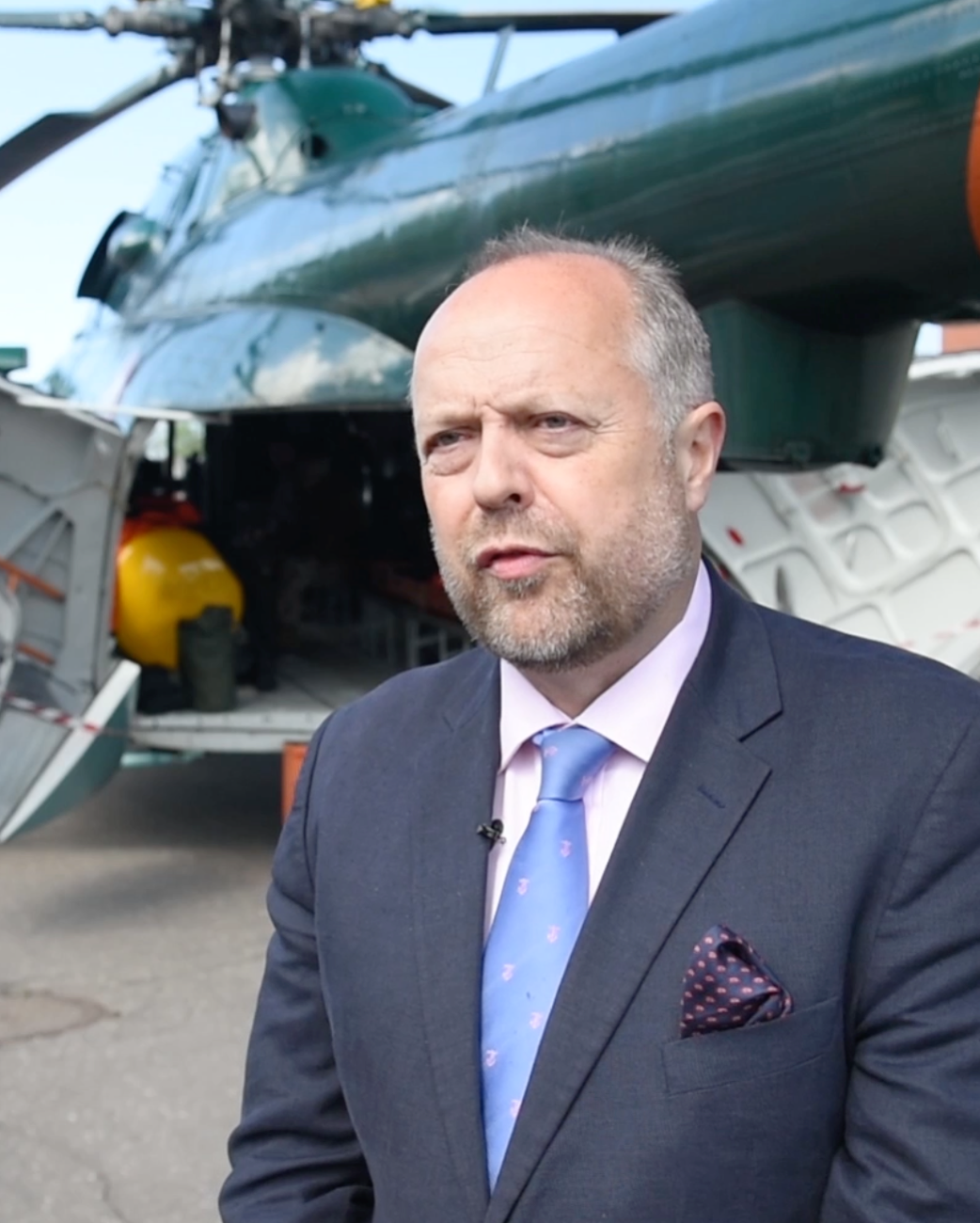
- Over the past two decades, the organization of the North Atlantic Treaty began to realize the contours of future conflicts and realized that the numerical advantage in tanks, ships and soldiers is not enough for success in military operations. Critical importance has acquired the ability to form an opinion, convince people, influence. And for this, we must better understand human thinking, understand not only the mechanism of influence itself, but also how people react to it, ”says Steve that.
The Riga Center for NATO on strategic communications last year published a study by the “Analysis of the Russian Information Campaign against Ukraine”. The authors, in particular, studied the Russian Twitter segment and revealed various kinds of systematic activity there. For example, the paid proxids in which each user separately has a small number of subscribers, but all of them spread the same message. Or a network of users is created with a more or less high degree of influence in the twitter environment that publish each other's messages or comment on each other's messages in order to become more noticeable on the network. The report describes a group of anti -Ukrainian -minded users who organized a fictitious discussion to create as many tweets as possible. Steve that explains:
Technique "Social Evidence" is used both by the "Islamic state" and Russia
- Our opponents in information wars use a number of very smart influence techniques. For example, on Twitter, Facebook, YouTube, we see a lot of comments that translate a certain type of views and opinions. Users who leave them create the so -called social evidence for the audience ( recognition of the truth of judgment from the support not on facts, but on public opinion. - Radio Liberty ). When you watch a video or read Twitter, you most likely disagree with this or that opinion. But when you read many approving comments left by other users, you ask yourself questions, you begin to doubt. This technique is used both by the Islamic State group and Russia in the information war against Ukraine.
- Is it possible to determine the algorithms for the spread of such information?
- I am sure that such algorithms are developed, because usually we are talking about the desire to maximize the penetration into the audience. But information technology and mathematical modeling are not my subject. We are engaged in recognizing the effect that this information has on a different audience. We can observe target groups and explore them using advanced methods of social sciences and determining the degree of exposure to influence, as well as determining the possibilities of reducing this influence.
In fact, people join the Islamic State due to many various personal reasons. Behavior is not always associated with their attitude
- How do behavioral mechanisms work?
- There is a big difference between the views, opinions and attitude of people corresponding to propaganda messages, and practice, that is, behavioral reactions. For example, around the world, the media media tell us how the Islamic State uses social media to encourage young women and men of Muslim religion to join this group. And people believe that there is a direct connection between the efforts of recruiters of agitators and sending volunteers to Syria. But in fact, people enter the ranks of Islamists due to many diverse personal reasons. And behavior is not always related to attitude. Our interest is to identify this difference between attitude and behavior.
- Can you give a successful example of the analysis of the target audience in the military context?
- I have a very good example when we had to conduct such an analysis, but did not do it. And paid for it. Once, when I served in Afghanistan, we entered one village. Men asked us to build a well. We built it, and the next morning we poisoned the water in it. The men said this was the work of the Taliban hands. We cleaned the well, and the next day we poisoned it again, and all again we wrote off on the Taliban. But the people who poisoned the well were not Taliban. These were the women of this village. They did not want any well. Every day they spent three to four hours on joint hiking for water for their family. They used every opportunity to escape from the oppressive atmosphere of the village and spend time together. The men made a decision without reporting this to women, and it did not make them happy. If we carried out an appropriate analysis in time, we would never make such a mistake. This is a tiny mistake on the country's scale, but it multiplied many millions of times throughout Afghanistan, and we understood it only now.
- It turns out that in order to act in a local situation, you need special knowledge and skills?
- The skills that are needed to confront such threats, including Russian, are universal and suitable for all NATO allies. Our students, returning to their homeland, will be able to apply skills in local conditions or transfer them to local specialists. We call our course "Training for coaches", - explains Steve that.
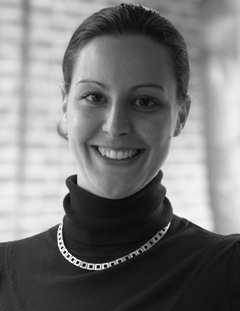
How do analysts learn to recognize behavioral mechanisms and change them? Director of the course Gabi Van Den Berg says:
-The Institute of behavioral dynamics in London has developed an approximate framework, which include a number of theoretical and practical training courses and trainings in various socio-scientific areas, and collected them together, creating a methodology. We teach students how to find hidden motives, how to understand the behavior of people in the light of the information they receive and in the light of their internal motivation. Students master all these techniques and skills and will be able to find out under what conditions certain information will cause a change in attitude or behavior, and under which this will not happen. Suppose we want to encourage young people to lead a healthier lifestyle and quit smoking. Numerous information campaigns that the government leads have a very insignificant effect. A well -known fact: a campaign against smoking on television is money thrown to the wind. Another thing is if we observe the smokers and follow the behavioral factors of the formation of dependence. How do people start smoking? Does smoking youth have pressure on non -smokers in their environment? What is the influence of the environment? In order to change the behavior of the group to the direction we need, we focus more on the identification of conditions under which behavioral reactions can change, and not to understandable information messages, says Gabi Van Den Berg.