
Translated material
Vladimir and Alexander
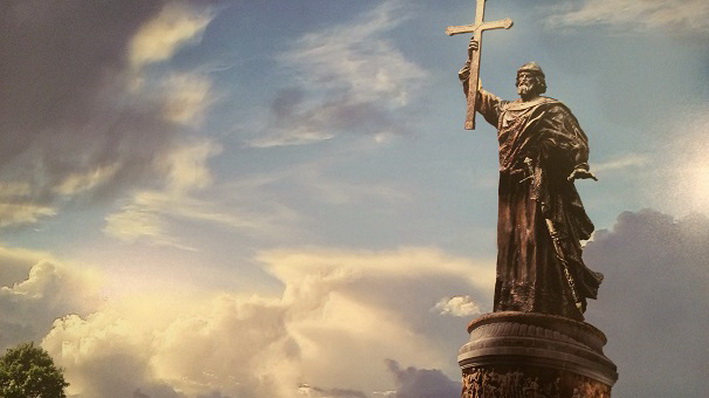
The empire gives change
To declare a symbol of Russia and Russian spirituality of the Holy Prince Vladimir is not a new matter. Ninety years ago, Russian emigration was already trying to follow along this path, or rather, its right wing is the Orthodox and military public.
It was then about the choice of a day that all the exiles would agree to consider the one - unifying - to celebrate cathedral love for Russia. They searched for the reason for the day of Russian culture (all letters, of course, are title). And for the proposal to declare Pushkin’s birthday - May 26 (June 6 according to the new) - the guardians of the spiritual bastard violently protested, putting forward in return for Vladimir the saint.
But these were the blessed times of the victories of common sense, secular culture and taste, and Vladimir Alexander NOT BUVASH.
Another thing, which was brought to the joyfully picked and easily learned cult of Pushkin: the "cheerful name" quickly reborn into a cheerful one.
In 1937, by the centenary of death, a group of Parisians, led by a dancer and choreographer Sergei Lifarem, decided to erect a monument to the first Russian poet on the Seine embankment. In Maxim, “Pushkin is our“ attractive pronoun ”, our each side understands our own way: for emigrants, he is“ our everything ”, we carried him into exile along with the best memories, with high ideals, with the dust of refugee roads.
Back in Petrograd, the hungry winter of 1921, Vladislav Khodasevich, uttered his famous words: "Our desire to make Pushkin's day of the day of the popular celebration, partly, I think, prompted by the same foreboding: we are applied to us what the name we come to, how can we echo in the impending darkness."
And Blok wrote about the same:
Pushkin! Secret freedom
We sang after you!
Give us your hand in bad weather
Help in a dumb struggle!
This understanding of historical memory was carried in their souls by many Russian emigrants. Pushkin became for the exiles the equalizes of Russia itself. She did not die, they said, she moved to us to a foreign land.
Again Khodasevich:
But eight volumes, no more,
And in them the whole homeland.
Eight volumes are a collection of Pushkin works that he took with him from Petrograd.
However, Pushkin, although he pushed Vladimir the Holy to the background, not only united the emigration, but also quarreled.
In the article "Singer of Empire and Freedom" George Fedotov said:
As soon as Pushkin closed his eyes, the rupture of the empire and freedom in the Russian consciousness took place irrevocably
“We want it or don’t want it, but Pushkin’s name remains related to the history of Russian political consciousness. (...) In his temple Apollo there were two altars: Russia and Freedom. (...) Freedom and Russia are two metaphysical roots from which his personality grows. (...) It is wonderful, as soon as Pushkin closed his eyes, the gap of the empire and freedom in Russian consciousness was performed irrevocably. For centuries, people who built or supported the emphasis, and people who fight for freedom destroyed the empire.
This discord of Russian society was carried away into emigration. Arguing about Pushkin, emigrants argued about the fate of Russia. Defending their understanding of Russia, they defended their Pushkin. In the words of Marina Tsvetaeva - “My Pushkin” - it sounded not only an echo of tradition (this was, first of all, the name of the long -standing book of Valery Bryusov), but also the conquest of his, private Pushkin, the spiritual patron.
For a long time, a stable stereotype of the idea of Russian emigration has long been developed. Who fled from the revolution? We believe that these are mainly nobles, intelligentsia, people of culture, writers, artists. We seem to understand that in exile not all aristocrats, landowners, capitalists and maids of honor of the imperial court. But with inconsistency, we do not associate the exile in any way. Meanwhile, it was precisely of uncultureedness that some extensions were accused of the emigrant community. And the reason for the accusations was Pushkin.
Vladislav Khodasevich cannot be imagined without Pushkin. Vladimir Weidle assured: "As Khodasevich is connected with Pushkin, so he is not connected with any other Russian poet, and so no other Russian poet is connected with Pushkin."
But what was in Vaidle's eyes, was rather a shortage of the presentation of other Russian Parisians. Montparnassian guide Georgy Adamovich turned his literary supporters towards the Pushkin’s “rival” and “Antipod” - Lermontov.
In Russia, no one is breeding Pushkin and Lermontov in different poles. But in Paris, this breeding had a deep meaning and it was especially clear to young writers, twenty and thirty years old- who was then called "unnoticed by generation." These young people survived not just the reader drama of the rupture with Russian culture, with loved ones, with their homeland (here they did not differ from the elders), but the tragedy of a deep social loss: they seemed to have failed between their country and a foreign land. By their age, they did not have time to sound in Russia and came to Europe unknown to Europe. Their names did not say anything to emigrants or Europeans. Talented people, they were covered by a sense of hopelessness and a sense of life impasse. Pushkin was inappropriate for them, indecently prosperity. Either the matter of the misanthropic, underestimated Lermontov, which seemed the only acceptable literary ancestor.
Pushkin - "successor", and "all the successors are swollen"
One of the brightest in this unnoticed generation, the poet and prose writer Boris Poplavsky claimed: "Lermontov is the first Russian Christian writer. Pushkin is the last of the magnificent major and dirty people of the Renaissance ... Pushkin is" successor ", and" all the successors are crooking. "
In the eyes of George Adamovich and his environment to love Pushkin - meant signing in literary amateurism, in aesthetic inappropriateness. And once Adamovich mockingly said about someone readers: “A smart person, albeit a fan of Pushkin ...” Emigrants knew how to quarrel even on Alexander Sergeyevich.
For the scolded Pushkin honor, Nabokov stood up, in particular. In the "Gift" he left a restrained and full dignity of the declaration:
"It so happened, - He wrote , that a measure for the degree of flair, mind and gifting of Russian critic is his attitude to Pushkin. So it will be, as long as literary criticism will not postpone its sociological, religious, philosophical and other manuals at all that only helping mediocrity to respect itself. Then, please, you are free: you can criticize Pushkin for any betrayal of his demanding muse and keep your talent and honor. ”
Like almost everything in the "gift", these words sounded, so to speak, in the presence of Khodasevich. It was him that Nabokov called "the literary descendant of Pushkin on the Tyutchevsky line."
Even then, in his Petrograd speech of 1921, Khodasevich, as if predicting what would happen in exit Paris fifteen years later, urged Pushkin’s name:
“In the history of Russian literature, there was already a moment when Pisarev“ abolished ”Pushkin, declaring him superfluous and insignificant. (...) The Pisarevsky attitude to Pushkin was stupid and tasteless. However, it was suggested by ideas that then rushed in the air (...), Pisarev expressed the gaze of a famous part of Russian society. "
"It was, - Khodasevich said - the first eclipse of the Pushkin sun. It seems to me that the second is not far. It will not be expressed in such a rude form. Pushkin will not be ridiculed or offended. But - there is a cooling to him. "
In these words, during the years of military communism, the fear of Khodasevich sounded before the catastrophe of civilization, which had just survived the First World War, before the collapse of all the foundations, before the onset of a new - almost wild language, in front of the advancing proletarian culture.
But here, by the way, Khodasevich did not guess. And the point is not that in the Soviet Union Pushkin began to be imposed on a state scale (the “owl wings” of the Soviet empire), but that just among the people the name of Pushkin became sacred, many people lived with their private cult of Pushkin, as a refuge, resting, salvation. It was bad to live, but we had Pushkin.
And with a misunderstanding of Pushkin, Khodasevich collided just where he did not expect this - in exile.
He did not tolerate when everyone began to judge Pushkin
Khodasevich in Pushkinism was a high professional. He was sometimes mistaken, sometimes he did not recognize his delusions, but Pushkin knew and understood the life and work exclusively deeply. And he was oppressed by the surrounding amateur. He did not tolerate when everyone began to judge Pushkin. And as the Pushkin anniversary of 1937 approaches the poet, the poet grew like weeds.
The organizers of the Pushkin exhibition proudly reported:
"Pushkin was honored in 1937 (...) in all five parts of the world: in Europe in 24 states and in 170 cities, in Australia in 4 cities, in Asia in 8 states and 14 cities, in America in 6 states and 28 cities, in 3 states and in 5 cities, and in a total of 42 states and in 231 cities."
As a result, the entire emigrant celebration of the anniversary reached the degree of vulgarity and emotion that it was no longer possible to compare Parisian celebrations with parallel Moscow. And there and here the national cult grew into a parody and became menacing. The most sensitive people fled from these smug fanfare: Bunin on the anniversary day simply affected the sick and did not appear in the presidium. They did not see Playel and Khodasevich in the festive hall.
Not wanting to have anything in common with each other, the democratic "Pushkin Svistoplyaska" was rejected by both the Toncachi and the figures from the right camp, the triggering of the memory of the holy baptist of Rus'.
Pushkin - was opposed to Russia.
Khodasevich did not want to be with either one or others: “... in any meetings, ” he wrote in a letter to Alfred Bema, “ meetings, concerts, I don’t participate in any“ Pushkin ”numbers of newspapers and magazines - because there is no strength to overcome the aversion to the emigrant rash dug up around Pushkin.”
And in another letter to him: “The fact is that the committee is sitting in forty, of which four read Pushkin: Hoffman, Lozinsky, Kulman and your humble servant. Two more read him: Burtsev and Tyrkov, but only a perfect cavard made in their heads. And now they thought of giving up Pushkin. They announced that they did not think of Pushkin. Democratic principle - by a majority of votes. "
In such an atmosphere of disagreement, a monument to Pushkin was conceived in the center of Paris. I must say that one Pushkin monument in Paris was already cast - sculptor Leopold Burnstam in 1912. Bernstam was favored by the sovereign himself, who ordered two monuments to Peter the Great (King Coral and King of the Rescue) and a monument to Pushkin for Tsarskoye Selo (now this work is at the fork of Pulkovo highway near the observatory).
In 1937, the Pushkin Committee ordered work. They chose and agreed with the city authorities a place - the Esplanade of the Disabled. The magazine "Illustrated Russia" brought on its cover the sketch of the monument (sculptor Akop Gürjan, architect Ivan Fidler), but it turned out to be even more overwhelming about Pushkin’s perpetuation in the bronze than to come to the coordination of the composition of the anniversary one -volume.
Pushkin became the object of state interests
And then a new empire, Sovetskaya, intervened in the script-skillfully playing on emigrant disagreements and did not want to give “our everything” to some refugees. It was necessary to show to whom the poet actually belongs. And the Soviet embassy, in the person of the ambassador of Vladimir Potemkin, directly made it clear to the French government that permission to build a white emigrant statue would be perceived in Moscow with great displeasure. Pushkin became the object of state interests.
And not only a veto was imposed on the monument. All Paris in sight was carried out by a Chekist special operation to disrupt Pushkin’s emigration plans. Celebrations - expositions, meetings, concerts - had to go first in the USSR, and only then, when the creams were removed, let the Parisians comfort.
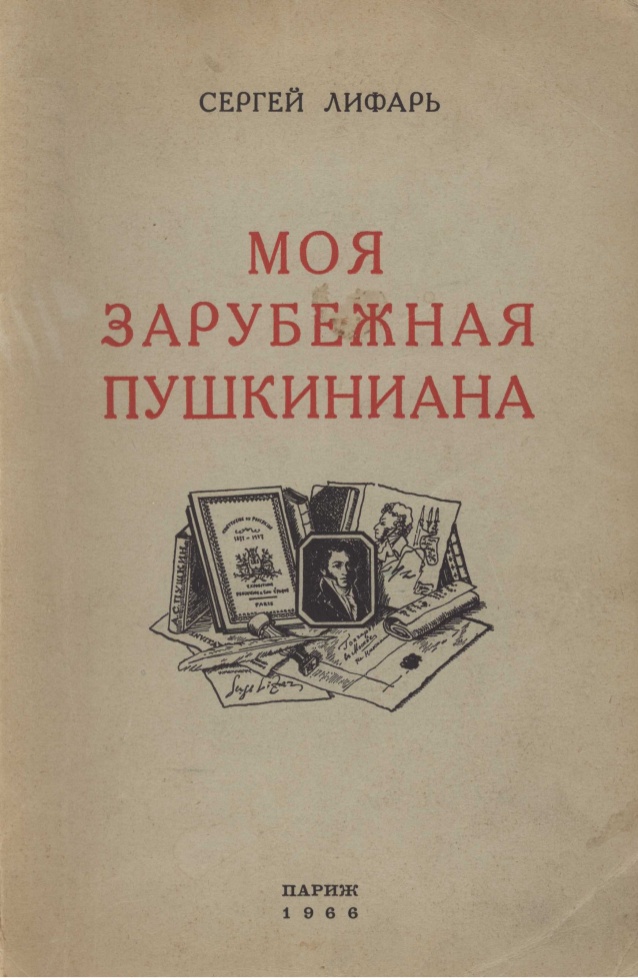
Shortly before the memorable date of February 10, Sergei Lifar was called to the Minister of Education of France. He began the conversation from afar-about how he appreciates the activities of the Lifar-dancer and the artistic director of the Paris Opera, that the Lifar has long earned the Order of the Honorary Legion.
The famous choreographer quickly sensed where the wind was blowing from. Sorry, your Excellency, he said, you have not met recently with the Soviet ambassador Potemkin? - Yes, we saw and discussed Pushkin days. - Never, Lifar continued, the leg of the Soviet official will not step on the soil that Russian emigrants cultivated with such love and diligence. And I will certainly arrange the exhibition.
Each time the gallery suddenly turned out to be busy
The next day, the French National Library refused the Lifar in the room. He rushed to the familiar galleys, but whenever they found out about a special conversation with the minister, the gallery suddenly turned out to be busy.
I had to go to the trick. Lifar turned to the director of the concert hall Playel on Ryu Du Four Saint-Oonore and private took off the lobby, without entering the explanation for what he needed it. He paid all the money in cash in advance and just prepared a huge exposition in a week. The exhibition (now the famous) opened in March, with a monthly delay.
Potemkin, acting in Paris, as in his house, called in the Great Hall of the Sorbonne - on the very day of February 10 - a solemn meeting of the French (in his hierarchy of a more respected) public, which, in its speeches and replicas, on stage and behind the cakes, in every possible way, throughout the evening, glorified the first Russian poet and the Store, which supports the Pushkin cult.
Potemkin triumphed. His goal was achieved: in 1937, Pushkin among the French was associated only with Bolshevism.
Then there was no monument on the banks of the Seine.
History, however, appeals to the end of the plot. Holy Prince Vladimir will sooner or later stand over Moscow. The initiative, like ninety years ago, again comes from the right wing-from the Orthodox-defense public. The idea was supported by the “Night Wolf” Alexander Zaldostanov, historian Alexei Novotochinov, chairman of the Central Council of the All -Russian Public Movement “People’s Cathedral” Vladimir Khomyakov and the rector of the Sretensky Theological Seminary Archimandrite Tikhon. The collection of money for the creation and installation of the monument was announced by the Russian Military Historical Society. They will succeed.
And right. From the recent revelry of freedom, it is permissible to get tired. Someone seems to have humiliated truly Russian people? The empire gives change.