
Translated material
Looping bumps
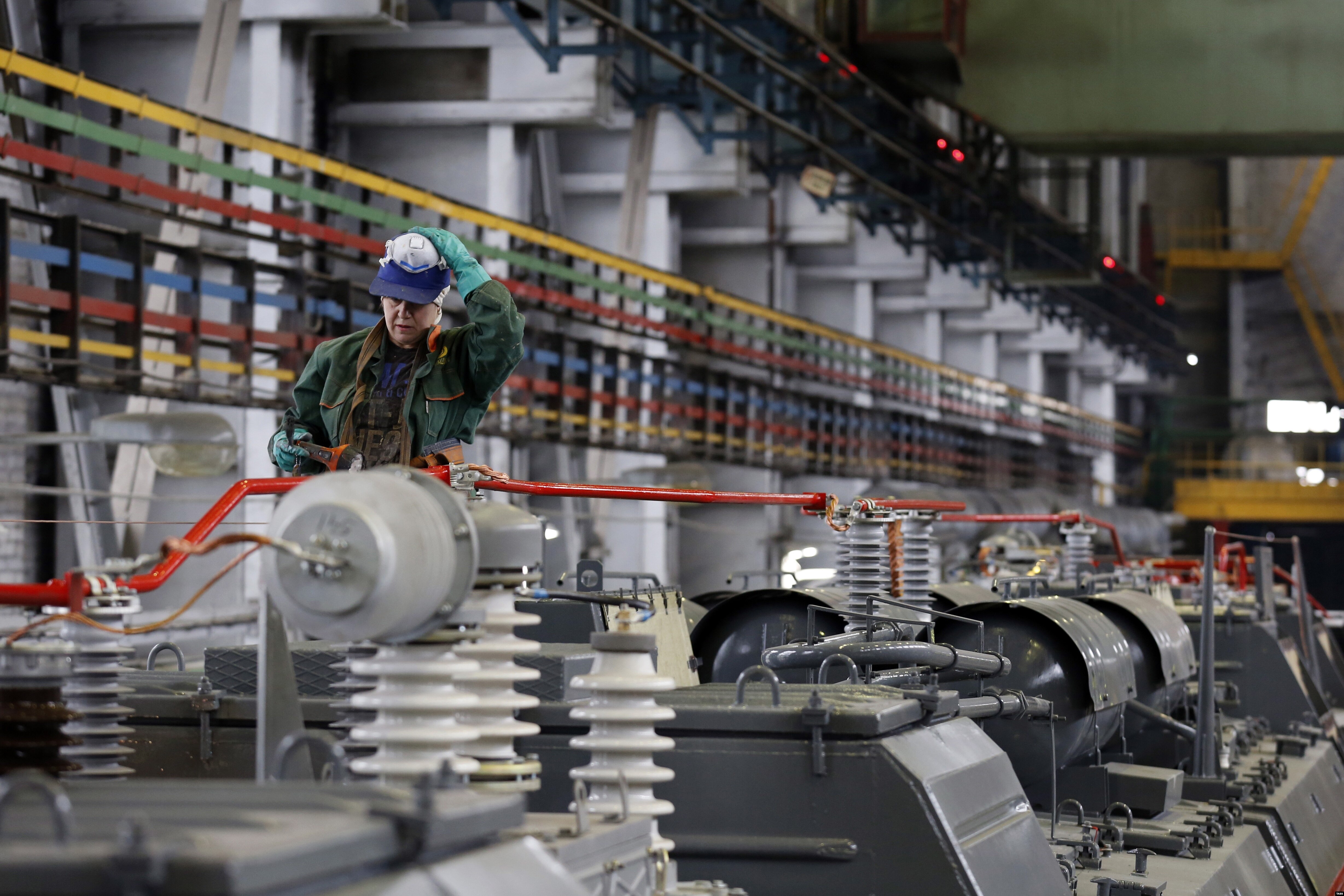
Economists - about when salaries and investments, and about the labor market begin to grow again in Russia
In the first four months of the year, the pace of economic recession in Russia accelerated exactly three times. In April, according to the preliminary estimates of the Ministry of Economic Development (mayor) presented this week, the volume of the Russian economy decreased by last year’s level already 4.2%, while in January this decline was 1.4%, in February - 1.3%, and in March - 2.7%. And if, in general, over the first quarter of the year, the recession of GDP amounted to 1.9%, then by early May it increased to 2.4%. In addition to the decline in production and transport, “a negative contribution to GDP also reduced retail trade in the context of an accelerating reduction in real wages, a decline in investment in fixed assets,” the mayor experts say in the next monitoring of the current situation in the Russian economy.
Private consumption accounts for more than half of the total volume of the Russian economy . It contains three main components: retail trade, paid services, as well as households. The maximum decline fell on retail trade: its turnover was reduced in January-April by 7.5% to last year. At the same time, only in April the decline amounted to 9.8% and continued to accelerate ...
Evgeny Gavrilenkov , chief economist of the corporate and investment unit of Sberbank :
-I want to emphasize that in the "turbulent" periods-this was how at the end of 2008 and in 2009-such statistics are not very reliable. After all, it is based on a selective study. But in such periods it is especially noticeable as some companies are bankrupt, others, on the contrary, only arise. Therefore, after some time, statistics are often very significantly reviewed.
Retail trading turnover is really reduced now by 7-8% per year, as statistics show in the first four months of the year. At the same time, there is no such decline in the services sector: there is only a very small reduction, so this is, say, trips to work by public transport, and payment for housing and communal services. Therefore, in general, private consumption in the country is not reduced as sharply as retail turnover.
The difference in labor productivity between the formal and informal sectors of the Russian economy is about five times
The real salary in Russia in January-April decreased by 10.2% to last year's level, the mayor notes in monitoring. And in April - by 13.2%. On the one hand, such a decline is explained by sharply accelerated inflation: unlike the nominal, in the real salary it is taken into account. On the other hand, by the spring of this year , growth and nominal salary almost ceased in the country. In April, it grew by only 1% to last year: many enterprises, against the background of a fall in demand for their products, reduce salaries, and employees agree not to lose their jobs ...
Evgeny Gavrilenkov:
- It is really very important to monitor how the nominal salaries will change. And I see some chances that their growth will gradually resume. In the first three months of the year, the financial statistics of Russian enterprises showed a very significant increase in their profits, which, probably, few expected.
It’s just that, in conditions of general economic uncertainty, the companies, apparently, tried not to spend this profit at all. But already in the second half of the year, if the situation in the economy is really stabilized, this money, like new ones, can gradually be directed both to increase in salaries and investments.
Business revenues appeared. And now - there would be a desire to invest, and the prerequisites are created.
After the crisis of 2008-2009, salaries in Russia, stimulated by the state, continued to grow at a very high rate, even despite the even deeper decline in the economy than today. Which, in turn, supported private consumption, which then became the basis of post -crisis recovery. Now there is no need to talk about this ...
Evgeny Gavrilenkov:
- Recall that before the crisis of 2008, salaries in Russia grew by pace at 30% per year. And after a crisis recession, they slowed down to 10-15%. And this, by the way, then led to the inhibition of inflation.
I think that even now, already in the nearest quarters, we should expect some new cycle when nominal salaries will begin to grow. Although, of course, a much more moderate pace - say, is clearly below 10%.
Another factor will also work. Against the background of, on the one hand, braking of salaries in the country, and on the other, quite expensive consumer loans in recent years, the total expenses of Russian households for the current service of these loans have approached 5% of the total salary in the economy, which is quite a lot.
Now, consumer lending is reduced, and inflation slows down , which entails a decrease in interest rates. Therefore, even with a moderate increase in salaries, the share of the expenses of families allocated for maintenance of consumer loans will gradually decrease and return to a more acceptable level of 4% of the total amount of salaries in the economy. It can also become one of the factors supporting the growth of consumption.
In Russia, the story is completely different: in general, few people are reduced in the crisis of the company, preferring to reduce the salary. Who does not agree - leaves
If private consumption accounts for more than half of the total volume of the Russian economy, then another 20–25% is the share of internal investments, that is, the investments of companies and enterprises in their own development. The slowdown in the pace of their post -crisis growth, which began back in mid -2012, sharply accelerated last year and turned out in a deep decline: by 3.7% in the first four months of the year and by 4.8% - only in April. Nevertheless, while these investments remain at the levels of spring 2011, which preceded a much deeper recession-by 15-16% in 2009. Will it happen again this time?
Vladimir Salnikov , Deputy Director of the Center for Macroeconomic Analysis and Short -term forecasting (TsMAKP), Moscow:
- In my opinion, the further significant reduction of investments, most likely, should not be. Their current decline was the result of the situation of the beginning of the year, when, in the conditions of a very high volatility of the currency course and the fall of the ruble to business, let's say, there was no up to investment. But the situation is changing rapidly. If there are no new external shocks, then in general the business has already calmed down, and his expectations are quite positive.
In addition, the basis of the investment process is still the own funds of companies. And in the first quarter of the year, according to Rosstat, their profit increased very significantly. Yes, the devaluation effect has been manifested in many ways, but nevertheless, the income of business appeared. And now - there would be a desire to invest, and the prerequisites are created.
On Monday, the Interdepartmental Commission of the Government of Russia previously agreed to reduce the investment costs of the state budget for 2016-2018 by 30–40%. According to the experience of recent years, how great is the role of state investments?
Vladimir Salnikov:
- Purely arithmetic, of course, the reduction of state investigations leads to a decrease in their total volume in the country. By the way, after the crisis of 2008-2009, a fairly rapid recovery of investments was largely determined by the growth of the state “component” - these were pipeline and “Olympic” projects.
The reduction of employees in industry is by no means a new phenomenon associated with the crisis, we observe it for a long time
But a very important point is the effectiveness of investments. If we assume that state investments are at least economically less effective than private ones, then in the theory the decline in state investments can be compensated by more effective private investments. Moreover, the effectiveness of the investment process as a whole may not only not suffer, but also increase.
The main thing is that the business should feel when the time comes to invest. There is a potential for the growth of domestic markets, a problem in uncertainty, that is, business is simply scary. And in this sense, now the main thing, it seems to me, is for the state - to offer business such a change in conditions that would interest him in investing.
Any investment does not appear immediately, it must pass for some time that they are embodied in the form of new production facilities on which new jobs will appear. What does this very lag seem to you in the current Russian conditions, that is, the time between investing in a new project and the beginning of its payback? Although, of course, these terms may vary greatly from the industry to the industry ...
Vladimir Salnikov:
- The investment lag is from about one year to three. Indeed, depending on the industry. But usually in Russia the horizon is still a little shorter: the business, especially in the current conditions, seeks to invest in projects that pay off quickly. Therefore, now it can be expected that this lag is an average of a year and a half, in some cases-two years.
I think that already in the nearest quarters the nominal salaries will begin to grow again. Although, of course, a much more moderate pace than recently - say, clearly below 10%
The current decline is both in industry (in January-April-by 1.5% of last year’s level, and only in April-by 4.5%), and in the economy as a whole inevitably led to a reduction in employment in it. At the same time, the total unemployment in the country not only does not grow, but even decreases again - from 5.9% in March to 5.8% in April. To what extent this is explained by the rewriting of the dismissed workers to the informal sector of the economy , and in which - the transition to other industries of the "formal" economy?
Vladimir Gimpelson , Director of the Center for Labor Studies of the Higher School of Economics, Moscow:
- The informal sector is also part of the economy. And it is also divided into industries, activities, like the formal sector. There are two aspects of the problem. One is the transition, for example, from industry to trade, or from construction to industry, and the other is the transition from the formal sector to informal. It can be inside and industry, construction, and trade.
The reduction of employees in industry, primarily in the manufacturing industry, is by no means a new phenomenon associated with the crisis, we observe it for a long time. People went primarily to trade and construction, as these two sectors grew. Although some, of course, simply left the labor market.
But in trade, in construction, and in transport, the share of the informal sector is relatively great. Therefore, those who moved to these industries had higher chances to be in the informal part of the economy. Both processes went in parallel, and they are very difficult to share.
How great, according to your estimates, the difference in labor productivity of the formal and informal sectors of the Russian economy? And how did her dynamics change in recent years? For example, in terms of employment growth, the informal sector is ahead of the formal one at times ...
Vladimir Gimpelson:
- Among economists and researchers there is no consensus on what the “formal” sector is, and what is “informal”. In this case, we say that the informal sector is a micro -enterprise, either simply self -employed, or those who work for hiring for other people. That is, it is not companies or organizations. These are either loners or microgroups that do not have a legal entity.
From this it is clear why such groups or individual entrepreneurs do not have weighty capital, there is no access to a normal bank loan ... They have very limited sales markets, they mainly work with their hands, their work, as a rule, is relatively simple and technologically primitive. All this, of course, cannot but affect performance.
So, the difference in labor productivity between the formal, or rather, the “corporate” sector of the Russian economy and the part of it, which we call the “informal sector” or “non -organizer”, is about five times. If you do not take into account agriculture, the productivity gap is less - about three times, but still remains large enough.
In Russia, especially in current conditions, business seeks to invest in projects that pay off quickly
Everything is simple. If the formal sector is modernized, investments are invested in it, thanks to which new technologies are mastered, the release is growing, and employment is ultimately reduced, which is a consequence of modernization, then this means that labor productivity is growing. That is, one employee has an increasing number of products.
If people go into the informal sector, then employment in it is growing, but it remains a low performance sector. And, although it is difficult for us to evaluate such processes in detail, a year after year, I would say that this gap in labor productivity only increases.
During any crisis in the economy, some free power arises, which later, when the situation improves, can be involved again. Or, conversely, they will already be completely abandoned ...
Vladimir Gimpelson:
-Firstly, we are by no means seeing such large outcome of labor in the Russian economy today. Yes, its number is reduced, but this does not mean that after the crisis it will begin to grow again. The number of workers was gradually declining even before the crisis, and we do not see that now this reduction has significantly accelerated.
There are simply no intensive contractions, as is usually the case during crises in other countries. And then, when the crisis passes, companies begin to recruit staff again. In Russia, as we see, the story is completely different. In the crisis of the company, either at all, or very few people are reduced, preferring to reduce wages instead. Who is unhappy - leaves. And whoever suits, who is simply afraid to be left without work and therefore agree to work for less money, they remain. And in the end, the release of labor is quite slow.