
Original Material
Welcome back to the war
All you need to know about the return of warmongering and combat in eastern Ukraine
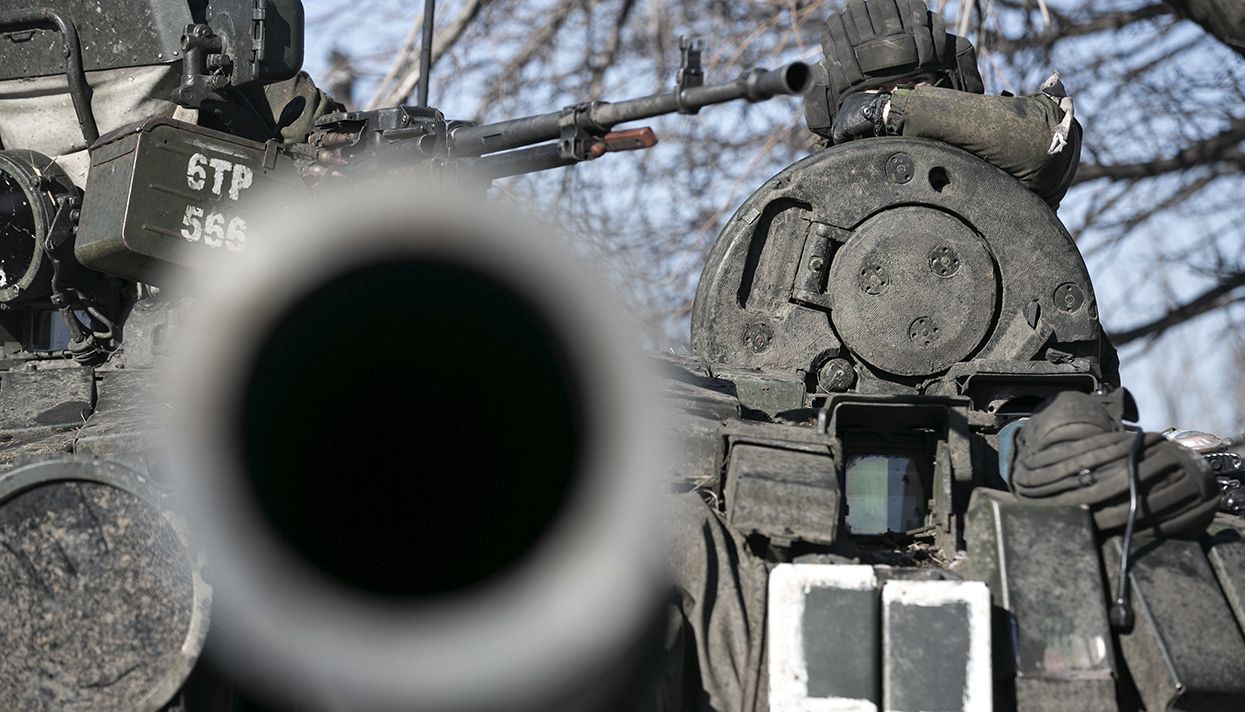
In the past couple of weeks, the conflict in eastern Ukraine has gone from simmering to explosive. Violations of the February Minsk II agreement were regular throughout the spring, but now there's evidence that a real battle has begun for the city of Marinka (currently controlled by Kiev). As the fighting returns in earnest and Ukraine's second ceasefire appears to disintegrate, Ukraine has signaled a growing interest in inviting foreign peacekeepers. Moscow, meanwhile, has suggested that it might expand its military intervention in eastern Ukraine. On June 4, Vladimir Putin's spokesman reminded the world that the president has the constitutional right to deploy Russian troops abroad. Meduza collects the most important events of the past weeks that considered separately might not mean much, but read as a developing story demonstrate a dangerous escalation.
Amassing troops at the Ukrainian border
On May 28, Reuters reported that Russia is amassing troops and military hardware near the border with Ukraine. According to the news agency, at a field camp in Rostov, the army is stationing “Hurricane” multiple-rocket launchers, tanks, and self-propelled artillery guns.
Putin makes military deaths a secret
Also on May 28, Vladimir Putin issued an executive order making peacetime military deaths a state secret. The day before, Putin's spokesman said a question from journalists about the possibility of Russia invading Ukraine was “inappropriate.”
The battle for Marinka
On June 3, serious fighting resumed in eastern Ukraine using heavy artillery that under the Minsk II agreement was supposed to have been withdrawn from forward positions. Ukrainian forces say the separatists launched an offensive against the city of Marina outside Donetsk. Rebel commanders in Donetsk, meanwhile, deny any attack, accusing Kiev of staging a provocation.
Signs of an emergency Senate session
Also on June 3, Federation Council Speaker Valentina Matviyenko suggested that the Russian parliament's upper house is poised to announce a special session, telling senators not to venture too far from Moscow. Matviyenko later explained the special session would be nothing out of the ordinary, saying it might be necessary to review legislation that the parliament's lower house, the Duma, could soon pass.
It was at an emergency session on March 1, 2014, that the Federation Council granted Vladimir Putin permission to deploy Russian troops in Ukraine. In June 2014, this permission was revoked at Putin's request.
Poroshenko says there are 9,000 Russian troops in Ukraine
On June 4, in an address to the Ukrainian parliament, President Petro Poroshenko announced the “colossal threat of renewed large-scale combat” in the country's east, saying there are currently 9,000 Russian soldiers fighting on Ukrainian soil. Russian defense officials denied this allegation, saying Poroshenko was scapegoating Moscow to distract from his presidency's “dashed hopes and phantasmagoria of bright prospects” for Ukraine.