Translated material
Mistress
Why the FSB selectively approaches communal barons and their patrons
Why the FSB selectively approaches communal barons and their patrons
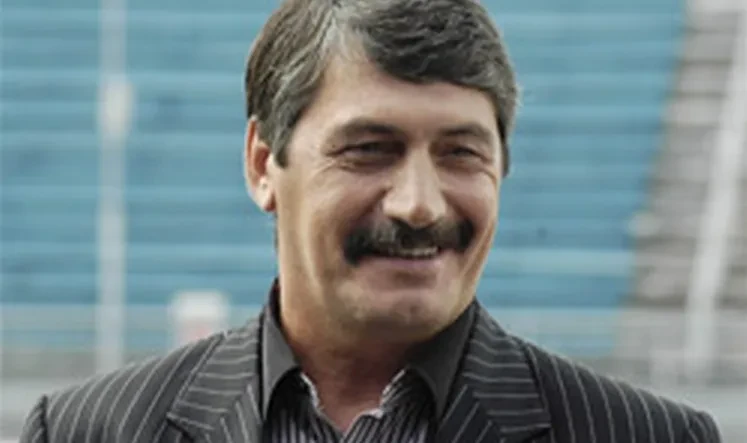
Today in Siberia, the traditional July increase in housing and communal services rate is written by a spectacular preface. The FSB detained, and the court arrested for two months the owner and the head of the board of directors of the largest communal enterprise Krasnoyarsk "Kraska" (formerly "Vodokanal") Valery Grachev. The Minister of Construction and Housing and Public Utilities of Khakassia Sergey Novikov was arrested. Like Grachev, he was detained at the airport, when leaving the Moscow flight. The former first vice-mayor of Krasnoyarsk, then the first deputy head of Khakassia Alexander Golyshev, was arrested as a defendant in the case of financial fraud in Khacresvodokanal. The former director of this state -owned enterprise, now the chairman of the State Committee for Tariffs and Energy in the Khakass government Oleg Baziev and his deputy Irina Oleshkevich are also detained.
It may seem that the housing and communal services finally put things in order. Even if so, the plot is not exhausted by this. Obviously, all communal barons work under close supervision. Secretly in this area, nothing can be done, the movement of money is transparent. Previously, the inviolable Grachev was presented with a fraud of almost five years ago: 20 million rubles from profit members of the board of directors divided them instead of directing to the repair of networks. And the amount and the act look funny, but, of course, this is a tie. Another thing. The FSB has become a key structure, it is given a carte blanche for corruption affairs. But why did the office have been waiting for several years?
How the profit was distributed for 2010, it has long been described by the auditors of the Accounts Chamber; A year and a half has passed from the seizure of documents made by the FSB itself. Perhaps the reason for its activation is in the worsening economic situation of the country. Given the go -ahead to search for money and scapegoats. Searches are held not only in the center of Krasnoyarsk in the Grachev mansion and in the office of the management company. The FSB entered and, for example, to Krastzvetmet - the state -owned enterprise of the affinage of gold and metals of the platinum group.
Deputy Anatoly Bykov, in the 90s one of the patrons of Grachev, said to the question about the possible customer of this case: “We have one customer is our president.” And - offered to return "paint" to municipal property. "I think the second such situation will not be."
Grachev and son -in -law
In a month, Grachev will be 62. One of the Krasnoyarsk kits. His anniversary was forced to celebrate the whole city: the sky above him was painted by a grandiose salute - where is there day of victory. A premium man, an honorary consul of the Slovak Republic, a traveler from one of his villas to another. Moreover, it is not a Muscovite and not the major, which was ozolly on the privatization of Siberian wealth, but a rare copy of the natives. Mine. He had served in the Navy a chef, who began the cooperator and shuttle, and ten years ago, he suddenly became a “homon”, to whom monthly a millionth city collected billion rubles of rent, and even Moscow herself sent billions for the repair of dilapidated housing.
It is clear that his business has always been “master”, under someone, his first large enterprise-Sibchelendge, “Russian-American”, the second largest mobile communications operator in the region-took place in the operational documents of the special services as “Anatoly Bykov controlled by the OPS”. Then Sibchelendge, like other autonomous local brands like “Krasnoyarsk Airlines” (also part of the interests of Bykov) or the Pikr beer corporation, will swallow Moscow and Transnational corporations, but in the 90s the ideology of Krasnoyarskosty bloomed puffy. Since it was converted. Let the crookedly, but his own.
At the beginning of the zero Bykov, whom the Varangians were scared, was taken out of the Krasnoyarsk metallurgy and energy; In 2003, Grachev sold Sibcheleng MTS for $ 45.4 million to power in the region at that time, Moskvich Alexander Khloponin (now Deputy Prime Minister of the Russian Federation) came, and the theme of “regional patriotism and pride” lost relevance in fact.
Local businessmen dare to be at ostentatious liberties: if Khloponin’s deputy did not allow themselves to start a yacht in the Krasnoyarsk Sea than the governor, then the head of Krasaire Boris Abramovich decided. And Grachev in 2005 overwhelmed everyone, he had the longest. Nevertheless, he did not forget his places. Khloponin said to support the Yenisei hockey club, and Grachev brought half a million dollars. He said to support the housing and communal services - and Grachev took under the visor. From the group of Prokhorov -Khloponina - Kuznetsov Grachev, the capital's businessman Boris Cherkasov was given to help the metropolitan.
According to the direction and with the support of the regional and city government - and it was guided by the instructions of Moscow to reform the housing and communal services and federal laws - Grachev became a monopolist: he was leased for 49 years of engineering networks of Krasnoyarsk. He was also given the district Zhiltrests, which he united under the city management company Zhilfond. That is, Grachev supplied the services to himself. In Kraskoma, Grachev has a control package, the city hall has 11%, and the regional administration has 15%. The participation of the authorities is limited by the impact on the formation of tariffs. On January 1, 2006, after 4 months from the appearance of the new Grachev yacht, the tariffs took off. As a result, the townspeople stare at the Grachevsky cars, at the Grachevsky Palace, which had grown in the center of the city, to the Polvartal.
He brought the former security forces to the housing and communal services department, at first sight (and from the second) indistinguishable from the lads. Friends of his companion Sergei Breilnikov, also a former cop, a regular of the casino and the owner of Spanish real estate. Grachev sold his former yacht from which he grew up. Then it sparkled between them, and a year and a half ago, according to the results of the investigation of the FSB of Barber, he sat down for 4 years in prison.
Grachev was wearing: he at the head of the “housing fund” of his son-in-law, dentist Andrei Maslovsky, then changed him to the Muscovite-Chekist Nikolai Selyakov. And the general director of Kraskoma was planted by Vadim Dyachkov - the son -in -law of Pimashkov, the head of Krasnoyarsk (already a former, now a State Duma deputy).
A pair of strokes about the overwhelming depths of the inner world of these characters, their ideas about the beautiful. When the FSB came to the office of the CEO of Kraskoma, the Chekists in the most prominent place was met by a silver German cross - an order established by Hitler. The examination showed that the order of Dyachkov is fake.
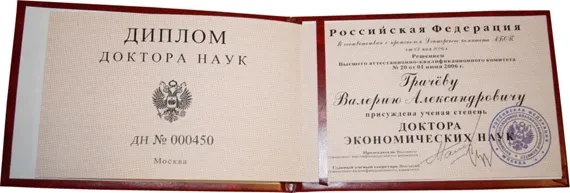
And during the search in the Grachev mansion, his diplomas of the candidate of economic sciences (dated 10.20.2005) and doctors of economic sciences were found (dated 01.06.2006). This is the fact that, before his 50 years, the millionaire did not worry about higher education and only in 2003-2005 received the specialty of the manager at a certain Academy of National Security, Defense and Law Order.
A courteous leak of photos from the Grachevsky features - all this stucco and brocade, gold and marble, monograms and ruffles (“in the style of pompis”, in the words of one ballerina) - simply yells: a ban on leading positions in the field of housing and communal services to people with such aesthetic views!
When the flow of federal money in the “housing fund” for the repair of dilapidated housing is a sabotage, and the scandals around the “housing fund” became indecently a lot, Grachev handed it to all the same Maslovsky (34%), Cherkasov (33%) and Energoinvest (33%). They, apparently, should sell the company further. For two years, the buyer has been looking for for two years. They were called "RusHydro" and the structures of Victor Vekselberg. Perhaps the price of the transaction will fall in connection with the arrest. Shortly before him, the Grachevsky “Kraszhilkominvest”, founded “paint”, began to gain other owners. These are all the same traditional Cypriot offshore, Maslovsky, Cherkasov.
Kuzichevs and Khardikov
Who is next for Grachev? The question rings over Krasnoyarsk, leading to nervous exhaustion both the authorities and the business close to it. For example, the Krasnoyarsk Regional Energy Company (CREK). From the regional budget, she was given more than 5 billion for the repair of dilapidated networks, and she undertook to distribute them under doubtful pretexts of affiliated companies and individuals close to regional power. In particular, the offshores of the Prokhorov -Khloponina -Kuznetsov group, all the same Cherkasov.
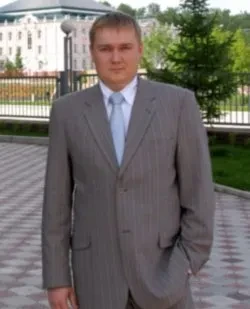
A business to ensure communal needs of the people and the processing of budget infusions has become family in Krasnoyarsk. Krak was led until recently, Vasily Kuzichev and his first deputy Andrei Khardikov, the sons of Mikhail Kuzichev and Yuri Khardikov. Dad Vasily, the vice-governor, retired last year. He worked as a phenomenon, leaving any troubles without loss. Literally: he played with General Lebed into cards when he collapsed a helicopter. All killed or crippled, Kuzichev - nothing. No matter what scandals he plunged-for example, leaving OGK-2, he accrued for himself and the deputies of more than half a billion as “gold parachutes,” came out dry. The same talents have the same Khardikov Sr., also in the past of the top manager in the energy sector (which means a special attitude to money). And he managed to work as a district police officer in the district department, a journalist, founder with the sons of Zelezuuz, a member of the Moscow government, a prefect of the northern district of the capital. From the Chubais team - to the Luzhkov team, what is it? But the highest aerobatics is: Khardikov allegedly “divorced” Elena Baturina by a billion. Per billion. Baturin. He was arrested in absentia, wandered around Europe. The case was closed, but new suspicions arose, Lithuanian prison ... And then Lithuania provided political asylum. The Secretary of the Political Council "EP" ... Last year, Khardikov went to the horizons. Captain of the yacht.
Andrei, one of his sons, worked at leading posts at Tomskenergo and in the Sochi administration. He managed to everywhere: he participated in the working group for the preparation of the Olympiad and in the development of money allocated by Moscow to master the Lower Angara: VEB established Kraslesinvest (“The largest investment project in the development of forests in the Russian Federation”), Kuzichev-Ml. and Hardikov-Ml. became the general director and the first deputy in it. At the same time, in the same positions they led Crak. And also Hardikov-Ml. He headed the Eastern Siberian metal structures in Nazarov, in the same place as an individual established a hot zinc plant together with Crak. He remained on paper, but half a million was spent on it (business plan). The leaders of the CREK generally seriously established LLC-to select the profit from the CREK: the share of the CREK in these LLCs was 20%, and the personal share of top management was 80%.
Here is the opposite picture: if Grachev did everything himself, he did not sit on budget money for the time being, then in the first plan there were young people owed to the fathers, and all its talents are seen only in the transfer of money from the budget to the wallet of the local nomenclature. People are different, and the schemes are alone. Dozens of affiliated companies - they help to squeeze the maximum profit from the life support of citizens. For example, renting the building "Out of itself." Or the same, “with oneself”, agreements on information services. So tens of millions are withdrawn.
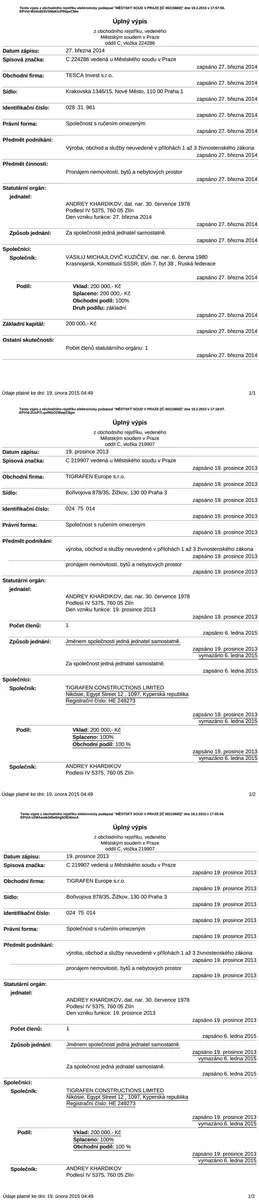
In 2012, CREK occupies 182 million to a close to her “Profit-Progress”. He does not receive interest. He also pays him a monthly rental rent monthly, as he sits in his building (which is confirmed by the documents found by the "new" in the city hall and arbitration). Who established this "profit", feeding to the dump in the trough of Crak, read the budget? In the extracts of the Unified State Register of Legal Entities, people associated with Denis Pashkov, then the regional Minister of Industry and Energy, as well as Cyprus Tigrafen Construction LTD. I will not say about the beneficiaries of this offshore yet, I will find out. Perhaps they themselves will appear.
When the operatives were frequent in the CREK, and General Yudin sent a letter to the authorities, describing those who were going on in their company (December 12, 2013), a week later, on December 19, the Cyprus company fussed and involuntarily lit up: in Prague it was registered by the Tigrafen Europe Sro branch-Andrei Khardikov. In the Czech Republic, commercial and judicial registers are open, and it is easy to trace that on January 6, S.G. Tigrafen Construction leaves the case, and the founder with the same deposit of 200 thousand kroons ( approximately 400 thousand rubles. - A. T. ) There is only one Hardikov. He also leads to Vasily Kuzichev in Prague Tesca Invest Sro
If the Vodokanal Krasnoyarsk flows into Slovakia, then the energy networks are tied to the Czech Republic. Please note: the Krasnoyarsk people do not bother, they call companies at home. TEPS-the fuel and energy construction company-the former co-founder of the "Profit-Progress" was called, whose share then went to Cyprus. The director of this LLC Anton Volokhin and two co-founders of the Profit-Progress (according to Statregistra) Janis Kusins and Andrei Skiter are in the list of 10 individuals drawn up by the police who received 546 million from the CREC (these are loans or the acquisition of their shares).
The same scheme in the relationship of CREK with the Moscow LLC Macroprof. He, too, Crak “occupies” round sums with something. And then for some reason he decides to buy it from the Cyprus offshore for 640 million rubles. Macroprot also has a building - in the center of Moscow, the Krasnoyarsk Permanent Protection under the Government of the Russian Federation settled in it, and the CREK pays a rental - 144 million for it. Despite the fact that the building has already gone to the CREK. Then, “Macroprof” also “occupies” 29 million. All oddities are explained if you ask its founders. These are Cypriot dochemio investments Ltd (90%) and Liumel Holdings LTD (10%). The first offshore is Prokhorov, he declared him when he ran for the presidency of the Russian Federation, Tatyana Zotikova and the same Cherkasov have the most direct relationship. Khardikov at one time worked as the CEO of Macroprot.
Neither Khardikov nor Kuznetsov (during these miracles - the Krasnoyarsk governor) did not respond to my requests. The situation with the New KRAK was clarified by the deputy head of the Presidential Department of the Russian Federation on counteracting corruption V. Mikhailov, deputy head of the department at the Guinetropk of the Ministry of Internal Affairs M. Medvedev. The impression is that the question of where the money from Krasnoyarsk is leaking was more worried about the Kremlin and federal departments than the regional council. The head of the Accounts Chamber of the region T. Davydenko announced a request to “New” that the audit was only planned ... a year later (!) Since the publication of the Ministry of Internal Affairs of her data, the Accounts Chamber finally summed up the audit. But she shared them with deputies and the Ministry of Internal Affairs. She refused to provide "new". What for the sake of the report was classified from the public is absolutely not clear.
From indirect sources, it is known that KREK expenses were checked in two years, 2012 and 2013. The hedonism of the power engineers is impressive. The money allocated by a holey regional budget went to the “elite” alcohol, mini-bars on business trips and breakfasts in rooms, VIP service at airports, charters. 80 million-corporate parties and charity, 42 million-the construction of a "training training ground" in the Krasnoyarsk Sea. Another 38 million is its two -year content. This is a villa of 688 sq. meters with a sauna, billiards, satellite TV, a covered with a barbecue terrace, with a separate warm garage for 4 cars with an attic floor and a house of service of 155 square meters. meters, transformer substation, water treatment devices and mosquito destruction. The flights here were paid by a helicopter for training: “The landfill was created to improve the level of professional machineration and qualifications of personnel, prevent production injuries, demonstrate advanced methods of work and exchange of experience.” Consumers for training and the exchange of experience were paid: kii, shampoos and gels, bath brooms, terry slippers, bells (?), Hair dryers, juicers, ice -generator, etc.
For special conditions and special regulations, the leadership relied on allowances. Another 8 million per year. He is one single bonuses - 16 million a year. And also annual prizes, quarterly, prizes for anniversary and festive dates, a prize at the end of the financial year ... V. Kuzichev KRAK charged 20.4 million in 2013. And the salary of ordinary hard workers ranged from 20 to 22.5 thousand.
Kuzichev and Khardikov left Crak on their own, Khardikov left for the Czech Republic, the company transformed from LLC to OJSC and announced the change of name: "The former causes unnecessary associations." That's all. Law enforcement officers were paused.
The CREK case is indicative. If they do not take him, limiting himself to one Grachev, then nothing new in the communal apartment happens, this is only a well -familiar spin mode. Squeezing the "Kraskoma" leisure. And then his purchases are cheap. The selectivity of repression is determined by commercial benefits.
Bykov says that the Last is taken from the Krasnoyarsk residents - our Yenisei. This, of course, is hyperbole, but he is right, calling Grachev "an instrument that was simply used." The same can be said about the younger Kuzichev and Khardikov. They all - the “master”, did exactly what they put them on these places and then controlled the power. The power that has specific name. They would ask them.
In these two different business historians there is almost nothing from the individuals of businessmen, there is only the character of the Russian state, a clinical diagnosis of it.