
Translated material
Ukrainian argument
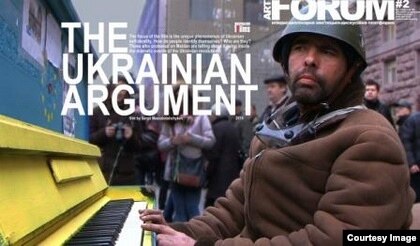
Kyiv director Sergei Maskhobamyshchikov talks about how, with an interval of a decade, he shot two films about the Maidan
The Kiev director Sergei Masoloboshchikov presented his new work to the public - the documentary "Maidan. Ukrainian argument" dedicated to the events of the late winter of 2014 in the center of the Ukrainian capital.
Sergey Masloboyshchikov , known for his theatrical productions, the work of the screenwriter and successful projects in the feature cinema, ten years ago shot a documentary about the "Orange Revolution" - "people of the Maidan". The new tape of Masloboyshchikov is based on an interview with Maidan-2 activists, shot in the thick of events: the director himself spent more than one day on Independence Square. Is it too late - a year and a half after the resolution of the crisis - his work came out? How does Ukrainian society now evaluate the events of 2004 and 2014 in the center of Kyiv?
- I made this film simply because I could not help making it. Naturally, I shot right on the Maidan, mounted at the end of last year. I did not PR on this topic, so I calmly waited for the organization of views. For me, the "Ukrainian argument" is an important story that the revolution took place from below. To some extent-this is the answer to the accusations that the Maidan was organized by someone from above, that allegedly, some puppets gathered in the square. In fact, according to these persons, according to the sincerity of the answers of my heroes, it can be seen that the Maidan is a completely folk, lower initiative, that the Maidan did not take place as an ideological movement, but as an individual act of each of those who went to the square.
Trailer of the film "Ukrainian Argument" (2015)
- You “lived” at first the Maidan, since you were a participant, then you comprehend its story again, when everything was already subsided in the square, when the dramatic and tragic Ukrainian events turned the other way. What does the experience and consequences of the Maidan mean to you? Are you satisfied with what Maidan led to?
Maidan-2014-continuation of the Maidan 2004 at a different qualitative level, at the level of understanding by each person that something still depends on you in the life of the country
- Any social movement consists of many channels, it is also a multi -vector. It seems to me that in general, the country is moving along the right path. Negative processes that inevitably accompany this movement, I hope that they will somehow disappear or level-these are just the processes for which people went to the Maidan. This is not to say: one - and we got the result! One way or another, development is a process. The vector of the development of Ukraine, it seems to me, is correct, exactly the one that the Maidan sought. The main result seems to me that, since it is connected with only public messenger: will the authorities allow, will it allow whether it will make the manifestation of his own initiative, amateur performances, without any precepts. Maidan gave a definite answer to this question.
Kyiv director Sergei Maskhobamyshchikov talks about how, with an interval of a decade, he shot two films about the Maidan
- Your new film is called "Ukrainian argument." Why did you call him so what this system of Ukrainian evidence is?
-Each has its own argument, the meaning of which consists in the individual message of each person, they merged into some single, general movement. The main thing in this system of evidence is the desire, in the intention to be yourself.
- The events on the Maidan turned out to be, as it is now clear, a prologue for Russian aggression on Ukraine. Your film has some kind of expectation of just such a development of events, at least a background? Or is it not read at all?
- Of course, there is this expectation, the expectation of a certain anxiety. As a matter of fact, the majority of the interview I recorded when the Maidan was not yet completed when he was “in the process” ... Yes, there is this anxiety, there are fears regarding the intervention of a certain force. But at the same time there is optimism, there is a desire to go to the end.
“Do you know something about how the fate of the heroes of your film has developed?” Where are these people now?
- I practically do not know. I know that one of the characters is now fighting in the army, in the volunteer battalion, he was already injured several times. Another person, he is from Donbass, returned to his home, and when the war began in full force in the east of the country, he remained there. In the film, another metropolitan intellectual, which broadcasts from the stage, he now remains in the clip of people who form here, in Kyiv, a social atmosphere.
- Ten years ago, you shot a documentary about the events of the First Maidan, the 2004 Orange Revolution. Purely professionally for you, this work around Independence Square, obviously, was at least partially repetition of the passed. How did the 2004 Maidan differ from the 2014 Maidan?
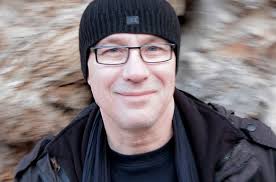
- I would not say that this is a repetition. It seems to me that this is the wrong word - repetition. This is not a repetition, but a continuation at some completely different qualitative level, at the level of another consciousness and another understanding by each person of his role in this story-the understanding that something is still dependent on you in the life of the country. Such an understanding came, of course, in 2004. Moreover, I think that if in 2004 the Maidan ended in failure, then this failure would have broken off a whole younger generation. Due to the fact that this generation did not break, ten years nevertheless allowed people to gain some kind of faith in themselves, and gain power, and understanding of their own rightness, and-most importantly-a feeling of freedom. Over the past decade, I was in Russia, in particular in Moscow, and I felt how this feeling gradually left Russian society. At first it was ridiculous, I even jokingly mocked some of my friends, but now, after the “second Maidan”, this loss of freedom has acquired a completely tragic character in Russia. We began, let’s say, broken relationships: the mass of my friends, whom I considered smart, intelligent, understanding people, suddenly turned out to be a completely different direction from me. So, even talking on "dangerous" topics with them is impossible.
The film "People of the Maidan. Nevseremos!" (2005)
-You worked differently on the second film, not like the first?
-Firstly, I'm not a documentary. I make documentary cinema from time to time, usually in those moments when some public cataclysms occur. I am the director of the feature cinema and theater director. You know, I did not think about the opportunity to make documentaries, I just made them. I shot it without any funding, without anything, absolutely independently, the good that the modern level of technology allows you to do this. Filming of the last Maidan is motley, from the HD camera to a mobile phone, in a variety of formats. This, it seems to me, is even more interesting, there is some kind of such irrational in this. The unintentance of everything that happened was connected with the multi -soreness of the shooting process.
- Tell me, have you not late presented your work to the public? In your opinion, does the topic of Maidan still continue to interest Ukrainian society? Or is the main conclusions made, the lessons have been learned and now Ukraine occupy other topics?
- This topic will never close, because, one way or another, it is a piece of life of so many people. They will return to the Maidan again and again. A huge number of people were shot on the Maidan, but in any case, none of these filming is not a repeat. One way or another, this is some other angle, even if the same characters fall into the frame in different films of different authors. You are right: the society is now busy with other issues, but the Maidan will still not go anywhere.
- Are you working on a new project now? Political cinema again?
- My main work is now as follows: I'm going to write a script for a full -length feature film. This is not a political topic. I think, however, somehow the echoes of political events in the script will remain, but in any case it will be a story about a person, about fate, about the search for his place in life.
-How do Ukrainian artists reflect socio-political events in the country?
It seems to me that for more than twenty years of independence of Ukraine, some general growing up has occurred, an understanding came that no one would solve your problems without you
- I do not follow this intently, but nevertheless I will say that the level of reflection is very different - from speculation to a completely serious and honest conversation on important topics. The main thing is that in this socio-political conversation of artists there is no mainstream. In fact, I am very afraid of this, because when the mainstream begins to form in an art associated with a certain political event, art immediately turns into an ideology. And from ideology I ran all my life.
- Have you changed the events of the last one and a half years?
People have an understanding: they do not receive freedom once and for all, it must be further defended
- Undoubtedly. An internal turn occurred, or something, in relation to life, to people, to society. First of all, in relation to the neighbor. I am leaving more and more general questions (although I also dig in them quite often) and closer and closer I come to thoughts about the phenomenon of a person as such. On the one hand, age probably affects. But on the other hand, we, whose youth fell on the Soviet era, were accustomed to some such ... infantile view of life, at social carelessness and, most importantly, to irresponsibility. It seems to me that over the twenty -odd years of independence of Ukraine, a general growing up has occurred, an understanding came that no one would solve your problems without you. This process goes slowly and painfully, I believe that it could go much faster, but, nevertheless, it is going ...
- Do you think that the Maidan and subsequent events have made Ukraine a vaccine from returning to the Soviet way of life and thinking, which have developed with Russia by centuries? Return is no longer possible?
- I would like to think so. But, of course, you cannot speak once and for all. People who stood on the other side of the barricades - and there were quite cruel people - did not share, they stayed here, here in Ukraine. I would like to think that Ukraine has grown, the initiation period has passed. I really hope that the Ukrainians understood: this process of growing up is non -stop. The main mistake that occurred after the Maidan 2004, it seems to me, was that society calmed down, coming to the conclusion that the victory automatically solved all the problems. But in fact, it turned out - again and again, every day freedom must be defended. It seems to me that now people have an understanding: this process cannot be abandoned, freedom once and for all is not obtained, it needs to be further defended further and further, you need to be constantly careful regarding your freedom.
-In this sense, as the metaphysical concept of the Maidan, in your opinion, continues?
-In a sense, yes ... I think that yes ... the processes in society are quite active, conscious people participate in them. A kind of rebirth occurred, even in details, in small things. Kyiv, for example, has always been mainly a Russian -speaking city, and now it is becoming more and more Ukrainian -speaking. A huge number of young people speak Ukrainian-these are good, smart guys. Honestly, my soul rejoices when I watch them. And God forbid that they would come out of the current difficult situation for the country, ”Ukrainian film director Sergeioloboyshchikov said in an interview with Radio Liberty.
Fragment of the final issue of the Freedom Time program
-

Andrey Shary
I.O. Regional Director of Radio Free Europe/Radio Liberty for Russian -Sound Content
Andrey Shary on Facebook
Sharya@rferl.org