
Translated material
After the mat. After ideology. After the holiday
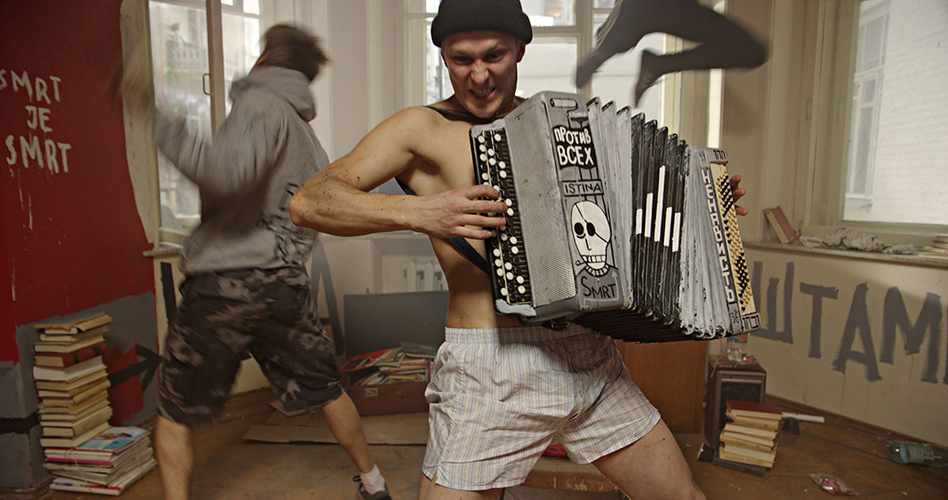
On the Kinotavra, one day showed two presumably the best films of the festival. The “rag union” by Mikhail Radutsky is pretended by the Leval Manifesto, the “country of Oz” by Vasily Sigarev - the conformist New Year's comedy for completely consonants with the policy of the party and the government of the new Russian philistines, but in fact, both paintings were shot only to say “no” of any ideology as such.
The Rawning Union is a kind of mocking game response to a gigantic number of documentary works about the “war”, Pussy Riot and other artificial unions that have the goal of blowing up the existing world order. The quiet guy Vanya, who does not quite imagine where to put himself after school, yearning for real, full events of life and possessing perfectly empty brains, in which it is time to put some great idea in, go to work as a walking advertising of monuments in the cemetery and meets a group of cheerful guys practicing dashing parkour among tombstones. The guys call themselves a “rag union” and represent a range of diverse charisma, which do not quite understand why they gathered together, but wildly eager to commit at least something significant. The square Peter (the star of the performances of Konstantin Bogomolov Pavel Chinarev), who does not part with the poodle weight, quotes the Stoics, schemes and plays the button accordion. Thoughtful provincial Popov (Alexander Pal), who lost his family in the fight against the village heroin mafia and then disappointed in any state institutions, tries to seduce the left -handed idea of the gopniks at the stall, and in his free from agitation and propaganda, the time makes explosive devices from the “The cook's cookbook”. Major Andrei (Ivan Yankovsky) calls himself a bloody Libertarian, plans to enter the architectural and tries to give this random company the form of a protest art unit. In order to decide what they really want, and at the same time gaining the necessary force for resistance, friends go to the cottage to the worker of the Van cemetery, there, under the guidance of physical education, Peter train the body in the morning, and in the evenings - the spirit.
The idea is born loudly to desecrate one of the Moscow architectural shrines. In preparation for the radical artistic gesture, Popov finds in the vicinity of hallucinogens, with the help of which he is even more effective about the world revolution, Peter tries to repeat one of the feats of Simeon of the pillar, using the weights and support of the power line, and Andrei calculates the moment when friends can be effectively handed over to the FSB.
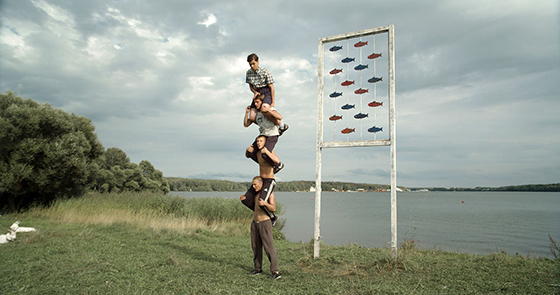 Frame from the film "Rawning Union"
The debutant Mikhail Radutsky is known for remote short films, which Kinotavr halls are laughing for several years; The last was the mockmentaries “Legs - Atavism”, a pseudo -scientific study that the person, having become earnest, made a large evolutionary mistake. The “rag union” at first also seems to be a kind of cheerful thing, which the author, inspired by the English sarcastic comedies of growing up from “Oh, lucky!” To the "submarine", trying to stretch a full meter.
In fact, this is a very important work that to say, when there is nothing to say, about how to exist in the postideological space, when you still long for something absolute, you will seek great ideas that have been compromised by one for a long time. “Rawning Union” is a nicer story about what to collect their own identity, when there are practically no bricks to build it and any act looks ridiculous: do you get into a pillar with a couple of weights in your hands, whether you cut this pillar to save the crazy friend, literally returning it to the ground, whether you compose the recipe poisonous insects. The demonstrative power of the film is a place of place, considered by many critics a minus, in fact there is an artistic solution: we live in a space where the statement is impossible, and its statement is about this impossibility. However, it is packed in such a tempting form (male brotherhood, jokes, gags, sharp political remarks) that this sad replica has a great audience potential - at least yesterday the public was applauded to the director of the hall.
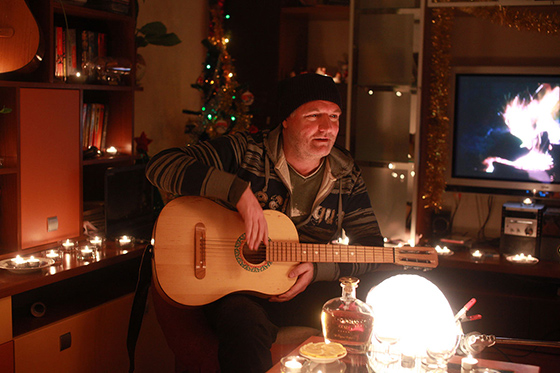 Frame from the film "Country Oz"
No less loud applause, as well as a fall on the floor of bottles, glasses and bucked bodies, the audience was met by the long -awaited New Year's comedy of Vasily Sigarev, due to the overdose of non -normative vocabulary, overtaking the viewer in the most inappropriate season for the snow fairy tale. “Country Oz” (whether the name refers to the fairy tale or to the ambulance phone is not entirely clear)-really heartbreaking, unacceptably festive cinema, sort of work, “Christmas trees”, where instead of Ivan Urgant and sonorous mechanical children-Alexander Bashirov and prostitutes in Snegurochka costumes. The plot is built according to the proven Carroll template: a naive and direct heroine, a native of a village called Malaya Lyalya named Lena, as always, masterfully practicing the next folk type of Yana Troyanova, is allowed to travel along New Year's Ekaterinburg; On the way, she meets miraculous weapons and perverts of all stripes. The playwright and director of Sigarev, known for his mercilessness, passes through all socially significant types in modern Russia: there is a gopy patriotic drunk that is a latent gay, and a dense Balzak blonde, fallen on the resort Greeks, and a particularly disgusting bard, more in the world, which appreciates liberal values, tantric sex and face. Vasily would like to get strongly for Barda (not the times now, so that it is so to be so renovable to expose the already trifling liberal thought) - but only until you understand that the most controversial heroes in the film are dressed exactly as the author is dressed: an unchanged hat (about which is one of the best indecent jokes), a T -shirt with a hood - who saw Sigareva, who saw. Smart, evil, but still painting in weakness to humanity, the author arranges a total carnival with him in the main role. Russian society, which he is dissecting, is caught at the time of existential peak - the celebration of the main holiday in the country. Vodka, Olivier, “girl, let's give a lift”, “what, I can afford” - all the extreme manifestations of the famous mysterious Dostoevsky soul are packed in the history of such a high existential density that it is simply impossible not to be imbued with the author’s attitude to the homeland of Dostoevsky.
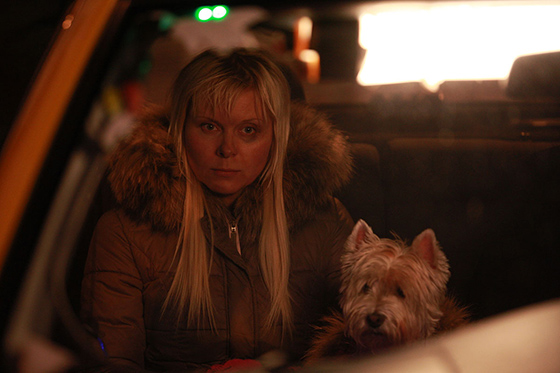 Frame from the film "Country Oz"
It is noteworthy that one of the two main characters - Alice of the male, or the bird of Dodo, the educated seller of the alcoholic stall played by the co -author of the script Andrei Ilyenkov - performs the literary opuses of Sorokinsky: gentle stories with a significant fecal component. After reading the cherished notebook of the seller, his friend, a drunk performed by Alexander Bashirov, asks where honor, courage and patriotism have gone, accuses the writer of addiction to low topics and in the punishment throws in that capacity with his own feces. The merciless Renaissance carnival, where people throw each other shit, shoot each other from injuries, end with a small manual dog, eat dumplings with their hands and vote for the LDPR party, appears a Russian world, meaningful to Sigarev in the form of a disgusting New Year's comedy for the most accessible for the Russian world.