
Translated material
The FSIN announced the cessation of another riot in the Bashkir colony
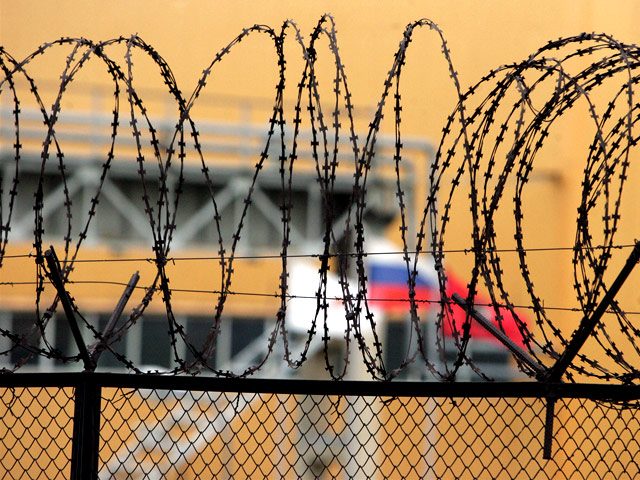
The mass riot , which was raised on June 8, lifted by prisoners in the medical and office of N19 under a maximum regime colony N2 in the city of Salavat in Bashkiria, was discontinued, the regional department of the Federal Penitentiary Service (Federal Penitentiary Service) said on Thursday.
According to her, the convicts stopped rebelling "as a result of explanatory work" carried out by the Federal Penitentiary Service, the LIU administration, prosecutors and members of the Public Supervisory Commission (PMC) of the republic.
"The convicts took off the posters, left the roof, unlocked the entrances to the detachments. Currently, cleaning is being carried out in the detachment. The institution is operating on the daily routine. The prosecutor’s office and the Investigative Committee will give a legal assessment of the actions of the participants in the share," the report said.
On June 8, the Federal Penitentiary Service reported that about 100 convicts in Liu-19 arranged a riot, "demanding that the leader of the group of negative prisoners, who was in the detachment with strict conditions of detention." The rebels barricaded in the three -story building of the hostel of one of the detachments, forcing the inputs and outputs with furniture, some of them climbed to the roof.
At the same time, according to the Federal Penitentiary Service, the rebels directly were "at least 60-70 people", and the rest in this room were forced to. Among them were bedridden patients who needed treatment, but the rebels did not allow doctors to them, the department noted.
"The persuasion managed to convince them to open the door of the detachment. Now the colony is working as usual. Doctors are made in the detachment, patients receive treatment and food," RIA Novosti said in the press service of the Federal Penitentiary Service.
The riot was explained by the unwillingness of the prisoners to refuel beds
They emphasized there: the leadership of the colony will not fulfill the requirements of prisoners, because they are illegal and insignificant. In addition to the requirement to free their leader from the pre -trial detention center, the prisoners also refused to refuel the bed and remove the territory, that is, to comply with the internal regulations, the agency’s interlocutor told.
LIU N19 is the only specialized anti -TB hospital in a closed type in the republic. According to Ufin, convicts who are ill with tuberculosis are treated here from almost all regions of the country, and at present there are more than 400 people serving a sentence on a general, strict and special regime, while there are many alcoholics and drug addicts among them, in addition to HIV tuberculosis.
Liu-19 adjoins IK-2, where two riots in a row occurred on May 10 and 13. In the first case, more than 100 convicts refused to comply with the “legal requirements of the administration”, beat representatives of the camp “asset”, after which they barricaded in the premises of one of the detachments and began to demand a weakening of the regime, calling the rest to riots and pogroms, the regional SK reported.
According to media reports, then the prisoners rebelled, "unable to withstand the abuse of the administration of the institution." According to the UK, during the riots 23 "activists" were beaten, who collaborated with the administration of this colony of maximum security colony, where convicted people convicted for serious and especially serious crimes were serving a sentence. The situation was resolved by the evening of the same day "without the use of physical strength", the Federal Penitentiary Service said.
And three days later, in the same colony, more than a hundred prisoners rebelled again, trying to “interfere with investigative actions against the mass riots suspected of organizing” May 10: they “beat glass, gathered on the parade ground, some of them climbed onto the roof of a detachment,” the Federal Penitentiary Service said. And in this case, “explanatory work” was carried out with the convicts without the use of special equipment to them, the department emphasized.
In these cases, two criminal cases were instituted: under Part 3 of Art. 212 ("Calls to the riots") and part 1 of Art. 321 ("disorganization of the activities of institutions ensuring isolation from the company") of the Criminal Code of the Russian Federation.
Meanwhile, during May, a whole series of various incidents related to mass protests or disobedience occurred in Russian colonies. In this regard, human rights activists suspected that the wave of riots could be intentionally provoked by FCIN officers in order to justify the tightening of the prison system using the Ministry of Justice of the Minuster, who was offered to expand the powers of the jailers to forcefully suppress the riots.
Many well -known human rights activists, including the Commissioner for Human Rights in Russia Ella Pamfilova, her predecessor in this post, Vladimir Lukin and the head of the Moscow Helsinki group (ICG) Lyudmila Alekseeva, who had recently returned to the Presidential Council for Human Rights Council, opposed.