
Translated material
Again, the blue is
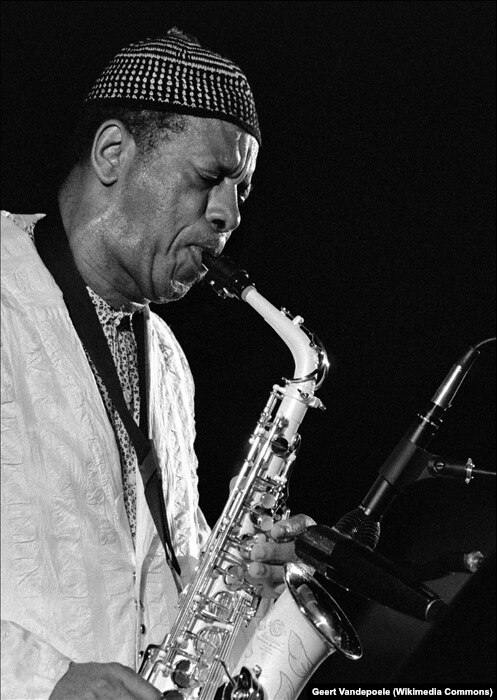
The sad news covered the world of jazz on Thursday evening: Oernett Coleman, Free Jazz's father moved to the highest spheres. Ornett was an al-i-tenor saxophonist, trumpeter and composer. He was 85 years old, all about Oernett Colemane in the nearest releases of the program.
Montgomery Bernard Alexander, Monti Alexander, had just blew seventy candles on a festive cake. He was born in Kingston on Jamaica and began to play and perform there. He was seventeen years old when his family moved to live in Miami, and a year later he had already played in the New York club Jilly's. Gilly Ritzso was an Italian; He worked for his father, delivered ice through her ears, until he became the owner of the club, a friend and assistant to Frank Sinatra. So it is not surprising that the pianist of his club, Monti, once began to accompany “blue eyes. But the real pianistic influence on Monty was exerted by Art Teitum, Oscar Peterson, Winton Kelly and Ahmad Jamal.
Monty Alexander - I'M Afraid The Masquarade Is Over - 4:06 (Monty Alexander Trio --- Concord Jazz)
“I'M Afraid the Masquarade is Over”, “Your eyes do not shine, as it was before, and when our lips are found, there are no special miracles. I am afraid that the masquerade ended, like love itself: it came to naught. ” The standard Ollie and Herba Megidson. Trio Monty Alexander, piano; Herb Ellis played the guitar and Rei Brown at the double bass. The record was made in San Francisco, in August 1980.
The historian Jazz Joachim Berendt, before moving on to Monti, Alexander speaks of Arte Teitum and the tremendous influence that Art had on several generations of pianists. “The most successful pianist of the Tatum school,” he writes, “was Oscar Peterson, who repeated and repeated all his life and repeated that he was forever in debt to Arth. Peterson swore with colossal strength and energy, with exciting attacks of attacks. In the seventies, when he began to perform solo, the influence that Harlem pianists had an obvious was obvious: Fats Waller and James Pi Johnson. And in their work, powerful bass lines lived, that is, they were the heirs of Art Thatum. But time passed, and Oscar Peterson eventually became the head of his own pianistic school ... "
Monty Alexander was born on June 6, 1944 in Kingston, Jamaica.
Art Tatum - I'M in a Sentimental Mood - 6:02 (Art Tatum - Stompin 'at the Savoy - Past Perfect)
“I'M in A Sentimental Mood”, in general, this is the theme of Duke Ellington with the shorter name “In a Sentimental Mood”, Art Tateum, and this he played solo, adds “I am in a sentimental mood” and puts his name under the play. In my opinion, it is worth perceiving art as a co -author, or an arranger. In any case, his style is convex and brightly reflected in this record made on December 29, 1953 in Hollywood, California.
Thatum fans were not only Oscar Peterson, Billy Taylor or Bad Powel, but also Vladimir Gorovitz and Sergey Rakhmaninov. Count Baisy called him the eighth miracle of light. But since we have another mentor of Monti Alexander ahead, I will remind our coordinates:
You can listen to the weekly “Jazz Time” on the short waves of “Freedom”, through satellites Hotbird and Asiasat-7, but cleaner and more stable from our website www.svoboda.org. The microphone in Lutetia has your ds.
The Oscar Peterson Trio - I DIDNIT Know What Time It Was - 6:37 (The Oscar Peterson Trio - Walking The Line - MPS)
“I disid knuck What Time It Was” - “I did not know what was the hour,” the music of Richard Rogers; Lorenz Hart wrote words. Total, the standard for the Broadway musical of 1939 was "too many girls ...". In 1940, the same name-comedy of George Abbot was released. Oscar Peterson, and it was him, played with George, Jiri, smuggles and Ray Price - drums. The record was made in Willingen, Germany, November 10, 1970.
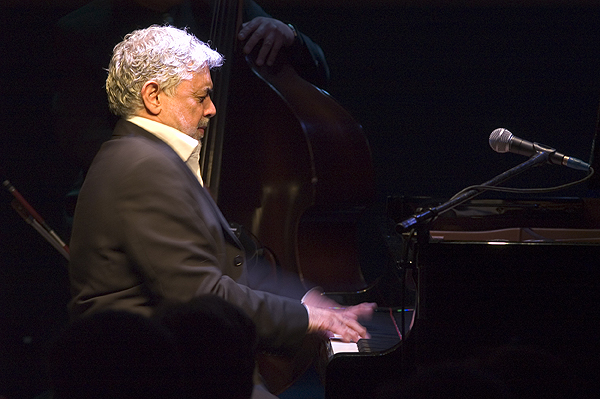
Oscar Peterson did not escape the charm of the Brazilian wave, which covered American jazz in the early sixties. His student, and then - the follower of Monty Alexander retained the charm, and sometimes the rhythms of his native Jamaica. But here Monti, who can still be confused with Oscar ...
Monty Alexander - Close Enough for Love - 6:43 (Monty Alexander - Ballad Essentials - Concord)
“Close enunch for love”, “Still not quite, but almost love ...” Hit 79 years old Johnny Magns and Paul Williams. Monty Aleksander from the disk of the company "Concord" - "The essence of the ballad." Monty recorded fourteen discs at this company from 1986 to 1996, and in March of the two thousandth year, Concord released the chosen, one single sd, the best plays of Monti. From this SD "Essence of the Ballad" I took "almost love ..."
I had a friend, Mike Bever, in a sense, he was on my list “Forgotten in May”. Mike was born in Queens, New York, May 18, 1930. He set sail in the best, I hope the edges five years ago. He was a thrombonist and played in the orchestra of Miles Davis on the first record "Birth of a Kula". But the musical career kept him in the sidenets and he went into journalism and prose and settled in Paris. He wrote for “Download Beat”, “Rolling Stone” and “Penthouse”, and then for many years he became a jazz observer of International Herld Tribune. In 1969, he moved to London, and in 1972 to Paris, which became his home. In 1969, he published a book not for the weak “inaudible sound of needles” - about his struggle against drug addiction. His most successful book was, published in 1985 in Paris, the book “Sadness of St. Louis: Swing under the rule of the Nazis”. This is a documentary book. Mike spent three years, exploring the French and Austrian archives. I always dreamed of making a program about him, but it was bad with music, even with the last 1979 disk, Trio T -shirt Zverin or with his records with French guitarist Christian Eskude.
Why did I remember him now? A few years before the death, he gave me his autobiography. It was called "Close Enough for Jazz."
If you are lost among the cod and squeak of short waves, if you do not have a hardening of your ancestors who listened to the “voices” through a powerful surf of the muffles, given even that now on the short waves of “freedom” we can be heard, you can listen to our last programs to podcasts from our website www.svoboda from the microphone all the same in the town on the Seine - your ds.
Dear Mike, let you nod “almost love” with the words, and I will make a program about you anyway!
Tony Bennett - Close Enough for Love - 4:28 (Bennett the Art of Romance - Columbia)
“Close Enough for Love”, this time with the words and performed by Tony Bennett. The orchestra of the composer and the author of the song Johnny Magns. The disk “Columbia” - “the art of romance” appeared on our musical market 11 years ago ... As for the translation of the song itself, this is something difficult close to Cole Porter. And I would add (words)-a little more dramatic, and therefore even more complicated.
You listen to the weekly and booty “jazz time” on the waves of “freedom”, from the space through satellites Hotbird and Asiasat-3, and from our website www.svoboda.org. The microphone in Lutetia has your ds.
Stan Getz - A Summer afternoon - 5:58 (Stan Getz - Focus - Verve)
“A Summer afternoon”, “Summer afternoon” - Eddie Soter. Historical disk wall of the hetz, Stanley Gaitsky, "Focus". Alan Martin, Gerald Tarak and Normen Carr - violin; Jacob Glick - Alt; Bruce Rogers - cello; Roy Hines (exclusively only in the first part of the suite!) - drums; Getz walls-tenor-saxophone and leading soloist; Hursesh Kay - conductor. In total, 19 musicians participated in the string and rhythm group, including smuggler, an harpist and percussionist. But their names did not fall on either the carpet or even Wikipedia.
Now the background itself: when the walls of the hetz played in the orchestra Benny Gudman, he was very impressed with the arrangements of Eddie Soter, a composer who wrote several of the best things for King Clarinet: “Clarinet à la King”, “MoonLight on the Ganges” and “Benny Rides AGain”. Soter graduated from the Columbia University of New York and the Julian music school. He began, like a drummer, then played on a pipe in the orchestra of the vibrophonist Red Norvo. He became famous as a composer and arranger at such kings of a swing era as art sho, Tommy Dorsi, Woody Harmean and, as I said, Benny Gudman. Gunter Schuller wrote about him: - I do not think that there is a master of harmonic modulations equal to Soter. In this sense, he is equal to Richard Strauss in classical music. ”
I will continue the story of Vinil’s record “Focus”, but the walls of the hetz will sound already without a string ensemble, and with the pianist Kenny Barron:
Stan Getz & Kenny Barron - I Remember Clifford - 6:07 (Stan Getz & Kenny Barron - People Time - Sunnyside)
"I Remember Clifford", "I remember Clifford", Clifford Brown - the standard of saxophonist Benny Golson. The duet wall of the hetz-tenor-saxophone and Kenny Barron-Royal. Spring 1991, Copenhagen. The last double sd wall of the hetz. He died on June 6 of the same 1991 at home, to Malibu. His will said that he prefers to be cremated and so that his ash was dispelled in the bay.
The story of jazz on short waves “Freedom, as well as from space through satellites Hotbird and Asiasat-3 and from our website www.svoboda.org. The microphone in the town on the hay is your DS.
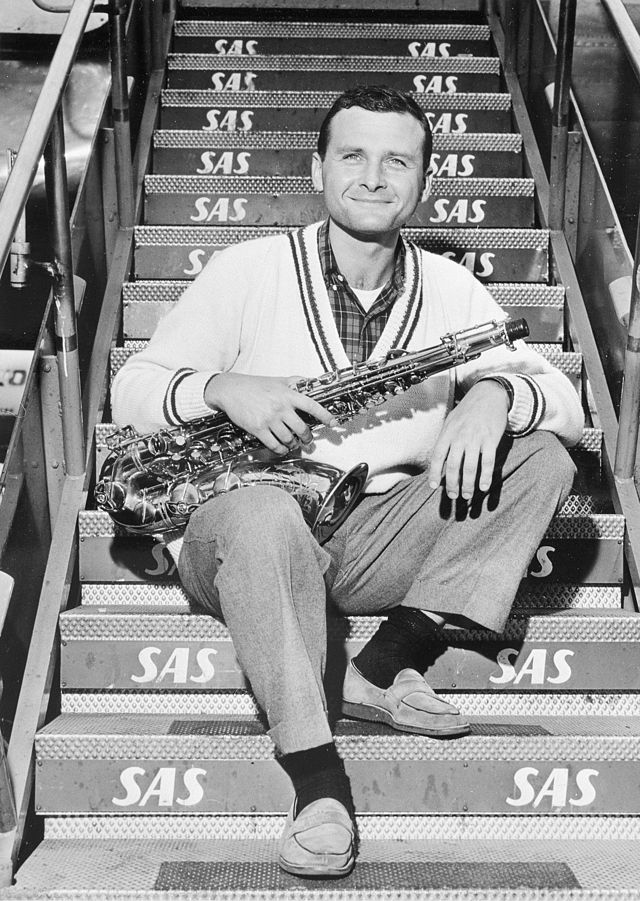
Getz walls, deciding that he was tired of the standards, popular songs, jazz classic and the like, turned to Eddie Soter and, without abode, asked him to write a suite for him personally. Soter recalled that the saxophonist said: “Write, anything, everything that you will like and everything that you has in your heart and we will write down the disk on“ Verve ”, and do not care about what they will think at the company ...”
Eddie Soter wrote a suite of seven parts, a suite for a string ensemble, and with a frank bow towards his patron and idol Beel Bartok. But not only. Critics found two more musical easters, hints of Stravinsky and Debussy.
The first sound recording session was scheduled for July 14, 1961, the second - on July 28. The thirteenth from the stroke, Goldi died - mother of the wall. He did not appear on the record, and, as expected, spent seven days, Shiva, at home, mourning with his mother. During this time, the string ensemble recorded almost half of the suite. Eddie Soter said that in all seven parts he left “hollow spaces” for the hettz saxophone.
On July 28, the second recording session took place. It was not overdubbing, like Bill Evans. Getz listened to the record in the headphones and soloed. He improvised without notes, tips or arrangements - on a living thread. The second part of the chitz and the Khersha Kei ensemble were recorded together. Getz believed that the "focus" is a masterpiece. His best disk.
Stan Getz - Her - 6:11 (Stan Getz - Focus - Verve)
“Her”, “she”, “about her” - the second part of the suite of Eddie Soter, which the hetz dedicated to the mother’s memory, the very one that Berdichev left in 1907. The string ensemble of Hursesha Kei and tenor Saxophone the wall of the hetz.
On this, the Jazz Time Club lowers the curtain. We will be in your company again in a week. The sound engineer of this issue is Alexander Arkadyev, the author and the presenter is your DS. You, as always, will find our podcasts at www.svoboda.org. All you are blessings, a successful and boring week, Chao, Bai-Bai!