
Translated material
Peter, Mazepa and Freedom
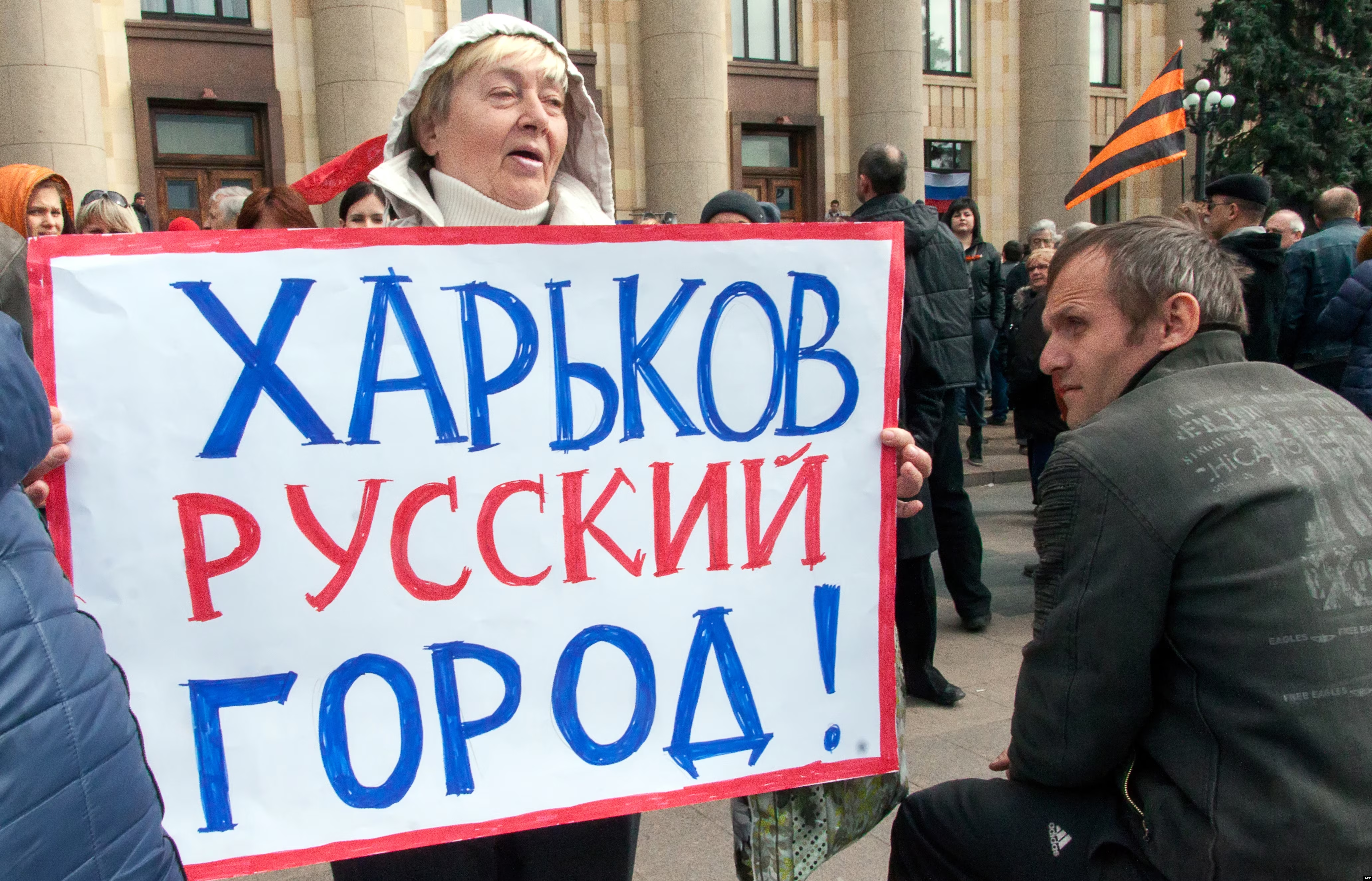
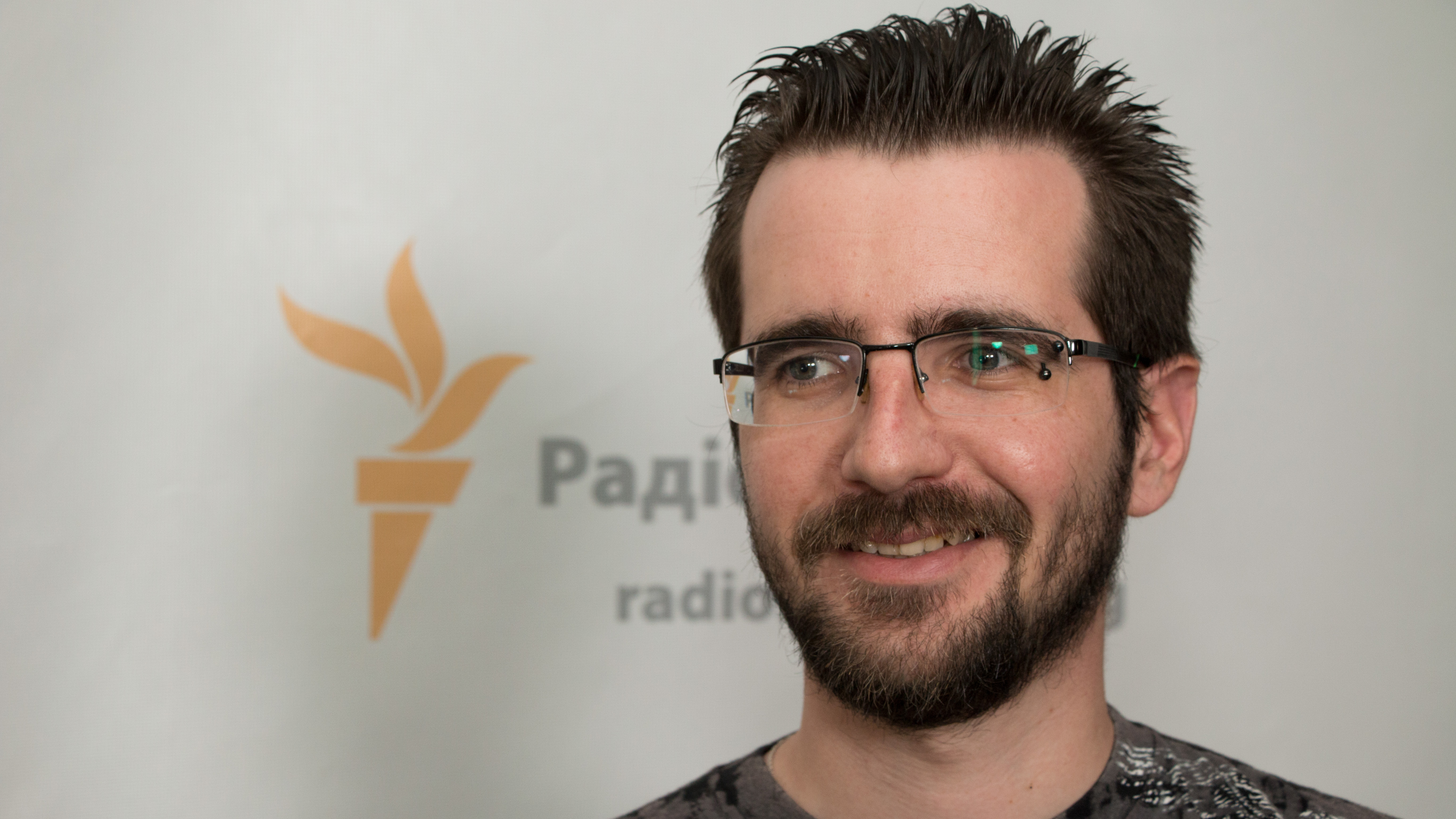
Vitaly Portnikov: Russians in the new Ukraine - a topic that suddenly became very important and hot immediately after the victory of the Maidan was actively discussed against the background of events taking place in the east of the country. Do Russians have their own vote, do they need it, what role do they play today in the process of forming the Ukrainian political nation? We will talk about all this with our guest, the creator of the Internet publication "Peter and Mazepa" Alexander Noynets .
Your online publication, in fact, is called the "Credo of the Russian People of Ukraine." What do you mean by "Russian people of Ukraine" - who is this?
Alexander Noynets: These are people who consider themselves Russian and live in the framework of Russian culture. Accordingly, the Russian people of Ukraine are all the same Russian people, only with Ukrainian citizenship, connecting their lives with Ukraine.
Vitaly Portnikov: After all, there are a huge number of people who speak Russian, think in Russian, read books of Russian writers, but do not feel Russian. Are there such people?
Alexander Noynets: Yes, of course. There are a lot of them.
Vitaly Portnikov: How to separate some from others?
Alexander Noynets: They do not consider themselves Russian.
Russians in New Ukraine are a topic that unexpectedly became very important immediately after the victory of the Maidan
Vitaly Portnikov: That is, this is exclusively a matter of self -identification. We are talking together, we can have the same cultural space, but I do not consider ourselves Russian, but you think. And your Russians, relatively speaking, Ukrainians in a political sense?
Alexander Noynets: In the political sense, I have a passport of a citizen of Ukraine - it is obvious that I am a Ukrainian, I belong to the Ukrainian political nation, which is still very weak. In addition to me, ethnic Ukrainians, ethnic Jews, ethnic Tatars and a whole bunch of smaller nations belong to the Ukrainian political nation.
Vitaly Portnikov: Do you understand that for a Russian person who listens to us and looks in Russia, all this sounds wild?
Alexander Noynets: In this case, the Russian who listens to us in Moscow should look out the window, look at other Russians, members of the Russian political nation who go to red moccasins, shoot from the golden Makarov to the air, and Allah through Ramzan Kadyrov gives money. They are Russians - this does not cause any conflict.
Vitaly Portnikov: Of course, but they are not Russians - this is an important point. I also often talk about it with people, it seems to me that just the political nation in Russia should appear at the moment when all these people that you are talking about will feel not just Russians, but Russians.
Alexander Noynets: Why?
Vitaly Portnikov: You call yourself a Ukrainian, and for you this is a synonym for a political nation.
Russia is a state that suppresses Russian identity and has nothing to do with the interests of the Russian people
Alexander Noynets: Absolutely. The political nation of Ukraine is called "Ukrainians", the political nation of Russia is called "Russians". This is the course of the political leadership of Ukraine, this is the course of the political leadership of Russia. This is an exclusively philological issue that in Ukraine ethnic "Ukrainians" coincides with political "Ukrainian".
Vitaliy Portnikov: You collaborated with another famous online publication in the Russian national sphere-"Sputnik and Pogrom". What Russian people did you want to find there?
Alexander Noynets: We had a wild conflict. Probably there is another audience. But at that time she was the same. In the Russian political sphere, there was no such cry that only Russia should protect Russians and no one else. At that time, the "satellite and pogrom" took the same position as Russian nationalists in general on the entire planet - that Russia is a state that suppresses the Russian identity and has nothing to do with the interests of the Russian people.
Vitaly Portnikov: Do you think so now?
Alexander Noynets: Yes, of course. For some reason, I am always asking me about this as an amazing one. In fact, it is this point of view that dominates modern Russian nationalism. Guys from the "satellite and pogrom" just in the minority. For many years, starting in the 1990s, Russian nationalists have claimed the same thing: anti-Russian people are sitting in the Kremlin.
Vitaly Portnikov: But on the other hand, if you admit that the construction of a Russian political nation should be formed due to the fact that people of different ethnic origin should include it: the same Chechens, Dagestanis, Jews, Khakasses, Kalmyks - all, then what is the suppression of Russian identity? This is a natural consequence of such national construction.
Anti -Russian people are sitting in the Kremlin
Alexander Noynets: A question in tools. We are the same ease of two -legged mammals as the inhabitants of Russia. Why do we, in this case, shoot in Russian citizens who come and come on tanks here to us across the border? No, not because they are erect two -legged mammals, but because they behave like this. In matters of building a political nation there is a huge number of various approaches. And the approach that the Russian state adopted is to suppress the Russian in order to exalt the Chechen and Dagestan. Nobody likes this, except, probably, Chechens.
Vitaly Portnikov: As far as I remember, the first time not the Chechens came to Moscow, but the Russian army (of course, multinational) came to Grozny. And she also separated Chechnya, Dagestan and Ingushetia with an anti -tank moat, through which few will get through without passports, is the real border.
Chechnya is quite mono -ethnic, Donbass - no
Alexander Noynets: At that time, they fought with Chechen separatism, although it is not very clear why to do this. Chechens do not experience any particularly patriotic feelings, they relate to Russia, as I understand it, exclusively as a donor. For some time I was interested in these issues. When you read all sorts of interviews and look at videos with Chechens who are trying to show their Russian patriotism, the eye begins to twitch. These people perceive patriotism in a completely different way. These are other people, they have completely different views on life. And in general, as I understand it, the position of Russian nationalists in Russia in relation to the inhabitants of Chechnya, it is that, indeed, the guys who wanted to separate in Chechnya were completely right-they should be separated.
Vitaly Portnikov: Maybe this is the meaning of any federal state - so that such different views on statehood get along under one roof?
Alexander Noynets: See, it doesn’t work. Perhaps this is a matter of political will. Perhaps the Russian state does nothing to get along.
Vitaliy Portnikov: I talk in such detail with you about the Caucasus, because it can be extrapolating on the Donbass.
Alexander Noynets: Chechnya is quite mono -ethnic, Donbass - no. In this regard, let's separate Kyiv - there are a lot of Russian people in Kyiv. In connection with what, what to separate it from?
Vitaly Portnikov: Maybe another political consciousness?
Alexander Noynets: Compared to what? With Kyiv - undoubtedly, but with Odessa - no, with Nikolaev - no. The same consciousness is post -Soviet cities.
Vitaliy Portnikov: But Donbass is a large industrial pool with a large number of new populations that have come in recent decades.
Alexander Noynets: Nikolaev - an industrial city with a monoeconomic profile, and destroyed. He enters the same rusty belt as Donbass.
Vitaliy Portnikov: Is it possible to build a Ukrainian political project, based on the fact that the center of this construction is Kiev, and an important part of the concept is an idea of the future of the central and western regions of Ukraine, if you say that in Nikolaev there are no moods that we saw in the so -called DPR and LPR?
While there are no Russian troops, everything happens peacefully, when they enter, everything happens badly
Alexander Noynets: There are such moods in Nikolaev, and they are quite strong. The question is that there are no Russian troops in Nikolaev. While they are not, everything happens peacefully, when Russian troops enter, everything happens poorly. And this does not depend on the political preferences of the population - it depends exclusively on the Russian troops. In this regard, I believe that over time, a political nation can be built everywhere.
Vitaliy Portnikov: Do I understand correctly that, nevertheless, until a certain point in the construction of a political nation, it was ethnic, so you did not feel like it, and at some point this nature of building a political nation changed?
Alexander Noynets: He has not changed yet, he is still ethnic. It terribly infuriates me. I think this is extremely short -sighted logic. I believe that building a political nation on exclusively ethnic foundations in such a multi -ethnic country will end poorly.
Vitaly Portnikov: What would you like to change? On the one hand, you are ready to classify yourself to this political nation, on the other hand, you think that this is still an ethnic project.
Building a political nation on exclusively ethnic foundations in a multi -ethnic country will end poorly
Alexander Noynets: I would like to change this not entirely within the framework of Ukraine, but in the international plan. I am not a statesman, I am really a nationalist, for me the issues of the nation are not very tied to the boundaries. Therefore, I am a supporter that Russian people should have a representative office, a kind of medzhlis. This Majlis should engage in the interests of Russian people, it should lobby, and at the international level. It should include the appropriate Majlis of Russian people in Russia, in Ukraine, someone else.
Vitaly Portnikov: Like Crimean Tatars in Crimea, relatively speaking.
Alexander Noynets: Rather, I want them to become like Jews around the world.
Vitaly Portnikov: Then this does not concern Ukraine - this applies to any such people who have large diasporas.
Alexander Noynets: Absolutely. Therefore, I am not very tied to Ukraine. It seems to me that the interests of Russians are oppressed in Russia, first of all. In Ukraine, they are not very taken into account, but there are not particularly taken into account there, so I do not see a global problem here. This is not like screaming, that they infringe on specifically Russians. No, there is just a rather stupid government. Since the Tatars are interested in their Majlis, I suspect that if the Tatars were just as represented in the rest of the states, they would have the Majlis in all other states, they would work as a single organ. Accordingly, I am interested in creating the same body, only lobbying the interests of Russians around the world.
Vitaly Portnikov: You are talking about the Majlis of the Crimean Tatar people . This is a certain organization that represents the interests of the Tatars as a national minority in the Crimea, the MEDZHLIS deputies in Crimea are elected and so on. And there are world organizations of certain ethnic or political cultural groups - this is not Majlis, it is the World Jewish Congress, the World Congress of Free Ukrainians or the Congress of Francophony.
Alexander Noynets: Okay, let's call it the Russian World Congress.
Vitaly Portnikov: I see nothing unnatural in that such a Russian congress exist.
Alexander Noynets: It is unnatural that he is not.
Vitaly Portnikov: But almost nowhere in other countries there are no such national Russian organizations.
There is a huge misconception: people believe that "Russia is for Russians", and everything else is not for Russians
Alexander Noynets: Because there is a huge misconception: people believe that "Russia is for Russians", and everything else is not for Russians. Brighton is not for Russians, he is for Americans. They somehow connect all their roots, thoughts and aspirations with Russia. It seems to me that in this sense the situation is now dramatically broken, because Russia showed that it is not entirely for Russians, and it has not coped with the protection of the interests of the Russians in all other states.
Vitaly Portnikov: There are many Russian communities in the former Soviet republics, which are oriented primarily to Russia. And even the leaders of those political parties that exist there and represent their interests are largely oriented to Russia. Is there a chance in Ukraine for the emergence of such a Russian community that will not be oriented to Russia as a state?
Alexander Noynets: Yes, of course, this is what is happening, and primarily because those Russian communities for which the Kremlin paid for us to promote the Russian idea, Russian patriotism in Ukraine, now everyone has safely moved to the DPR. I am familiar with the person who received grants for the development of Russianness in the Zaporizhzhya region. I really like this man, because he was a born thief, he stole all these grants from beginning to end, in connection with this, the construction of the Russian idea in the Zaporizhzhya region was failed. Now he is some kind of deputy of some advice in the DPR. These people received funding to engage in the construction of the "Russian world" in the most disgusting form - the Russian world. Now they will all be, I hope, in the end, are condemned by the tribunal, and we will have a second chance to build the same thing, only without Russia's participation.
Vitaly Portnikov: And without Russian money. In many cases, those national communities that exist in different countries and are guided by the state of their origin, interact with states with some institutions, receive development grants.
People received funding to engage in the construction of the "Russian world" in the most disgusting form - the Russian world
Alexander Noynets: This is a grandiose mistake that Russia is the state of the origin of Russians. I am not so mad as to believe that the homeland of Russians is Ukraine. Russians have a lot of homelands. I am a supporter of the nationalism of the Grand Duchy of Lithuania, Zhometsk and Russian . But there, too, the Russians came from somewhere. The boyars who quarreled with Ivan the Terrible, with all these kings, fled to Lithuania, because it was not necessary to learn other languages, because the Russians lived there because it was another Russian land, another Russian principality. There was a Moscow principality, Russian and other peoples lived there. There was a Principality of Lithuania, Russian and other peoples lived there. The Russian national idea is not monolithic. I do not believe that there is some kind of totalitarian idea, I believe that ideas should work in a dialogue. When a person who knows the whole truth and teaches everyone only this truth, it ends in the end very poorly.
Vitaly Portnikov: Your audience understands what you want to achieve as a result?
Alexander Noynets: Partially. I have a very diverse, motley audience. When I begin to talk about the Grand Duchy of Lithuania-this causes people some hysterically positive reaction. This is a real idea. When I say now that Russians are also people, and those who in Russia are people, this causes a conflict. At the stage of the war about any dialogue with Russian people on the other side of the border, of course, is difficult to speak. But it is difficult to find the opponent of the idea that the Russians in Ukraine are, there are many of them, they have some kind of idea, rights, and they also want some kind of subjectivity.
Vitaly Portnikov: But on the other hand, a very important event occurred - the Maidan. There was a huge number of Russian -speaking people, ethnic Russians, and in a cultural sense they were also Russian people. They somehow never thought about it, and when the Maidan occurred, they rejected all this. I heard this and saw a huge number of times. If these people lived in Vyatka, Ivanovo or St. Petersburg, then no one would doubt that these are Russian people. And now they no longer perceive themselves as part of the people from which they have come.
At the stage of the war about any dialogue with Russian people on the other side of the border, it is difficult to speak
Alexander Noynets: This is regrettable. This means that people perceive themselves part of the people, only so far this people are well done, only so far they like it. This means that they do not have a nationality at all. At some point, Ukraine can very badly lead itself. The Ukrainian government can also make some disgusting muck. There will be some Ukrainians who will say: no, that's it, now I am ashamed, I’m no longer a Ukrainian, now I am a Georgian or Litovets. So, he was not a Ukrainian before that - why cry ...
Vitaly Portnikov: Speaking of such Russian cultural construction in Ukraine, how do you estimate its quantitative potential? The Russians were statistically about 10 million, if I am not mistaken.
Alexander Noynets: 8 million, 18%. These are not Russian-speaking, there are a lot of Russian-speaking, 39 percent, in my opinion.
Vitaly Portnikov: Do you focus on Russian -speaking or these 8 million Russians? Or is it generally unimportant (of these 8 million 4 million, they may not consider themselves Russian)?
Alexander Noynets: Of these eight four, out of those 18%that were Russian-speaking, some will pass. Я не очень понимаю, о каких цифрах может сейчас идти речь, потому что ситуация сложная.
Виталий Портников: ДНР и ЛНР видят себя в роли защитников "русского мира" – это сказывается?
Путин строит российскую политическую нацию, причем так, что русским в этой политической нации очень неудобно и неприятно
Александр Нойнец: Нет, они не позиционируют себя так. Это был пропагандистский заход на старте. Действительно, тогда Путин впервые за долгие годы во время своей речи после аннексии Крыма целых шесть раз произнес слово "русский" – это рекордное число. Все тогда восхитились: елки-палки, человек вспомнил о том, что у него в стране есть такая нация. Сейчас ничего такого не происходит. Важный деятель ДНР Александр Кофман заявил, что нет никаких русских, что все дело в россиянах. И на днях главный российский волонтер Александр Жучковский сделал аналогичное заявление. Он как раз был до этого русским националистом. Случилась вся эта "русская весна" – он принялся снабжать ДНР товарами, оружием, всем остальным. И на днях заявил: дело не в том, что здесь русские, это очевидно; дело в том, что Киев, Одесса и Донецк с Луганском – это российские города.
Виталий Портников: Не русские, а российские?
Александр Нойнец: Да, именно российские. То есть на самом деле это уже не русский человек – он российский националист. Хорошо, тогда мы будем воевать. В общем-то, мы уже воюем.
Виталий Портников: А если бы с той стороны были русские националисты, вы бы с ними не воевали?
Александр Нойнец: Если бы с той стороны были русские националисты, они бы с нами не воевали, ведь в таком случае нет никаких причин воевать. Если защита прав русских заключается в том, чтобы стрелять в русских на земле, которую они называют русской, то это не совсем защита прав – это, вероятно, называется как-то иначе.
Виталий Портников: А можно предположить, что у президента Путина один проект "русского мира", а у вас другой?
Александр Нойнец: Можно. Только проект "русского мира" Путина на самом деле не является русским, он не связан с русскими людьми. Он строит российскую политическую нацию, причем строит ее так, что русским в этой политической нации очень неудобно и неприятно.
Виталий Портников: Я не хотел бы быть адвокатом президента Путина, но, честно говоря, не понимаю, как Россия существует без российской политической нации.
Александр Нойнец: Очень хорошо, что строится российская политическая нация, прекрасно! Непонятно только, почему при этом страдают русские. Когда у нас президент Порошенко строит украинскую политическую нацию, украинцы при этом не страдают. Почему во всем мире политическую нацию можно строить без ущемления прав титульной нации, а в России не получается?
Виталий Портников: "Титульная нация" – это советский термин. Найдите какой-то другой.
Россия – наш сосед. Со временем все сотрется, и мы как-нибудь постепенно все равно наладим какой-то диалог
Александр Нойнец: Тем не менее, чисто филологически это титульная нация. Украинец в Украине – просто потому, что это однокоренные слова. Это какая-то нация, доминирующая в государстве.
Виталий Портников: Этническое большинство, наверное.
Александр Нойнец: Называть русских в России доминирующей нацией просто невежливо. Есть определенные интересы нации, это отражается в школьной программе, в судопроизводстве, в исполнительной, судебной власти. В России же не соблюдается даже равенство русских людей перед законом. Стопроцентное правило: если чеченец убил русского, то у чеченца была "необходимая самооборона". Если русский убил чеченца – это все.
Виталий Портников: Насколько я понимаю, речь идет не обо всех чеченцах, а о тех, которые пользуются поддержкой административного ресурса.
Александр Нойнец: К чеченцам, которые не пользуются административным ресурсом, нет вообще никаких претензий, потому что их обычно и не видно.
Виталий Портников: Почему же? Они тоже часто попадают в правоохранительные органы, и там им несладко, поверьте.
Александр Нойнец: Вероятно, в правоохранительных органах Чечни происходит ущемление чеченцев в правах, а в остальных местах каждый раз, когда в кого-то стреляют из золотого "Стечкина", можно угадать, кто держал этот "Стечкин" и в кого он целился. Именно такое неравенство перед законом и вызывает претензии.
Виталий Портников: В Украине изучение украинского языка – это обязательная вещь, его изучают и в русских школах. Вы это считаете нормальной ситуацией?
Александр Нойнец: Разумеется. Это государственный язык.
Виталий Портников: А вот в республике Татарстан тоже хотели бы ввести обязательное изучение татарского языка во всех школах республики, в том числе и в русских, увеличивают количество изучения татарского языка. И очень многие люди русского происхождения против этого протестуют.
Александр Нойнец: Это прискорбно. Если в республике Татарстан, в субъекте федерации есть собственное законодательство, которое называет татарский языком федерального значения республики Татарстан, то либо вы живете в Татарстане и изучаете этот язык, либо вы живете не в Татарстане. Это же не очень сложно в России – развернуться и поехать туда, где тебя не заставляют учить татарский язык.
Виталий Портников: Вы – какой-то странный националист, я никак не могу вас классифицировать. Вы на одни вопросы отвечаете в либеральную сторону, а на другие...
Александр Нойнец: Я – правый либерал западного толка.
Виталий Портников: Может быть, нужно заменить слово "чеченец" на слово "кадыровец", тогда в вашей системе все встанет на свои места?
Александр Нойнец: Ок, я могу пользоваться словом "кадыровец", тем более, что чеченцы обычно меня именно об этом и просят. У нас очень много чеченцев, которые сейчас выступили на стороне Украины, они тоже говорят: какие же они чеченцы – это позор чеченской нации, это кадыровцы. Просто очень много кадыровцев, поэтому принято их называть чеченцами.
Виталий Портников: Вы верите во взаимопонимание между русскими Украины и русскими России в будущем?
Александр Нойнец: Как в неизбежность – нет, не верю. Как в возможность – да, такая возможность существует, процентов 60, что взаимопонимание будет, но чисто по экономическим причинам. Эта мобильность в голове, когда люди были одним целым, а потом прошло три месяца, и они внезапно стали страшными врагами, – дарит надежду на то, что пройдет два года, и люди перестанут быть врагами. Вспомните 2001 год: у Украины вообще не было друзей, кроме России. Сейчас все об этом забыли, считают, что у нас все время была такая европоцентричная страна, и мы все время к этому стремились. Nothing of the kind. 20 лет – и мы вообще будем стремиться в другое место – может, к Турции захотим присоединиться. Возможно, у нас откроются залежи пластилина, и мы сами станем экономическим доминантом в мире. Разумеется, у нас будет какое-то взаимопонимание просто по экономическим причинам. Россия – наш сосед, у нас там очень много родственников, бывших друзей. Со временем все сотрется, и мы как-нибудь постепенно, через какие-то драки и прочее, все равно наладим какой-то диалог. С трудом, но неизбежно.