
Translated material
“Hello, earth!”: The Philae module on the Clot Churumova-Gerasimenko came out of the “hibernation”
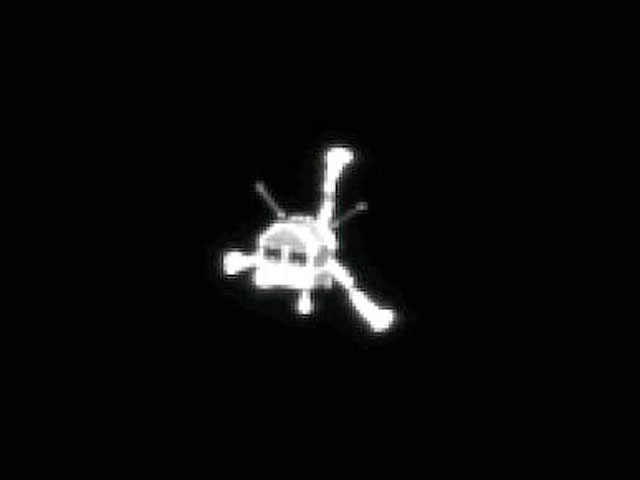
The European research module from the European probe Rosetta, located on the surface of the comet 67p/Churumov-Gerasimenko, emerged from the forced "hibernation", again charging the batteries. This was reported on the website of the European Space Agency (ECA), as well as on the "personal twitter" of the module: "Hello, earth! I hear me? I woke up. How long did I sleep?"
Having left the gibberniation, Philae handed over more than 300 data packets to Earth, the first communication session lasted 85 seconds, ECA said. “The module is ready for work. Everything is fine with it: the temperature is -35 degrees Celsius, in batteries - 24 watts,” said the project manager Stefan Yulamuek.
Currently, ECA experts expect the next communication session, according to their data, Philae has about 8,000 packages with data for the period when there was no connection with the device.
PHILAE landed on a comet in November last year. Philae went down in history as the first apparatus that was able to successfully land on the comet and drill its surface to take soil samples. The module also managed to take water samples - it turned out that it differs from the one that is available on Earth.
The module worked for three days, and then, having exhausted the energy reserves, stopped giving signals and moved to the “sleeping” mode. Initially, it was expected that the module would accumulate the charge necessary for the resumption of work by the beginning of spring, but this did not happen.
The Rosetta probe with the Philae module was launched to the P67/Churumova-Gerasimenko comet on March 2, 2004. The historical landing of the device occurred more than 500 million kilometers from the ground.