
Translated material
Cemetery on the street of the dead
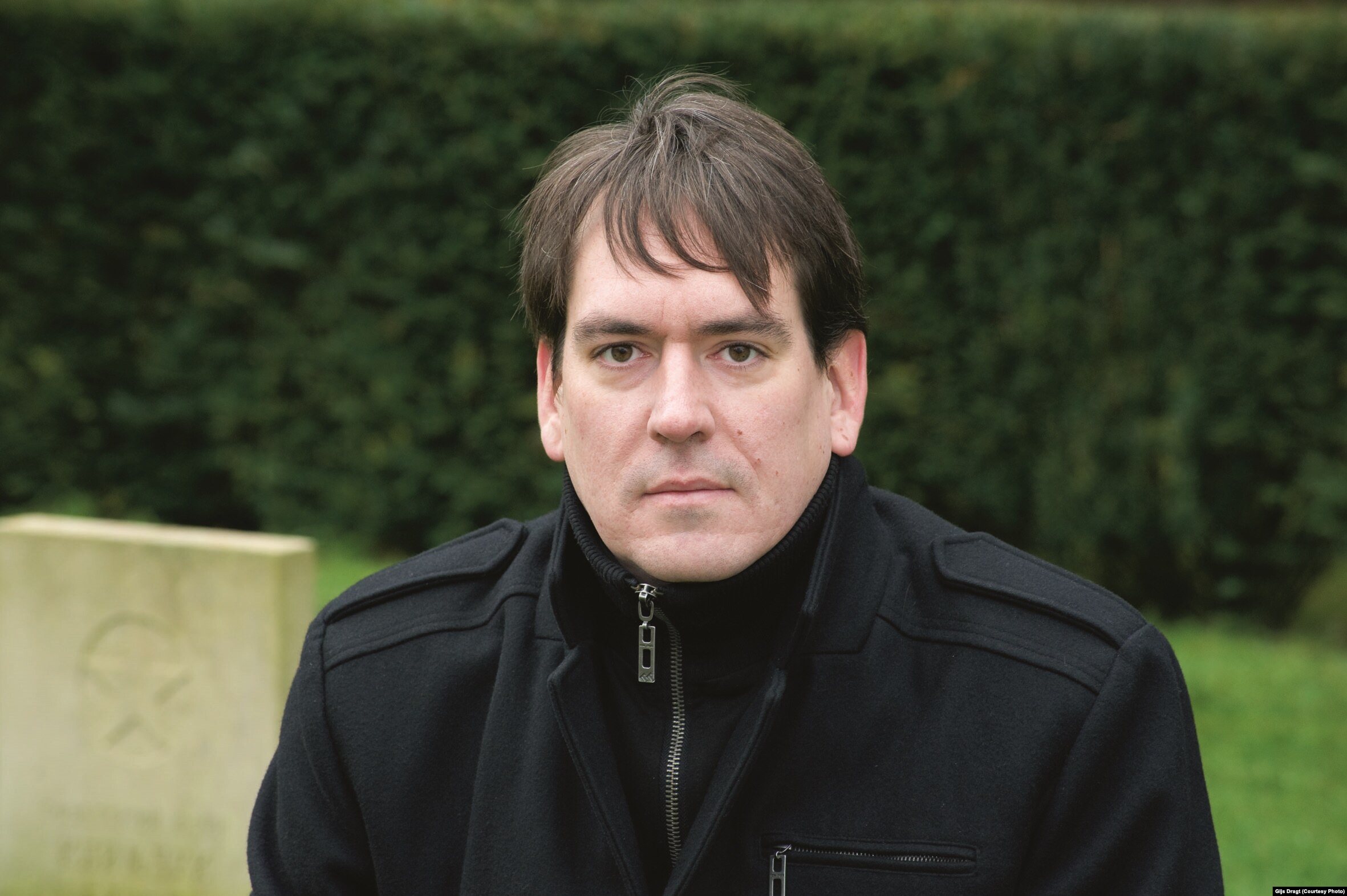
The history of the Dutchman, who is looking for relatives of Soviet soldiers "missing" in Europe
The Dutch journalist, a former RTL correspondent in Moscow, Remco Rading, quit his job to completely devote himself to the “field of glory” - the cemetery of the Soviet prisoners of war in the town of Lyuzden. Last spring, his book “The Child of Fields” was published in Russian about the fate of people buried in this cemetery, and how he searched and found their relatives throughout the former USSR.
In Russia and other former republics of the Soviet Union there are families in which they are still waiting for relatives who have not returned from the war. Not returning from the war, which is customary to call the Great Patriotic War and which in modern Russia was enclosed in the capsule of a sacred myth. For these people who are still waiting, the war has not ended. In contrast to the rulers, who was producing their rights to the war, who rattling the weapon of the official and the whip of the “victorious people”, these people are a living history of the war, its genuine cut, which reveals primarily an irreparable loss, injury, human tragedy. Tatyana Kulik, the wife of a soldier from the village of Kulishovka in the Krasnodar Territory, was waiting for her husband for almost 60 years and did not wait. With rare exceptions, hundreds of thousands of Soviet soldiers and prisoners of workers who are listed in the official Russian archives missing, died during or immediately after the war. Many lie in special "Soviet" cemeteries in Europe, but relatives still do not know about this. In Holland there is such a Soviet cemetery, here the remains of 865 Soviet citizens rest. Almost 200 of them, the Dutch journalist Remco Raing, took almost 20 years to find relatives. It was the rating at the beginning of the new century that Tatyana Kulik informed that her husband died back in 45.
The history of the Dutchman, who is looking for relatives of Soviet soldiers "missing" in Europe
- It was a forgotten place. Relatives did not come, because no one could find them. I decided to try to find out who these soldiers are and find relatives. The idea was that it was important for them to know where the father is, where is the husband, where is the grandfather. I found relatives, they gave me photos, told me about the fathers, and so this place became alive, although, of course, this is a dead place, a cemetery.
- There is even called Dodenweg, "street of the dead"?
- Yes, this is an old name.
- There has always been a cemetery before, even before it became a cemetery of Soviet soldiers?
- Yes, for a long time. But this was a completely dead place, because there was no one in the cemetery, there were no relatives, we did not know who these soldiers were. There is an entrance, he is a way out, there are stones, the names of soldiers are written in Russian, it is not clear to us.
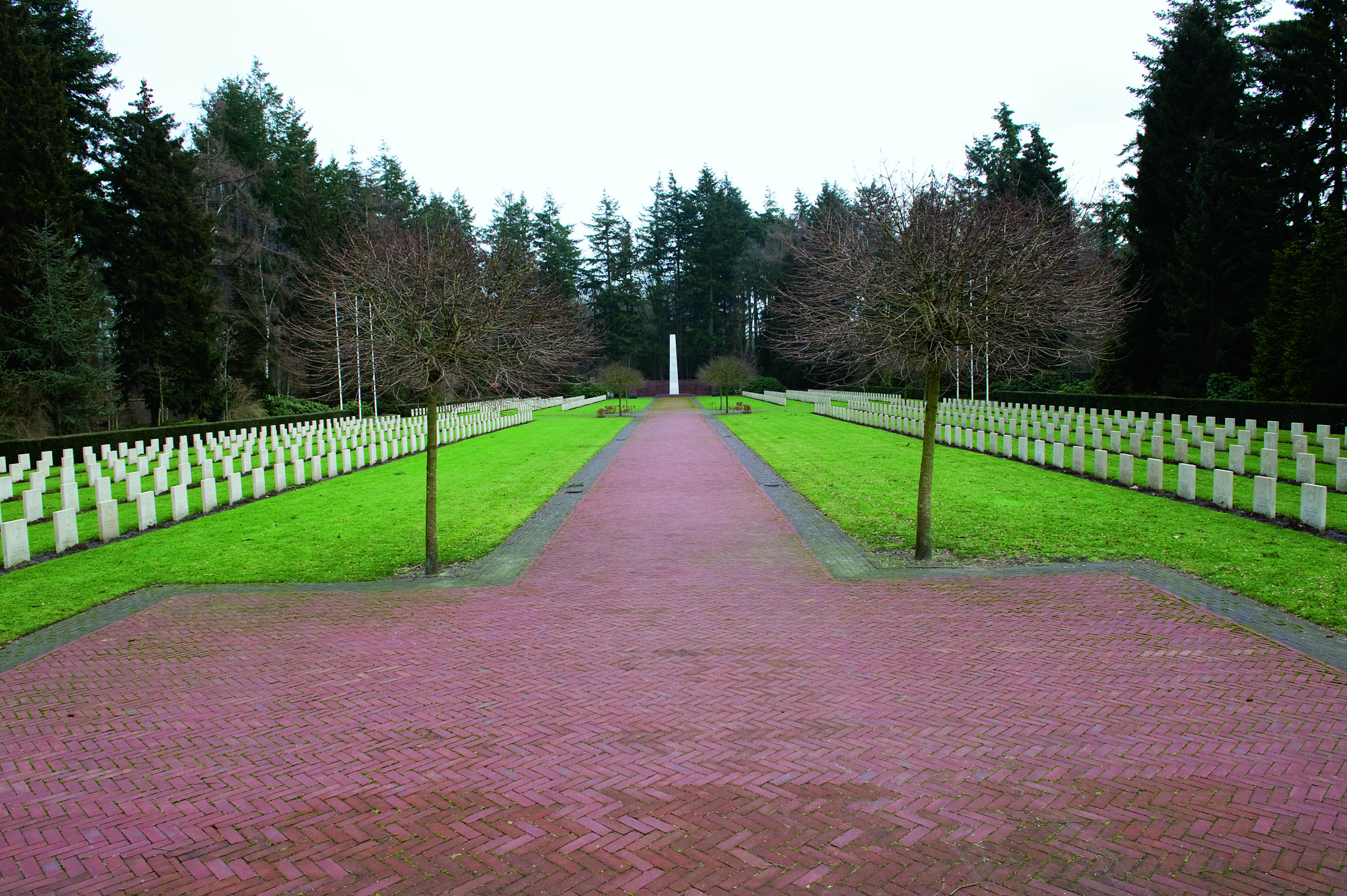
- But at the same time, the cemetery was in such a wonderful state that it cannot be said that it was abandoned. Cathed the graves very well.
- Yes, this, of course, is wonderful that everything looks so good. But the problem, perhaps, is that many people thought that everything was decided, everything is fine. Nobody probably knew that relatives did not know about it. I found out about this, already 17 years ago. And he began to search.
- Any attempts were not made before you?
-There were attempts, but few, and, of course, it is very difficult to try to find out something in 50 years. I also only searched for the first two years in the archives - the first results were only two years later. Therefore, I always say that I was the right person. I have a character - no matter what, to continue to the end. But the time was correct. That is, I was the right person at the right time.
- In what year did you start work?
- In 1998, when they also only started work here to learn more about the camp that was in the city of Amersford. And this was also an almost forgotten place.
- And what was there for the camp?
- About 35 thousand Dutch were imprisoned there during the war, many died. Most of them were sent to Germany, it was also very difficult in the camps. This, in principle, was an important historical place, but a little abandoned - there is no museum, nothing. And naturally, in the editorial office of the local newspaper they also began to write about this. There was a wave of attention.
-When you started, you did not speak Russian at all and had nothing to do with Russia at all. In my opinion, you only once went to Russia for an internship and then the editor asked you to do the Soviet cemetery?
- Yes, I was a student yet, stayed in Moscow for a week, taught the words “thank you”, “please” and “two beers” there. I did not know anything about Russia and did not speak Russian. Of course, it was hard. But still, I would have done this, and if they were French or the British, but they were Russians and no one helped them find their relatives, it was wrong. I think this is my moral duty.
The first 100 graves in the cemetery in Lyuzhen appeared in 1942, after Soviet prisoners of war were brought to the occupied amersfort. Soon, about a third of them died, the rest were shot. The Nazis burned the card index with the names of these prisoners of war.
- After the war, they said that they were from Uzbekistan and from Central Asia. Who knows, maybe there was one Russian or one Ukrainian among them.
- That is, their names are unknown? Not a single person?
- Yes, they all lie like unknown Soviet warriors. I already managed to make a reconstruction, but the reconstruction of what was here, their life in the camp was terrible. But who they are and where are they from - this, unfortunately, is still unknown.
- In your book, you are very interestingly saying that they were actually brought here for propaganda.
- Yes, the idea was like that. In 41, the Germans still thought that we, as a fraternal people, would choose a side of the Germans, if we find out that our allies in the east are non -Untermen. It was specially decided to send Uzbeks here with Asian faces, hungry, their clothes were bad. This is ideology, racism. The idea was such that we will see these Uzbeks and choose better than Germans in our allies and we will fight with them in the East. But this idea was unsuccessful, because the local Dutch immediately began to help these Uzbeks, gave them water and bread. The idea was unsuccessful, and probably therefore, in the end, the Nazis decided to shoot them. Because there were no more ways to use them further.
The remaining 764 graves on the Field of Glory are the Soviet prisoners of war who died from April to June 1945 in Germany. Many of them managed to survive the joy of liberation from the camps, but their vitality was running out, mainly due to tuberculosis. The allies decided not to bury their enemy and transported their bodies to neighboring Holland.
-At some point, I understood that it was unprofitable to continue to look for relatives of unknown soldiers, so I really began to look for information about other soldiers and after a year and a half I found very interesting information, additional. Because here on the graves only the name and surname are written and there are a lot of errors, and there were a year of birth, address, and patronymic.
- Where did you find it?
- It was in the Central Archive of the Ministry of Defense in the Netherlands. It was the very beginning. Then I worked in other archives and found a lot, a variety of documents, a lot of additional data. If there is only "Andrei Ivanov", then where to look? And if "Andrei Ivanovich Ivanov" from such and such a village was born in such a year, then it is another matter, it can already be sought. I began to do this after a year and a half, that is, 15 years ago.
- So you know more about the person, what are you doing? Are you going to Russian archives then?
-Firstly, this is not only Russia, these are all the former republics of the Soviet Union. The first time I myself began to look for in place, but this, of course, is very expensive and costs a lot of energy. Now I have a system-I am sending some letters and I hope that local authorities, local search engines, local media will help me with this last step. Because work in the archive is the most important, hard work, and then looking for relatives-it is somehow easier, because you already know where to look and who should be there. I hope that the governor of the region, the head of the administration - that they are looking, use their capabilities. There is also a military registration and enlistment office, a registry office, the Internal Affairs Directorate, there is a FSB, there are address bureaus, there are search engines, there are media - local newspapers. I use all these opportunities to find them.
“ And they all helped you?”
- Often yes. Sometimes I do not get an answer. Sometimes I get a stupid answer, for example: "In order to get information about relatives, you must first ask them permission." But they usually help, yes. Because in the end it is not just the authorities, these are also people who work there. They understand very well, especially in Russia and in Ukraine, that so many dead that every family was affected. They understand how important it is to know where the father lies.
“ But you are partially continuing searches now?” In recent years, the desire to cooperate with you has not changed? As journalists, we see how much the situation in the archives is changing, how open - or closed - archives and archives themselves. Compared to the 90s, the attitude to initiatives abroad is changing. Plus, we already know several cases when foreign scientists who conducted historical research on the materials of Russian archives, including on the topics of the second m Irova to the oyns, were sent from Russia, as if they were collecting some kind of secret information.
This week I was called both the "Euro -fascist" and "Putin's prostitute"
- In the end, what I do is not historical and not scientific work, this is human work. I believe that the relatives of these soldiers should know where the father is, where is grandfather. This is a purely humanitarian work, and I hope that all authorities understand this. I can’t complain, I meet few problems with work in archives, for example. But it is obvious, of course, that the second 10-15 years the Second World War in Russia has been getting more and more attention, the government uses this. Military history has become a policy. I'm sorry that this is so. Correctly, of course, that we remember and think about the war, it’s good that this is being discussed. But in the West, for example, military parades are very poorly understood, because it seems scary to us. Because we do not love the war. Show what your weapon you have-it’s somehow not very good for us. Although in France they also do. But I can’t say that I have big problems. The problems that are related to relations between Holland and Russia - relations have become worse, much worse. This is not easier for me either, of course. This week I was called both the "Euro -fascist" and "Putin's prostitute."
- Who is you so?
-Some idiots, of course. One says that I am completely left -wing, and the other is completely right.
- This is due to the fact that you received gratitude from Putin for your activity - a letter, in essence, formality?
- Yes. Such people are everywhere, but it is ridiculous to me, because I did a purely humanitarian work. One says that I am completely for, the other - that I am completely against, although I just received a letter. The situation is such that everyone now has opinions, all questions immediately became political, but I don’t like it, because I just want to help people.
“But you didn’t notice this that now you have already become afraid of some local authorities or local archives, to give information to you or answer you because you are from Western Europe?”
“Until I feel it, but they don’t write to me that we don’t give you this data because we are afraid.” So how can I judge?
- By the frequency of answers, by how adequately they react to your request?
- It is very difficult to judge, I don't know. The only thing I can say is, of course, I see that a lot is changing, but sometimes they say that, they say, we are “rewriting the story” here in the West. I don't see this. Vice versa. When I started my searches, on May 9, about a hundred people came to the Dutch cemetery of Soviet soldiers. And now more than a thousand comes. So - more attention! This is not thanks to the government of Russia or the government of Ukraine. This is because we, I try to attract attention, people will learn about it. There was a lot of interviews, there is a book that I wrote, which has now been published in Russian. This attention leads to the fact that more and more people come to the cemetery. Therefore, if we rewrite history here, it means that we pay more attention to the role of the Soviet Union during the war, and not less!
- You probably faced the fact that many of the missing Soviet soldiers have not yet been found. Of those who have nothing to do with Holland. Now many people in Russia, for example, are engaged in their search? I can imagine that these are thousands and thousands of people about whom relatives still do not know anything.
- I think that even millions do not know. Hundreds of thousands for sure.
- We do not even know exactly how many people died and went missing.
- Officially, more than 26 million, but this is officially. Of these, half are military. Until now, in the summer, when there is no snow, local search engines are looking for the remains in the forest and try to identify soldiers. I know a lot of search engines in Ukraine, in Belarus, in Russia, who are still trying to find out the fate of the soldiers. This is a very important job, I think.
“ But is that all a private initiative?”
- These are organizations, yes, but these are private people, groups, search units. There are memory shifts. These are thousands of people who are actively looking for - not their relatives, but in general. And there are hundreds of thousands that are still officially listed as missing.
- Do you work with these organizations?
- Yes, but they have a problem that I also have: little time, little money. Of course, I try to solve something through them too, but the government usually has more resources.
“But the government does not do this?”
- If I write a letter to the governor, then he often helps. If not, then I write to the head of the district administration, if not, then I write to the head of the village or village council administration, and if not, you can still write or the registry office to the military registration and enlistment office.
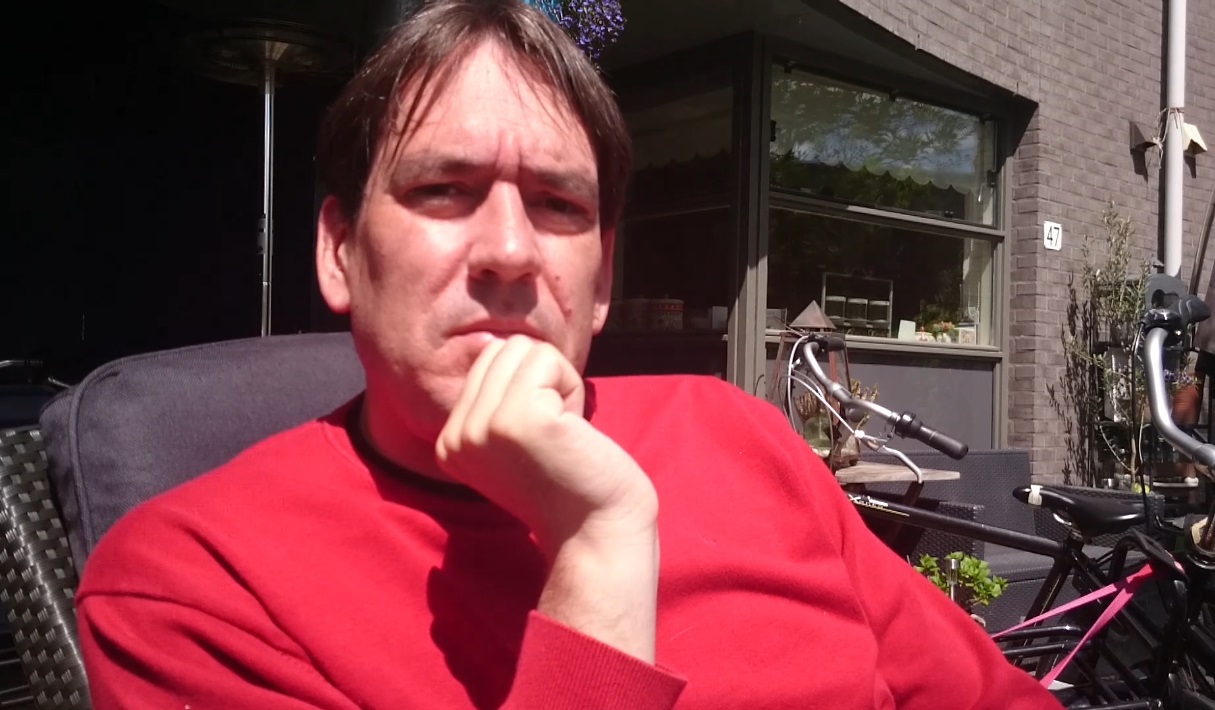
For eight years in a row, Remco Rading lived in Russia and worked as a correspondent for Dutch newspapers, radio and television. In his free time and often at his own expense, he conducted the search for relatives of soldiers buried in the Holland cemetery in Holland. In 2012, the rating returned to his native amersfort to completely devote himself to work on the Field of Glory.
- Three years ago, when I returned to Holland, I quit my journalistic work. I’ll try now, although, of course, the financial situation is not very good, but I will try to do Full Time. This cemetery is in principle my work now.
- Work is carried out on donations from people who go in favor of the Fund organized by you - the Foundation of the Soviet Field of Glory?
The cemetery has become a matter of my life, everything has changed because of it
- We organized the program "Grave for Guardianship". We decided that there were 865 soldiers, they were forgotten, we would like everyone to forget everyone else. If we find, say, 865 Dutch, who will take under the guardianship of the grave, then all these 865 are no longer forgotten. We ask for 50 euros per year. We use this money for me to work in the archive and look for relatives, but especially for the trip of relatives to Holland. Because here is the daughter of a soldier-this is usually a grandmother who lives somewhere in the village, and she has no money to visit the grave. Therefore, it is very important that there is this program. And the rest-I try through subsidies, funds to get some money for projects-for example, the translation of my book into Russian organized and paid for the Ministry of Foreign Affairs of the Netherlands.
- And all these years, when you also had another, the main work, who financed your search activity?
- Search, everything related to the cemetery, - I am. Well, I received some grants, but in general it was little money.
- All trips are not free either.
- Of course, there were sponsors who paid for relatives' trips - of course, I could not pay for myself.
- Rossian sponsors or Dutch?
- Mostly Dutch. The Dutch authorities, Rotari clubs and just people who wanted to help.
- How many soldiers have you already found relatives?
- 198 Found families.
“ Many of them have already visited here?”
- Dozens. There were daughters and sons of soldiers, and each time it is very touching that after 70 years they found the grave of the father. And then I understand why so much work, so much frustration, so much energy.
- You see, why did you do all this?
- Yes, it is very important, very touching. And I understood the most important thing: “missing” - it meant that they did not know fate, and not to know - this is the most terrible. They are 70 years old, every year on May 9, for example, they think about it and cannot close this matter.
-They think that maybe he is still alive somewhere.
- Suddenly! Yes! Who knows? Everything can be in principle. To know that he has a grave, he does not lie somewhere in the forest, he could not return, because he died.
- As far as I know, in Soviet times, such families often did not even give any help, because, as they were told, there was no documentary evidence that "your husband was killed." "Maybe he lives somewhere with the German Frau?"
- Yes, such rumors were very often. Indeed, the status was different. He died or missed - a big difference, other pensions. Of course, the idea was that “he could be a traitor,” but especially, most importantly, not to know, just not to know. The unknown is the most terrible.
– Ну неужели кто-то из тех, кого вы нашли , действительно думал, что их отец или муж мог быть предателем? Допускал такую возможность?
– Не думали сами, но вокруг них говорили, что, наверное, он такой. Это ужасно больно, и знать сейчас, что это не так, – это реабилитация. Но самое главное знать сейчас, что у него есть могила, где он умер, как он умер и что есть люди, которые его не забыли.
– А вам удалось застать вдов этих солдат или в живых уже остались только дети?
– Три или четыре раза жена была еще жива. Первый раз я сам посетил их, это было в деревне Кулишовка в Краснодарском крае. Там была жива еще Татьяна Кулик, жена солдата. Она до этого момента верила еще, что он жив и вернется. Очень часто мои новости – хорошие новости, потому что никто не думает больше, что он вернется, знать что-нибудь – уже позитивно. Но она приняла это сначала как неприятные новости, потому что до тех пор у нее была надежда.
– Она не вышла замуж больше?
- No, never. Waited.
– А дети у них были?
- They were, yes. И сестры были тоже в живых.
– Она приезжала сюда в Голландию?
– Нет, потому что ей возраст не позволял уже. Надежда умирает последней, но я тоже лично видел, что для нее было хорошо – знать. Это придало ей спокойствия. Она могла в церкви делать какие-то ритуалы, чтобы он тоже спокойно здесь лежал. Это – конец, это – точка. И я видел, что это хорошо.
– Какая история произвела на вас самое неизгладимое впечатление?
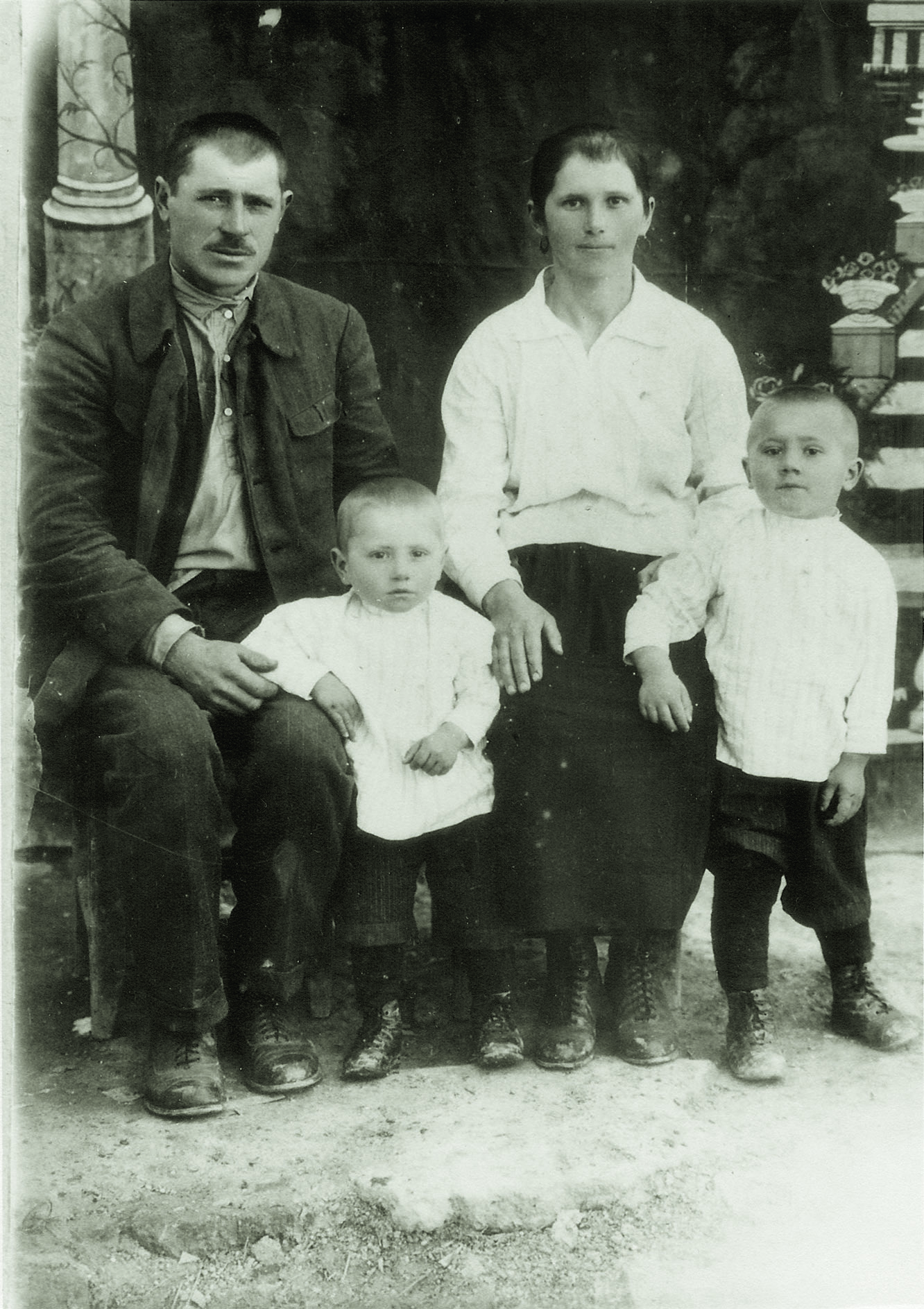
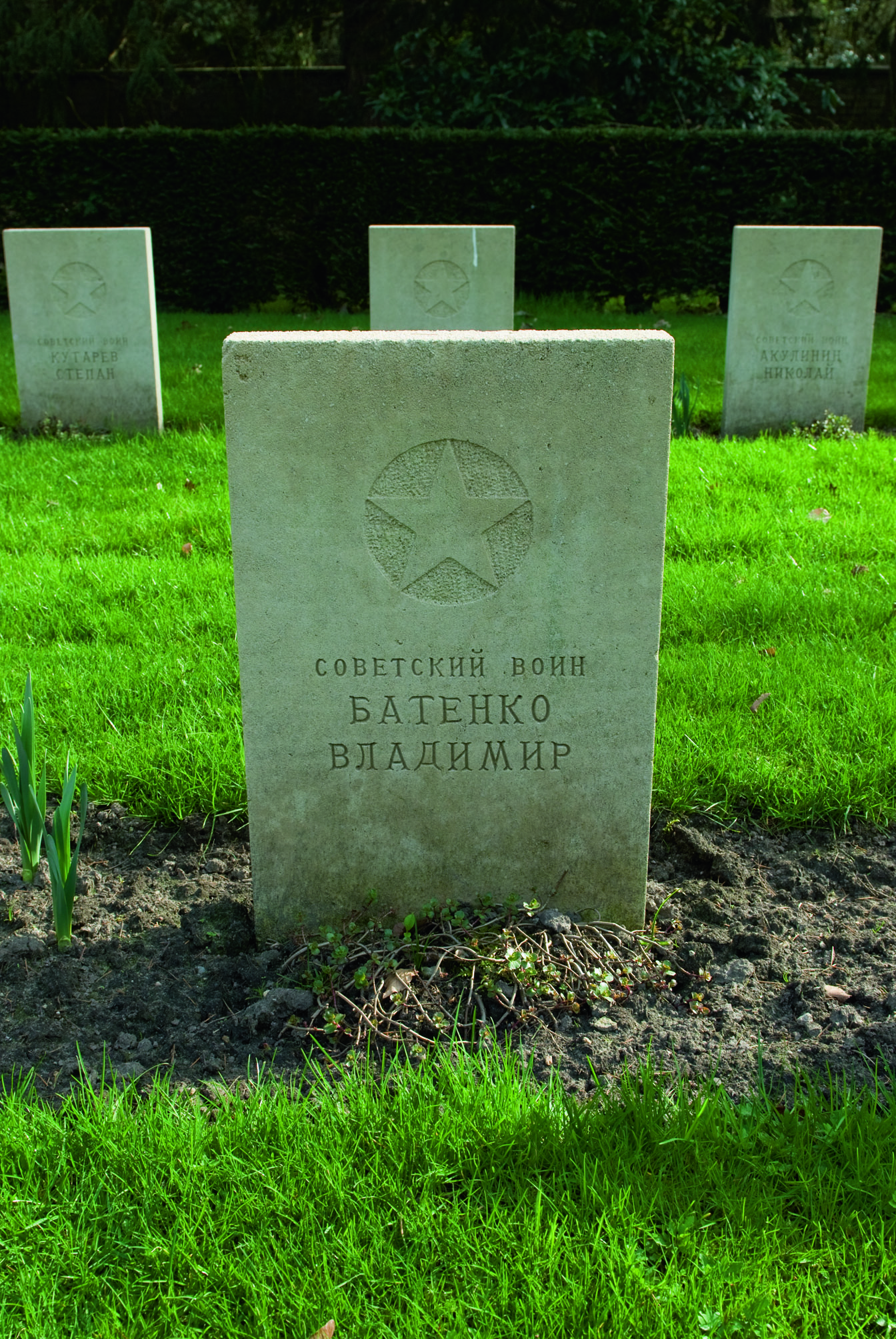
– Это, конечно, самая первая история, когда я сам на месте начал искать и не знал, что будет. В конце концов я стоял на третьем этаже в типичной хрущевке. Открывают дверь, в дверях стоит старый мужчина, не понимает, кто я, я не понимаю, кто он. Я объяснил, что я делаю, ищу родственников Владимира Батенко, он вдруг сказал: "Это мой отец". Конечно, мы были в шоке, потому что он через 55 лет услышал, где отец, а я через два года работы в архивах наконец-то увидел живого человека, не просто на документе, и понял, что все получилось. Это, конечно, незабываемо. Дмитрий Батенко был первым родственником на голландском кладбище.
– А где вы его отыскали?
– Это было в Ялте. Они жили где-то в деревне, потом переехали в Симферополь, там отец строил свой дом, но ушел на фронт, не вернулся, и после войны они переехали в Ялту.
– И что думал его сын все это время?
– Воевал-погиб. Но были слухи, что видели его после войны с немкой. Но это, конечно, были глупости, потому что он уже был мертвый, уже лежал у нас.
– Эти слухи присутствовали во многих рассказах?
– Такая была идея, что пленные были уже почти предателями во время Сталина.
– Ну да, им же фактически лучше было не возвращаться обратно. Я сама несколько лет назад брала интервью у женщины, которую угнали на работы на юг Голландии, в город Веерт, и в итоге она здесь осталась, возвращаться было страшно.
– Здесь на советском Поле Славы лежат не только солдаты, но и пленные рабочие, в том числе несколько женщин, которые тоже работали там, на юге Голландии, и там их расстреляли. Один пример такой, что девушка была голодная, увидела поле, где лежала картошка, начала ее есть, а немцы это восприняли как отказ от работы, и ее расстреляли на месте. После войны ее нашли и перезахоронили здесь. Было очень много таких рабочих на юге Голландии.
– Была какая-то типичная реакция у всех или каждый реагировал по-разному? Вы, конечно, не видели каждый раз лично, как люди встречают эту новость, – я так понимаю, что последние годы в основном местные поисковики этим занимались, но все-таки, может быть, вы могли бы как-то это обобщить?
– Эмоции большие, конечно. Вообще никто не ожидает, что будет этот момент, когда какой-то высокий голландец...
– Я бы сказала, не просто высокий, а по российским меркам, заоблачно высокий!
– Это уже первое, что шокирует людей, что я такой большой. И никто этой новости уже не ожидает. Все эти годы они думали об этом – о судьбе мужа, отца или дедушки. Всегда это большие эмоции и почти безграничная благодарность, которую мне сложно принимать, потому что сколько можно... Они вспоминают всё: как тяжело было во время войны, как тяжело было после войны без отца, надежду, что он вернется, ведь мужчины в 45-м вернулись, а их отца все не было. И потом все эти годы ждать, искать...
– Они искали, кто-то из этих семей?
– Искали, часто искали, некоторые даже искали еще в этом году.
– А куда они обращались?
– Самое обычное – в центральный архив Министерства обороны, сейчас есть база данных ОБД.
– Но им говорили, что не найден, да?
– "Пропавший". Официально они и были пропавшие. Никто не знает, что этот пропавший и человек, который лежит в Голландии, – один и тот же человек.
– А вообще в Европе ведь несколько таких кладбищ советских воинов?
– Прошу прощения, но Германия – это вообще одно большое кладбище, там лежат миллионы жертв войны, в том числе и миллионы советских военнопленных. Везде есть кладбища советских воинов.
– Вам известно что-то о ситуации там? Много найдено родственников?
– Боюсь, что ситуация такая же, как здесь, много солдат числятся пропавшими, хотя они лежат на кладбище. Но не везде индивидуальные могилы. Есть очень много братских могил. Я думаю, что, к сожалению, там тоже все неясно. Есть списки захоронений, но если там написано "Андрей Иванов", это еще не значит, что мы знаем, кто он.
– Вы общаетесь со своими коллегами в Германии, там есть свои Ремко Рейдинги?
– Такой как я, конечно, только один. ( Смеется. ) Нет, ну конечно, у меня там есть коллеги, но я не знаю никого, кто взял бы на себя целое кладбище. В Германии вообще другая ситуация. Германия еще даже не совсем готова принимать это всё.
– Даже так?
– Я считаю, что да. Мы уже дальше продвинулись, я считаю.
– А вашу жизнь как изменила ваша работа? Как вы ее оцениваете сейчас, по прошествии 17 лет?
– Найденные почти 200 семей очень часто считают, что я – их пропавший сын. Они потеряли отца, но получили нового сына, это их слова.
– Вы поддерживаете отношения с некоторыми из них?
– Часто да. Конечно, сложно, столько семей, но я пробую. Плюс моя жизнь изменилась, я встречался с русской переводчицей, она стала моей женой, и у нас есть сын – свой сын Поля Славы. "Дитя Поля Славы" – название моей книги.
– Что он об этом думает? Он туда приходит иногда?
– По-моему, он достаточно горд за меня. Вчера увидел меня в газете и хотел прочитать статью. It's nice. Плюс я стал корреспондентом в России, потому что я уже доказал, что могу там работать. Кладбище стало делом моей жизни, у меня все поменялось из-за него.
– Мне интересно, как психологически оно вас сформировало? Потому что вы были еще не до конца сформировавшейся личностью, когда начали этим заниматься.
– Точно, да. Может быть, это мертвое место, но для меня оно – не мертвое место, потому что у меня каждый день все двигается. Может быть, они и умерли, но они мне дают столько работы, что я считаю, это очень живое место. Я побывал везде в России, у меня появилась семья, я не могу жаловаться, хотя работа очень тяжелая. Я мог бы стать пусть не богатым, но получать больше денег, если бы нашел нормальную работу, но я рад, что я могу помогать людям, и мне эта работа тоже иногда дает что-то хорошее.
– В прошлом году король Нидерландов присвоил вам орден рыцаря Оранских-Нассау. Ваша жизнь изменилась после того, как вы стали рыцарем?
– Ну да, у меня сейчас есть белый конь! No, of course! Приятно, конечно, что уважают меня, приятно получить внимание. Может быть, это как-то и помогает, потому что какой-то статус у меня есть сейчас.
– Вы теперь сэр Ремко!
– В конце концов, я – просто Ремко. Мы шутим об этом. Голландцы такие, не любят, если один чуть-чуть выше, чем другой.