
Translated material
The campaign of the embargonauts
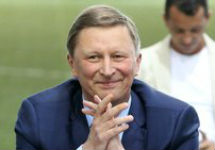
For Russia, it will not be difficult to circumvent any embargo on the supply of equipment introduced by democratic countries. According to Interfax, the head of the presidential administration Sergei Ivanov stated in an interview with Financial Times. “Any equipment, believe me, by virtue of my main profession, can easily be bought through third countries,” the official explained for many years in intelligence.
“It will be a little more expensive,” Ivanov continued, “it will be, if we speak Russian, crookedly, but this can be done, and it is impossible to stop it. And by the way, Iran proved it.”
On Friday, Vladimir Putin, speaking at the St. Petersburg International Economic Forum, said that Russia managed to avoid a deep crisis , despite sanctions. “Not so bad from the point of view of sanctions. There are pros and cons,” he said. Putin, however, admitted that GDP and industrial production in the country in the first quarter of 2015 were reduced, and inflation increased due to the devaluation of the ruble.
Over the past 15 months, democratic countries have introduced several packages of sanctions against Russia in connection with the annexation of Crimea and aggression in eastern Ukraine. In the fall of 2014, there was a collapse of the ruble, which, however, in early spring, slightly strengthened its position. Russia responded to the sanctions in August by introducing an embargo to introduce a number of food products from all countries that imposed sanctions, with the exception of Switzerland and Japan.
Meanwhile, the United States on Friday promised new sanctions against Moscow in the event of pro -Russian militants in the Donbass and Azov. On the same day, the European Union for a year, until July 23, 2016, extended sanctions against Crimea and Sevastopol annexed by Moscow. On Smolenskaya Square, this stepwas regarded as a collective punishment of Crimeans for "a free choice in favor of reunification with Russia."