
Translated material
Koshkin House
Teachers of the Sevastopol State University, who are threatened with mass dismissals, blame the rector from Moscow Valery Koshkin in their troubles
Teachers of the Sevastopol State University, who are threatened with mass dismissals, blame the rector from Moscow Valery Koshkin in their troubles
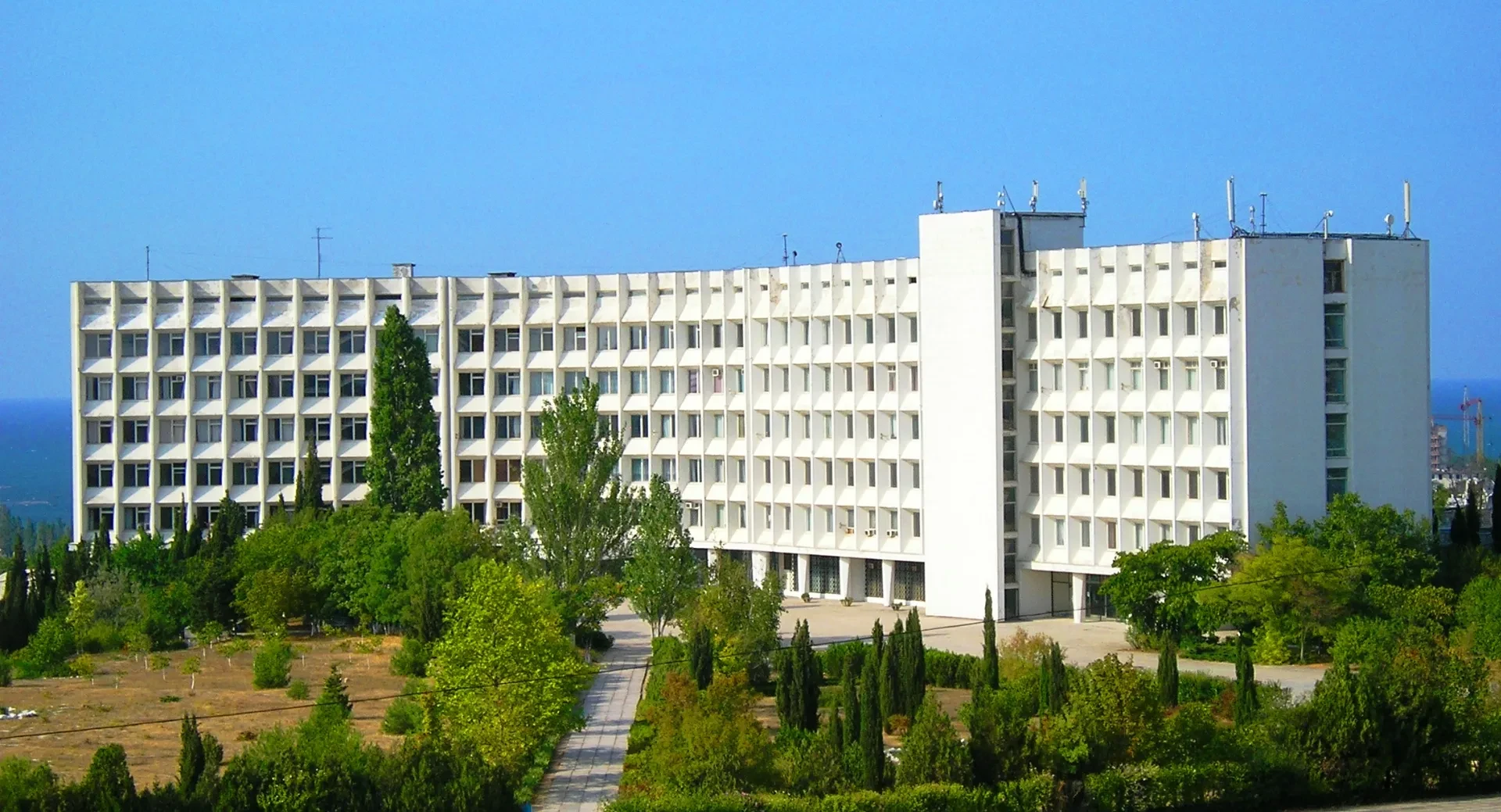
Scandals associated with the fusion of many research institutions, institutions and universities of the peninsula into centralized educational institutions, it would seem, were subsided in winter. Then the formation of the KFU (Crimean Federal University, uniting 7 main Crimean universities and another 7 research entities) and SSU (Sevastopol State University, which included 6 institutions and 1 college).
The local authorities managed to quickly break the resistance of part of the educational institutions that protested against the centralization aspirations of the federal government (to recall at least the S.I. Georgievsky team of the Medical University of the Medical University against entering the KFU). Despite everything, officials managed to introduce everyone into the structure of new universities as soon as possible and even report on the happy future of Crimean science.
Those who doubt the gingerbread with a gingerbread in the form of raising wages and colossal subsidies, protesters were driven by a whip, hinting that the rebels may not get to the state or the budget, and they were simply sent to the dissatisfied with their pension or free swimming in their native harbor.
As a result, the merger took place, but the administrations of the United Universities were in a state of permanent confrontation with the groups of their educational institutions. A new round of confrontation is an attempt to reformat the composition of educational institutions and optimize their work. Of course, in the conditions of the total subsidation of Crimea, such a measure looks economically justified, but from a moral and ethical point of view it raises a lot of questions.
The employees of Sevastopol State University stated this publicly, when it turned out that each third of them was about to threaten dismissal.
University and serfs
In early June, the Sevastopol monument to Yekaterina Velikhi had a rally, at which dissatisfied teachers demanded the resignation of Valery Koshkin, a new rector sent from Moscow. Earlier, Mr. Koshkin led now a reorganized Moscow State Industrial University.
If KFU was headed by a native of the Party of Regions and Crimean Sergey Donich close to the speaker of the Republican Parliament, then the SSU was given to the Moscow Varangian, probably in order to revive a provincial university and build relations with the CSA with central universities in the Russian Federation, using personal contacts of Valery Koshkin.
But the authorities did not appreciate the logic of actions. The university opposed the policy of the capital's rector. And the reason for discontent was a tough statement that sounded from the lips of Valery Koshkin on May 29, during a meeting of the university administration with the team. The new leader said that the number of educational and other personnel and other personnel at SSU is three times higher than Russian norms. And he added that the reduction in personnel is an unpleasant, but inevitable process, since previously the relevant ministry gave the university the missing 570 million rubles for salaries only with the condition that the university optimizes its work and find additional sources of financing.
Allegedly, it was after these words that the team realized that it was possible to defend their own interests only in a public plane, because in the face of a shortage of jobs on the peninsula (especially for teachers who have worked in universities all their lives), unemployment threatens almost every employee of the SSU.
As a result, a rally gathered at which they recalled the promise of Vladimir Putin that all Crimeans would retain jobs and no one would be offended. And also - the rector was criticized for the fact that the decision on mass layouts was made without a wide public discussion, and at the very last moment, because the duration of previously concluded contracts expired on June 30, and then an open competition was to be held.
In general, most of the claims were precisely to the personal behavior of a visiting specialist. Although it is now quite difficult to understand the line between the negative attitude towards the Moscow Substract itself and the real miscalculations of the rector, because each participant in the conflict has its own truth.
But, be that as it may, it is worth admitting that in the anti -record campaign not everything is clean, because Koshkin spoke about the upcoming personnel changes and before the May performance. Back in April, during his “strategic session”, he, relying on numbers and documents, explained in detail that 5 thousand state employees who are studying at the university should have about 450 teaching rates, and not 900, as it was at that time at the SSU. And he emphasized that since the university fundamentally does not go to a forced increase in the cost of training for 2–5-year contractions, there is clearly not enough money. But for some reason, no one remembers this.
Few drew attention to the fact that the June rally was not organized by teachers: they simply joined the performance of the national liberation movement of Russia (GCD) against the development of the coastal zone of the Victory Park with elite skyscrapers.
But initially the university employees wanted to block the road at the government house, but abandoned this venture that could provoke law enforcement officers to use force.
As a result, the rally turned out to be truly anti-government, because he played against the local government, hitting on the command of the Sevastopol Governor Sergei Chanyilo, which is also actively involved in the process of reforming the SSU. So the problem of the team of Sevastopol University was taken to the federal level.
In the end, the protest was extinguished. After numerous consultations, the parties came to a temporary truce: the conclusion of new contracts was transferred from July to November, and a moratorium was introduced to personnel permutations at the university before the end of the year. Probably, government plans have not changed, but mass dismissals will now take place in a more measured regime.
Views for the future
It is interesting that Valery Koshkin, despite the impending personnel cleaning, continues to defend the development plan of the university, which involves the expansion of the student corps from 11 to 20 thousand to 2020, and still believes that SSU can become a university of federal significance.
Of course, this is respect for, because the captain who does not love his ship is bad. However, in the current political conditions, which are unlikely to change until 2020, it is very difficult to talk about the development of higher education in Crimea.
Yes, huge financial injections and subsidies can do their job and launch a formal conveyor of education, stamping the diplomas of the "federal model". But Crimean universities are de facto in a state of external blockade, and therefore are attached purely to Russia and the intra-republican market. What can we say about modern technologies, which, according to the same plan, Valery Koshkin should develop in Sevastopol?
Unfortunately, it’s difficult to find a more unsuccessful place for this, because even the Google Play or iTunes application is difficult to download here.
Alas, the current situation will inevitably hit teachers. Although they have the right to protest the decision of the university authorities on serious personnel reduction, the outcome of the case is obvious: optimization will be held at the university, and the authorities will decide to finance a hopeless project, because there is even a limit to the spring exacerbation of the Crimean issue.