
Translated material
Our crystal nights
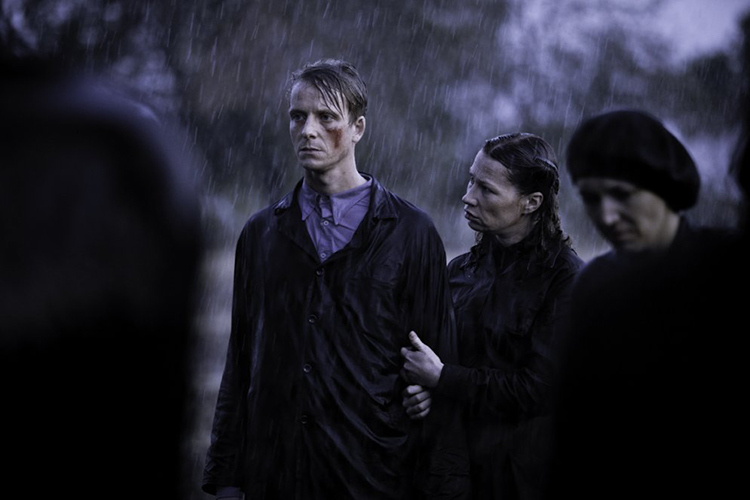
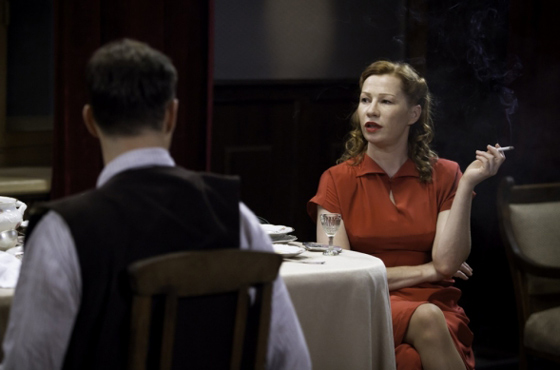
Spring 1941. USSR. City n . Living room with a wooden buffet. Ugly landscapes on the walls, a table set with bourgeois grace. At the table are four. German speech, terribly reminiscent of stage. Soup? Oh yes, please. A little more eggplant? Thank you very much. Suddenly theatrical politeness breaks into a disgusting scandal.
According to the evil irony of fate (however, why fate-everything was made by the hands of specific Russian officials) a film about nervous German specialists working at the Soviet defense factory some few months before the war was the last case of the Russian-German co-products, which lasted only a year and a half. The Ministry of Culture of the Ministry of Culture to finance the post-production of “Cute Hans, Dear Peter” (the money ultimately allocated the Film Foundation) was the last straw-and in December 2013, the German-Russian support fund for support for joint production projects was closed due to endless verbal attacks and business inaction of the Russian side. In the light of this story, it is seductive to read the film Mindadze as an euphemism, which has in mind our time frozen in the same way. But time is always the same. People too.
Four German experts who boil glasses for (military) optics at the Soviet plant are not too different from their Russian employees. Here is the name of the film about the same. But the new film Mindadze is just different from the previous two. It is not a spirit (this is again a very fragmented movie about how a person hit the caps of Fatum), rather a shape, speed, and the distance of a run. Here everyone is locked in the factory town and busy with their glass. There is nowhere to run, and there is no time. Glass, all thoughts about him. “Labor feat” - so it would be called in Soviet cinema. In the cinema, Mindadze is just a condition for life. The circumstances driven into a corner, Hans and his Russian partner Peter sacrifice others to the glass. Tied with a common secret, accomplices turn into friends. Crime, not accomplishment, becomes a real feat.
 © Studio "Passenger"
Forbidden friendship requires secret, bustle here is deadly. And Oleg Mutu’s camera no longer comes in convulsions, does not go astray on the shortness of the runner in the adrenaline impulse. But the tension here is perhaps even more. It accumulates for a long time and slowly, reluctantly comes out, like steam through the safety valve of the boiler - we understand that everything will tear later, in a few months, on one June morning. In the meantime, the industry machine is slowly tiring, which will soon become a war machine. Not small movements of the pupil, staring intently in the observation eye of the furnace, but the sweeping dynamics of the masses, tectonic shifts of color spots and shapes. Metal roar and clang, the incomprehensible geography of the industrial zone, where the picnic beucolik on the sandy The shore will certainly be interrupted by the invasion of the locomotive landscape, where only a step separates the children of the glass -leaf workshop from the sterile whiteness of the optical laboratory, and the error from insight.
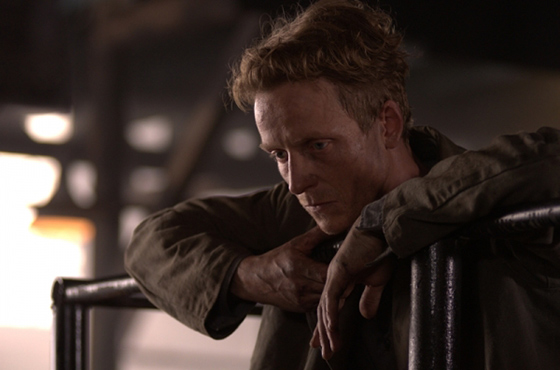
Here, any space is curved and softened - and the space between people including. The Germans who are forced to live in a stuffy reservation, Russians, already accustomed to the collectivist swarm, bosses and subordinates, escorts and escorted ... Everyone is rafting in the many -sided Androgyn monster, like what is depicted on a well -known poster of Lisitsky. “I don’t remember myself who I am, what and where, I even forgot that the Hans” - this is how the literary scenario of Mindadze begins. Depersonification, loss of oneself between the two countries, more like Scylla and Haribda, is the main theme of the film. Here people are their own doubles, here German fates find a strange reflection in the Soviet ones - or even pass from hand to hand, like public property. Hans merges with Peter. The German Gretchen turns into a Russian mongrel. Sexual desire, aimedly, like scabies, moves from one hero to another, sometimes finding objects that are not explained by logic (so, Hans nourishes some poorly articulated feelings to a sullen, similar to a stump, a mother of a girl who died in his workshop, and the head of the group, an engineer Otto, seems to hide-including homosexuality for mizoginia and an exaggerated love for order).
 © Studio "Passenger"
However, this spirit of barracks collectivism, paintings of the early Pimenov and Deineki (even angles, even the positions of the bodies in the frame here are clearly inspired by Soviet painting of the late 1920s) eludes the digital camera, whose gaze is clean and transparent, like the very ideal lens of Otto. The spectator habit requires that the rough, dirty, nanosa would be not only the texture of the Stalinist industrialization - but also the medium transmitting it. But it is precisely the “figure” that the elevated glow of glass mass, a super -value object, on which the fate of all characters, is best caught. And nature - here it is revealed by another beauty, which is more characteristic of naturally, than artistic perception: the forest, through which Peter's path to the will, is laid out on the lines and leaves, grass and twigs, into a variety of discrete shapes and shades, isolated from the green breathing mass of ideal optics.
Actually, the film itself with its characters itself - acting contrary to the logic of a formal plot with its characters. Someone complains that everything is unclear here-but the certain discomfort of the perception of the Hans is caused by this very clarity that rescues the affective essence of life from the pile of ideology. The state steps on a private, filling it as ink, fear, laws and rules of the schedule. Private resists, accumulates in lowlands, erupts through fear of the moments of passions, nervous breakdowns, drunken confessions, ambiguous poses. Pours out over the edge, like overheated glass from the shape, occurs to the future - As in an epilogue where the Hans looking at the eyepiece seeks in an ideal lens - exactly in a crystal ball - scenes of a joyful blitzkrieg, recalling himself, his country and a role prepared by this country to him. Cavalcade of motorcyclists in a gray form flashes a familiar road through the forest. The foot in a German military boot finds its own imprint on Russian asphalt. He returns to Russia as a woman. But blackness comes again, for some reason completely different.