
Translated material
Medicine for white nights
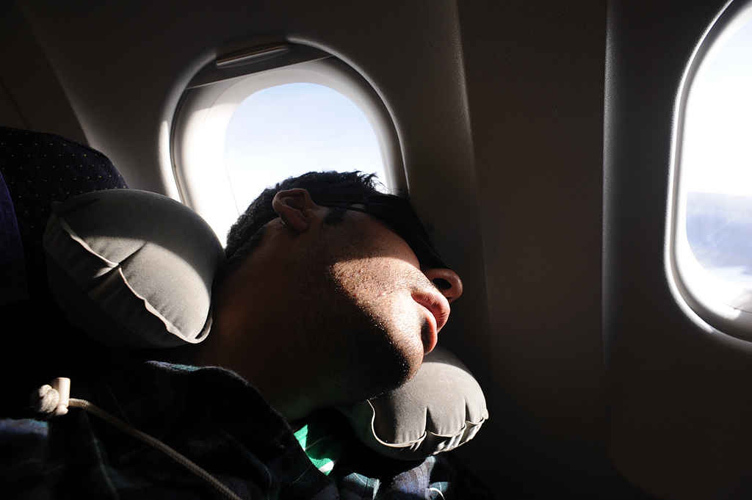
Why are football players playing worse than at home? The point is not at all the beneficial influence of the native walls, the journalist David Randall claims in his book “Sleep Science”. Jetlag is to blame, the shift of the sleep and wakefulness cycle. If the national team flies from Moscow to San Francisco (the difference of 10 hour zones), then on the field it will be released late at night or in the early morning Moscow time. The loads are conflicting with the daily (they are also circadian) rhythms of the body - and football players, as well as basketball players, rowers and swimmers, systematically lose in such a situation weaker rivals. Everything can spoil even the time difference of three hours, as between Samara and Berlin. This, of course, concerns not only athletes - just in sports, where there are statistics of victories and defeats, the effect is easier to notice.
And it seems that nature has made people vulnerable to the jetla: some are embedded in the New York rhythm of life in two days, others continue to fall asleep in the middle of the day and eight days after the flight. A new study , printed today in the British scientific journal ProChedings of the Royal Society B , explains this by differences in the work of the brain zone the size of a pin head, which is located in the hypothalamus and which is called the suprachiasmical nucleus (SCN) .
Scientists have long known that SCN in the answer for daily rhythms, and even described the cellular mechanism of the internal watches at the level of proteins and genes. But so far there have been no idea why different people have this watch is not the same to set up. Now five American neurobiologists from Georgia and Massachusetts have nominated (and checked) the following hypothesis: it is not a matter of individual nerve cells, but how quickly they catch each other's effect of each other. In other words, instead of looking at individual birds, it is useful to look at the behavior of the pack.
Travel to the east - towards earlier sunrises and earlier awakenings - people transfer more painfully than flights in the opposite direction.
The mice with a luminous brain was checked their hypothesis. More precisely, the mice with the mice was corrected so that one of the daily rhythm controllers, Period2 , was produced along with a fluorescent mark.
Each mouse was seated in a cage with a squirrel wheel: when the mouse runs forward, it rotates. For three consecutive weeks, these cells were illuminated for 12 hours a day, and then for 12 hours they plunged into the darkness - until one day scientists were simulated “a night flight for six hourly belts to the east”: the light was lit six hours earlier than it was. Why east? Such travels - in the direction of earlier sunrises of the Sun and earlier awakenings - people transfer more painfully than in the opposite direction, after which you can wake up as much hours later.
All this time, sensors on the squirrel wheel led to the chronicle of mouse activity. The wheel rotates - the mouse is awake. And if the wheel does not spin for a long time, then the mouse is sleeping. According to these data, scientists concluded how quickly the mouse adapts to the new rhythm. Neither people nor in the mice are an unconditional signal “time to wake up” - but the brain takes it into account and adjusts its cycles under the alternation of day and night.
After four weeks in the east, the lamps stopped turning on in general for three whole weeks so that the effect of getting used to life in the “new time zone” managed to gain a foothold. Then they took the cuts of the brain with the mice, with which they worked in the EX Vivo mode: although the mouse itself died, its nerve cells remained alive for a long time - and behaved as they learned to behave during the life of the animal.
Behind the activity of cells, scientists monitored their fluorescent glow: the brightness grew and fell along with the concentration of the protein Period2 . This protein is the key detail of the internal watch mechanism: its concentration changes according to the known rule with a period of about 24 hours, and the nervous cell to answer the question “how long”, it is enough to look at how much this protein is contained specifically now.
Unlike Russia, in the USA, melatonin has a food supplement and is not registered as a medicine.
It turned out that different SCN cells have different time peaks: each is trying to withstand its 24-hour cycle, but together they behave like an orchestra that plays a discreprement. The degree of this “dioecessor” predicts how difficult the body tolerates Jetlag.
Bad news: this coherence of the work of neurons is an innate feature, as a shape of fingerprints. It seems that a conscious effort cannot be influenced by it - this focus passes with the cortex, but not with the structures of the subcortex, such as Scn . Therefore, it does not matter at what hour you were wigged to school or how your daily your next life was arranged: to suffer after flights or not to suffer, it is predetermined from birth.
Another thing is that the neurons of SCN , which count the cycles non -ishronically are a potential target of drugs that put our daily rhythms in order. Now they are trying to influence them, as a rule, with the help of melatonin, the hormone of the cerebral gland. This is the active substance of the Russian drug Melaksen, and in the USA it has a food supplement and is not registered as a medicine.
Melatonin really controls the cycle of sleep and wakefulness, but this is only the last link in the chain of regulators, and the same SCN controls its release. Therefore, manipulations with melatonin-in a sense, an attempt to plug the machine gun barrel during shooting instead of taking the cartridge from the machine gunner.
If in the end there is a medicine that makes the neurons of SCN flash well, this will not only help to defeat Jetlag for those who often fly a lot. The authors of studies about circid rhythms often mention people who work on a night shift and sleep in daylight hours. In Russia, this would come in handy at least residents of the Arctic, in whom the polar night without sun alternates with a polar day without darkness, but biological watches are still trying to count their 24-hour cycles. And, perhaps, much more people in Northern Europe, from St. Petersburg to Reykjavik, who do not tolerate white nights.