
Translated material
"I don't understand why you need to swear"
As the Rector of the Higher School of Economics criticizes and supports power at the same time. Interview with Yaroslav Kuzminov
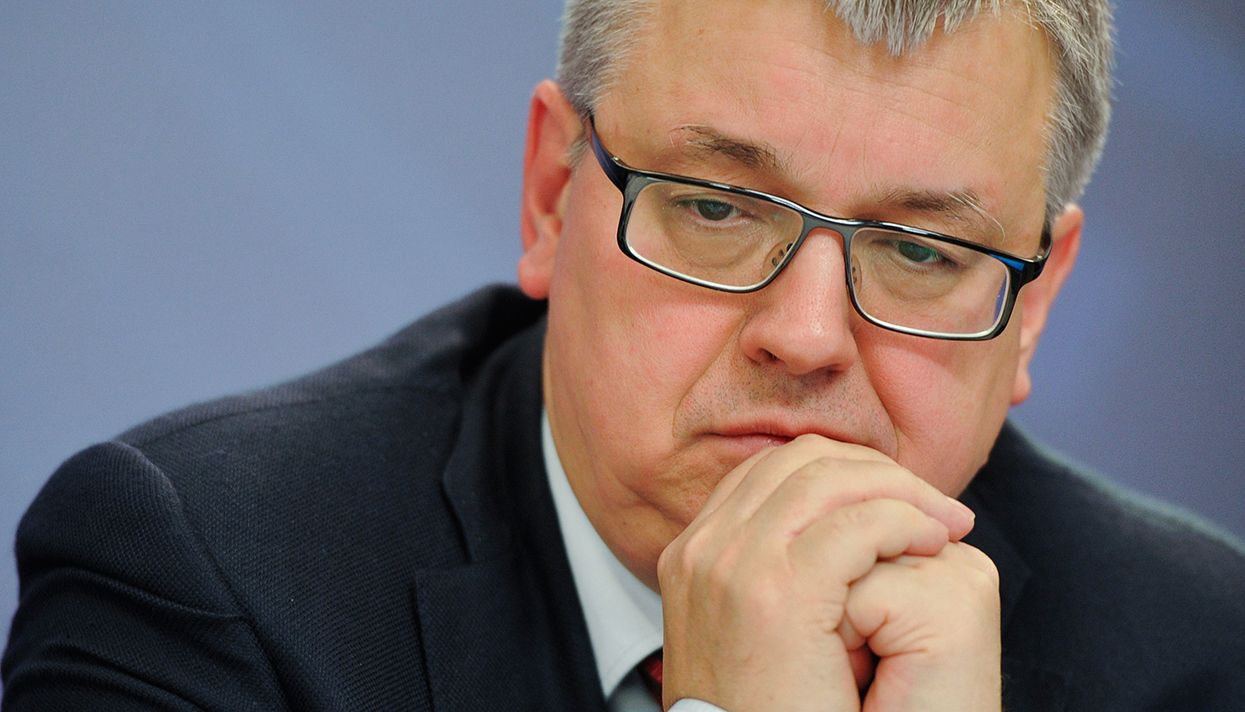
The Higher School of Economics is often accused of spreading liberal ideas, although its rector Yaroslav Kuzminov has recently headed the Moscow branch of the All -Russian Popular Front. Unlike one of the founders of the school, the former Minister of Economy of the Russian Federation, Yevgeny Yasin, who regularly and harshly criticizing the authorities, Kuzminov offers “not to swear” and continues to work closely with the government and the president. The special correspondent of Medusa Ilya Zhegulev met with Yaroslav Kuzminov at the St. Petersburg International Economic Forum and asked the HSE rector about what reforms the state needs and how it refers to the Dynasty Foundation in the list of foreign agents.
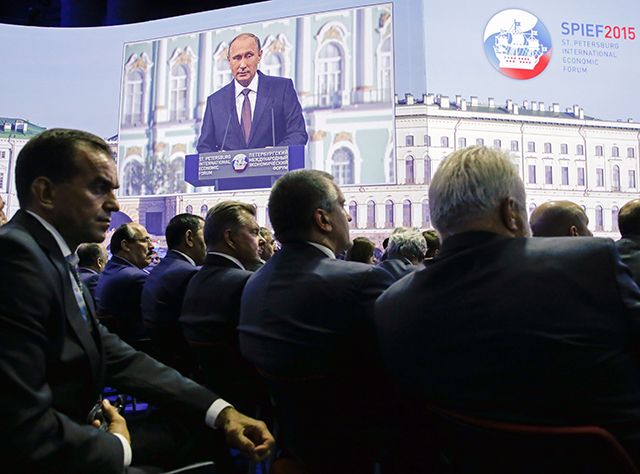
- This is not the first time at the St. Petersburg Economic Forum. From year to year, it refers to the changes that should occur, and the last forum is no exception. German Gref and Alexei Kudrin believe that political institutions should change, urgent reforms, including government administration, should be carried out. But there are no changes and everyone is used to it. Why say all this if nothing changes?
- Investors listen to words less, they evaluate actions and the real situation. In our country, not everything is so bad. If we compare the investment climate in Russia and Latin America, for example. And if we compare the investment climate in Russia and the largest half of the countries of Asia, then we have at least not worse.
- Do you mean Burma?
- No, I mean far from only Burma. You know, weak institutions are not just Russia. Weak institutions, a weak guarantee of property rights, work “according to concepts” is rather a rule than an exception, everywhere, except, say, 30 countries.
- Developed.
- The peculiarity of Russia is that along with this common weak place it has great advantages. In addition to resources that others do not have, we have a serious advantage in the level of culture and education of the population, we have a rather large solvent demand within the country. Still, we have a large market, and 25-30% of this market is a middle class.
- In demand in the last year, the problem. The demand for cars fell - the automobile market collapsed. People have less money. The whole crisis is a fall in demand. What are you predicting?
- The fall in demand for cars and household appliances, which is calculated in dozens of percent, is not only a consequence of the fall of the ruble or reduce real incomes of the population. I think more than half such a fall is caused by a hype-sales wave in November-December 2014, when families were overstated by cars for two years in advance, and a large household appliances for about a year and a half ahead. And, pay attention, because a sharp fall is not noted in the products, including in the elite sector of products - it means that people did not switch to potatoes ...
- Sales of sanctions products fell after a sharp take -off of prices. Cheese, for example.
- No, there is no downshifting in the food basket yet. There is no landslide fall in the clothing sector, for example. What does that mean? This means that in the sectors of high -tech goods there was a purchase for the future. Consumers expected a greater fall in the ruble than happened. In another case, when we, for example, are talking about cars, this should not be 45% of the fall, but 20-25%. The component of the fall is visible, which is associated with a situational psychological reaction to the crisis, and not with the crisis itself.
-In any crisis in the country, they begin to take some measures to increase investment attractiveness, and we-on the contrary, are more prohibitive measures. Kudrin said that scientific exchange with other countries has decreased greatly, it is more difficult for our teachers to leave. Do you feel it in the Higher School of Economics?
- Are you talking about scientific exchanges? No, we do not feel restrictions on either the Russian or the foreign side. There are ordinary, current problems, no more. In my opinion, the issues of regulating migration of highly qualified specialists are an object of constant tug of war between officials and users of specialists, and this began long before 2014. I do not think that this has something to do with the crisis, this is such a common bureaucratic creativity.
Traveling abroad, the invitation of foreigners could fall here due to the fall of the ruble course-yes. But I head the Association "Global Universities", which unites leading universities in the country-and I cannot say that we somehow sharply reduced activity here. Rather, they redistributed their reserves in order to maintain exchanges at the same level. Unfortunately, I do not know what Alexey [Kudrin] had in mind.
- This is related to the general “clamping”, which has been taking place for the past two years.
- I do not see any conveyor who comes up with prohibitive measures every day. At the same time, I critically relate to what our bureaucracy does, I am not trying to protect it.
- It is believed that the Higher School of Economics has problems - and it does not love its power anymore. Is that so?
- The authorities do not love anyone at all, the authorities want to love her. The authorities will demand you or not. The demand for our expertise has not only been preserved-I would say that over the past two or three years it has grown significantly. The circle of departments that work with us has expanded. There are more problems in the information space, but they have been traditional since the 1990s.
We have always had a certain number of professional exposures. Especially from the flank of the so -called national extremism. If we analyze the characteristics - such as “agents of the world bank”, as they write on the Internet, then this is very funny.
-Previously, such statements were marginal, but now the general national-patriotic line is much more noticeable and has turned into a trend.
- I don’t think so, there were the same amount of such performances five years ago.
- Seriously? Five years ago, it seems to me that we would not talk about it, it was not in hearing.
-Why did some revival of such a hurra-patriotic rhetoric occur? Because the state took a number of steps that were approved, including National Patriots. This, of course, is a conflict with the West, and the accession of Crimea. Both that, and another is the forced answer of our leadership, the state does not occupy national-patriotic positions, it is aimed at continuing integration, because the country has no other rational path. It is impossible to return to the USSR today - the USSR was twice as large as Russia, and the socialist camp was three. And this system collapsed because it could not stand the autonomous existence in that world.
Here are those actions that were committed in 2014 led a significant part of the National Marginals to the support of the authorities. Not completely-they still criticize Putin, but they now break into the media that have not printed them before.
- Precisely because they support power? Or does the authorities support them?
- Yes, precisely because they support power. When we are talking about attacks on the Higher School of Economics, attacks on Alexei Kudrin, [rector of the RANEPA] Vladimir Mau, on people who are engaged in professional support of reforms in our country - they have always been. It’s just that now those who attack have become closer to the bosses. But we do not have the impression that attacks on the professional part of the current elite are part of state policy.
- And you think that now Russia is needed in general, and if so, then what kind?
- We need a reform of social policy. Citizens must take, as in the whole world, in their own hands, the disposal of their social benefits is not the owners of enterprises and not the officials of the state, namely employees. When people will pay their own money to pension, to medical funds - we will finally have enough money for normal pensions and normal medicine. On this basis, their own “long money” for investment projects will appear in the country, they will not have to be occupied abroad.
We need budget reform, redistribution of tax powers and income in favor of regions and cities. We need a budget maneuver (we talked about it back in 2011) - the redistribution of funds from “supporting the economy”, law enforcement agencies, a bloated government for three priorities. This is education and science (it is difficult to divide them), it is healthcare, it is transport infrastructure and subsidizing passenger transportation.
Russia definitely needs a reform of public administration. We regularly issued reports - 15 years ago, and 10 years ago, and five years ago, and said that the Russian public administration system is extremely ineffective.
- And what needs to be changed the fastest?
- It is necessary to cut not only the number of officials, but the number of powers in power. We have too many control and supervisory powers in the state. Some of them can be transferred to self -regulating associations of market participants.
Another part is to transfer down from the federal center to the regions. The regions have much less money, they quickly optimize. And some part can be replaced by compulsory risk insurance. As a result of this, you can save a significant amount of money and hire officials for higher salaries, like those of corporation managers. So that decent people who are ready not to steal, but work for decent payment, would go to the public service. After all, in our Federal Property Management Agency, for example, the average salary in Moscow is 30 thousand rubles. That is, you can, of course, look for idealists, but it is impossible to dial a whole agency of idealists.
- It is especially difficult to find idealists responsible for the sale and preservation of state property.
- This is the root of the state ineffectiveness. The state does not ensure the effectiveness of officials. It fell into a trap of social demagogy: it supports and even inflates to the people an idea of a kind of extraordinary, who for some reason will work for a state at a loss.
This is a very strange position. I know a lot of capitalists - I assure you that these are people very greedy, mainly. If they could pay a salary that the state pays to its officials or managers, they would do it. But they don't do that.
-It depends on which managers-there are state-owned companies whose managers receive much more than top managers of private companies. Take the rating of salaries, which annually publishes Forbes magazine. Even if you don’t talk about the rating champion-Sechin, all the first places are top managers of state companies, not private ones.
- Honestly, I do not understand why you are so preoccupied with salaries in the commercial sector. If the state wants to hire a manager for a greater money, it will simply hide the worst manager.
- It seems to me that this is not very effective management when such a solid amount in the company goes to salaries and parachutes.
-You know, we have a community and Bolshevik disease-to consider money in a strange pocket. You dashingly from the effectiveness of the state have jumped to the fact that someone gets a lot. I’m telling you that the official receives little, you need to hire more effective officials for the normal money that they pay in the market. You immediately remembered me that someone gets a lot.
-Simply, maybe you need some kind of balance between the salaries of officials and the salaries of state-owned companies managers? Enlarge somewhere, and somewhere to reduce.
- The problem of inefficiency is not in salaries. The problem of inefficiency is that people who occupy these places occupy them almost for life that there is no public demand, there is no public assessment of the quality of state corporations and that they occupy a monopoly position.
-In your opinion, public institutions for the support of the authorities that are being created now are needed?
- I do not see any public institutions for supporting the current government. If you are talking about the “Popular Front”, it was created before the presidential election as an interface of power and state in the context of weakening the political structure and feedback within the framework of the traditional political system, the party system.
-That is, do you think that it was created due to the fact that United Russia has exhausted itself?
- It seems to me that now it is a social movement, not a party. There are no members, party organizations, there are interested people who gather around the support of certain provisions of the president’s program. In the "Popular Front" there may be private people who are interested in the implementation of this program and who, relatively speaking, act as lobbyists.
- Why lobby for the president’s decisions? He is already supported at all levels.
- Well, if the president’s decisions are not realized or poorly implemented by the executive branch, then, apparently, it is necessary. The president of only one person, and the ineffective system that we talked about can formalize and grind any elements of the program. But people, after all, when they voted for Putin, voted for a certain program, she was formulated in his articles, which were widely discussed, then these articles were formalized in decrees. The articles themselves were prepared, including on the basis of the opinions of interested public professional groups, and the “Popular Front” arose that way, as I recall.
- Why do you think many were surprised that you headed the Popular Front in Moscow?
- I said - I worked closely with the government and with the president. Putin instructed us with the head of the RANEPA Vladimir Mau to form a group of experts that prepared his program - 2020, and the president’s articles were largely based on those elements of the program - 2020 with whom he agreed. He did not agree with everything that we proposed - we, for example, offered a more stringent pension reform. But he agreed with the core, with the economic program, so we consider the program with which Putin won the election - his program.
- It is one thing to cooperate with the authorities and organize experts, help with the economic program, and another - to lead the public movement “Popular Front”.
- If this economic program is beating, if we continued to believe in the goals that we formulated then, then, probably, it would be dishonestly refused to participate in its promotion.
-Did you manage to help and solve something?
- In a month? We compared what the Popular Front is doing now, with the fact that we believe we need to do in the first place. We really offered something, we are now discussing. But I would not want to talk about it now - early. I hope you see in a few months.
- So what did the Popular Front do in Moscow? What will you do specifically? That is, you will swear with [the head of Moscow Sergey] Sobyanin and his officials?
- I do not really understand why you need to swear. You have to swear with opponents. I do not consider Sobyanin in any way as my opponent, I greatly appreciate what his team does, and we have constructive relations. By the way, we took part in the Sobyanin program - just like in the Putin program. But this does not mean that we believe that everything is good in Moscow. We see things that disappear and are not realized.
- What, for example?
- The most odious are large families who have been living in communal services and emergency houses for many years. This, in my opinion, is a challenge to Moscow: in a rich city, we have families with young children who live in very bad conditions and they have no prospect of getting out of this state. The system of additional education of children in Moscow does not correspond to the capabilities of the city, or to the level of general school education, which in Moscow is a cut higher than in other regions. The quality of Moscow procurement - this regularly Moscow "People’s Front" was engaged and will be engaged.
- I was sure that you would focus on the aid of business.
- You know, the emphasis on business was already - before my arrival. I would say that I have to change this. Most of the population of Moscow are people with a high level of education and with an average income. And their interests should also be taken into account, the features of their views are taken into account. Some problem of the Moscow branch of the Popular Front is that it reproduced a nationwide agenda and was less focused on the features of the Moscow audience.
Moscow is a part of Russia put forward to the future.
Moscow for 15 years is ahead of the rest of Russia. That is, relatively speaking, Russia in 2030 will live as Moscow lives now. Probably, some gadgets will be more progressive, but in general, the incomes of the population will be the same, they will also often ride abroad, they will learn a lot as well. Moscow is Russia in the future. It is very important to form this Russia in the future so that it fully realizes its potential, and does not accumulate problems so that the quality of the urban environment is adequate to the incomes of the population.
What is Moscow now? Москва — это, в принципе, уровень Западной Европы по доходам. Но согласитесь, что мы с вами живем по качеству жизни не как в Европе, мы живем значительно хуже. У нас медицина хуже, у нас плохая экология, пешеход не чувствует себя в Москве как в нормальном городе. Возможность, как я уже сказал, для ребенка получить дополнительное образование в самых разных секциях, развить свой талант, возможность начать свой бизнес, инфраструктура для бизнеса — все эти вещи, конечно, должны быть на повестке дня и московского правительства, и московского отделения «Народного фронта». Он должен подталкивать московское правительство.
— Вы недавно в программе у Владимира Познера говорили, что замглавы администрации президента Вячеслав Володин курирует Высшую школу экономики. Он же курирует «Общероссийский народный фронт». Часто ли вы встречаетесь и имеете ли возможности для лоббирования каких-то важных вопросов? Ну, например, история с фондом «Династия». Как вы к этому относитесь и пытались ли вы как-то повлиять на решение?
— Я уже сказал, как я к этому отношусь. Я считаю, что фонд «Династия» — это чисто российский проект человека, который заработал в России деньги и тратит их на поддержку российских проектов. Да, формально это деньги, которые Зимин вывел за рубеж в 1990-е — ну, заработал и вывел, тогда все так делали. И, на мой взгляд, можно было бы путем переговоров как-то затормозить, не педалировать это решение, уговорить Дмитрия Борисовича Зимина, чтобы он, по крайней мере, ту часть, которая финансирует фонд, вывел под российскую юрисдикцию — тогда он и формально не подпадал бы под такого рода законы. А так просто формально подпадает — у нас закон так написан. Здесь должна была быть более точечная работа Министерства юстиции и больше уважения государства к создателю фонда, который, кроме добра, ничего России не сделал.
— Вы пытались эту точку зрения донести?
— Мы обсуждали это неоднократно.
— С Володиным?
— И с Володиным, да. И я должен сказать, что у нас принятие решений в государстве не контролируется политически. Вот Министерство юстиции исполняет закон, иногда не принимая во внимание политический контекст этого дела. У нас нет телефонного права в том виде, который часто представляют журналисты.
— У вас с Володиным более тесный контакт теперь — после того, как вы вошли в «Народный фронт»?
— Нет, пожалуй. У нас всегда был тесный контакт — мы часто и откровенно разговариваем.
Ilya Zhegulev
Saint Petersburg