
Translated material
Tusk: Greece should stay in the eurozone
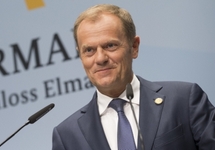
The chairman of the European Council Donald Tusk said that Greece should remain a member of the eurozone. He placed the corresponding entry on Sunday night on his Twitter. “In contact with leaders to guarantee the integrity of the eurozone from 19 countries,” Tusk added.
On the afternoon of June 28, the BBC reported that the European Central Bank at a meeting of the Administrative Council can turn the emergency program for Greek banks. In this case, it was not ruled out that the Greece authorities would introduce control of the movement of capital. However, later it became known that the help would not be stopped - the ECB retained the amount of lending to Greek banks at a level agreed on June 26, although it reserved the right to revise this decision.
On Sunday night, the Greek parliament approved the appointment of a referendum on July 5 on the question of whether the country should adopt or reject the agreement with international creditors on leaving the long crisis. The initiative of such a referendum was made on June 27 Prime Minister Alexis Tsipras .
Meanwhile, the director of the International Monetary Fund, Christine Lagard, said that the referendum in Greece would not have legal force, since he is scheduled for the date after June 30, when both the deadline for the repayment of Greek debt to the fund and the extension of assistance from the European group.
If Greece by this time will not pay the IMF of 1.6 billion euros of the debt, it faces default. International partners are ready to negotiate Greece, but only on condition that the country's authorities will introduce a regime of rigid economy.
At the same time, at the end of last week, the German authorities warned that Greece would be excluded from the eurozone and deprived of international financial assistance if it does not pay off its creditors until June 30. Tusk on the same days demanded from Athens to stop the game in a coward and the search for guilty.
The topic of exclusion of Greece from the eurozone was raised earlier. Such plans were reported, in particular, in early April with reference to the Memorandum of the Ministry of Finance of Finland.
In January , the Siriza left -winged coalition won the Greek parliament. She came to power precisely thanks to promises to reconsider the conditions of the loan issued to the country and achieve the abolition of the regime of rigid economy, without the introduction of which Athens could not count on financial assistance from the EU and international institutions.