
Translated material
Greece President signed a decree on the holding of debts payments to creditors
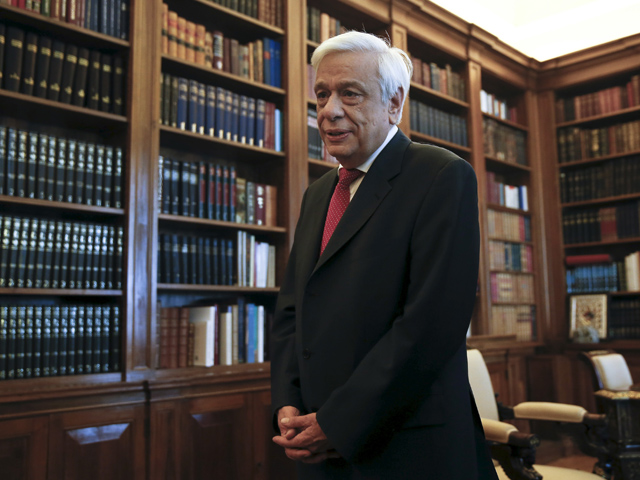
The President of Greece Prokopis Pavlopoulos signed a decree on the holding of a referendum on the proposals of creditors on July 5. The document has already entered into force. On the eve of the idea of holding a plebiscite supported the parliament - 178 out of 300 deputies voted for the initiative, 120 opposed. At the same time, the European Union refused to extend the action of the Greece Assistance plan, financial support will be provided until June 30. By this day, as the head of the International Monetary Fund, Christine Lagard, said, Athens need to pay off all debts.
"The voting procedure will take place in the same polling stations with the same composition of the election commissions and representatives of the judiciary, which were appointed for the universal parliamentary elections on January 25, 2015. The day before the voting and until 19:00 voting, the media is prohibited to publish any materials that can influence the choice of the voters," the Pavlopulos decree quotes.
Greece Prime Minister Alexis Tsipras made a referendum with the idea of holding a referendum. He believes that the terms of creditors regarding strict saving measures "clearly violate the pan -European rules and the right to employment, equality and dignity." According to the head of the government, perhaps "the goal of some of our partners was not to achieve an agreement with all parties, but, perhaps, the goal was to humiliate the whole nation."
Lagard, in turn, argued that the upcoming referendum would not have any legal force, since it would take place after the expiration of the deadline to repay the loan. “Speaking from a legal point of view, the referendum will be about sentences and measures that have no power,” said the head of the IMF.
She claims that Athens should pay a tranche of 1.6 billion euros until 18:00 Tuesday, June 30, Washington (01:00 in Moscow, July 1). Lagarda emphasized that we are talking about money that belong to the international community, "including people who have lower life standards than in Greece."
If the Greek authorities will not be able to make a payment, the country threatens default and a possible exit from the eurozone.
In 2010, when the crisis of sovereign debt of Greece began, the EU and the IMF allocated loans to this country for almost 250 billion euros, and these funds should gradually return these funds. Despite the partial write -off of Greece debt in 2012, its public debt currently exceeds 315 billion euros.
From June 29 to July 6, Greek banks and exchanges will be closed . On Sunday evening in Athens, an emergency meeting of the Council on Financial Stability was held to discuss the situation in the country's banking system. According to Greek media, the Minister of Finance, Janis Varufakis, said that the government is considering the possibility of closing banks and introducing control over the withdrawal of money from bank accounts and moving capital from Monday.
In addition, the Greece Ministry of Finance limited the daily limit of 60 euros to withdraw cash at ATMs and banned any money transfers abroad. According to TASS, payment of goods and services using cards issued in Greece will be possible only in the country. The limit of cash withdrawal from cards issued by another state will be introduced by a separate order of the Minister of Finance of Greece.
During the “bank holidays”, interest on loans will not be accrued, the repayment period of which falls on this period. It is also noted that the restriction on the removal of cash from ATMs will not affect tourists.
Greece is forced to resort to emergency measures after refusing to compromise with creditors from the European Union.