
Translated material
The drama of co -authorship
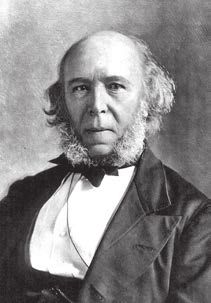 Herbert Spencer
 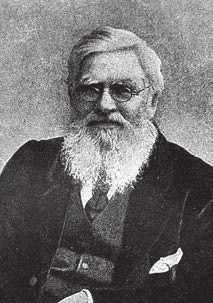 Alfred Wales
 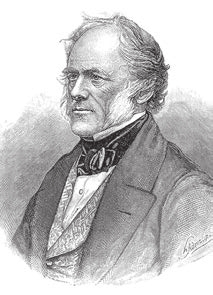 Charles Lyel
 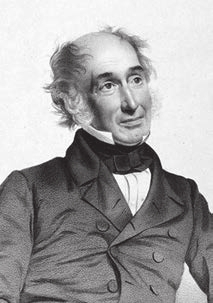 William Hoker
 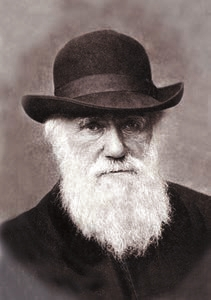 Charles Darwin
 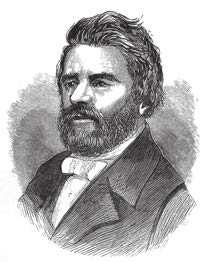 Robert Chambers
Who is the author of Darwinism?

Who opened that the species are transformed under the influence of natural selection? Well, of course, Charles Darwin. In 1831-1835, he made a round -the -world trip on the Bigl ship, which gave him abundant material; In the 1838–1842s he wrote a draft version of the work on the origin of species; In 1844, he rewrote it and read it to his two friends, outstanding scientist Charles Lyell and William Jackson Houker, but for another 15 years he did not dare to publish.
Meanwhile, in this very 1844, an anonymous work was published in England, which became the first -bit sensation and withstood 11 editions over the next 15 years, “traces of the natural history of creation”. The author argued that biological species did not arise suddenly, but gradually, permanently improving each time from lower forms to the highest with a person at the end, and all this without any intervention of the Creator (the existence of which the author did not deny, but deprived him of any impact on the development of the world). The author’s name was stored in the strictest secret (only two people knew - wife and brother) and became known only in 1884, after his death. It turned out to be a Scottish publisher and enlightener Robert Chambers. True, Chambers did not have such a thing as natural selection, but the idea of evolution was expressed.
In the early 1850s, engineer Herbert Spencer has released a number of works in which Maltus developed the idea of the struggle for the existence and survival of the most adapted in human society, that is, about natural selection and its significance for evolution.
Meanwhile, the “Journey to Bigl” and the book of Chambers were impressed by Alfred Russel Wallace, and this poor man in imitation of a wealthy Darwin in 1848 went on a four -year journey through the Amazon to his own meager means. But the ship with all the collected collections caught fire and sank. Wallace did not lose heart and made an eight -year journey to the Malay archipelago (since 1854). In 1855, from the island of Borneo, he, sick, sent a note to the magazine in which he expressed the idea of the dependence of new species on the previous ones. In 1858, he fell ill again and, having stated a law on the origin of species in a new note, sent this work to view his idol Darwin. The shocked Darwin writes to Lyel: "All my originality ... will be destroyed." Layel and Gooker collected evidence of Darwin’s priority and in 1858 published both material in the volume of the Linneevsky Society - Darwin and Walles (Darwin buried his son at that time). And the next year, Darwin published his book “The Origin of Species” and Darwinism began. Even the earlier considerations of Spencer began to be called social darwinism.
Why did Darwin henitate for so long? He was afraid of the reaction of society. Why did you decide? Either he considered that society was ripe, or the competition spurred. In fact, Wallace and Darwin released the discovery itself a year earlier than Darwin’s book, and their discovery was published in co -authorship, without the knowledge of co -authors. M. D. Golubovsky [1] writes about the "drama of co -authorship", noting some disagreements.
Mysterious long longers
A completely different aspect of the "Drama of Co -authorship" can be observed when reading modern articles on natural sciences in prestigious magazines. The other day, one physics article published in the Physical Review Letters [2], once again broke the world record - it turned out to be 5154 co -authors. 24 pages out of 33 are given only to the list of authors and their affiliations! (Before that, an article of 2008 was considered a record holder, which has about three thousand co-authors [3].) We are talking about the joint works of two ATLAS and CMS collaborations (these are the most important detectors of the Great Hadron Collider)-scientists from dozens of countries and institutions obtained the most accurate importance of the Higgs Beson’s mass at the moment. It would seem that everything is justified, but such articles are still maliciously called “mass graves” and are subjected to fairly criticism if, for example, laboratory assistants, students or volunteers, helping to correct minor mistakes, are included in the number of co -authors.
The humanities, of course, do not happen. But they also have heaps of co -authors often breed in large quantities - in books. And it’s good when co -authors are painted according to the chapters: it is clear who wrote what. After all, each of us has clearly ranked lists of colleagues in our heads, we know who can believe 100%, to whom to believe with reservations, who does not need to believe. But so clearly everything is not always painted. In addition, the lists may not be alphabetical, then at first the venerable go - authorities, academics, organizers, and then already in alphabet. Very rarely, this means the real participation of these venerable in writing a book, more often - general leadership, not even editing, but reference, control. They are not authors, and this is clear to everyone. With the same basis, you can include in the co -authors of all the outgoing scientific books of the rector of the university, the director of the institute, the president of the academy, the minister. Sometimes they turn on.
Since in some articles the team participants are my friends, about whom I know for sure that they cannot be co-authors of this discovery, since they have nothing to do with such and such science, and at the same time they are still in the middle of the list (which means not the bosses!), I started that I traced the share of each of them. Yes, in some way they are involved. This is evident from the text. Some of them performed the necessary analysis, the other turned out to be the copyright holder of the necessary materials, the third-the co-author of the examination of certain objects. Examination and analysis are attached, authorship is indicated. And why in a common hat?
Massage to call them like impolite. But they have nothing to do with the idea of work, to argument, conclusions. They, of course, deserve mention, but in applications, in links, in bibliography. What is the difference between those work, to which these authors refer to the bibliography, and those applications in which the data is not published separately, but as expert conclusions? There is only authorship to this application. For the rest of the work, the author of the application does not answer.
By the way, in different sciences there are different traditions of indications of the sequence of co -authors, but they are not tough. In biology - one, in astrophysicism - another. The first surname or several surnames in the list may belong to real authors of the work. This is their idea, their conclusions, their responsibility, their merit. The latter in the list, say, the leader of the team, he mines and receives grants, distributes them, is in correspondence, in a word, is responsible for management. He may not have a relationship with the study itself. I would believe that such as the co -authors should not be mentioned as any director should not be mentioned. This is not his article. This is an article by his wards.
What to do?
Why did the author’s groups grow exorbitantly, including all involved even indirectly to work? The usual explanation: Modern science has become complex and collective in nature. You can’t do without collective work. Without all these experts and copyright holders, there would be no discovery. But in the past, you can list those who helped the discoverers: Spencer had to be included in the co -authors of his secretary David Duncan, Wallace - his assistant Henry Bates, Darwin - his consultants and friends of Lyel and Guker. Later authors - engineers and librarians. And the current - also programmers, without whom there would be no discovery. Yes, then let's turn on the doctors, and cooks, and wives ... In my opinion, this is not the drama of co -authorship, but an erosion of authorship.
There were several points.
Firstly, in connection with the development of scientific, ratings, the Hirsch index, etc. Employees of scientific institutions need to gain a large number of publications in prestigious publications. You will not include assistants and maintenance personnel (not to mention administrators) among equal co -authors - you will not receive help from them. But this is solved simply: among laboratory assistants, experts, directors, etc. It is necessary to conduct their ratings, evaluate them separately.
Secondly, the ultraliberal and ultra-democratic idea of equal rights of all participants in the scientific process, the research process, has become widespread in the West. We are all Einsteins and Lobachevsky, only one is lucky, and the other is not very good, but if everyone is in equal conditions, then the discoveries are about to sprinkle, as out of a cornucopia. The organizers of science are not aware that we are thereby rubbing Einstein and Lobachevsky.
Thirdly, those sections of the rights where intellectual property criteria are formulated are not sufficiently developed. The tradition of swollen copyright groups is still young, conflicts have not accumulated. But they are certainly coming. People involved in the discoveries will begin to apply for priority and monetary benefits from authorship only indirectly - through side applications and very private details.
I think that now it is necessary to clearly divide the workers involved in the scientific discovery in the authors of the scientific idea with its development and auxiliary participants who supplied the first material, individual tests, examination, etc. There are authors and those whom the authors thank.
1. Golubovsky M.D. Darwin and Wallace: the drama of co -authorship and disagreement // Bulletin of Vogis. 2009. T. 13. No. 2. S. 321-335.
2. Https://journals.aps.org/prl/abstract/10.1103/physrevlett.14.191803
3. Http://iopsciense.iop.org/1748-0221/3/08/s08004/
Illustrations: "Wikipedia"