
Translated material
Generation "h"
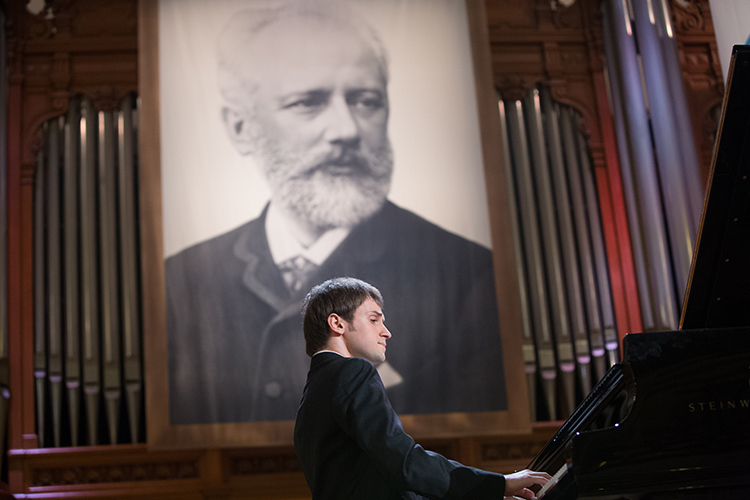
Tonight in Moscow, the names of the laureates of the XV International Competition named after Tchaikovsky will be named. He will definitely go down in history, regardless of what decisions of the judges will be, says Dmitry Renansky.
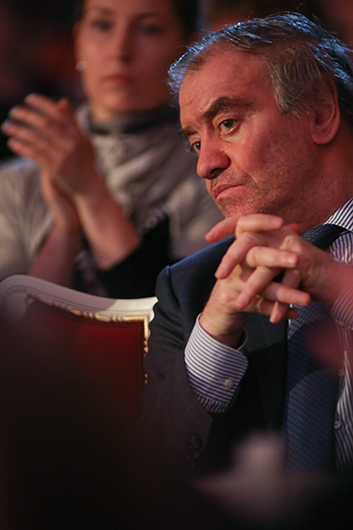
The rumble was silent. Valery Abisalovich Gergiev went to the stage. Leaning against the door jamb of the Great Hall of the Conservatory, the chairman of the Organizing Committee of the XIV International Competition of the Tchaikovsky tensely listened to the game of his laureates - those to whom the jury entrusted the Renoma to one of the key domestic cultural institutions. It was sometimes much more fascinating to observe the music of the Gergievsky face than to listen to the winners - there were too many different emotions and thoughts was broadcast by his facial expressions: did not eminent judges bring up so many organizational efforts to invite? Do the marked performers correspond to the tolerable and, as if forever lost the prestige of the competition? Were there really those who believe that all anti -crisis works went to dust?
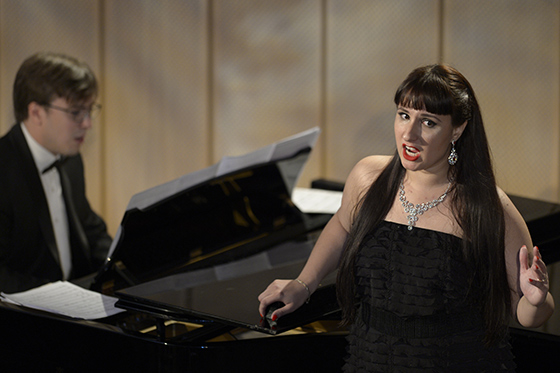
The four-year-old mise-en-scenes, which materialized a tremendous tension, under the sign of which the previous Tchaikovsky contest was held, in recent weeks I recalled more than once or twice-this year Valery Gergiev has definitely have several reasons to relax at once. Not that there were completely without scandals and slurred - but what a competition without them. Yes, bewilderment causes to offensive the low level of the linep among the vocalists, who had completely settled for the final without the winner of the Average Operate , the charming Chinese baritone AO Lee Lee. Yes, it seems that in the era of sanctions, the competition of Tchaikovsky again, as in the Cold War, has become an instrument of cultural diplomacy: it is difficult to get rid of the feeling of fair artificiality of many decisions of the piano jury-several participants in the second round from the USA, Poland and Germany in a good way should be drawn up even after the reconstructive auditions.
 © Tchaikovsky-2015
With all this, from the point of view of the transparency and openness of the Tchaikovsky -2015 procedure, it creates a precedent quite amazing for today's Russia -and it is difficult to say that it makes a stronger impression: whether the competition is interested, with which the press service of the competition reacts almost to every sneezer on Facebook, with which the members of the jury commented on the agenda, or, or, or, or, or, Finally, officially published tables with estimates of the competition participants who did not go to the second round. Add to this and a close contest in the nineties and zero, increased level of attention of the international community-heated, of course, outstanding quality online broadcasting of the Medici platform . TV - and get an exhaustive picture of the managerial triumph of Gergiev and the company. The reboot, so to speak, is completed: a giant competitive machine, if you observe from the side, works like a clock - and this watch for the first time in a few decades show an accurate musical time.
The fifteenth event was already in the first round, when Yuri Favorin, Andrey Gugnin, Lukas Genyushas, Andrey Korobeinikov, Daniil Kharitonov and Dmitry Masleev performed in the Great Hall of the Conservatory - it would be worth justice for the sake of adding the names of Alexander Lubyantsev, Nikita Mondoints and Nikolai Putrian. Mysteriously not passed the sieve of qualifying auditions, but the figures of the silence spectacularly complemented the overall picture. The landing, delegated to the current contest of the domestic piano school, turned out to be not just the most representative and powerful over the past years - it also turned out to be extremely diverse quality.
 © Tchaikovsky-2015
The breadth of the stylistic spectrum is really amazing. From the moderate traditionalism of Dmitry Masleev - to the unwell introvert analytical pianism of Yuri Favorin, to the radical experience of Andrei Korobeinikov with his historical performance of the thirty -second Beethoven Sonata, which is knocked out of the horizontal framework of the competitive regulation straight into the open cosmos. The debutant Daniil Kharitonov with a phenomenal creative will for his age stands apart: if at sixteen years the pianist is able to play the final “Appassionates”, in the future we can expect a lot of from him.
Four years ago OpenSpace . RU wrote that the key problem of Tchaikovsky’s contest was in his repertoire and wider, political orientation on the romantic art paradigm that had finally swore by the beginning of the 21st century. The fifteenth recorded an access to the world scene of a Russian musician who is actively working with a romantic discourse, realizing all his problem, critically rethinking him - and thereby powerfully moving forward the domestic performing tradition. If you have not heard the competitive speeches of the 24-year-old graduate of the Moscow Conservatory of Lucas Genyushas, it is urgent to make up for the lost one-and you should start exactly from the first round . In the case of Genyushas, it is not worth talking about technical perfection: it is much more remarkable, for example, the iron logic with which in the Beethoven third sonata it combines several different types of pianism at once, melting them in a solid style monolith, or the quality and quality of intonation “events”, communicating the musical tissue of early Bethnoven, amazing information saturation and force To hear in it predicting the paradoxical writing of late quartets.
 © Tchaikovsky-2015
The work of judges of any music competition is always complicated by a combination of political circumstances, but the piano jury of the fifteenth can only sympathize. On the one hand, in the final round (or at least in the second round), it would be worthwhile to skip all six of the Russian pianists mentioned above. At the same time, the arbitrators, obviously, had to keep in mind the idea of the diplomatic mission of an updated competition with its official orientation towards multiculturalism - and ignore foreign leaders (the American Ling Lee Lee Luke Luke Luke Debarg in the footsteps) Comme IL faut . In any case, the arbitrators from the very beginning ended up in a PATOS Situation of the situation not between the best and worst for any competition, but, figuratively speaking, between yellow and round - so it could also be assumed that the formed original artists, whose genetics, the least coincided with the program code of the competition, would fall in absentia in absentia: Yuri again came up with Yuri's program code. Favorin, who did not even have preliminary auditions at the fourteenth, and not passed into the final of the thirteenth Andrei Korobeinikov.
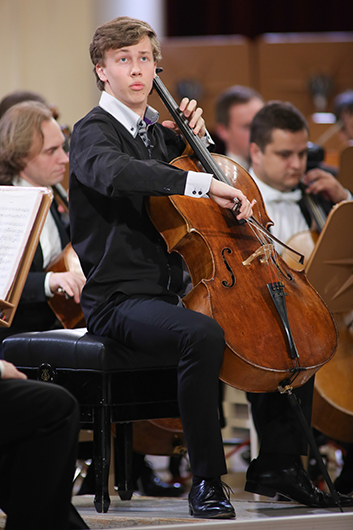 © Tchaikovsky-2015
On a scale of history, all these, however, are trifles. Judging by the piano segment - and the history of the Tchaikovsky contest, as you know, was written primarily by the pianists - the fifteenth was always written not only to coincide with the pulse and the spirit of the times, but to be con but it Tempo , demonstrating a completely exhaustive range of processes taking place today in Russian performing. The competition is not loners, but generations, the team of commandment, the fifteenth became a landmark event, for the first time in many years giving food to think about music - and only then only about the fact that (or who) surrounds it. Whatever the judicial verdict announced tonight, the current contest has definitely went down in history by the dissimilarity of the handwriting of his protagonists and the difference in their creative strategies: they did not see this - and here again.