
Translated material
Tell me about Australia
How refugees live in camps on the islands of Nauru and Manus: Vlad Sokhin photo gallery
Australian centers for illegal immigrants in the Ostro country Nauru are often compared with the American prison of Guantanamo. According to the Pacific Solution program, which was launched by the Australian government in 2001, everyone who sailed to Australia on boats without a visa and asked for asylum in the country, transferred to such centers to Nauru and to the island of Manus in Papua - New Guinea, where the issue of granting status was decided. In July 2013, the then Prime Minister of Australia Kevin Radd announced that no more “boatman” from among the refugee status illegally arriving in Australia would receive. In January 2014, Nauru and Manus tightened the rules of entry for human rights activists and journalists, and since the beginning of July 2015, Australia has forbade camp workers to talk about what was happening there, under pain of imprisonment. "Medusa" publishes Vlad Sokhin’s photo station, who managed to visit the islands after tightening the rules of entry.
“Under no circumstances, you will never get to Australia,” the banners of the Australian immigration department installed at the airports of Pakistan, Indonesia, Malaysia and other Asian countries tell refugees. Refugees, who, risking their lives, still decide to make a dangerous journey to the shores of the continent, continue to send the Pacific Islands to prisons. Around the year, their cases are considered and, if a person receives refugee status, he is offered to stay forever in Papua - New Guinea or Nauru. The governments of these countries receive large subsidies to support the project from Australia.
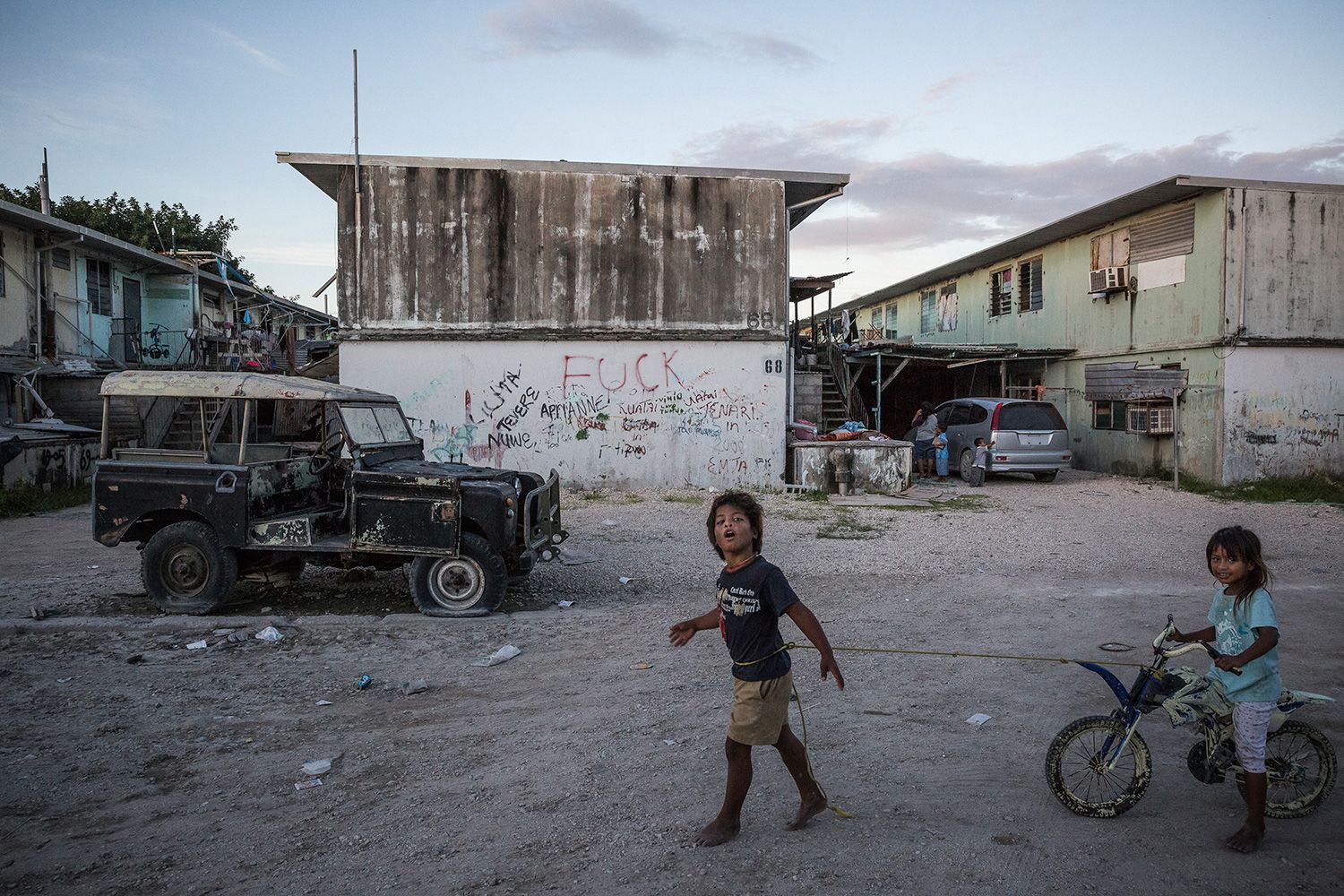
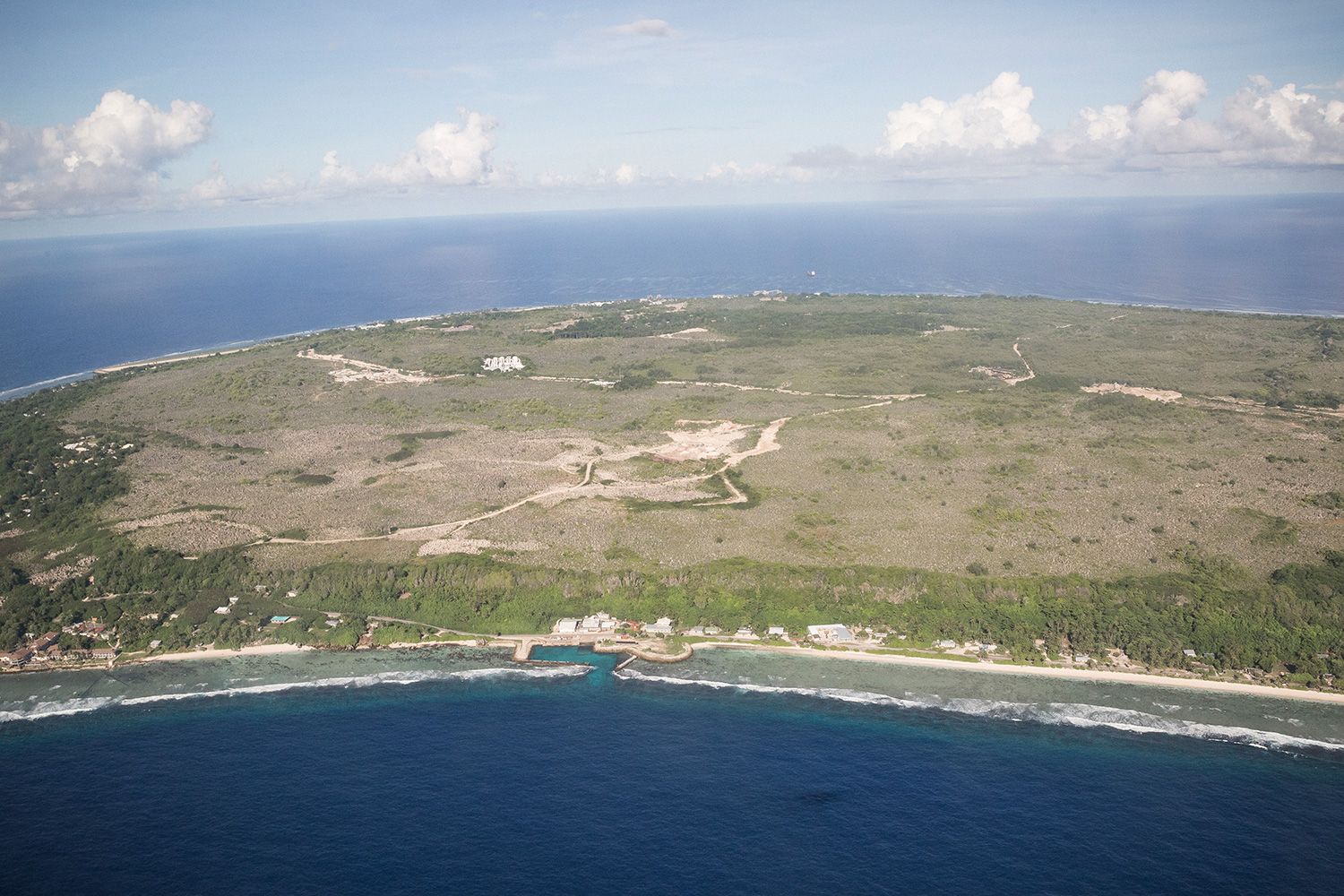
In the area of Loqueshen on the island of Nauru, numerous workers used in the extraction of phosphates used to live on the island of Nauru. When in the early 2000s the reserves of phosphates were exhausted, Nauru lost the source of the main income. This partly affected the government’s decision to allow the opening center for refugees to open here. Today, Nauru remains one of the poorest countries of Oceania.
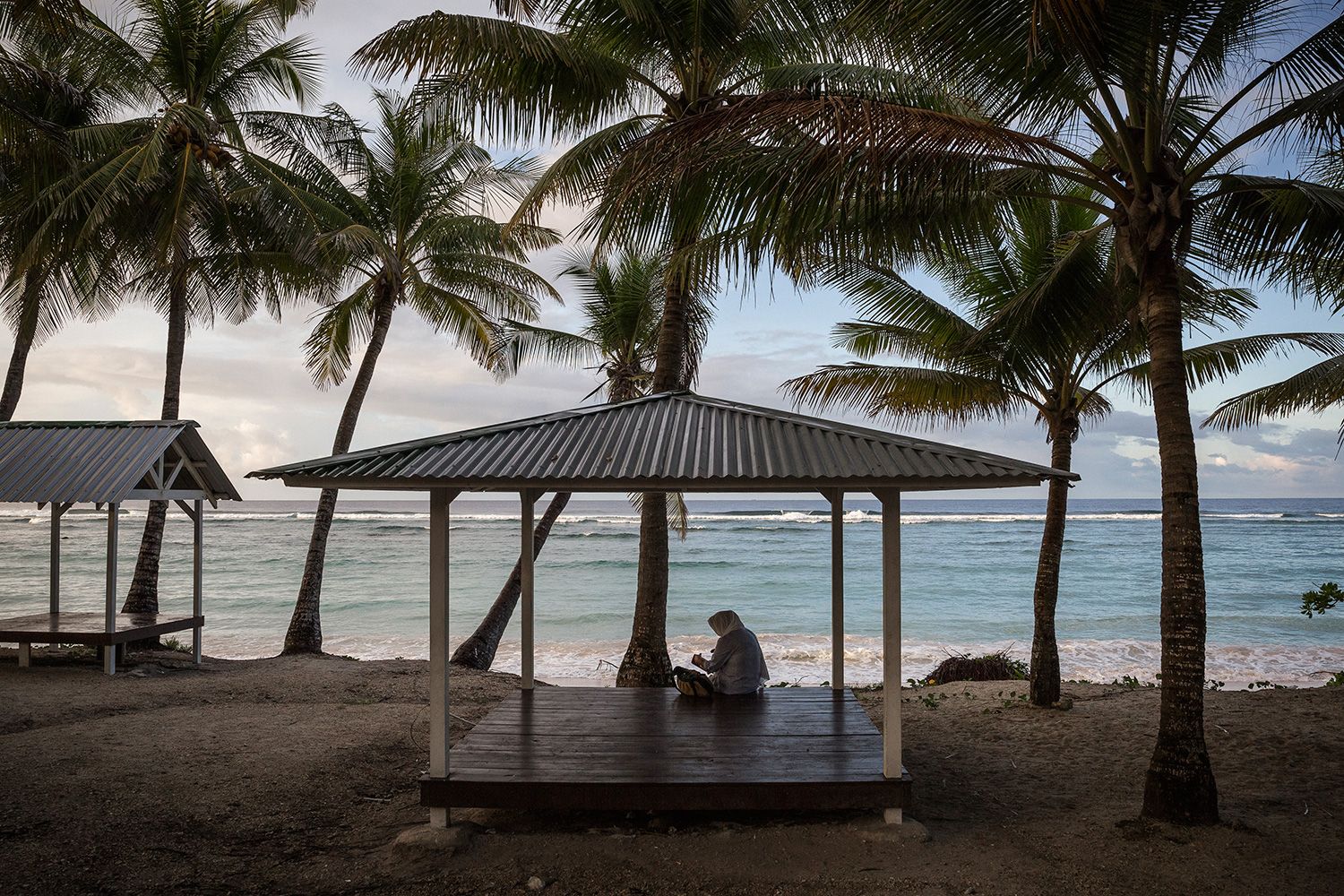
Fetemch, a refugee from Iran, is waiting for a bus on one of the beaches of Nauru. The Australians move those people who received the status of refugees to the camps located outside the prison. Relative freedom of movement is distinguished from prisoners, but periodically the locals attack refugees. In Nauru, where the unemployment rate is quite high, most of the local population does not support the government’s decision to put strangers to the island of strangers.
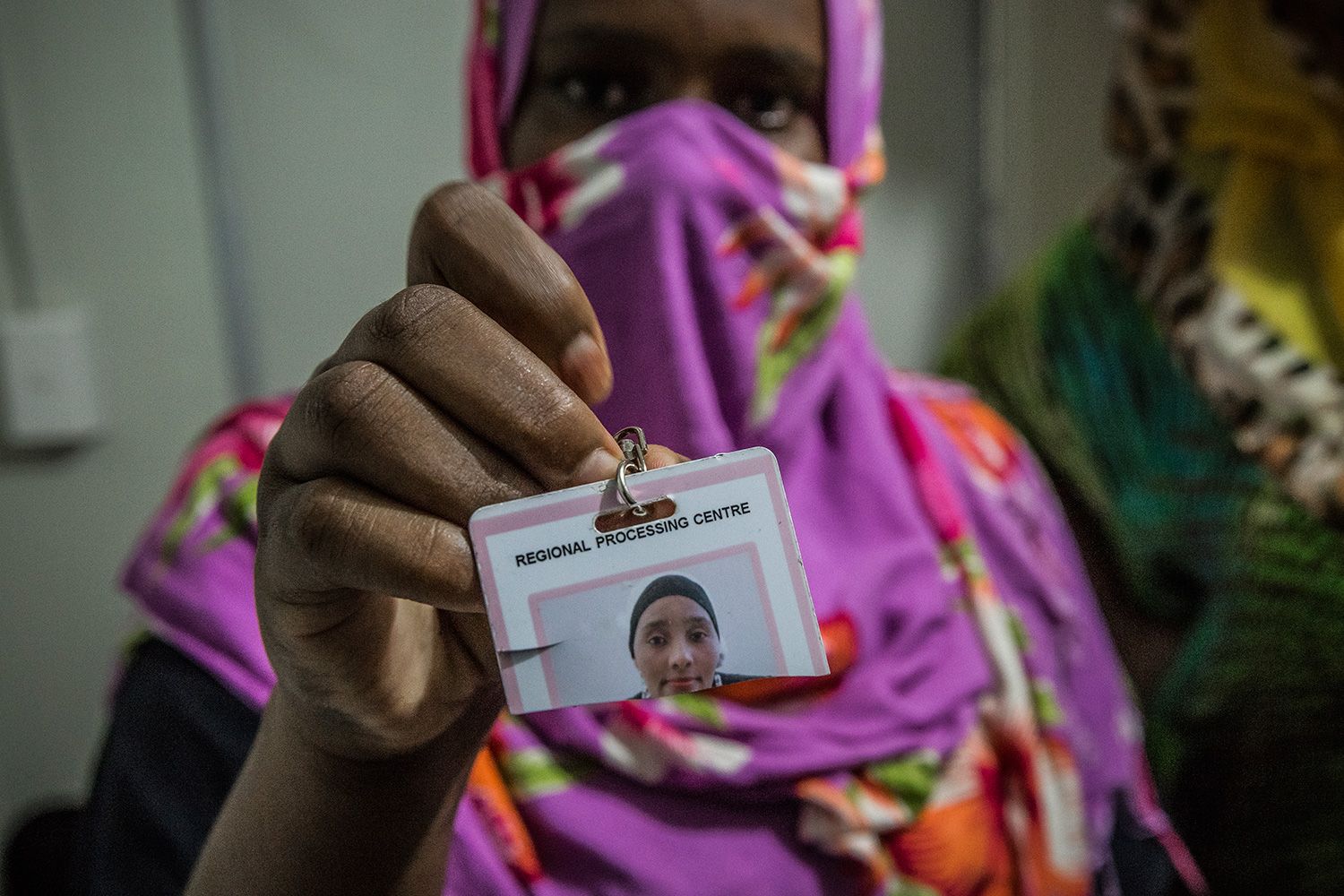
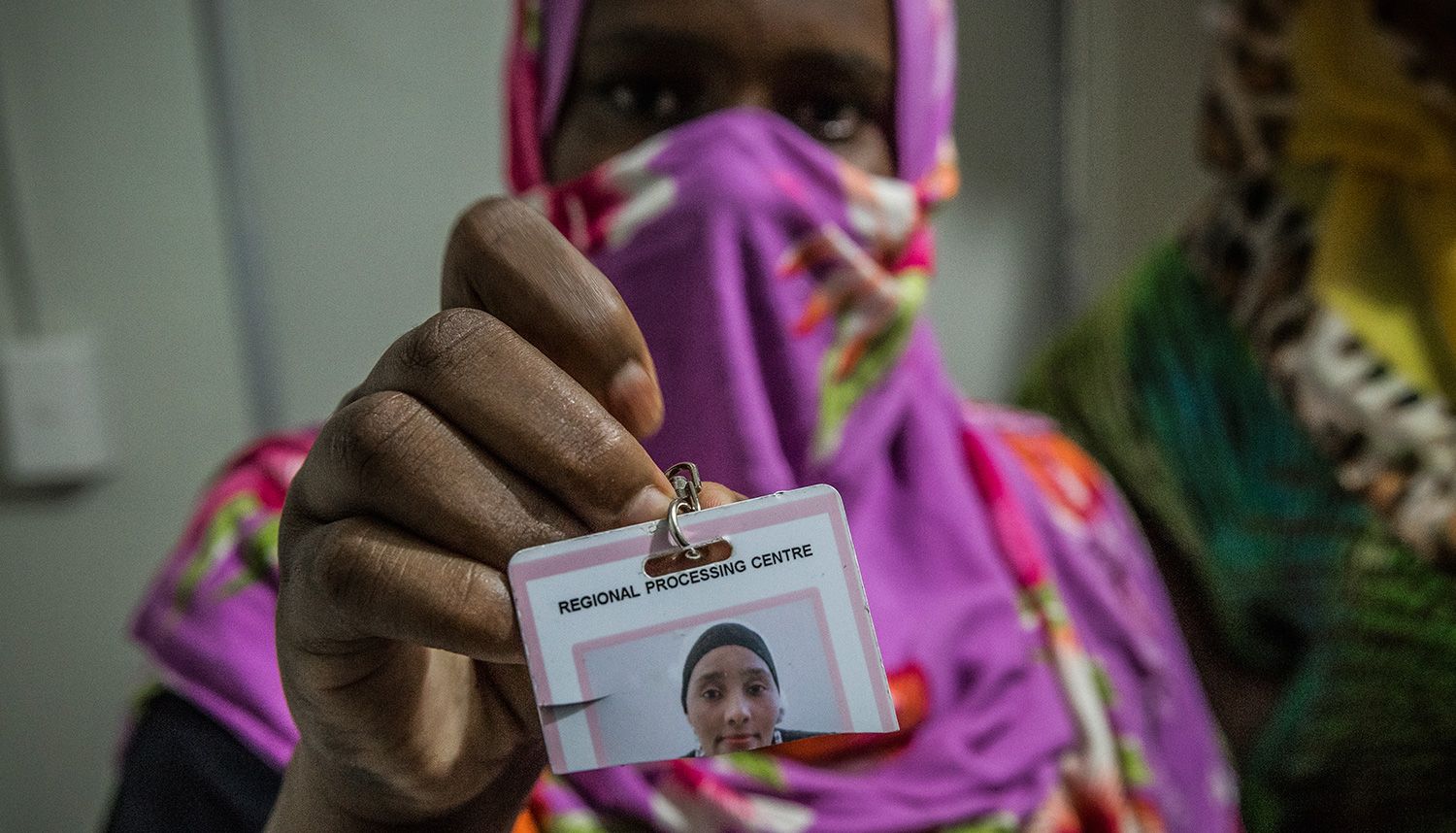
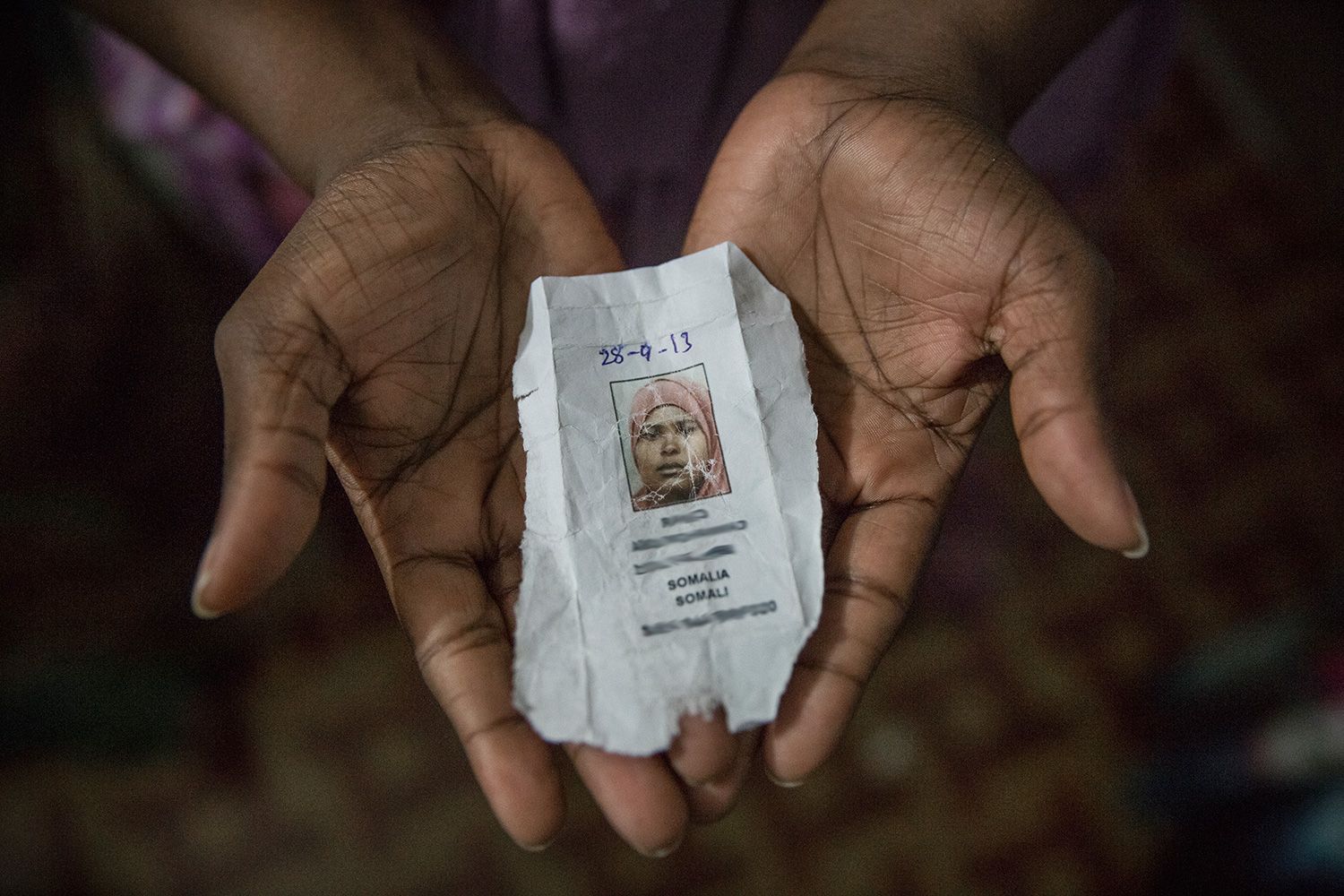
The woman-refugee from Somalia shows her identification map, which she was given at the Australian Center for the content of illegal immigrants. “When they gave me the status of a refugee and said that I would remain in Nauru forever, this card was taken from me and cut. I managed to get a part from the garbage tank so that I had evidence that I was kept in prison for almost a year. ”
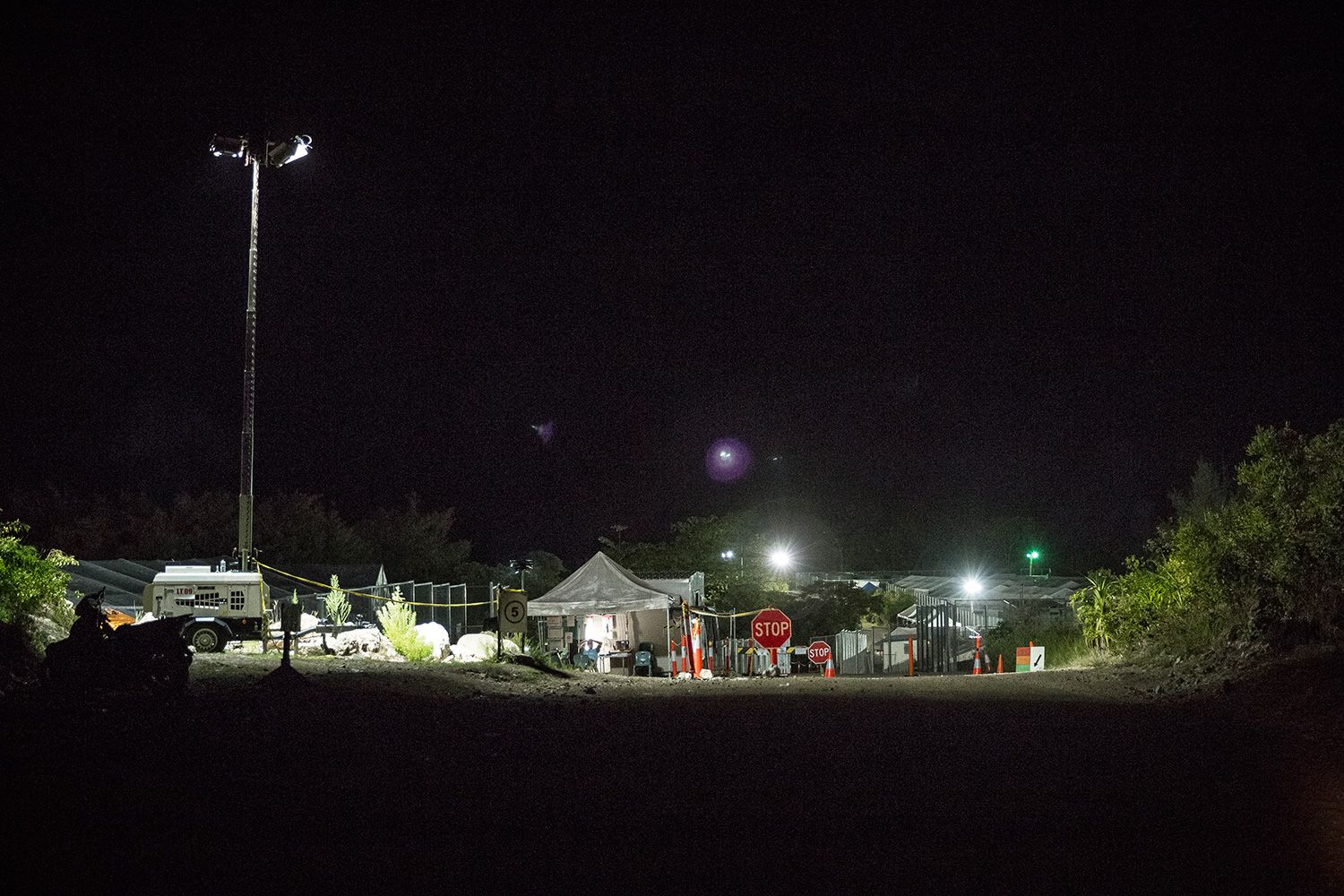
This is the center for illegal immigrants on the island of Nauru. Refugees live in terrible tents under the scorching equatorial sun, 20 people each, for 400 people work only 8 toilets, refugees are forced to stand for hours to see a doctor in a forty -degree heat, many do not receive the necessary drugs. Former doctors and employees of the NPO Save The Children reported numerous human rights violations, including sexual in relation to women and children. In 2014, the Nauru government practically closed access to the island for representatives of international organizations and the press, raising a fee for a journalistic visa to $ 8,000 (more than $ 6,000).
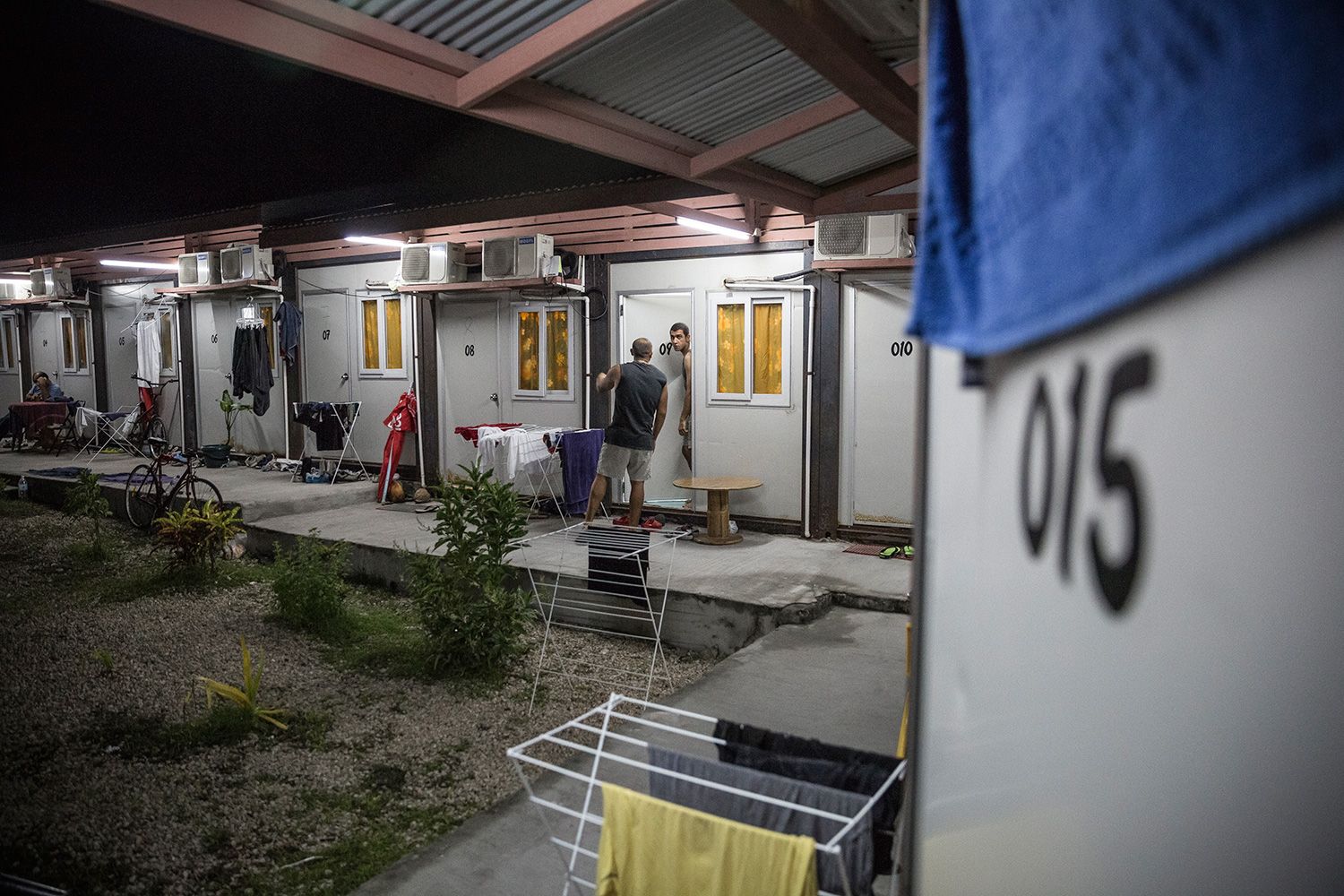
In the refugee camp in the area of Anibar, Nauru, bachelors and married couples without children live. In containers, two by four meters only a bunk bed, a toilet and a mini-cooler are placed. According to the Australian government, refugees will spend their whole lives in such camps.
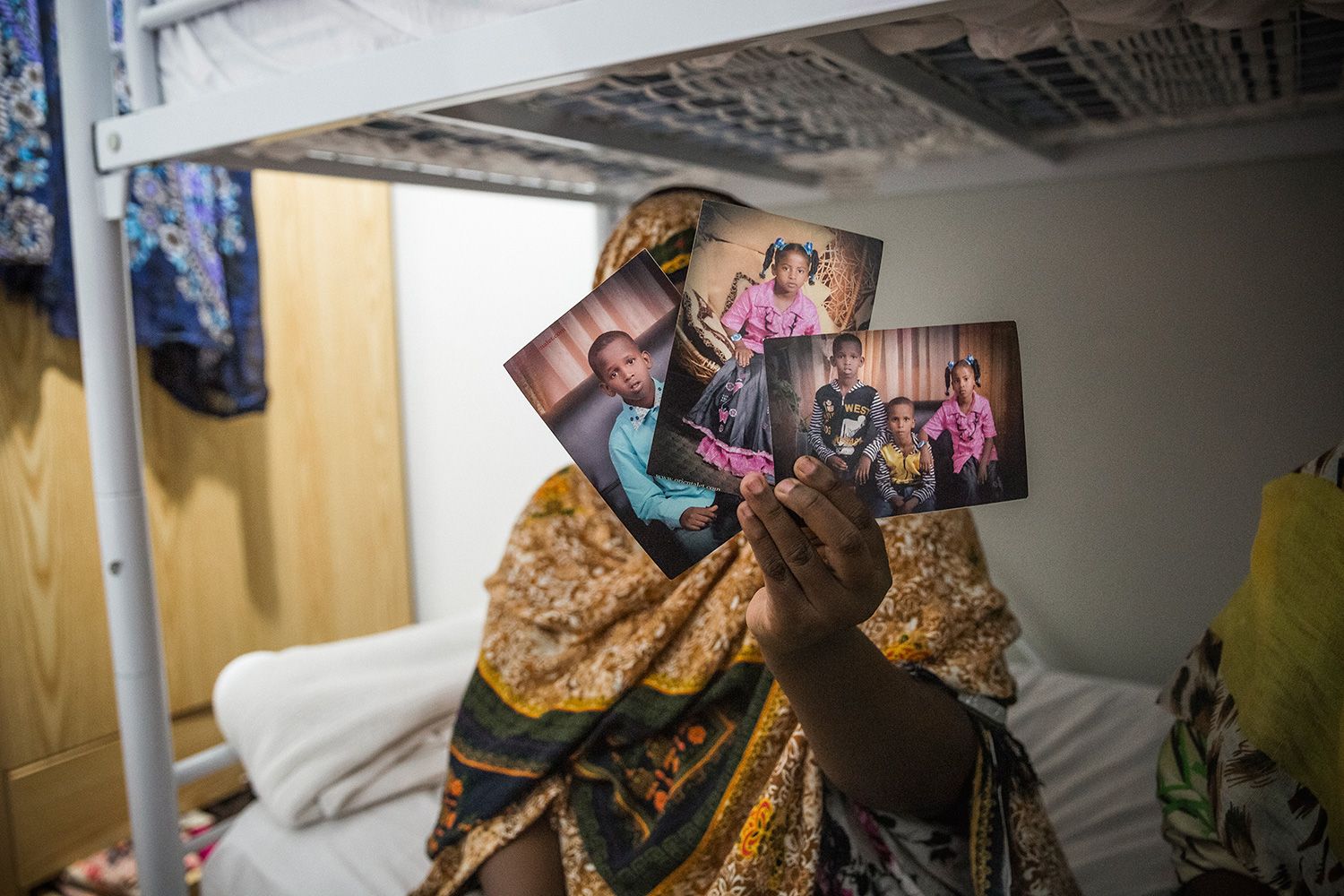
28-year-old Sabah shows photographs of three children with whom she was forcibly separated during the escape from the al-Shabab of Somalia. Sabah does not know if she will ever be able to see her children again.
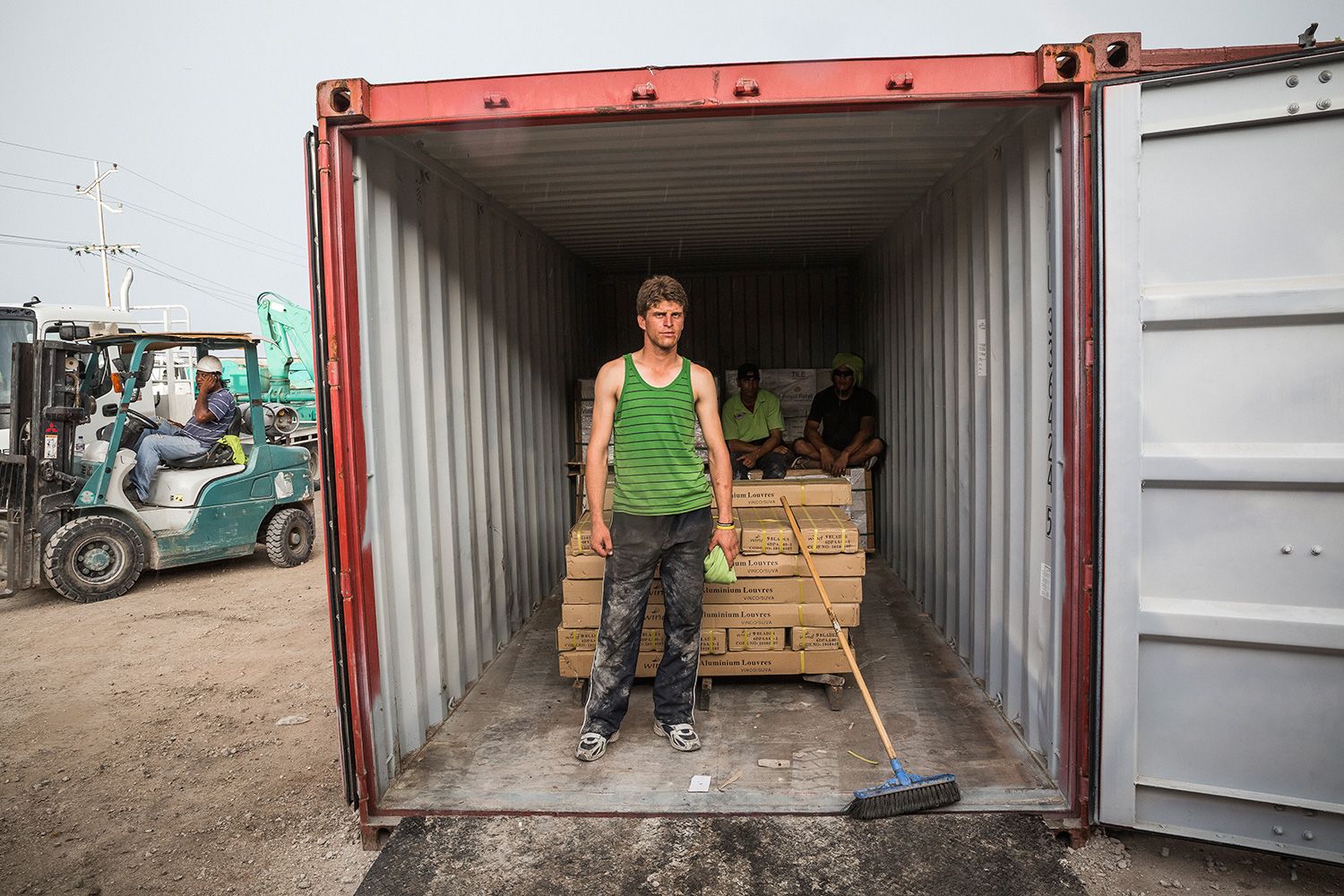
Mujtab Hussein from the Pakistani village on the border with Afghanistan. After he fled from the Taliban pursuing Shiites, he was taken to Nauru, and spent 10 months in the camp in prison conditions. Mujtaba is one of the few refugees who was able to get a job on the island. He unloads ship containers for the salary of 4 Australian dollars per hour (3 American dollars). At fairly high food prices, which is delivered to Nauru by aircraft and ships from Australia, its salary is enough only for a minimum of the most necessary products.
Abdi, a refugee from Somalia, shows her photo from her “business”, which was brought to her in the center for immigrants. Previously, refugees were given the opportunity to talk with their relatives through Facebook to exchange news and photos. In May 2015, the Nauru government blocked access to Facebook for the whole country, supposedly to fight pornography. Journalists and human rights activists believe that this was done so that information about the content of refugees on the island does not leak into the press.
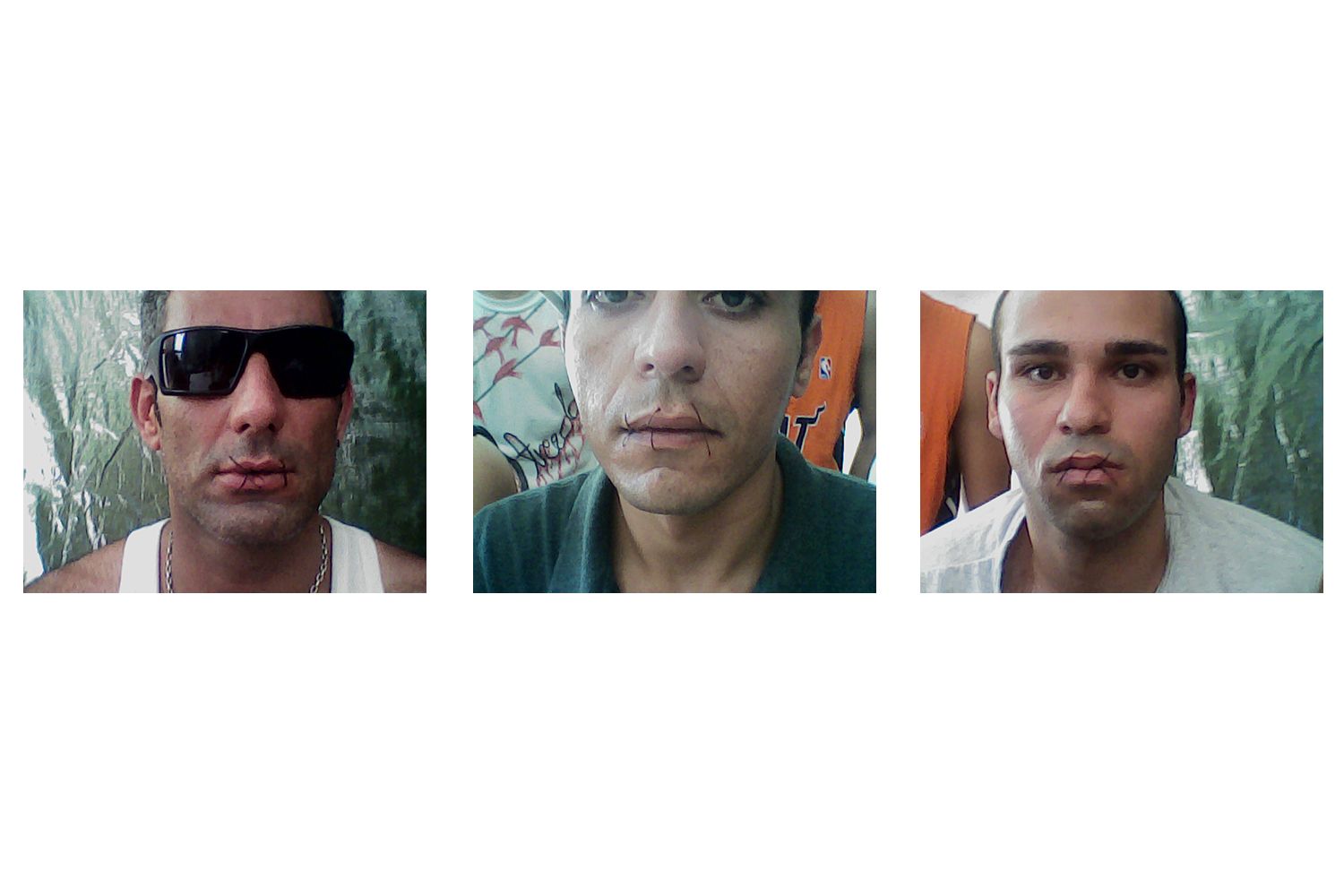
Photos of refugees from Iran who sewed their mouths in protest. The photographs were handed over to the photographer Vlad Sokhin people who have already received refugees status in Nauru.
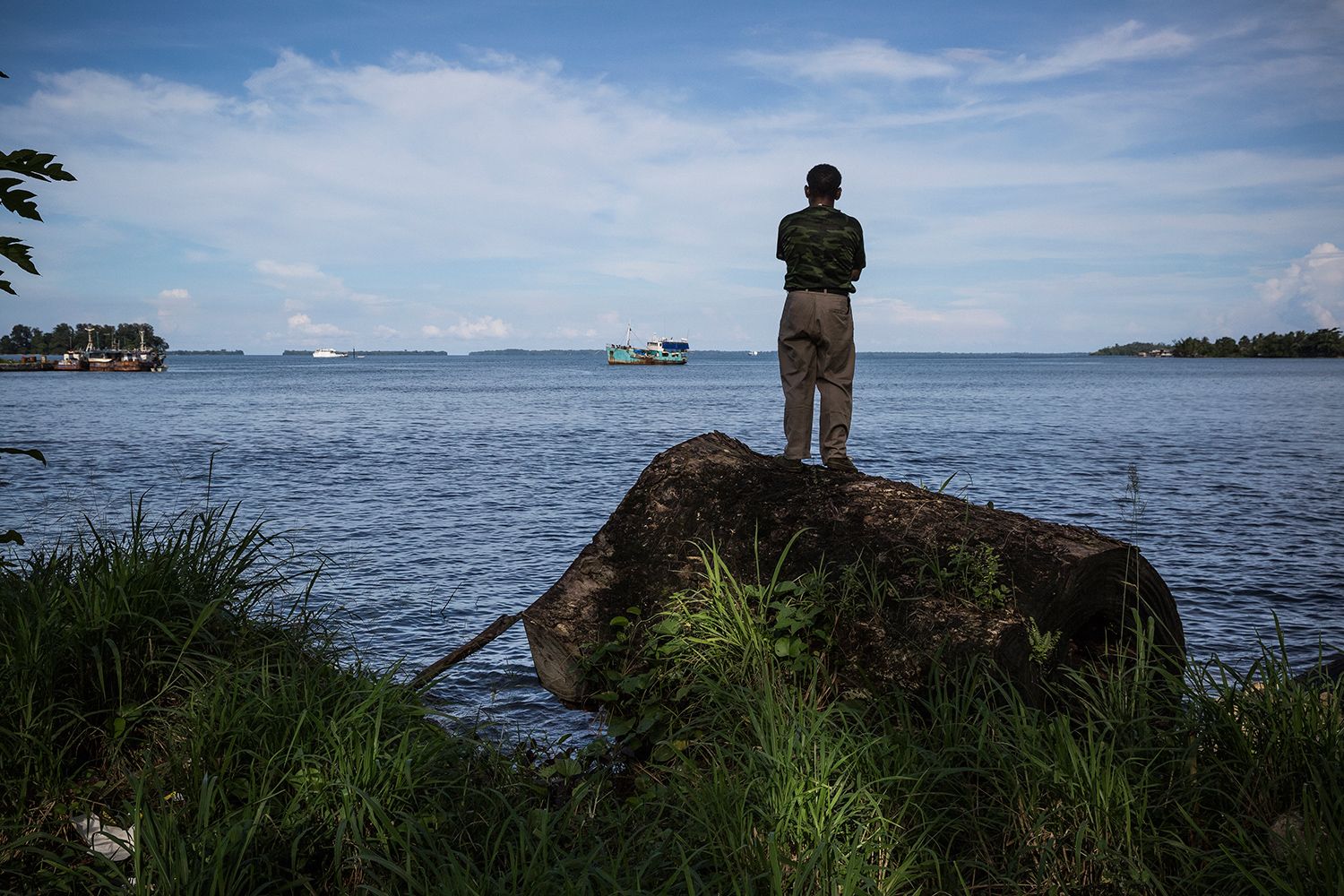
One of the guards of the center for immigrants on the island of Manus in Papua - New Guinea. The Australian government, together with the Papua government - New Guinea, prohibit access to the center to almost all journalists.
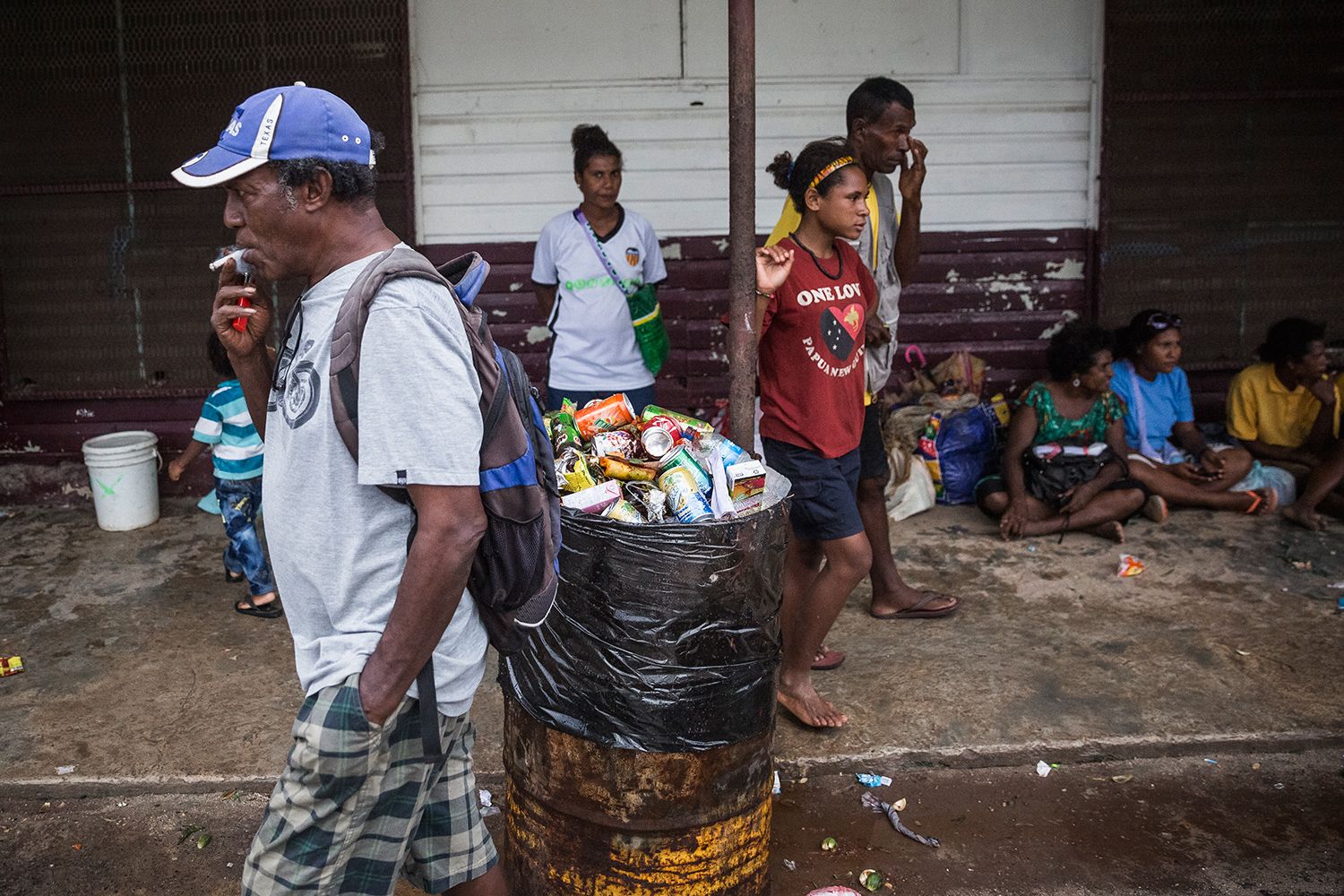
People on one of the streets of Lorengau, the capital of Manus. After a refugee camp opened on the manus, Lorengau began to attract migrants from the whole province, hoping to get a job in the city.
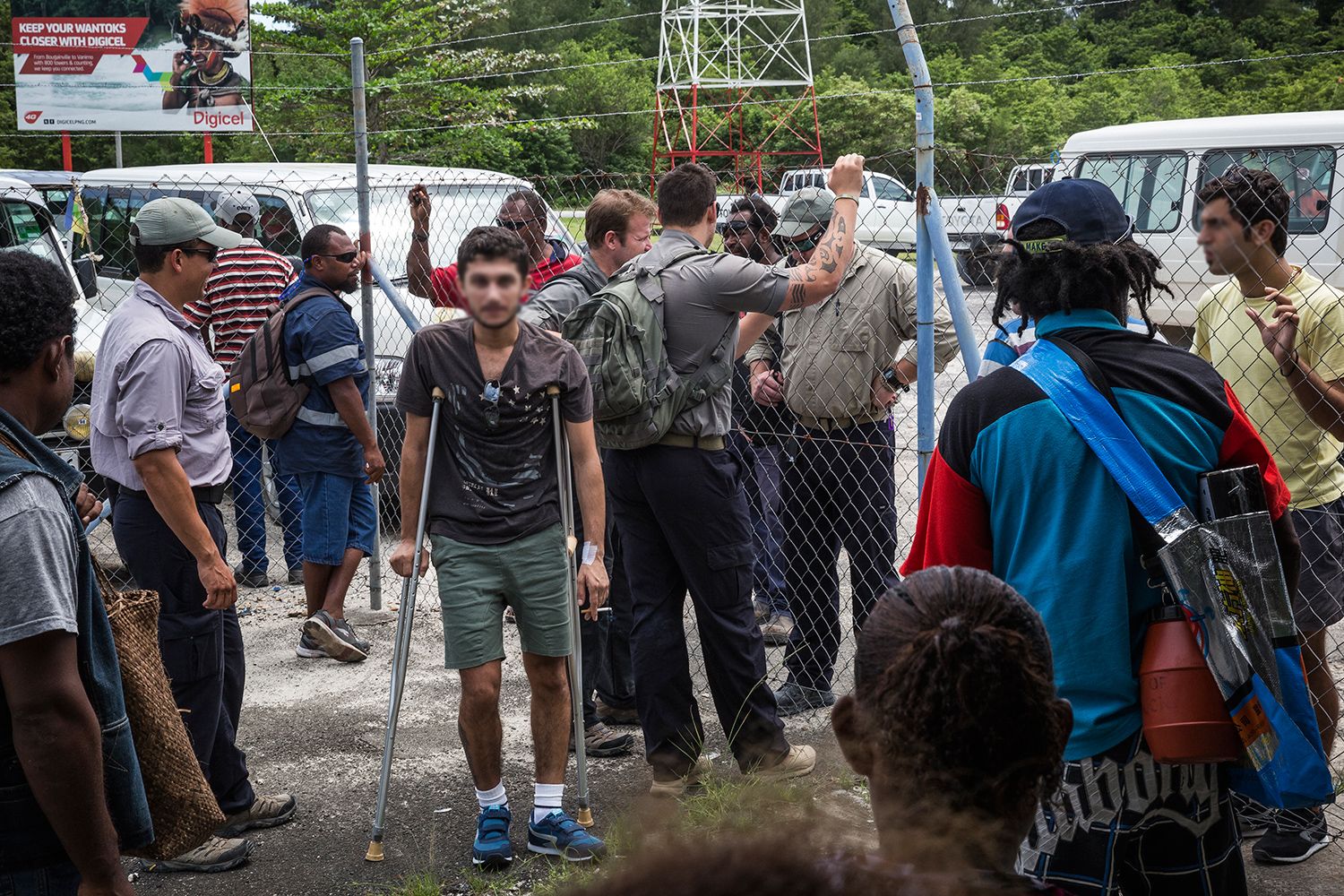
A injured refugee at the Airport of the island of Manus, after treatment at the Port Morsby hospital, the capital of Papua-New Guinea. According to various evidence, the guards of the center repeatedly beat refugees and threatened to kill. In February 2014, during the protest of refugees against the conditions of maintenance in the center, the guards killed 23-year-old Barati. Two people were arrested for this crime, but the trial has not yet ended.
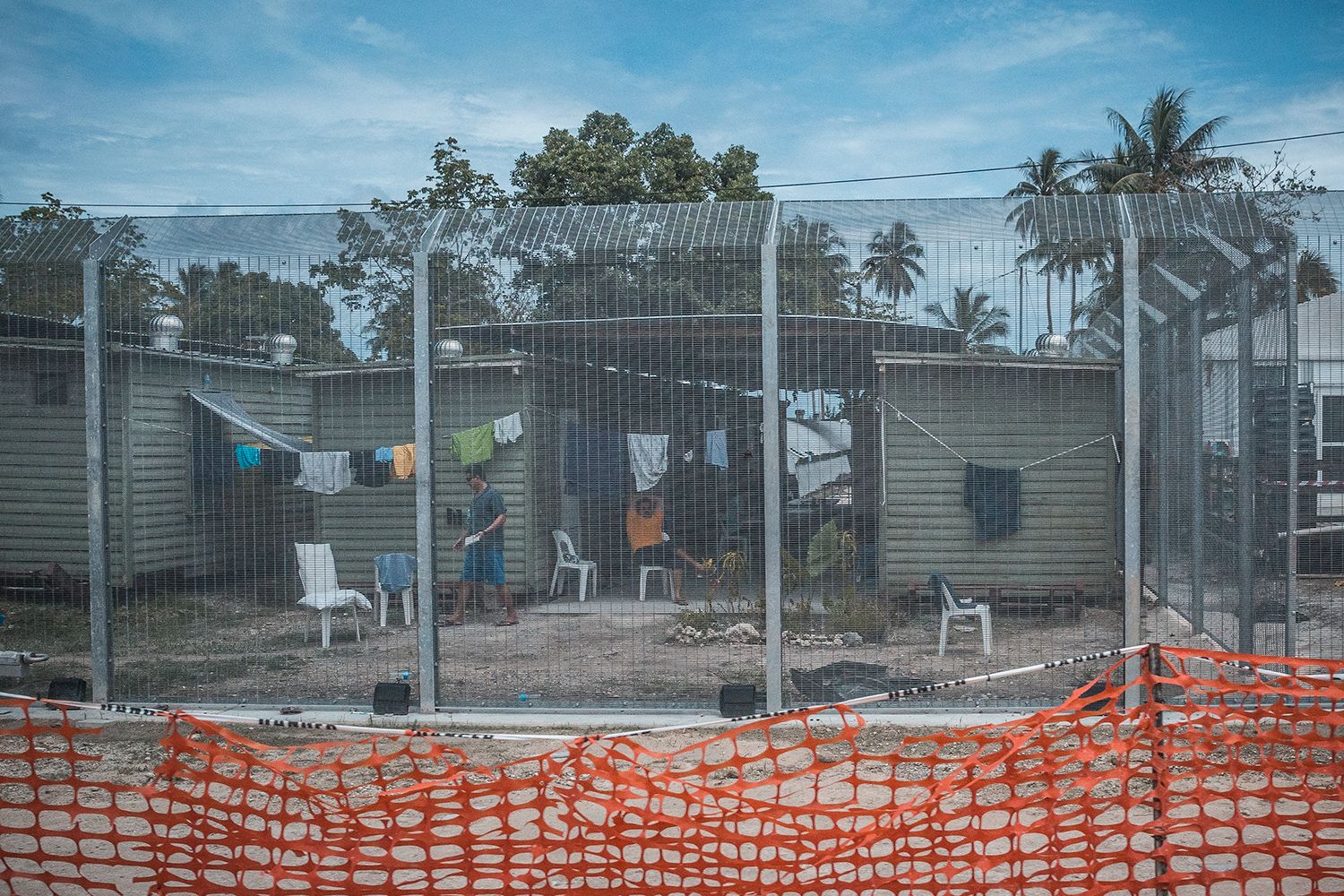
Refugees inside the Lombrum camp on the island of Manus. Human rights organizations accuse the center’s employees of violating the conditions for the maintenance of refugees and human rights.
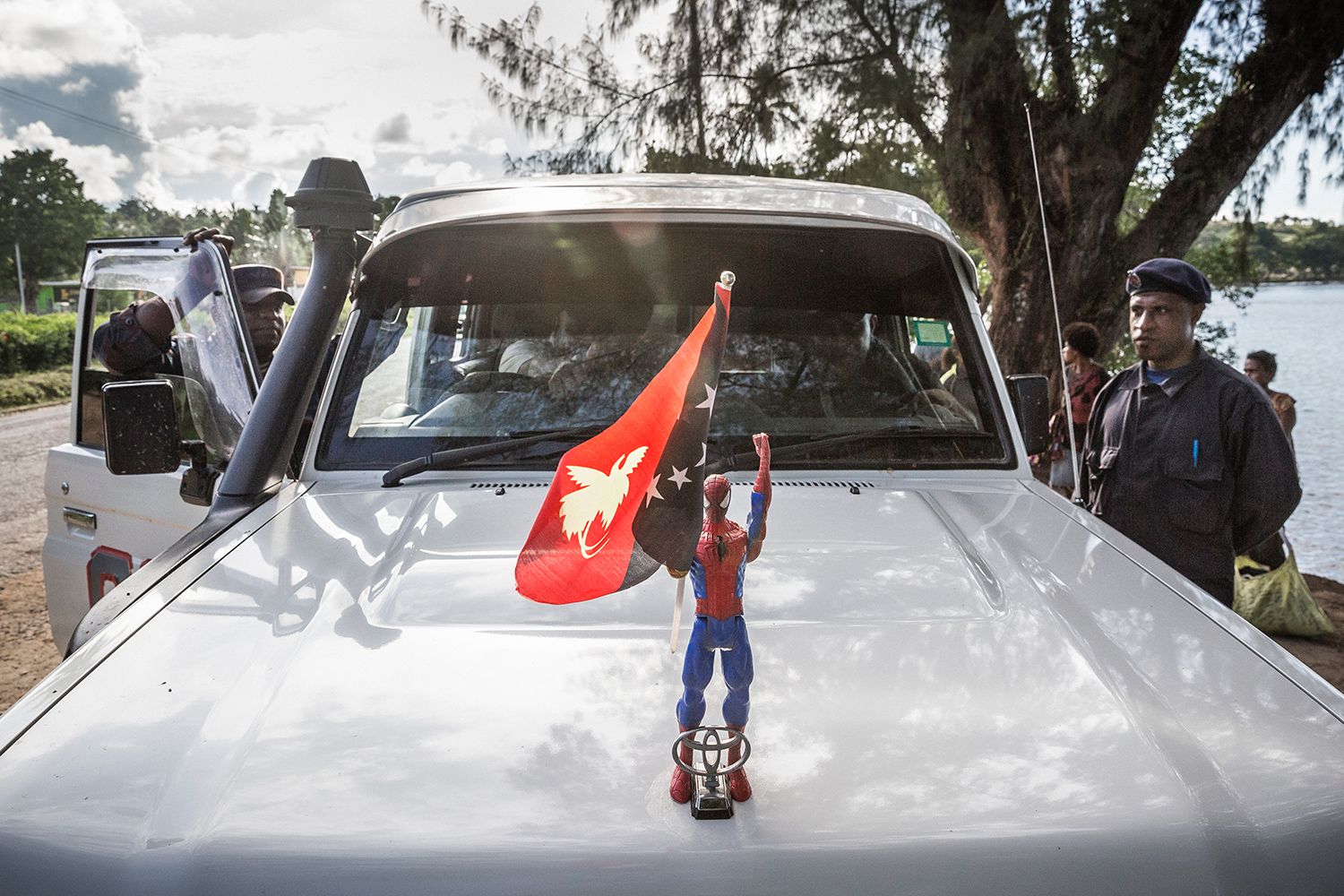
Police from the Papua-New Guinea mobile detachment stand next to their car, on the hood of which the figure of a man-spider with the flag of Papua-New Guinea is installed. The presence of a mobile detachment in Manus is sponsored by the Australian government. During their presence on the manus, the police killed two local residents. 21-year-old Raymond Sipown was beaten to death in the local market with witnesses in July 2013. 17-year-old Kisaven Plot was killed in June 2014 on the way from school by police officers, allegedly drunk.
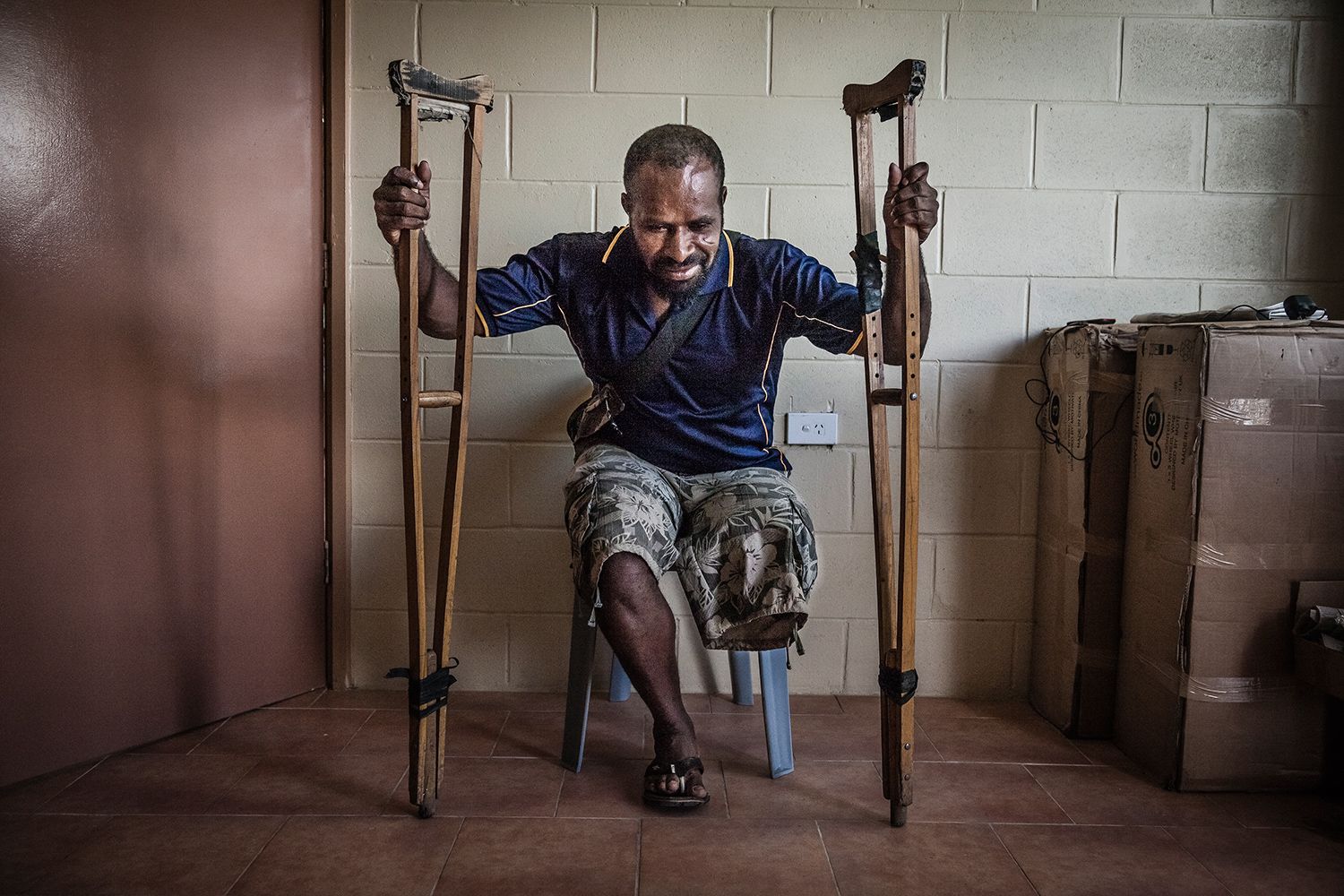
In Papua - New Guinea, there are cases when the police shoot the suspects to their feet so that they do not run away. In December 2011, Ekip Pad (29 years old) rested with his friends at home in Port Morsby, when the police suddenly burst to them and began to shoot all men at their feet. They were accused of killing a policeman, arrested and sent to a prison camera, where they kept for two weeks without medical care. Later they were released without any explanation. The outskirts went to the local hospital, where he was amputated with his left leg.
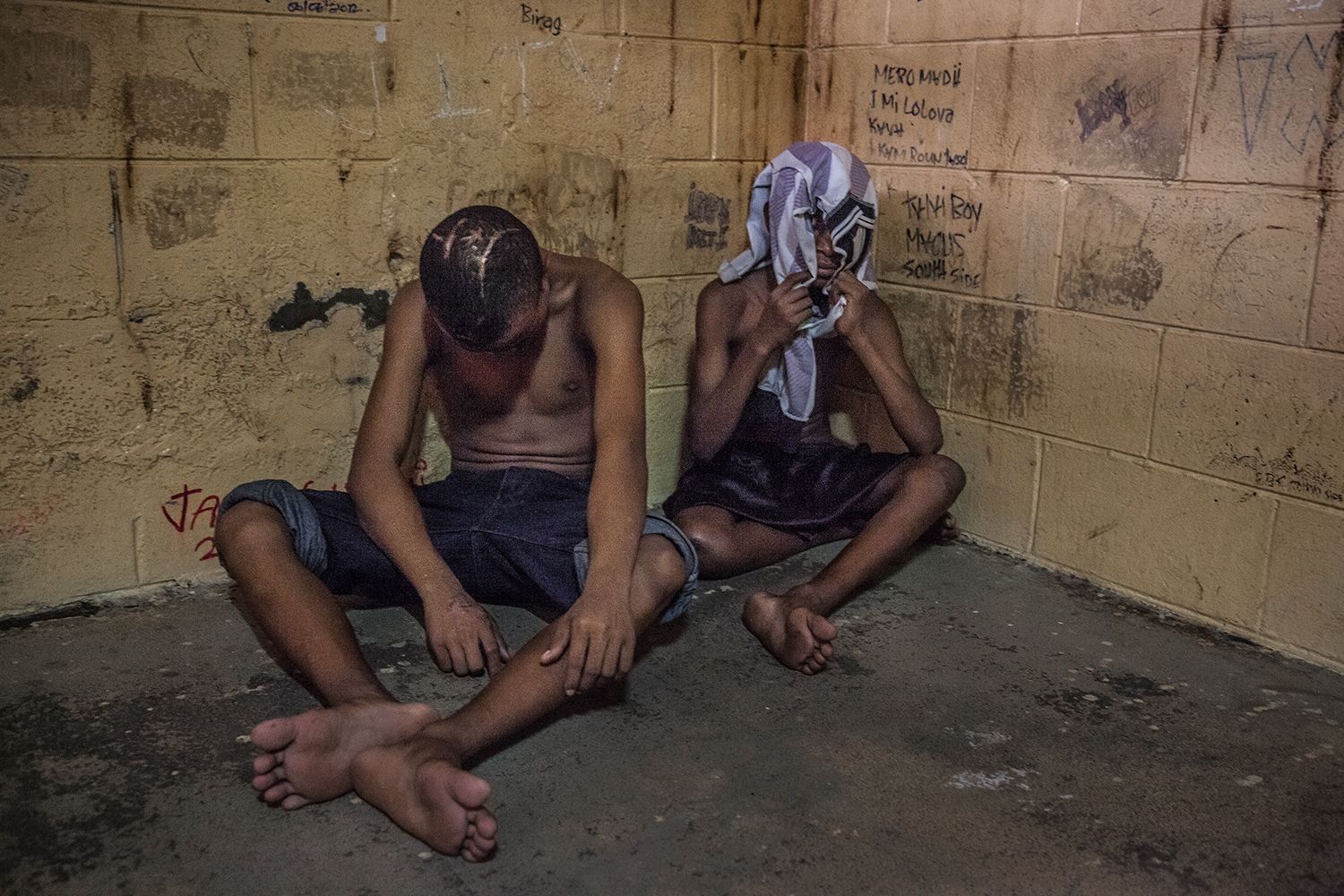
From police arbitrariness in Papua - the children suffer from New Guinea. They are arrested for minor offenses and put in prison cells with adults. Junior (left, 14 years old) and Manu (on the right, 10 years) were arrested on suspicion of selling stolen phones and smoking marijuana. To knock out information from the children, the police tortured them for several weeks. Junior's head was cut by knives, Manu was broken by the jaw. They were deprived of the right to visit parents and access to lawyers. Later, the children were released at the request of one of the international NGOs.
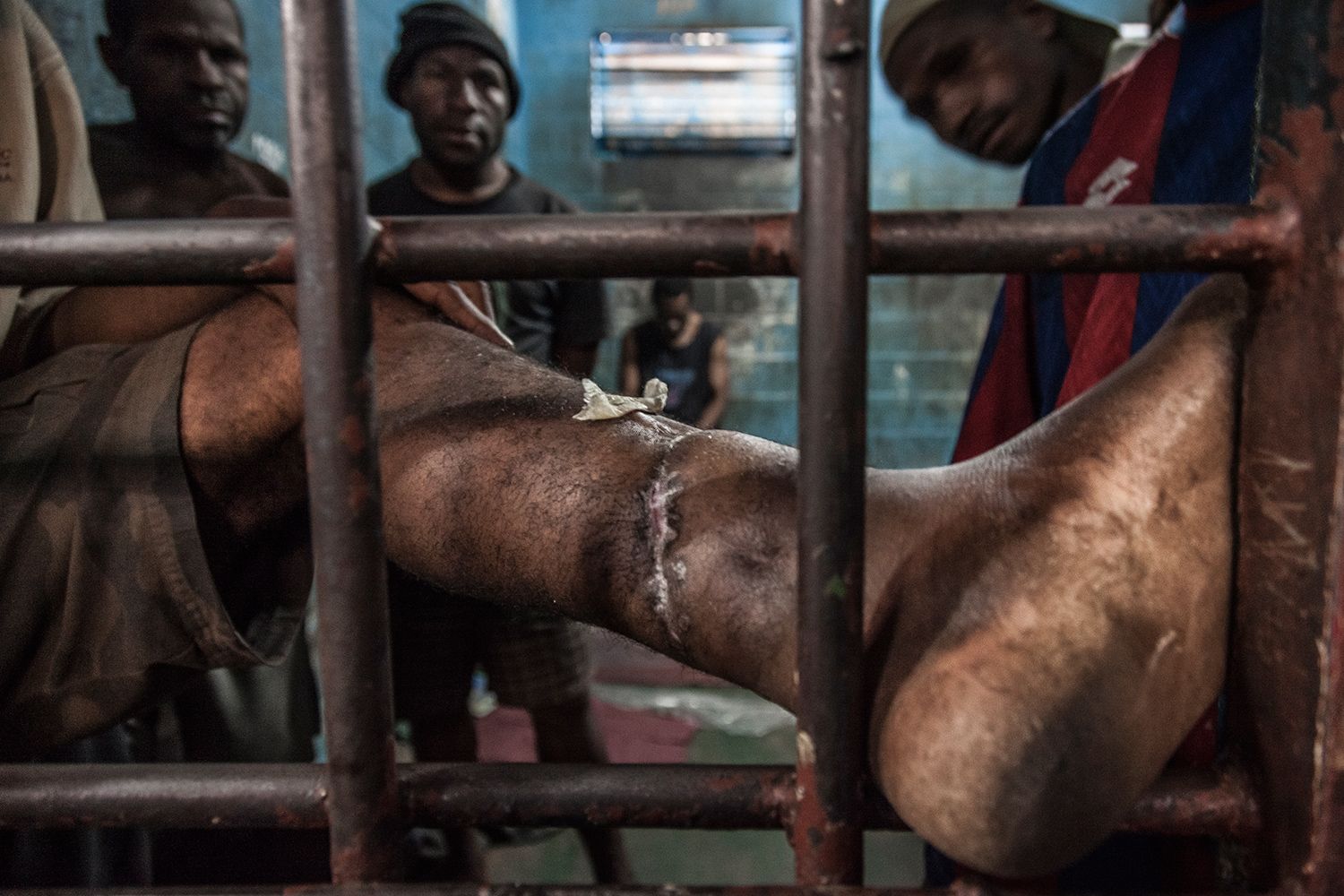
The 28-year-old Mondu, detained in the police station of the city of Kundiava, Papua-New Guinea, shows a leg that the local policeman tried to cut off the machete to punish for walking around the city in a drunken form. Then Naul was left for an unknown time in a prison cell, where the cellmates provided him with medical care.
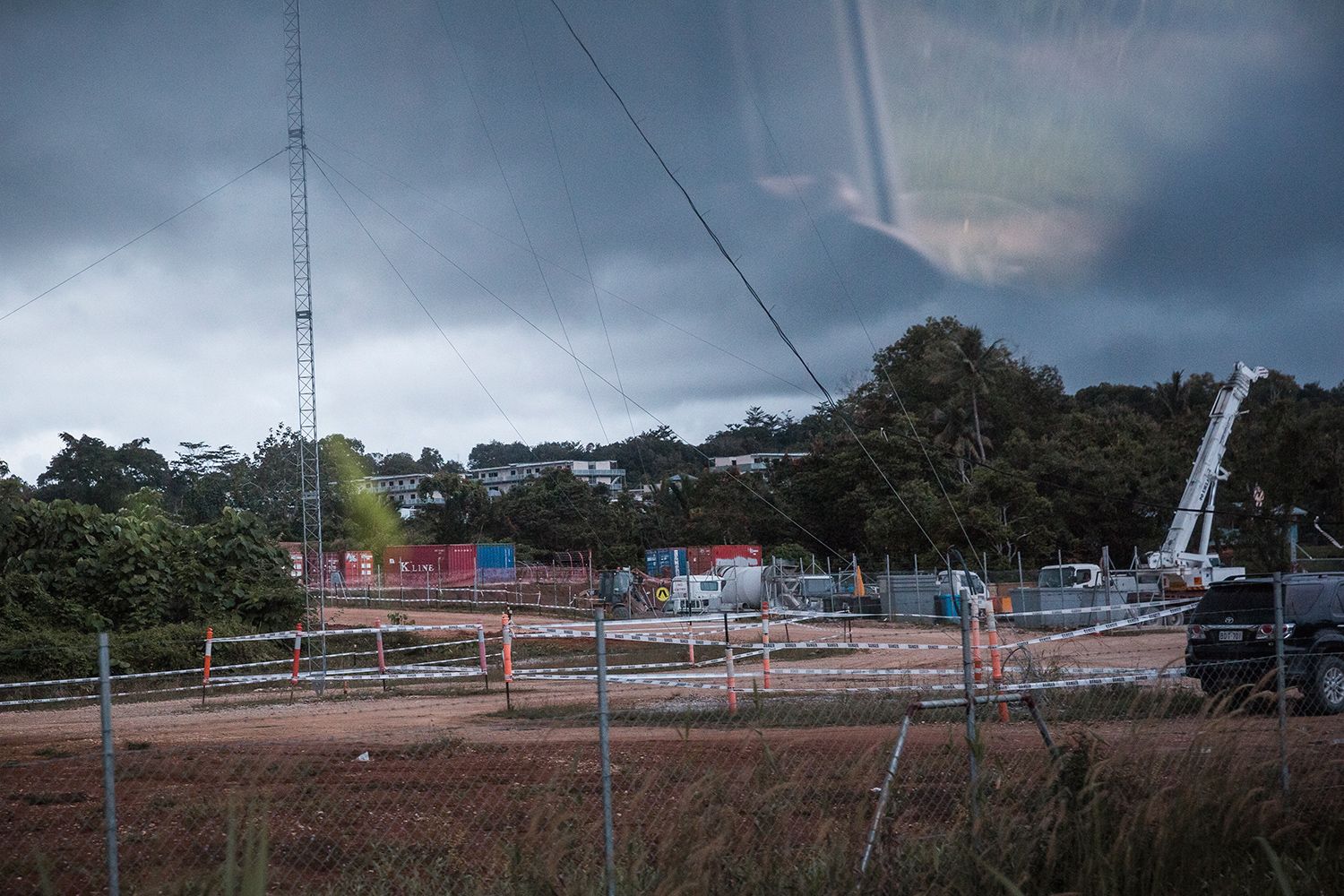
People after the provision of refugee status are placed in a freshly observed camp on the island of Manus. They promised the possibilities of employment, but in fact they are forbidden to leave the island, and they simply cannot meet potential employers. The refugee stay regime in the new “free” camp was also established - the refugees had to return from walking around the city no later than six in the evening. When the 28-year-old Iranian Mokhsen Sahravi was late for the “Hatch”, the camp workers beat him and forced him to run in front of their car through the whole city back to the camp. According to press reports, the participants in the “incident” were punished, and the end of the end was soon canceled.
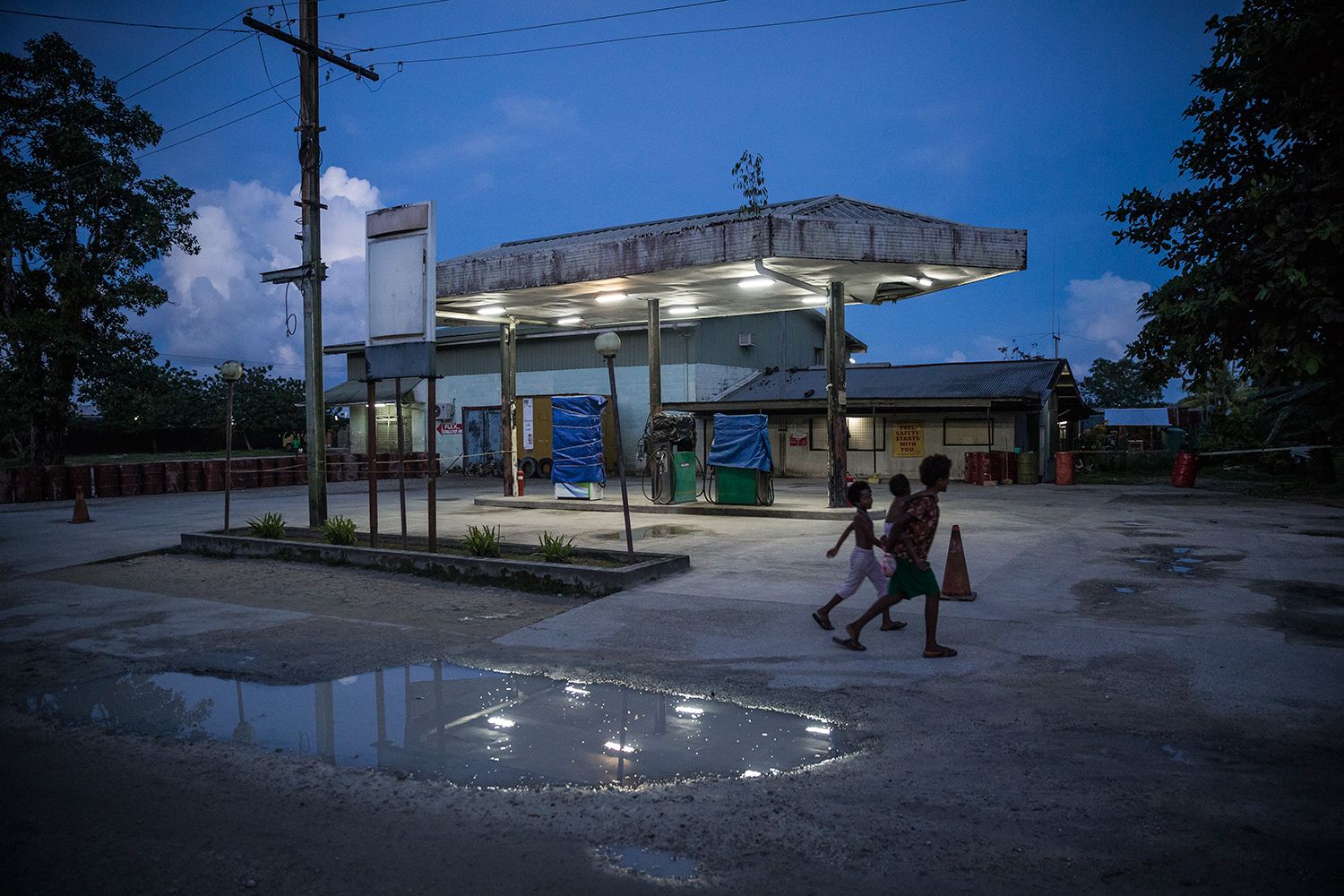
Children walk along the street of the city of Lorengau on the island of Manus. Despite the fact that the Manus is not a closed Papua - New Guinea zone and for its visit, it is not necessary for special permission, employees of the Australian immigration services and private security enterprises monitor media representatives after they arrive on the island. So, the author of this report after visiting the island of Manus was denied at the entrance to Papua-the new Guinea, where he is still on the list of Person Non-Grad.
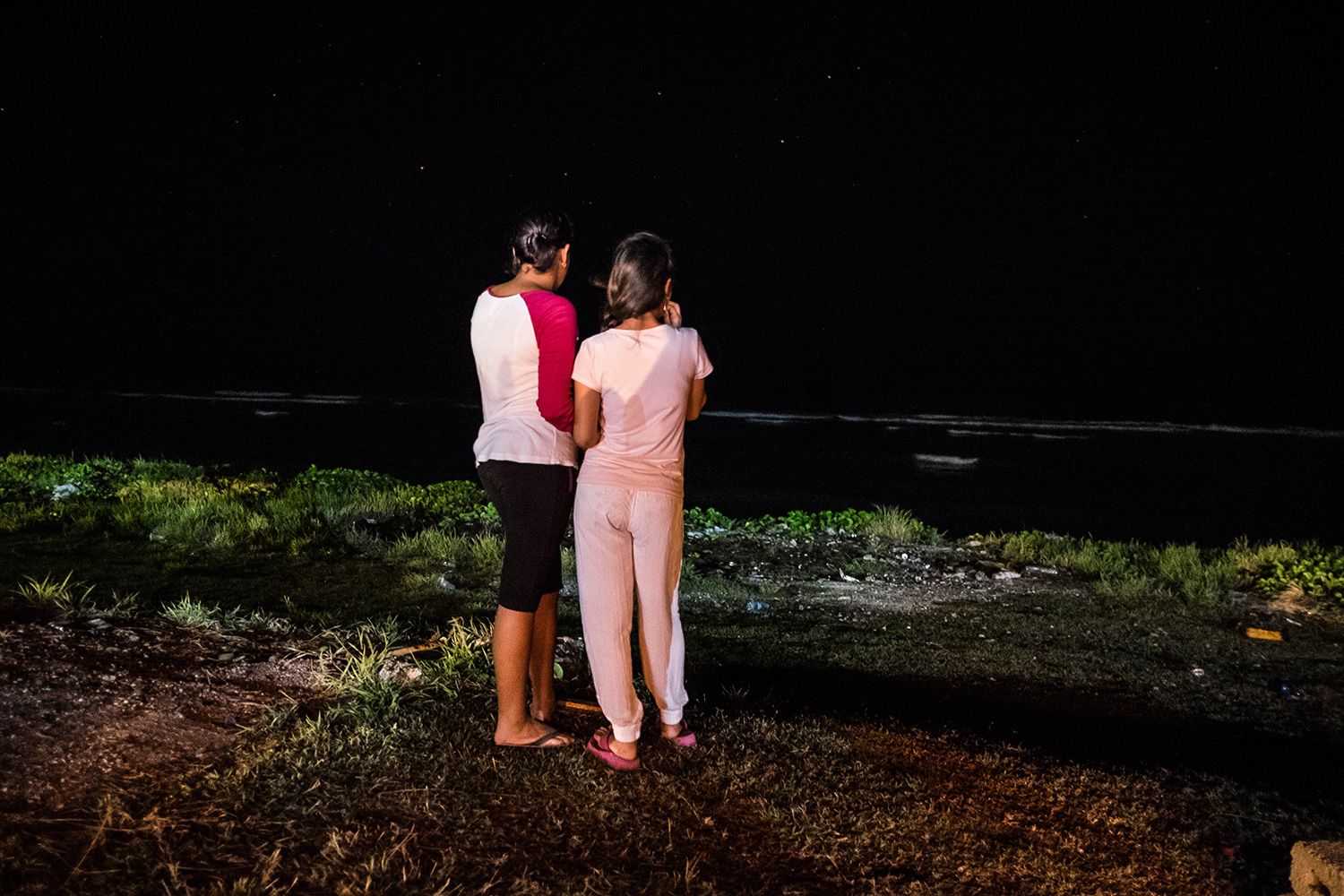
Two young refugees look towards the ocean at the entrance to one of the camps in Nauru. For many, Australia still remains a country of dreams. Refugees in Nauru and Manus hope that the Australian government will once change its decision and allow them to settle in a country where they can feel safe.