
Translated material
Through cacti to the stars
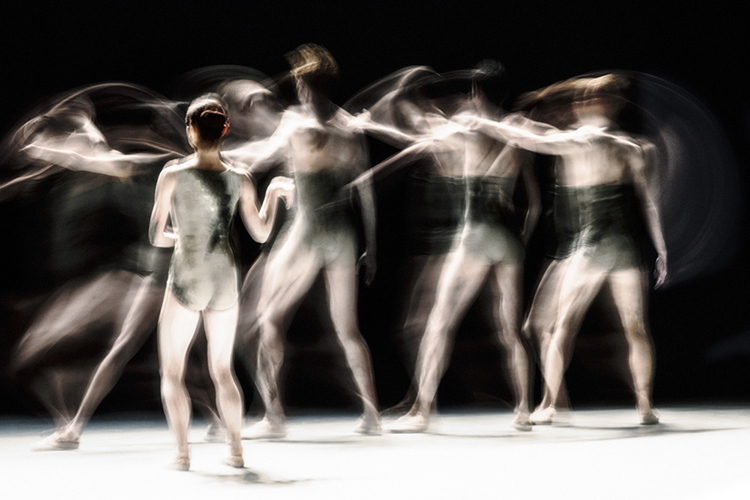
In St. Petersburg, the legendary NDT , the Dutch Dance Theater, performed as part of the Open Look festival . The historical meaning of this tour is Bogdan Korolek.
How much for Russian ballet does NDT mean, we ourselves do not fully understand. In childhood, every local choreographer was ill with the Dutch and at least once poisoned by the work of Irji Kilian, the founding father of NDT in its current form. The department of choreography of the St. Petersburg Conservatory remembers cases when Kilian learned by the pirate record was issued on the exam for the original essay - and the judges sincerely put him “satisfactory”. The severity of the examiners did not stop the Dutch epidemic: the alloy of sophisticated modern and household gesture, exaggerated facial expressions, stirring fingers, even Mozart’s enthusiasm - the generic features of the Kilian theater can be found in every second Russian opus. Now the original got to us: it's time to supervise the clock and spy something new.
Here you need to make a reservation. Firstly, while Moscow applauded NDT-I (the main, “adult” troupe), the younger capital went to see the younger Dutch, NDT-II . Officially, this unit is called De Springplank , the “springboard” is a frog for those who have not reached twenty -two years and cannot be enrolled in an adult troupe. At the same time, it is incorrect to consider the “springboard” something like the Academy of Young Dancers: NDT under any number (once there was NDT-III -for those who for forty) acts as a mature and independent company-one of the best in the world. More precisely, just the best, without any reservations.
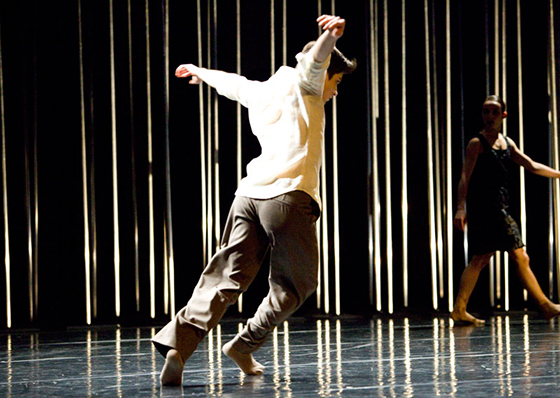 © Daisy Komen i New then
Secondly, the program of the current touring was the old hits-a relative novelty could be considered only “ I New Then ” (2012), an unpretentious little thing for warming up the public. Choreographer Johan Inger effectively used the simplest techniques of the composition: canon - synchron - the destruction of synchron; Here everyone runs in a circle, but sharply broke into three groups, and each dancing its own text. At the same time, Inger vocabulary is hard to call fresh: contracts and slides “Kontempa”, a classic ballet in scanty doses, slanted running, funny faces and doll gestures. All together - the actual dance darabarshchina, the secret language of a kitten named Gav. It works best in the climax of the performance: while the “lyrical pair” is slowly undressing between the sparkling pins, arranged in the far corner, a soloist wanders along an empty scene. When the next wardrobe item falls on the floor, a lone of a single eccentric comes in hysteria: mutters aloud a nonsense, wrapps in a knot, folds his fingers in a pistol and shoots the hall-well, “Hamlet” from the recent premiere of the Bolshoi Theater, only Hamlet-comedian, performing funny laczzi with sad eyes. Someone giggled in the stalls, but in general the audience took the jokes wary.
The choreography shown by the Dutch is needed in Russia as air - both dancers and viewers.
The theme of the comedy of masks was picked up by the “Sad Case” Paul Lightfut and Salt Leon - an excellent witty thing set as much as in 1998. All typically Dutch techniques are brought to the extreme: convulsive grimaces instead of faces, indefatigable faith with his head and hips, paralytic shaking and (what a nightmare!) Stopping each other for indecent places-exactly the “cannibalman’s ludochene, indecent nibblers”. With all this, there is a clear classical structure: the antra, variations, duet, code. After the softened manner of Inger, the staining-cutting poses and delightful difficulties brought to the automatism of the change: for example, in a fraction of a second you need to drive on the heels and fall on the back without help from your hands. The Mexican mambo roars in the speakers and the rustling “ay-yai-yai” rings: the most venerable audience, now five immodest polyinels will make you amuse you. Puritan from choreography could choke on indignation: how can children dance? Lightfut and Leon answer: dance, if you forgot, is bodily art. Which is natural, it’s not ugly: “Sad Case” speaks in such a simple and delicious language as if I called all the indecent places right now.
The evening was completed by Cacti ( 2009) - this is already Alexander Ekman , an eternal child, a city crazy. He doesn’t need to fill his own room at first with hay , and then a huge scene of the Stockholm opera (evaluate the recent “Sleep on a summer night” ). He frozen joyfully in the city fountain and then composes the radical paraphrase of the Swan Lake , where he floods the scene with water and lets out a duck.
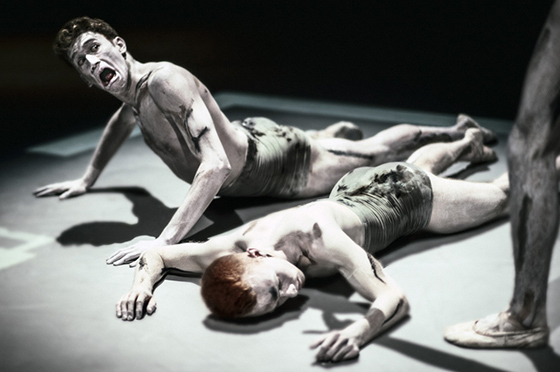 © Rahi Rezvani Sad Case
In the “Cacti”, the cordbale of sixteen people, planted on white platforms, beats up intricate rhythms with his palms and takes yoga poses. When the dancers arrange white squares in a shackodic one and begin to dance, the performance gains symphonic greatness: so virtuoso to build plastic counterpoints, so revel in the current movement and only Ekman can calculate pauses in it. The chanting of the first part replaces the contemplative second: a couple of soloists depicts a rehearsal of a duet, the phonogram pronounces everything that happens aloud (“You dropped me? Here with ***!” - the ironic commentary of the choreographer on the theme of their own craft, which allows to evaluate CACTI not as the performance of Contemporary Dance , but as a traditional neoclassical ballet).
In addition to an excellently organized mass, excellent light (Tom Wisser) and the workshop humor there is still something. The voice, which at the beginning spoke of some banality about creativity, whispers manic in the final: “The end? Yes, the end. I know this is the end. " Here the curtain really falls, which you do not expect. When Ekman has cooled for children and youthful ardor, and the hooligan will suddenly notice-and so sooner or later it comes for all Enfant S Terrible S -the works of the great choreographer-tragic await us. But it will not be soon, but now - oh yes, “ cacti ” - well, this is because in the middle of the performance a lot of fake cacti are carried out on the stage.
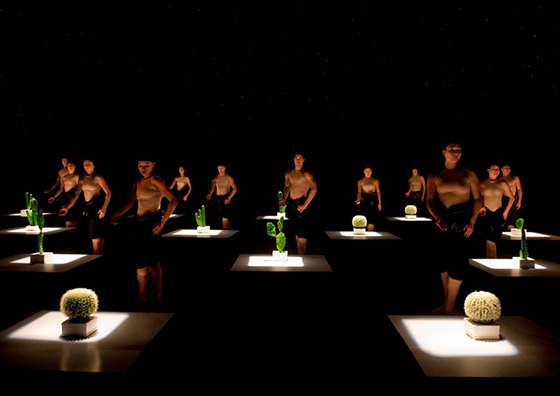 © Rahi Rezvani Cacti
Morality? NDT left, and we stayed. The choreography shown by the Dutch is needed in Russia as air - both dancers and viewers. Not decomposed on "technology" and "acting". Free from the cargo of the centuries -old performing tradition. Appealing to a pure, imperative of emotion. Waving not to be melodrama, but a salty fair theater. Smaking their own bodily and glorifying earthly gravity. The celebration of disobedience, accessible only to the harsh training to professionals.
“ Cacti ” and “Sad Case” , no matter how defiant they look in the interior with velvet-knuckles, can be the honor of any academic troupe. Just imagine: the same “cacti” were transferred to the Mariinsky Theater. The test is cleaner of the Forsyt and Balanchin. Of course, the artists will resist. Of course, he will confuse everyone (Ekman recently performed at the Bolshoi Theater, posted the video - read the only comment under him). Then the breakdown will pass, and a pure buzz will come: we will begin to understand the ballet theater (emphasis on both words). Another rhythm, another sensation of space, another attitude to your own body and to the bodies around you. The unbearable ease of stage being.
And when in their native open spaces the young directors begin to be monkey and repeat behind the light food and Ekman, no need to scold them and beat them in their arms. Such underground studies are not in vain: let them be monkey, spy and try to repeat. Because all three hours spent at the performance did not leave one thought: someday we can so, when? The classic claimed: according to the calculation of philosophical tables, five hundred years later. I have reason to think that a little earlier. Well, a little.