
Translated material
The court in St. Petersburg allowed to sell sanctions products
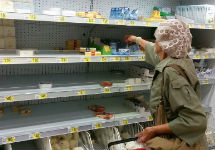
The Arbitration Court of St. Petersburg and the Leningrad Region allowed without restrictions to trade in Russia products that fell under sanctions, reports Newsru.com. Dirgining the complaint in the case of the Magnit chain of stores, Judge Elena Sinitsyna ruled that the presidential decree "On the application of individual special economic measures to ensure the security of the Russian Federation" says only about the ban on importing foreign products, but there is no prohibition to sell them.
The reason for the complaint was the incident in one of the stores of the Magnit retail chain. After the introduction of the grocery embargo, the local department of Rospotrebnadzor during one of the unscheduled inspections found the Sirtaki cheese for the Greek salad in France.
Since such a product was included in the sanctions list, the supervisory authority convicted the retailer in illegal sale. A fine of 30 thousand rubles was assigned for the violator. CJSC TANDER, which belongs to Magnit, did not agree with the requirements of officials and appealed to the Arbitration Court.
"The restriction in the turnover (sale) of dairy products, including cheeses, is not legally fixed, that is, the composition of the offense (objective side) is absent," said Judge Sinitsyna. She indicated that the federal customs service, and not Rospotrebnadzor and retailers, should stop the import of goods under sanctions. The decision on the application of administrative sanctions to CJSC was invalid.
On June 24, Putin signed a decree on the extension of the food embargo for a year.
On June 22, the Foreign Minister - members of the European Union extended the effect of sanctions against Russia for six months , until January 31, 2016. This was the expected step that was planned in advance. Initially, this was supposed to be done at the EU summit on June 25-26, but then the decision was made to the Foreign Minister . On June 17, the renewal of sanctions approved the Committee of the Permanent Representatives of the EU members .