
Translated material
The dream of the rank
Three young people-a future contract, an acting official and applicant of the university who is preparing officials, agreed to tell The New Times on why they decided to devote themselves to work in government agencies

The future is according to the contract
The 20-year-old resident of Barnaul, Alexander Yurchenko, dreamed of connecting his life with the army from childhood, so immediately after school he went to the draft. “It is better to serve as long as you have no family and children. After all, families are being brought up in Altai early, ”Alexander notes in a conversation with The New Times .
Even during the first medical board, the military enlistment office invited him to be trained in a driving school for six months before the onset of draft age to get a driver’s license: “In a civilian, it would cost at least 40-50 thousand, and here it was free. I happily agreed, but I could no longer get into any other troops except automobile. ” In all other respects, the army gave continuous advantages, including the medal "For the Return of Crimea."
In the winter of 2014, Alexandra, along with four Altai conscripts, was sent to serve in the village of Roshchinsky, Samara region, where the military base of the 2nd Guards Combined Arms Red Banner Army was deployed. “There was no hazing there,” says Alexander. - Yes, some behaved boldly, showed that they are older and most important, but so that they would be packed with stools or extorted money - this was not the case. A good part. Three brigades served here - signalmen, motorized rifles, and we are an autobahn. Our task was to bring fuel and refueling. This is what we did in the Crimea. ”
Soldiers learned about the beginning of the operation only on the night of sending. “In Crimea, we got a train by rail from Samara. They put equipment on the train, loaded to capacity, and 80 people sat in two free cars. In addition to us, a convoy with machine guns rode, since the train was driving tanks and ammunition, ”recalls Alexander. -Five days later, we stopped at an abandoned base in the village of Cossack Lageri, next to Novocherkassk, and deployed a military field camp. We regularly passed exercises, shooting, throwing grenades - everything that was missing in Samara. ”
In total, they spent about two months in the camp. But Alexander did not visit the Crimea itself: “We brought fuel and food for the 2nd Army on the KAMAZs and immediately returned back,” he says. -Once they wanted to throw us abroad when some brawl began on the territory of Crimea, but he was quickly allowed. Politsanitsy said, they say, they caught some Ukrainian spy. ” Politics, according to Alexander, took place every evening: “They said that the people in Crimea were tired of the Kyiv authorities and die for anything. They called on to be on the alert - spies everywhere. "
Alexander returned home and after a and a half to two months found out that an order had come to award him: “The medal was handed to all who served with me on the day of the conscripts-this is 300-400 people. Of course, we were glad. Although they did not understand that we were participating in a historical event. Service as a service. I wanted and eat home. "
In addition to the medal, Alexander received a letter with the characteristic “On the impeccable passing of the service” and hoped to enter the university, but failed. And now Alexander plans to return to the army. This time as a contractor: “From the very beginning I was offered to stay under a contract and get a sergeant’s ski, but then I was a little tired of the barracks, plus I wanted to marry. And contractors are busy, and there may not be time for a wedding, ”he says. “The salary at the start will be small, about 35 thousand rubles, but the city with work is generally tight, and here guaranteed money and the opportunity to become an officer, enter a military school.” Now the best army friend of Alexander is in the army under the contract. He is pleased that he agreed to sign it. “I remember, I dissuaded him - the army is not for him, but now I regret that I did not stay with him right away. He will now receive a general before, ”Alexander laughs, as if not noticing that today's service has one nuance:“ He spoke to him the other day on the phone. He said that they seemed to plan to send them there - well, you understood ... Of course, no one wants to go. But you do not have to choose. The order was given. " 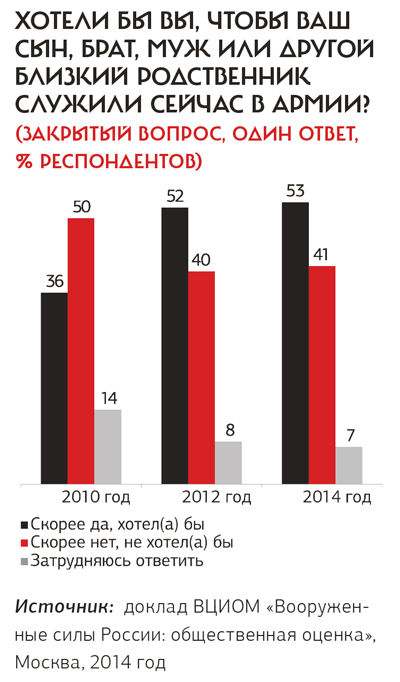
From private to state
A graduate of the Faculty of Law of the Tax Academy (now-a financial university under the Russian government), 25-year-old Muscovite Kirill Markovsky was one of the best students on the course. He did not lose time in vain, comprehending the future profession in practice: first - in the tax inspectorate, then in the presidential administration and the police. Over the years of study, Cyril realized what the state machine was.
“In my fourth year, I trained in the department for combating tax crimes. Now the Investigative Committee is engaged in them, and before - the police, ”says Cyril NT . - The work of the department looked something like this: every day the employee called a witness and interviewed him: "Where is the director of the company?" - "I went abroad." - "And the chief accountant?" - "On the run." “Well, we will wait for them to be detained.” The district police department, he says, are littered with dirty work, and here everyone was lying around the fool, without smoking his hands: “Economists in uniform carried out business against intelligent businessmen. This was back in the days of Medvedev’s presidency, when the principle was proclaimed - not to nightmare the business. Therefore, things frankly lacked, and those that were excited occasionally came from tax inspectorates. Someone cunning did not pay VAT (value added tax)-do them guys! ”
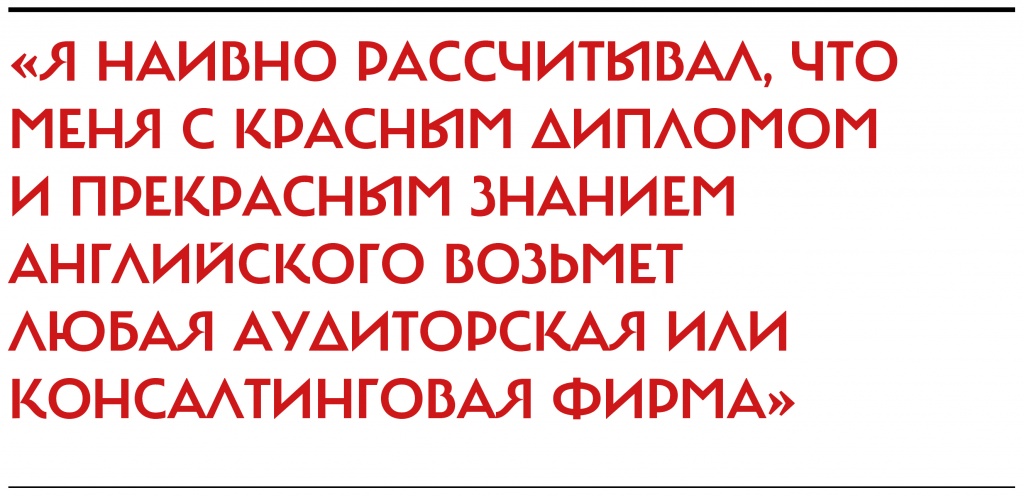
Tired of idleness and disappointed in the civil service, Cyril got a regular lawyer in a private company, where he worked for about two years. Then he had difficulties in relations with his superiors, and he safely quit. “I naively hoped that any audit or consulting company would take me with a red diploma and excellent knowledge of English, but six months later, after unsuccessful searches and walking in interviews, this did not happen,” says Cyril. “My profile education was a plus, but the lack of experience was a big minus.”
Interviews in large companies like Lukoil or TNCs take place in several stages. “Your resume is selected from thousands of others and send a test to knowledge of general legal issues. I easily coped with him. Then they invite you to a personal meeting, where they are already given a specific test - in my case about tax legislation, ”he explains. - There are dashing cases that cannot be solved without experience. For example, it is necessary to determine how the dividends of foreign companies that have assets in Russia will be taxed. With difficulty I completed the tasks, but in response I heard: you would have, a young man, at least a year of experience, we would have taken you, and so - to the exit. And where to get experience immediately after the university? - Cyril shrugs his hands. - The institute does not prepare for work. However, like the school to the institute. "
It was much easier to get into a state institution: “I was offered a job as a legal adviser in the municipality of the Ramensky district. I accepted the proposal, leaving no hope to go into commerce. The salary of a civil servant is very low - 24 thousand rubles - a penny for a resident of Moscow. ” Six months later, Cyril switched to the federal level - to the legal department of the Social Insurance Fund of the population (FSSN), where he was appointed a much more decent salary. What - I preferred not to call. “In fact, the FSSN is a separate ministry - a huge structure subordinate to the government,” he says. “Everything suits me here - the level of service, the specifics of work and the money that I receive.” According to him, more and more young people come to municipal institutions and the fund. Its legal department has 32 people, of which there are only four over 40 years. The rest is 25-30. The youngest is 21. 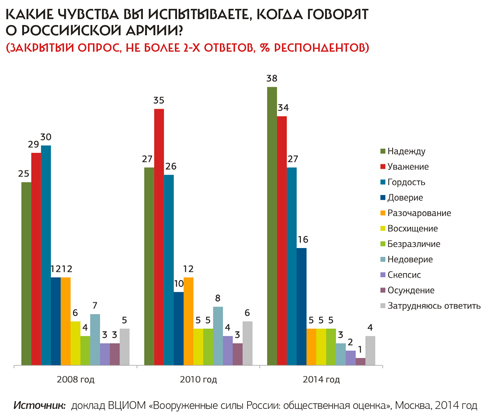

European approach
The 18-year-old Eduard Verkhnigorsky, together with his family, spent the whole youth in Chukotka-in the city of Pvekek, where, as he says, everything is fine except weather and prices for flights. For a long time, the singer was considered a closed city, where you can get only by sea or air - there are no ground roads here. However, this did not stop most of his classmates to quickly settle in other cities in search of earnings or education.
This summer, if the points on the exam are on his side, Edward will be attended by the Department of the Office of the Russian Academy of National Economy and Public Administration (RANEPA). “I submitted documents to the Vyborg branch of the Academy,” he says NT . “Vyborg is not bad in that there is Peter on the one hand, which means there is a where to move in terms of career, and on the other, Finland, which conducts students' exchange under the Erasmus program.” Competition among applicants and money also play an important role: “The price of a rented apartment in a shabby sleeping bag on the outskirts of St. Petersburg is 23 thousand rubles, in Vyborg with a renovation - 15 thousand. And the prices for food and other life are twice. ”
Why the choice fell on the wounds, Eduard explains simply - a prestigious education that gives a chance to try himself as an official: “Of course, I don’t know how the cards will fall in four years, but if the climate in the country changes for the better, there will be more interesting posts and fewer stupid orders from above, then why not go to the civil service.”
Today, the most interest of the applicant is caused by city projects. The fault of this is the reading of the LJ-bloggers Ilya Varlamov and Maxim Katz, as well as the books of the American professor of Urbanism of Pennsylvania University, Vukan Vuchika: “I would love to work at the Department of Transport to Maxim Liksutov to improve urban space and make the life of megapolis more convenient. This is easier to implement in the status of a civil servant than a city activist, ”says Edward. - Citizens score on their country, and then at least dust their own fence. I would like to fix this, because before we had beautiful cities with parks and boulevards, and now in the same Moscow or St. Petersburg there were almost no such places left or they only recently began to be restored. Everything else was given to the development of glass -plastic shopping centers, BCs, etc., ”he complains and offers to adopt the European experience in the development of cities.
Eduard is often in Europe and even now, communicating with a NT correspondent, is in Hungary. But at the same time, he never thought about emigration. It seems much more “pretty and patriotic” to him the option of temporary departure for training abroad, then to integrate the knowledge gained in Russia.
At the end of the institute, Eduard would like to receive 50 thousand rubles at the start: “Yes, I know that the ordinary civil servants are not paid so much. But, who knows, maybe some nut in the system will weaken, and the authorities will understand that officials need to pay more in order to steal less. So far, as we see, they are only twisted. ”
Photo: Shutterstock.com