
Translated material
Burned dissident
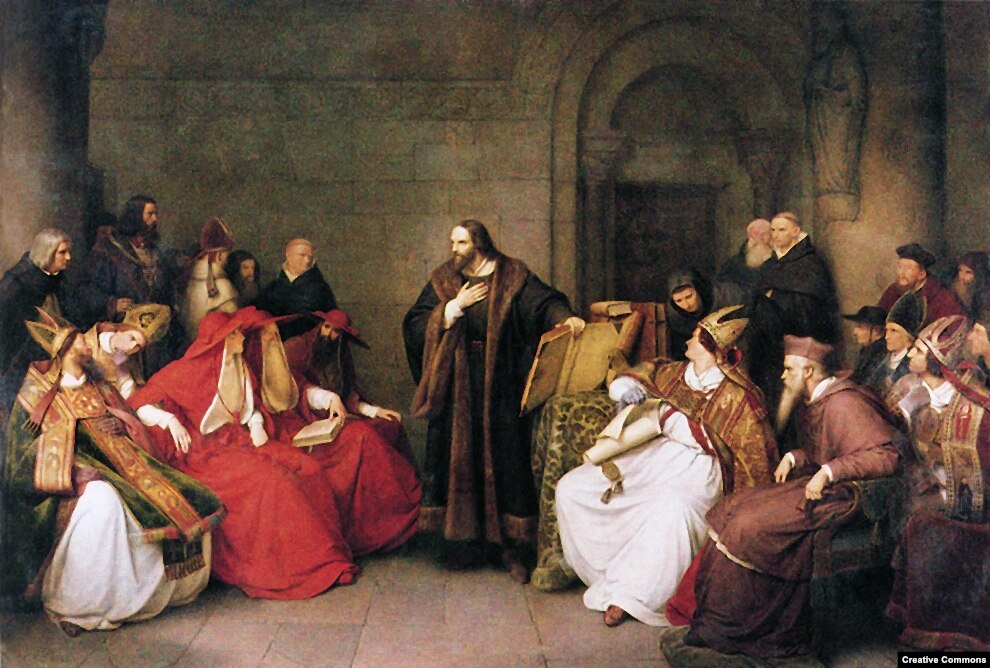
The Czech Republic celebrates the 600th anniversary of the execution of Jan Gus
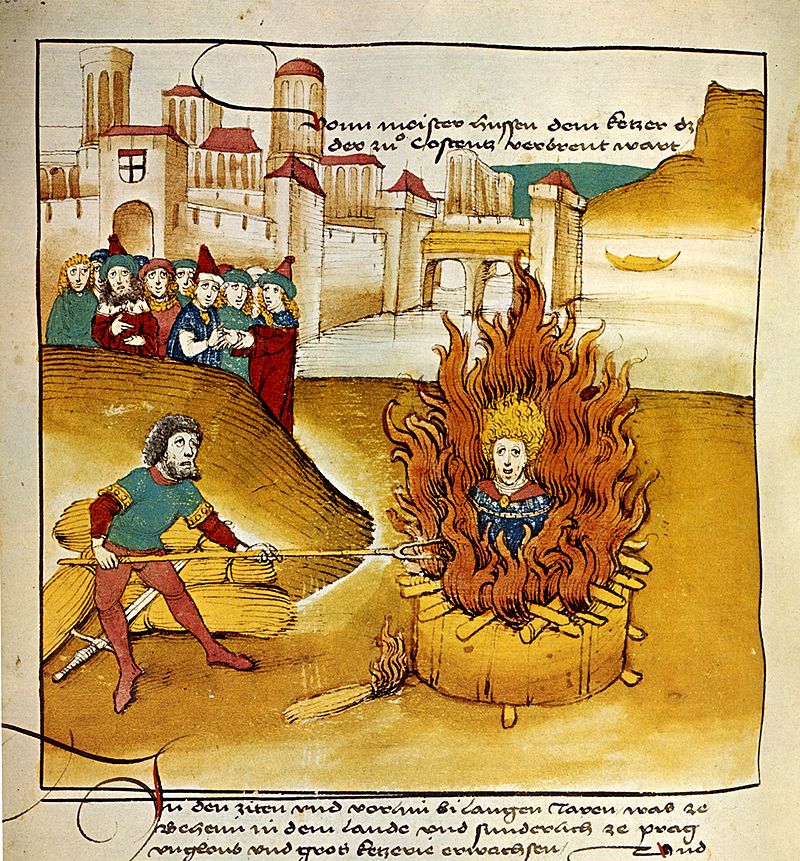
Infrequently, the day of someone's painful execution becomes a public holiday. In the Czech Republic, this is so: on July 6, the day, when, by decision of the Cathedral of the Catholic Church in Constanta, the Prague Prazhsky preacher Jan Gus was burned at the fire, is a holiday and a non -working day. This year this is a special holiday: exactly 600 years have passed since the death of Jan Gusa.
In the village of Gusinets in the south of the Czech Republic, where Jan Gus was born, this date was celebrated by a three-day festival -concerts, worship and a special representation-reconstruction, introducing spectators to the life of the Hussite camp during the almost twenty-year wars that followed the execution of the preacher. In the Czech Republic, this period is often called the "Hussite revolution" - he brought such serious changes to the religious, political and social life of the then Czech kingdom. In fact, it was simultaneously talking about the religious war of Protestants-Gusites against Catholics-both Chekhov and Germans, because the Czech Republic was part of the "Holy Roman Empire of the German nation," as well as the social and national conflict.
The communist regime made from the hus and his followers of the convinced "fighters for the happiness of the working people"
In 1434, the radical Hussites finally lost to their more moderate brothers, who entered into an alliance with Catholics, but the echoes of the "Hussite revolution" were heard in Czech history for several centuries. After 1918, when the independence of Czechoslovakia was proclaimed, the first president of this country , Tomash G. Masarik, called the Husslery of the National Religion of Chekhov and emphasized the democratic and national liberation character of the Hussite movement-diligently bypassing, however, such "uncomfortable" moments as the Husitov terror and Catholics as a whole, as well as the ruin that brought the country to the country. Hussite wars. The communist regime later made from the hus and his followers of the convinced "fighters for the happiness of the working people." This is how GUS appears in the film of the same name by the Patriarch of Czech cinematography of Otakar Vavra, shot in 1954.
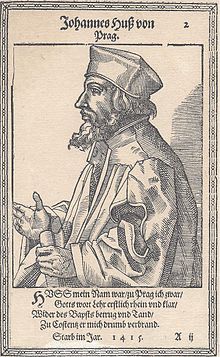
True, Jan Gus is unlikely to be responsible for all the acts of his followers. He himself tried to avoid violence and calls to him, although some provisions of his teachings were revolutionary. In particular, Gus claimed that church and secular rulers have no right to fulfill their functions if they live in mortal sin - and according to strict Christian canons, in such sin, almost all the then kings and princes and a considerable number of church hierarchs lived. Hus criticized the practice of the Church by the Church of Indulgences (the remission of sins). In many ways, he anticipated the ideas of Martin Luther , who, a hundred years after the death of Hus, came with a more extensive program of religious reformation, shocked all of Europe. In this sense, the activities of Jan Gus and the “Hussite revolution” are a part of European history, a phenomenon that goes beyond the limits of the Little Czech Republic.
In the post -communist years, Czech historians, however, no longer look at the husser as a revolutionary - rather as a dissident, a popular preacher who expressed thoughts that were contrary to the teachings of the official church. On the one hand, they were aimed at improving the life of the church and bringing it closer to a common person. On the other hand, without justifying the monstrous execution, they note that according to the then church law, many of the positions of the geese doctrine really fit into the concept of heresy, and heresy was punishable in such an inhuman way. As the Czech specialist in church history, Radomir Molo , “all 30 statements that the Council of Council presented Hus as evidence of his heresy, the follower of Hus Jerome Prague, who himself was burned less than a year after his teacher, found in the works and letters of the Hus - just in the sense in which the cathedral was interpreted. Jerome himself wrote about this, and this letter was preserved.”
Many of the provisions of the geese doctrine really fit into the concept of heresy
- Has Hus itself in personal and public life is a morally impeccable person?
- He lived with dignity, decent, but I would not call him “impeccable”. So, his patron was an immoral and in many ways the criminal king Vaclav IV, but the Hus publicly did not reproach him, while he criticized his religious opponents mercilessly.
- What were the strengths of Yana Gus?
- He was a man’s man, sincere, sought with all his heart to cleanse the church.
- Can it be considered a Czech patriot or even a nationalist?
- Partly. He loved the Czech language, partially reformed the spelling of that time, and in his sermons there was a criticism that he considered an excessive expansion of the Germans, - said Czech historian Radomir Molo.
On the eve of the 600th anniversary of the execution of Jan Gusa, Czech television showed a three-part feature film about him. According to the film critic of Camil Fila , this is a fairly interesting attempt at a new understanding of the personality of the husser in the context of his era. Gus, unlike the film of the 1950s, is shown as a person who is looking for his truth, internally restless, doubting, at the same time quite stubborn, stubborn and brave. He tries to resist the system and eventually dies in the fight against it.
For most Czechs, July 6 is just another day off in the middle of a hot summer. For those who remember Yana Gus, one of the expressive figures of Czech history and 600 years after his death, this is a day of memory of not only an outstanding Christian preacher-dissident, but to some extent also dissidents in general: people who are not afraid that they consider right and righteous to go against the system, no matter how strong it may be.