
Translated material
New York Almanac
Rachmaninov on the Broadway stage. “Icon and ax” of Billington. Russian conductors in the West
Alexander Genis: The second part of ACh will open the July issue of the New York Almanac, in which we and the culturalist and musicologist Solomon Volkov are discussing the news of cultural life, which they see from New York.
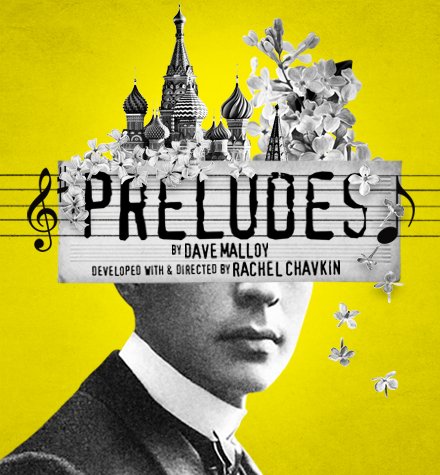
Solomon, I propose to start today's release of our “almanac” with the premiere, which made a great impression on the New Yorkers-this is the performance “Prelude”, staged in the Lincoln Center. It is already interesting that everyone we love on the stage appear, starting with Rachmaninov, there are Chaliapin, and Chekhov, and many others.
Solomon Volkov: This sensation is really kind, very unexpected. But, of course, as soon as I heard the name of the author of this musical, Dave Mallow, I remembered that this is a person who made a theater performance with music is no less than from the “War and Peace” by Lev Nikolayevich Tolstoy.
Alexander Genis: A very bold thing.
Solomon Volkov: She enjoyed great success.
Alexander Genis: Yes, the performance walked for a long time, because of success, his life was extended on Broadway. I still thought: the author really has no Russian roots? No, Dave Maloma is a young man from Cleveland, who simply loves music, and all kinds of music, from the most modern to classical.
Solomon Volkov: And this is the Commonwealth that developed on the production of “war and the world” continued. The same female director Rachel Shafkin helped to create something new. And again with Russian heroes. You involuntarily think: why didn’t they realize a performance from such a wonderful topic in Russia? After all, history itself is extremely entertaining. Moreover, I will add, it is even more entertaining than it seems at first glance. I know something about this almost first-hand. So, this is a musical about the young Rachmaninov ... But here I must say that Rachmaninov is an extraordinary figure in all respects. Firstly, for me, he is no doubt the largest pianist of the twentieth century, not Russian-but in general on a global scale, the largest pianistic figure is, of course, Rachmaninov. From my words there is no need to make a conclusion that I do not like the composer Rachmaninov, I appreciate him very much, I put it very high, I love his music very much. By the way, my wife Marianne, pianist, taught me, by the way, to really love Rachmaninov.
Alexander Genis: And my mother. All her life she stroked his shirts to her father to the music of Rachmaninov, especially performed by Rachmaninov. She passionately loved these records, they were played. I grew up under the second concert of Rachmaninov, as far as I remember, the second concert of Rachmaninov, and the Grieg concert is the music that I listened in childhood almost every day.
Solomon Volkov: For me, it was a big surprise when I came to New York, that here the attitude to Rachmaninov in the circles of the musical elite is more skeptical. Despite the fact that the audience of his music enjoyed great success, and the authority of Rachmaninov as a pianist was never in doubt, he is a powerful figure that reigns over the whole landscape of American music production. He became part of America’s musical landscape, his interest is very great. You remember that a feature film was released in our memory, which talked about such a pianist who overcame his madness, performing the concert of Rachmaninov No. 3. And then this “rah-three”, as this concert was called, bypassed the whole country.
Alexander Genis: About the “Rach” two words. In the review of the play “Prelude”, about which we are talking about, Rachmaninov is called “Rah” everywhere for simplicity. I remembered when I arrived in America, the Daily News or New York Post, I don’t remember, I didn’t remember, I went out with the headline: “Present Mit Trinks”. (Prez Met Brez). Yana immediately realized what this means "the president met with Brezhnev."
Solomon Volkov: When Shostakovich arrived for the first time in America, he was also immediately made in shock, and so reporters turned to him that he did not like it extremely, of course.
But back to Rachmaninov. He was a child prodigy. When he graduated from the conservatory, he wrote the Aleo opera, Tchaikovsky immediately noticed it and insisted that the Bolshoi Theater accepted this opera. She was supposed to go constantly in pairs with the “Iolanta” of Tchaikovsky. You can imagine: a young man who is not fulfilled, and his opera is performed at the Bolshoi Theater. That is, the head could dilute from anyone, as Anna Akhmatova said, "the number could not withstand." Despite the fact that Rachmaninov was a very restrained person all his life, he made a severe impression, but what he thought, it was easy to guess in this situation.
And then there was a catastrophe completely unexpected, because Rachmaninov, who had already composed his opera Aleo, which is still playing, this is an amazing opera, wrote the first piano concert, also, as we know, an outstanding essay, as well as a number of classic Rachmanin’s things, and suddenly a catastrophe. The premiere of his first symphony in 1897 ended in failure. Because Alexander Glazunov, who conducted this premiere, conducted it unsuccessfully.
Alexander Genis: Is it true that he was drunk?
Solomon Volkov: There is such an opinion: he was drunk, because of this he held an unsuccessful concert. But there is a small nuance, which consists in the fact that Glazunov was always a gear, so saying that he specially got drunk, leaving the Symphony of Rachmaninov, would be unfair. Again, Glazunov never was not like an outstanding, but even a decent conductor, everyone forgave him for the fact that he was a significant composer figure, respected, of course, a wonderful musician in all respects, but not a conductor, but he loved to conduct. When he was told something commendable about his music, it did not bother him, and the conducting for him was very important. One way or another, he failed this prime minister. This plunged Rachmaninov into real depression. From this depression, according to the existing very stable legend, he was cured with the help of a hypnotist of Nikolai Dahl.
Alexander Genis: who appears on the stage of the musical as a woman.
Solomon Volkov: And here we are approaching a little secret that Alexander Borisovich Konyus told me about, he is also Rachmaninov, that is, this is a real legitimate grandson of Rachmaninov, his daughter married a Konyus musician. At first he was Alexander Borisovich Konyus, and then he took the name of his grandfather - Rachmaninov, (as an heir, it was easier for him). Until recently, and he died not so long ago, Aleksanlr Borisovich headed the Rachmaninsky society, he did a lot to promote Rachmaninov’s work. Although there was, as they say in such cases, a difficult person. I met him just in the Radio Studio Freedom, not in this one, where we are talking, but on Broadway.
Alexander Genis: This is Broadway 1775, the old listeners perfectly remember this address.
Solomon Volkov: The legendary address. There, but not at the microphone, he told me his secret. It turns out, according to him, the matter was not in the power of the Hypnotyser Dahl, but in the fact that Rachmaninov had an affair with his wife Dahl. This was the reason for his exit from depression.
Alexander Genis: Maybe the authors of the musical knew this story?
Solomon Volkov: No, I think no. If they knew, they would have done so, it would be a much more winning plot and stage move. But this indicates the intuition of the authors of the performance: they guessed that a woman should be involved here.
Alexander Genis: In this musical, it is very curiously shown what happened to Rachmaninov before he was cured. He could not write for three years and literally did nothing. Not a scene, even in a musical, it is difficult to show that a person does nothing, for this you have to be a Becket, but they managed to portray it.
Solomon Volkov: As you said correctly, a huge number of characters iconic for Russian culture are acting in the play, there are Chaliapin, there is Chekhov, there is Tchaikovsky, Tolstoy Lev Nikolaevich and Nikolai II.
Alexander Genis: The author of the review, musical and theatrical criticism Ben Brentley managed to find a very correct analogy to this performance. He compared it to Woody Allen's film “midnight in Paris”, where all the celebrities of the American diaspora in Paris of the 20s were bred: Hemingway, Scott Fitzgerald, and so on. A brood of celebrities - and on stage, as in the cinema, it looks fun.
Solomon Volkov: At the same time, there are not so many music of Rachmaninov as such. The author simply composed his pop songs, creating what we call an anachronisms. He freely uses a variety of musical idioms, and this does not cause special resistance, because you immediately understand: before you, a conditional game is, in the end, not a realistic drama from the life of Rachmaninov.
Alexander Genis: musical and is not realistic.
Solomon Volkov: As you already said, instead of a male doctor, hypnotist, woman.
Alexander Genis: The fact is that do not forget, the case is happening in New York, where, as someone considered it, there are more psychoanalysts in the same New York quarter than in the entire midvesting of America. So the topic of manipulations of consciousness is very popular for New York, and the performance is on-ura.
Solomon Volkov: Everyone is delighted, they compare this musical with the wonderful musical of Stephen Sondheim, the master of the American musical theater, called “Sunday in a park with George”, which tells about the history of this famous picture of Georges Sea, which depicts the park.
Alexander Genis: Sondheim had a more difficult task, because it is more difficult to portray an artist in a musical than a composer.
Solomon Volkov: What does criticism and the public notes, although some of my friends, for example, did not like the performance, but some really liked it. Critics have a rather typical phrase: “If you have never heard Rachmaninov’s music, you know it, because it rushes from everywhere. You can be transferred with its help to some other being, or you can be outraged, or you may be aversion to this music.” That is, Rachmaninov for this critic as a composer is still a dubious figure.
Alexander Genis: I think this is because Rachmaninov is exciting, aggressive author. I just listened to Rachmaninov’s second concert in connection with our conversation, as I love - in the car. I know this concert by heart, but I was shocked again, because every time I hear something new. For example, this time I heard the influence of Asian music, there is music coming directly from Rimsky-Korsakov. Indeed, Rachmaninov opened a new musical dimension to the West. And he did it with such pressure that he became the favorite of Hollywood. Each time with the old cinema, you need to show passions, Rachmaninov sounds in the film.
Solomon Volkov: Well, we will put the recording of the second concert as a musical illustration,
Alexander Genis: Dedicated, we must add, to him to Nicholas Dalya.
Solomon Volkov: This concert Rachmaninov plays himself, this is a 1929 record. Which is also pretty for us and again reminds of the place of Rachmaninov in the musical life of America - this is that the record is made with the Philadelphia orchestra under the direction of Leopold Stokovsky. So, the second concert of Rachmaninov performed by the author, 1929.
(Music)

Alexander Genis: Another news that I want to discuss with you today is James Billington's resignation. This is actually a sad story, because Billington is the librarian of the National Library of Congress. This is the largest library in the world, and he is the 13th librarian in its history. We know him well, because Billington is the winner of our Liberty Award. We were lucky, this is a great honor for both the award and for us.
Solomon Volkov: Then we went to give him a prize to Washington on purpose.
Alexander Genis: He then made a wonderful speech. Everything was very pleasant, because Billington is my hero, without a doubt. He is now 86 years old, he does not resign as his own free will, he is squeezed out, because he is already old and it is believed that he is not actively engaged in digitizing the library. This is a difficult problem, not for us to understand it. But this is an occasion to recall the main work of Billington “Icon and the ax”. This book of 1966, and it is still, in my opinion, the main book on the cultural studies of Russia.
Solomon Volkov: I completely agree with you.
Alexander Genis: A year ago, there was a conference on the influence of this book on all Russian studies in the United States, where Billington was called the father of Russian cultural studies in the West. It was his book that laid the foundation for all studies of this kind. This book “Icon and the ax”, thank God, has long been translated into Russian.
Solomon Volkov: Unfortunately, they did not make in Russia the impression that she made here, this publication remained unnoticed, I have never seen links to him.
Alexander Genis: Although the author received an order, awards, medals, and in Russia he is noticed, he is an honorary member of the Russian Academy of Sciences. But I agree with you, the book did not become an inevitable part of the discourse, as they say now. There are books that have been waiting for too long.
Solomon Volkov: Deleza is quoted, Derrida is quoted, but there is no Billington.
Alexander Genis: Meanwhile, this is a classic from classics. The very name of the book is very interesting: "Icon and ax." In my opinion, it goes back to another book belonging to the feather of the founder of cultural anthropologist Ruth Benedict. This wonderful woman wrote the book extremely important for America. This is a book about Japan, which was called "Chrysanthemum and Sword." She ordered this book during the war, in 1944. The Americans had to understand who they deal with, with whom they are fighting, and they ordered her this book. Then it was a new area, completely unknown. The author said that any culture has its own central concepts, rods around which everything is built. The symbols of Japan, its codes, are chrysanthemum and sword. The book is incredibly interesting, it is also translated into Russian, and also did not make a big impression. Say, the “Sakura branch” Ovchinnikov has become a classic book for Russia, and this, incomparably deeper, unfortunately, did not take the place it deserved. Although she was a bestseller in Japan, which is interesting, and in China she is a bestseller, because this book allows us to understand what is happening in the Japanese soul. For example, the main concepts in Japan are shame and duty, all relations are being built around this. Ruth Benedict, for example, wrote that the Americans who fell into the Japanese concentration camp during the war were beaten, beaten, if they laughed. The prisoner cannot have a smile - he lost his face. And if he still laughs, then he is mocking the enemies. I talk about this in such detail, because the book “Icon and the ax” was published, in 1966, in the midst of the Cold War.
Solomon Volkov: And in America, she played just such a role as the work of Ruth Benedict.
Alexander Genis: I am talking about this, she prepared America for what would happen during the Cold War. And it was not for nothing that Billington was an adviser to Reagan on Russian issues. He raised a galaxy of specialists in Russia and, in my opinion, his work is still extremely important in order to understand who America is dealing with today.
Billington, despite his advanced age, is very interested in new political events. He says: see what is happening in the twentieth century. Over the past half a century, two events that have changed the map of the world are a revolution in Iran, which led Islamic radicals to power, and the collapse of the Soviet Union. Both that, and another was a surprise to the Americans, for the West, because we do not understand either one or another culture. This is what cultural anthropology is needed for.
You remember when you and I awarded the Billington Award, he said: every time they ask me how to understand Russia, what you need to know in order to understand it, I say the same thing: re -read the “war and the world” again.
Solomon Volkov: to top up and to the development of this thought, Billington, with whom we both, in my opinion, completely agree, I will show an excerpt from Sergei Prokofiev’s opera “War and Peace” by Tolstoy.
(Music)
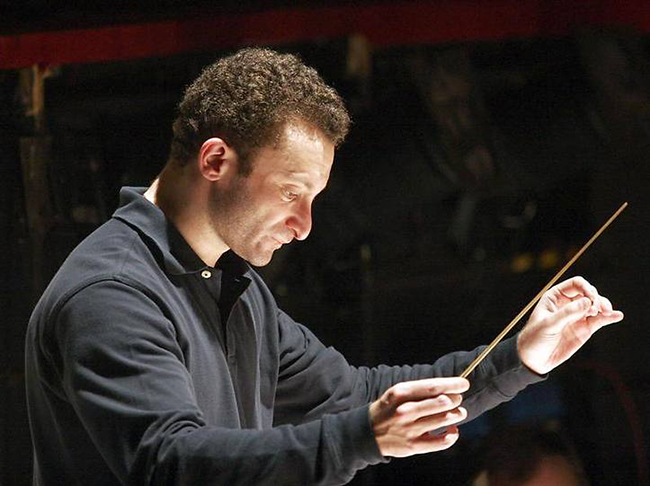
Alexander Genis: And the last news that I want to discuss with you. Recently it became known that the conductor of the Berlin Philharmonic was appointed conductor of Russian origin Kirill Petrenko. As I understand it, this is the main position in the musical world, right?
Solomon Volkov: Yes, because so far, this tradition is already long -standing, so far it has been preserved that the main one, the number one orchestra existing in classical music, is the orchestra of the Berlin Philharmonic. Someone can object, of course, many music lovers will have their own favorite. There is such a thing as the first five, the first dozen, the Amsterdam orchestra, Consetgebau, the Bavarian radio orchestra, two-three American orchestra, Chicago, Cleveland, Boston, Boston, is included there. You see, I do not include a New York orchestra in this list. But the Berlin Philharmonic is still the number one position in the musical world.
Alexander Genis: Petrenko is extremely young, he is only 43 years old.
Solomon Volkov: Yes, he is born in 1972. Я ведь был хорошо знаком с его отцом Гарри Петренко, мы вместе учились у одного и того же педагога по классу скрипки в Ленинградской консерватории. Он был замечательный заводной парень, по распределению уехал в Сибирь работать. Петренко родился в Омске. Потом они переехали в Австрию, сейчас Петренко живет в Берлине. Он являлся до самых последних дней музыкальным руководителем Баварской оперы, где он работал с 2013 года. Кроме того, я должен заметить, что он первый русский дирижер, которого пригласили провести сезон в Байройте.
Александр Генис: Выступал он и в Нью-Йорке, дирижировал «Хованщиной» с большим успехом.
Соломон Волков: Он в Мет регулярно появляется. В выборе Петренко тоже была своя интрига. Дирижера тут выбирают оркестранты, в этом, между прочим, особенность выборов у берлинских филармонников, в отличие от подавляющего большинства других оркестров, где либо культурная бюрократия назначает руководителей, менеджмент, совет директоров, а здесь голосуют оркестранты. Было два кандидата основных — рижанин Андрес Нельсонс, ученик Марсиа Янсонса и немец Кристиан Тилеман. Оркестр раскололся на два непримиримых лагеря, и они не могли сойтись, первые выборы поэтому прошли без результата. В итоге качестве компромиссного кандидата, который удовлетворил и одну, и другую сторону, появился Кирилл Петренко. Это для всех была огромная неожиданность.
Александр Генис: Все оркестранты сказали одно — их подкупает харизма. Он оркестрантам нравится.
Соломон Волков: Безусловно, это у него есть. Безусловно, это человек с большим будущим. Это тот случай, когда у него все впереди, теперь во главе Берлинского оркестра он сможет доказать, на что он способен, по полной катушке.
Александр Генис: Петренко эмигрант, в 18 лет он уже жил на Западе, тем не менее, можно говорить о том, что он принадлежит к российской школе дирижеров. Среди них и Марис Янсонс, и Гергиев. Есть в мире не так мало дирижеров, которые так или иначе восходят к русской музыкальной школе.
Соломон Волков: Между прочим, среди них и однофамилец Петренко — Василий Петренко, который занимает серьезные позиции в музыкальной жизни в Норвегии и в Англии.
Александр Генис: Что же делает привлекательной эту школу для международной музыкальной жизни?
Соломон Волков: Вы знаете, профессионализм, очень хороший профессионализм по подготовке. Почему музыканты из России так ценятся, и пианисты, и скрипачи, в последнее время между прочим и вокалисты, нужно отдать здесь должное Гергиеву, который на протяжение последних 20 лет выступает неутомимым пропагандистом российской школы пения. А дело все в том, что отличная профессиональная постановка дела. Между прочим, так же когда-то обстояло дело и в кинематографе. ВГИК был с точки зрения профессиональной, так же, как и знаменитая киношкола в Лодзи, отличная кузница кадров, очень жестокая профессиональная муштра.
Александр Генис: Но сегодня на фильмах, по-моему, это не сказывается. Впрочем, это мое личное мнение. Скажите, пожалуйста, а что именно Петренко хорошо дирижирует? Ведь у каждого дирижера есть свои любимые музыканты.
Соломон Волков: В этом смысле у него нет какого-то конька, он самую разную музыку дирижирует отлично. Должен сказать, что с Берлинской филармонией ему придется нелегко, это все ребята себе на уме. Они считают, что они главный оркестр мира, соответственно себя ведут, они действительно замечательные профессионалы, но есть у них некоторое клановое высокомерие, которое свойственно коллективам такого рода.
Александр Генис: Еще бы, это же оркестр, которым Караян дирижировал.
Соломон Волков: Аббадо, фигура может быть не меньшая, а для меня и более симпатичная, чем Караян. Что касается Петренко, то я слышал и видел как он дирижирует «Поэмой экстаза» Скрябина. Он действительно весь в экстазе, он, как говорят музыканты в таких случаях, вылезает из штанов, а оркестранты спокойно, хладнокровно играют, на лицах никаких эмоций, они выполняют аккуратно его указания, но не более того. Чтобы эту ледяную стену растопить, Петренко придется приложить немало усилий. Прослушаем отрывок из «Поэмы экстаза», дирижирует Петренко, оркестр Берлинской филармонии.
(Music)