
Translated material
The road from the temple
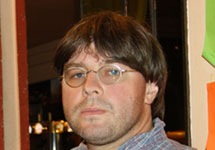
Last weekend were marked by a loud scandal. On July 4, the retired head of the Synodal Department of the Moscow Patriarchate of Relations with the Armed Forces and Law enforcement agencies, Archpriest Dmitry Smirnov, decided to remind himself of Alla Pugacheva’s song “Hey you there, upstairs”. If he was not invited to the festival of the Silver Rain who passed a kilometer from the church (and did not even agree with them the volume of music), then, having interrupted the worship, to appear at him and, having broken through the gate, demand that he sounded quieter. After that, the elderly prima donna of the church scene in the first plot of the evening program on the leading state television channel can, squinting with pleasure, engage in calculations. Like, there’s nothing to do, and now in a day I had to give an interview to three television channels, five radio stations ...
In practice, the situation does not look so safe, and Smirnov seems to understand - frankly crafting when setting out the circumstances of the case. Group invasion of an event using violence falls under a whole bouquet of articles of the Criminal Code, including anti -ejectomist. If the prosecutor’s office gives a move of the complaint of the radio station , then, without even reaching the court, it may be great Smirnov. The Moscow Patriarchate is sensitively monitors the situation and at any time can send a priest prone to the riot to a not -so -honored pension.
The incident with Smirnov could be considered a special case associated with the state of the psyche of the "Judging" (according to the intra -church definition) of the veteran of the Orthodox policy if he had not fit into the tendency that has been visibly visible.
Last week, two events occurred, almost completely ignored by large state media. Groups of public activists twice managed to achieve the suspension of illegal construction, initiated by Orthodox radicals. On July 1, after a large -scale confrontation in the territory of the Koropyanka Park in the Losinoostrovsky district of Moscow (it reached the arrangement of the warning sides of the tent camps), the district prefect promised to stop the construction of the temple before the court decision. At the same time, the decision was announced on the installation of a colossal monument to Prince Vladimir on the Vorobyovy Mountains. The rallies conducted by Orthodox activists, including the chairman of the Union of Orthodox citizens by Valentin Lebedev and Orthodox youth movement, "St. George" did not help. On the observation deck, a fence for some research works on strengthening the soil is still preserved, but the supporters of the project are preoccupied with the search for a new place to install the monument they loved. Both victories were won despite the threats (and attempts) of physical reprisals against social activists from the Orthodox extremists - the Movement of Forty forties in Losinoostrovsky and "Night Wolves" on the Vorobyevs Mountains .
These small and, possibly, temporal successes of the public in the confrontation of initiative clericals became possible only thanks to the clearly declared position of citizens who support them municipal deputies and socio-political organizations. And above all, the citizens themselves did not spare the time and effort to participate in pickets and demonstrations, managed to expand the collection of signatures, and there were no threats. As a result, the authorities were backward, although there were not very many protesters: several dozen people in the peat, a small initiative group at Moscow State University, who gathered (possibly not without the assistance of the rector) two thousand signatures.
What conclusions can be drawn from these three (considering the "collision of Smirnov") stories?
Firstly, it is obvious that neither power nor any other political forces control the situation at the lower level. Within the framework of each of these stories, actually actually independent (albeit inscribed in some political networks) groups that either lobby their interests or express protest. For example, the Moscow Patriarchate, of course, is not against the fact that a certain initiative group has mastered another section of the metropolitan park and erected a fence for the construction of the temple. However, she will not launch all her administrative influence for the sake of a single peat. Indeed, in this matter, she has accumulated negative experience. As Vladimir Resin, who was responsible for the Church Program of 200 Temples, recently told, about 20 intended sites remained uninitiated due to the protests of local residents. On the other hand, the Communist Party or Yabloko is ready to support public protests, but in the absence of the same public they will not drive their activists so that they defend the site illegally assigned by the zealots of Orthodoxy (or Orthodox entrepreneurs).
Secondly, in the power there is no unity on many ideological issues, in particular in relation to religion. Moreover, on each floor, the verticals of power are both hot supporters and opponents of certain ideological or religious theses, publicly declared by the authorities. For example, the public silence of the rector of Moscow State University Viktor Sadovnichy regarding the monument, tossed into the territory, symbolically controlled by the main university of the country, is especially noticeable against the backdrop of the violent activity of the protest group against the monument to the university itself. And the degree of support provided (or not provided) by one or another prefect plans for temple construction in his district does not correspond to the position officially declared by the mayor of the capital.
Thirdly, a similar alignment completely diverges from the "political reality" described by the official Russian media. In the Vesti 24 TV channel, which is repeatedly scrolled last week, the responsibility for any protests is transferred to American agents. Obviously, this film is designed to justify the closure of representative offices of any Western public funds in Russia. They will be closed in the fall, but will it stop the protests? Examples of last week say no. Conflicts are generated at the local level, local forces - and although so far they are resolved relatively peacefully, without contrary to the will of the central authorities, it is obvious that the protest experience is accumulated and absorbed.
Fourth, the orientation and the course of protests show how far the paths of "normal" Russian citizens, including conservative Orthodox and Orthodox radicals, have dispersed. Hot calls to defend the temple in Torfta or erects a monument to Vladimir on the Sparrow Hills The Orthodox community of the city completely ignored. In the places of the Orthodox were represented by people who are most similar to paid classes. Smirnov’s visit with the flock to the festival of “silver rain” and the unmotivated cessation of worship were also unanimously condemned by all the representatives of the church who had expressed on this subject.
It is interesting to look at this situation historically. In perestroika times, all “living” public protest groups in general advocated the opening, restoration and construction of temples (or, in any case, supported this idea), and their opponents were either people of pre -retirement age with a low level of education, or all kinds of security forces. Today is the opposite. All public groups and a significant part of the "normal" Orthodox are opposed to the Orthodoxly colored extremism and unbridled construction of temples, which does not take into account the opinions of local residents. And, as the experience of perestroika shows, from lower -scale public, religious and environmental initiatives, a stone's throw to great politics. So, in my opinion, from such small stories, a real political agenda of tomorrow boils before our eyes.