
Translated material
Dad chewing Coca
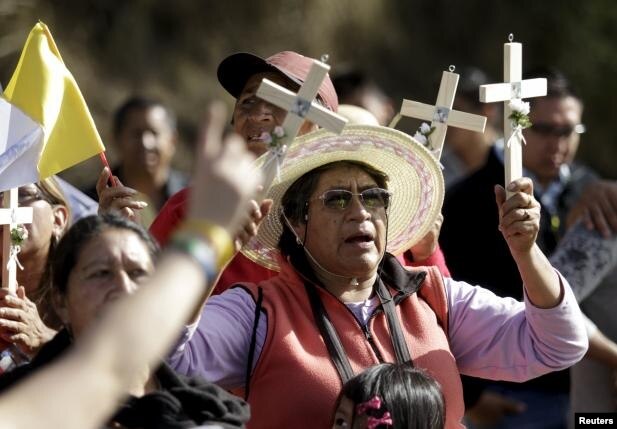
The head of the Roman Catholic Church continues to surprise, unlike the Hierarchs of the Russian Orthodox Church
Pope Francis began a weekly trip to Latin America. He will visit three states: Ecuador, Bolivia and Paraguay, considered one of the poorest on the continent. But there is the highest proportion of Catholics among believers, from 82 to 93 percent. About 40 percent of Catholics around the world have been living in Latin America, but in the past 20 years the Vatican has rapidly losing his flock here, passing under the wing of Protestant churches, mainly the evangelical direction . However, Francis himself, when Bishop Buenos Aires, who maintained excellent relations with the Evangelists, says that he arrived in Latin America rather not with preaching, but for the sake of dialogue with civil society and activists of social, charitable and environmental organizations.
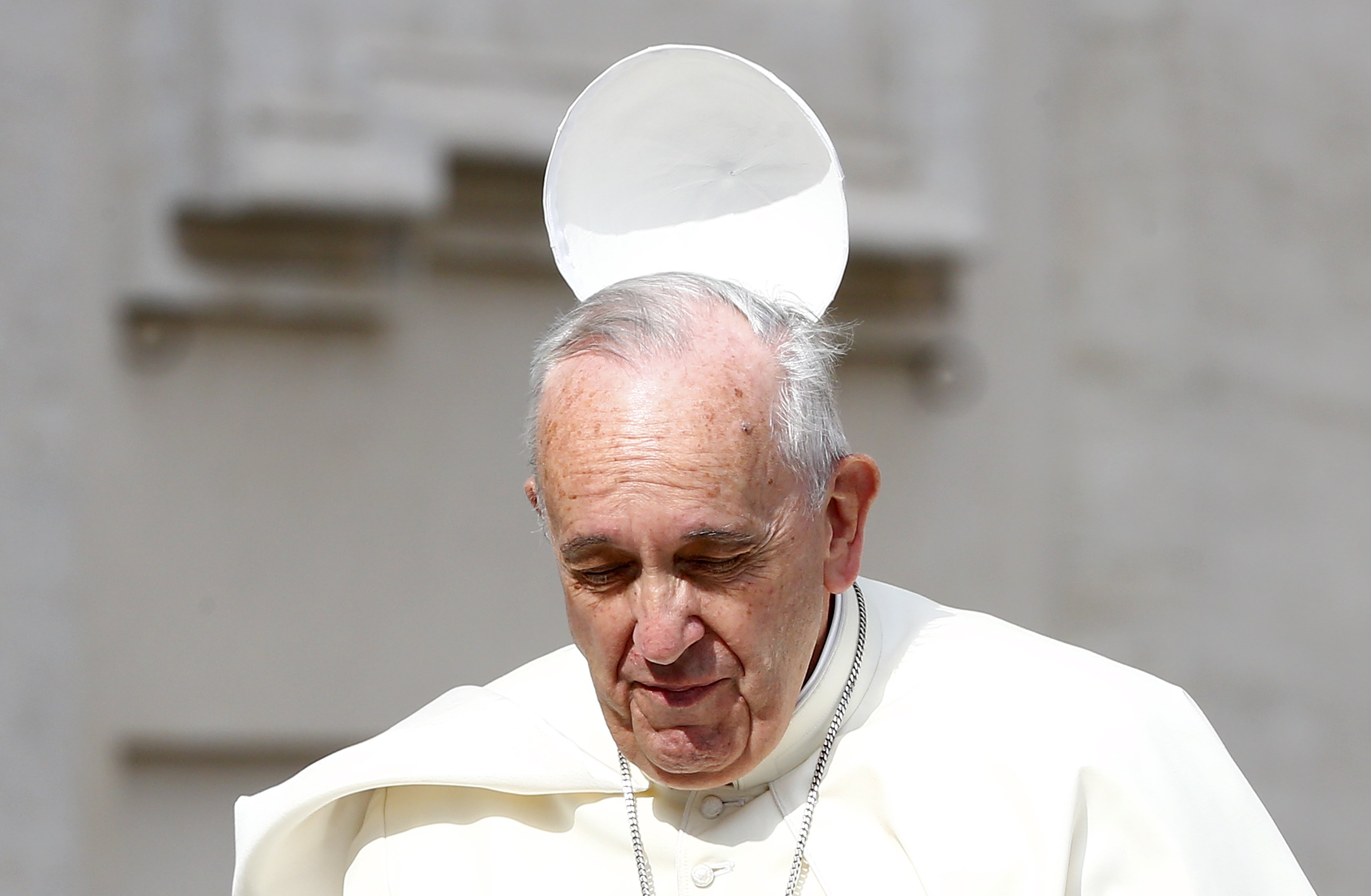
In the highland capital of Ecuador, Kito Francis met the strongest wind, torn from his head a hat, a crowd of Indian children dressed in national outfits and president Raphael Correa in a costume from Cheutti, which began to stigmatize "imperialist countries that take the food of his people and lead the nature ." Correa, obviously, hoped that Francis would be forced to catch his thought, but dad only replied that "all ways to cope with the challenges of our time can be found in the Epistles of the Jesus."
The first Latin American on the papal throne, the Argentine Horge Mario Bergolo for the last time visited the continent in 2013, having arrived at the Youth Festival in the Brazilian Rio de Janeiro. However, he made this trip, actually replacing Pope Benedict XVI who planned her and suddenly renounced her and suddenly renounced her. This time, Francis personally chose three states that he would visit on the continent, and his assistants tell reporters that only dad “returned to their homeland” in these days.
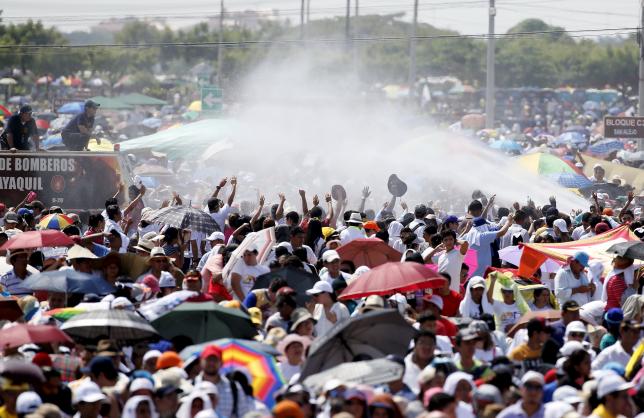
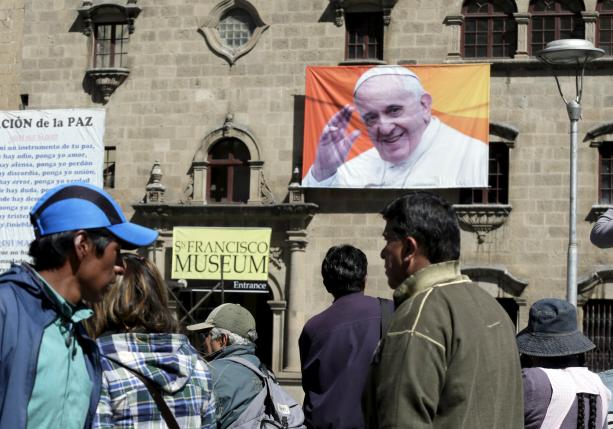
On July 6, Pope Francis visited the main industrial and port city of Ecuador Guayakile, where he served the mass in the main city cathedral, returned to Kito for worship for open -air worship in the largest park of the country's two hundredth anniversary of the country. On July 8, Francis flies to Bolivia, where he will meet with Evo Morales President, another, like Rafael Correa, a fiery fighter with world imperialism and the “spiritual son” of Hugo Chavez, representatives of the Indian communities and concluded in the well -known frequent and bloody rebels of the Palmasol prison. On the eve of the arrival of Bolivia, the pontiff dropped several times that I would like to chew the leaves of Coca, which President Morales likes to popularize . However, this was a joke or seriously, it is still incomprehensible. There is only no doubt that Coca Morales to Francis will offer.
The Pope will spend the end of the week in Paraguay, where again he will communicate with local activists, mainly representatives of the Indians of Guarani , as well as with the Paraguayan President Orasio Carlets. He is one of the largest businessmen of this poorest country. In 1989, Cartes received a prison term for bribery (although then the prosecution was removed). In 2000, in one of the estates of the current president, the local special forces Tigreros, a plane loaded with cocaine, was able to prove that he had nothing to do with this aircraft, nor its cargo.
Pope Francis loves Latin America, and she certainly loves him. Regardless of how many of its illiterate, but sincerely believers, sometimes naively mixing into one, the Virgin and Holy Communion with ancient deities and spells , can be considered real Catholics. The next time, through the Atlantic to the West, dad should fly in September to visit Cuba, before a long voyage to the United States. Despite the importance of communicating with Barack Obama, in his schedule, Francis put Havana ahead of Washington.
On the views of Pope Francis, the social doctrine of Catholicism and whether the reputation of the “Levak Papa” reputation is justified by Francis, we are talking with the historian and cultural scientist Kirill Kobrin .
It is difficult to imagine serious thoughts on whether the pope, Vicar of St. Peter, can chew on some stupid leaves
- In connection with the visit of Pope Francis to Latin America, the media wrote the most about these notorious Bolivian leaves of Coca, which produce an effect close to the drug. In this regard, I am interested in the question not about whether the dad will chew it, but about why Francis chosen such an interesting PR strategy over and over again? Every now and then he does or pronounces something unexpected, and is often criticized for this. Its opponents consider pontiff behavior sometimes lightweight. Do you agree with this?
-Well, it is difficult to imagine serious thoughts about whether the Pope, the Vicar of St. Peter, can chew on some stupid leaves. Not seriously, people worry about the hallucinogenic effects of these leaves on the very clear mind of Pope Francis? In fact, this is not about how someone sees the actions of the pope, but what this dad actually does and what motives he is guided.
- About that. Pope Francis largely adopts part of the purely political leftist agenda. This refers to his many performances on environmental problems and social inequality. That is, we are dealing with a pope and even a populist dad?
- No. The left turn in the social policy of the Catholic Church occurred at the end of the XIX - beginning of the twentieth century, it was just not very noticeable. Public opinion has long been passionate about large ideological projects, which were represented by both the totalitarian ideologies of Nazism and Communism and the Social Democracy. This was somewhat pushed into the shadow of what the Catholic Church did in social matters. You can, of course, make a lot of claims to this church and its politics, and they will be justified. But it is impossible to deny her turn towards social justice. This turn became obvious, however, only recently - thanks to Pope John Paul II and now thanks to Francis. John Pavel conducted absolutely the same policy, but his pontificate fell on a completely different era - the time of the collapse of communism. John Pavel inevitably played on the side, relatively speaking, capitalism, he associated himself precisely with the winners in the Cold War. Now the situation is completely different. Public support for the neoliberal model of capitalism is minimized, especially in places such as the countries of Latin America. In these conditions, the social course of the Church is becoming more and more obvious. After all, dad is not a shepherd of the rich - he is a shepherd of everyone.
- At the same time, the Catholic Church and under Francis firmly stands on some very conservative principles: the ban on abortion, celibacy of priests, a position on sexual minorities and so on. How does this combine with the "progress" of the dad in matters of social justice or ecology?
- There is a popular misconception that the idea of social justice belongs to the category of progressive liberal ideas. This is wrong. The idea of social justice and the idea of a liberal society are two completely different things. So you can fight for social justice, but at the same time not to be no liberal. And vice versa. Many authoritarian conservative regimes of the past were not alien to the ideas of social justice. At the same time, in the same Latin America, right -wing dictatorships often pursued Catholic bishops and priests only because they protected the idea of social justice, for the fact that it was the Church of the poor.
- Both the rhetoric and the actions of Pope Francis are quite different from the rhetoric and actions of the hierarchs of the Russian Orthodox Church, which rely mainly on what they call conservative values. Is it possible to say that this prevents the dialogue between the Catholic and Orthodox churches? At the same time, Pope Francis recently met with Vladimir Putin ...
-He could not help but accept Putin, firstly, as the head of state, where Catholics live, secondly, because there is some hope of rapprochement with the Russian Orthodox Church. This is where the question is very complicated. After all, the point is not only and, probably, not so much in theological issues. Once, in the XVII-XIX centuries, the Catholic Church in Europe was often the church of the state, the church of the nation, despite the fact that it was a universal Christian church. Then it was primarily the Church of the rich, the Church of the establishment. In the twentieth century, and now the Catholic Church gradually ceased to be a European church, because most Catholics now live outside Europe. And this is the church, which is trying to protect the interests of the poor and the poor, stands for social justice, and therefore often criticizes the authorized authorities.
The Russian Orthodox Church is a church that supports the state, it has become half -hot with the state. And this is the church primarily rich
The Russian Orthodox Church, on the contrary, now plays a role similar to the role of the Catholic Church about 200-300 years ago. This is a church that actually left all claims to universality. This is the Church that supports the state, moreover, it has become half -hot with the state. And finally, this is the Church primarily rich. Of course, the hierarchs of the Russian Orthodox Church will never say about it. But if we look at the fact that the Russian Orthodox Church does not emphasize the questions of social justice, if we look at the very close relations of this church with business, with the richest people of Russia, then we will see that this is something like a Catholic Church in some Ferrara at the beginning of the 19th century. This is the Church of a deaf local reaction, supporting those who have against the poor - with all possible explosive consequences. After all, the catastrophe, which occurred with the Russian Orthodox Church after 1917, was largely the result of the same position that it occupied then, before the revolution.