
Translated material
634 days in captivity
Daniil Turovsky tells the story of a Russian who became hostage to the Syrian Islamists
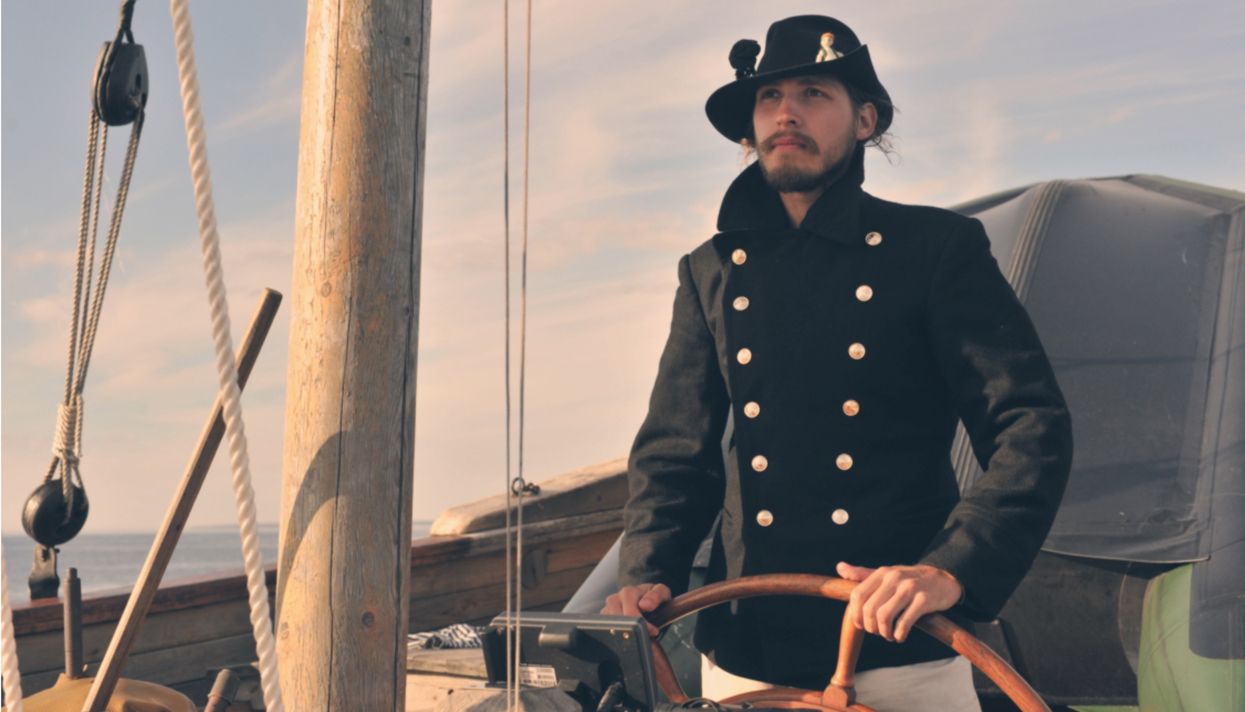
For almost two years in the Syrian captivity, the Russian traveler Konstantin Zhuravlev is located. In 2013, he was taken hostage by the opposition Islamist group "Lebani At-Tauhid". In the first months, the militants allowed Zhuravlev to contact Skype parents; A year ago, Islamists sent his relatives a video in which Zhuravlev asked for "the Russian government to take care of every citizen of his country." The militants tried to exchange Zhuravlev for women in prison at government Syrian troops in Damascus, and later on a colonel-opposition; Nothing came of it. What group of Islamists now holds Zhuravlev is unknown, while the city of Aleppo in which he was located is partially captured by the “Islamic state” ( the organization was recognized as extremist and prohibited in Russia ). Whether it was taken away from there is unclear; There have been no news about him for six months. Special correspondent of Medusa Daniil Turovsky tells the story of Konstantin Zhuravlev.
October 2013. In Syria, for two years there has been a war between the rebels from the Syrian Free Army (SSA) and the troops of President Bashar al -Assad. The Islamic State has not yet declared itself.
A bearded smiling man enters Syria from the territory of Turkey on a bicycle, on it (most likely) orange shorts, whose pockets are sewn by plush cubs.
At that time, Konstantin Zhuravlev is a little more than thirty, and in travels he feels confident: behind his back a three -month hitchhiking in the CIS and almost two -year circles of 37 countries (including Syria). Zhuravlev graduated from Tomsk State University of Management and Radio Electronics, worked as a programmer, but threw a boring life for the sake of traveling.
In the summer of 2012, he said that before traveling he was trying not to think about possible dangers. “I don’t think about any serious things that can happen: what can either kill, steal, beat, and something else,” he said. - If you begin to think about it, it accumulates like a snowball, and it can outweigh the desire to travel. We rename any troubles into adventure. ”
This time, adventures should have begun in sugar. In September, Zhuravlev came up with the project “alone with the desert” and was going to, as he wrote, live on the 21st day “in absolute loneliness, being tied with eyes closed with my ears, silently in the Sahara desert, in the western part of Egypt.”
By September 27, 2013, he reached the city of the Horde (Türkiye), from where he posted the last video from the series “alone in the desert” on the network. Zhuravlev in a green knitted sweater, standing on the Black Sea, under the song of the Turkish pop singer Tarkan, says in the camera: “Yesterday I turned out to be a fabulous day, I was quite accidental at the wedding. One person invited me to the wedding company, after which we went far to the village. There were a large number of people, there were a large number of dances. Everything is very fabulous. I also spent the night also remarkably, literally fifty meters from the coast of the Black Sea on the seats-caches with soft pillows. ”
On October 2, 2013, Zhuravlev wrote: “I leave the Horde. I'm going to the south of Turkey, to the border with Syria ... "
A few days later he crossed the Syrian border and, having traveled around the territory that state troops control, reached Aleppo. He was unlucky: as a result of the fighting, the city went under the control of the opposition free Syrian army. The militants of the Islamist group “Lebal AT-Tauhid”, which is part of the Syrian opposition, caught him as a “spy”.
The captive
On Saturday afternoon, October 12, 2013, a phone call was heard in the Tomsk apartment of the Zhuravlevi family. Relatives from St. Petersburg called. They recommended turning on the TV as soon as possible - they showed Konstantin in the news. So the Zhuravlevs learned that their son was captured.
A few hours later they were called by a friend Konstantin - Oleg Patsai. He said that he found a photograph of Passport Constantine in a Facebook of Syrian militants on Facebook; The picture was accompanied by a comment: a spy from Russia, which worked for Syrian and Russian intelligence, was detained, a video with recognition will soon be published. Under the post in this group (now removed), Zhuravlev’s friends wrote that Konstantin was actually a traveler and posted photos from his trips.

The next day, a post in Arabic appeared in the group: “We were sent photos and letters in which they claim that he is just an ordinary tourist. <...> We answer this that we, for our part, exclude the likelihood that he is an ordinary tourist. What is this tourism in the country in which fierce battles take place and whose people are killed, abducted and expelled from their native places? However, we are directing his case to the consideration of fair Islamic justice, which will decide. There is no more fair court than the trial of the fighters on earth jihad. ”
“We were in shock and did not know what to do,” Konstantin's mother Nadezhda Zhuravleva tells me. - Nobody contacted us. Neither the FSB nor anyone else called. We ourselves began to write letters and call the Foreign Ministry, the Syria embassy in Russia, our embassy in Damascus. ”
On October 15, the Foreign Ministry published the first official statement about Konstantin Zhuravlev. It said that the militants promised to decide on the future fate of Zhuravlev "following the results of the Sharia investigation." The ministry also noted that "the necessary steps are being taken to clarify the circumstances of the incident and the early release of a Russian citizen." “Unfortunately, K.V. Zhuravlev ignored the repeatedly published recommendations of the Russian Foreign Ministry to citizens of the Russian Federation to refrain from visiting Syria’s internal armed conflict. ” The representative of the Ministry of Foreign Affairs Alexander Lukashevich noted that "it is very difficult to determine the location where our citizen is, and those circumstances that opened him so irresponsibly to Syrian territory." Vice-Consul of Russia in Syria, Vasily Kartuzov, said that "he was perplexed, why a person, knowing about hostilities in Syria, went there unauthorizedly."
On October 16, the Mufti of the Tomsk Region Nurulla Haji asked to release Konstantin, who "fell into Syria by the will of Allah." The next day, Zhuravlev’s friends published an appeal in the group “alone with the desert”: “This is a test for all of us. Only together we will be able to go through it. Support, at least mentally. Send bright warm light from your heart to the hearts of people who now have Constantine. Tell me, let the big pain that the war brought them to dissipate, let their hearts open to unconditional respect and love. ”
* * *
In the spring of 2011, Syrian teenagers from the town of Deraa (not far from Jordan), inspired by the Arab Spring, painted the wall with anti -government slogans of the wall. They were detained, taken to the station and beaten. Locals in protest began to smash state buildings, the authorities in response shot a demonstration - according to human rights activists, about 100 people were killed. Protest shares spread throughout the country and led to war (over four years, more than 200 thousand people were killed in it, five million became refugees); Several generals founded a free Syrian army, small (but rapidly growing) militarized groups appeared in different regions and settlements, often Islamist groups. One of them was Liva At-Tauhid, which appeared in Aleppo in 2012.
* * *
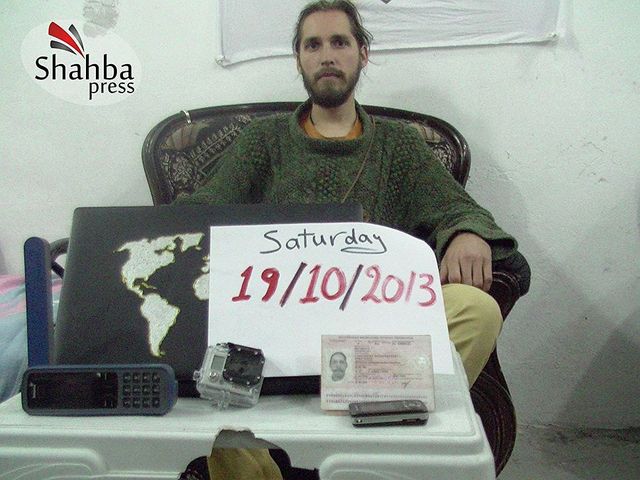
On October 19, 2013, the group militants first posted a photograph of the Russian Spy of Zhuravlev. On it, he sits in the same green knitted sweater, in which he appeared in the last video posted on September 29. Before him is his things: a laptop with a luminous map of the world on the lid, the GoPro camera, telephone, passport, satellite phone.
Negotiators and Sharia court
In the 20s of October 2013, Oleg Melnikov joined the liberation of Zhuravlev from the Alternative movement, a public organization that rescues people from slavery (usually from brick factories in Dagestan). In total, they, according to Melnikov, managed to free about 200 people throughout Russia from captivity.
Using his contacts, Melnikov was able to find the "Syrian Dagestanis." They tied him with the leadership of the Leban AT-Tauhid group.
In the first days of negotiations, the militants demanded that the relatives and friends of Zhuravlev go to the pickets in Moscow against the war in Syria, the Foreign Ministry and Vladimir Putin. No one came out. Melnikov asked relatives and friends why they refused to fulfill this requirement. They answered him: "What are you, we will be imprisoned, we are in Russia."

Closer to November, Melnikov, through the same Dagestan ties, agreed with the leader of the Leban Ath-Tauhid group by Abdel Cader Salekh that two faithful Muslims will fly to Syria who will perform at the Shariah court for Zhuravlev-they will confirm that he is not a spy and entrust him.
On November 13, 2013, two people from Dagestan and one Muscovite accompanying them arrived in the Turkish Gaziantep - a city on the border with Syria, a “new Casablanca” - a transit point for both militants and refugees. “We went to Syria, there are no borders there, the road, the tower, and then you just go,” one of the participants in this trip tells me. They reached the village four kilometers from Aleppo. However, the connection with the militants from Liva At-Tauhid suddenly broke off.
Nevertheless, Dagestan and Chechen militants fighting for the Syrian opposition were able to reduce the "ambassadors" from Russia with a group. It turned out that on the day of their arrival, Syrian aircraft inflicted a airline at the base of militants, as a result of which the leader of the group died - it was with him that Melnikov negotiated. The “ambassadors” were offered to get in touch later when a new leader appears. They refused to show the living Konstantin Zhuravlev in Aleppo: "You will scan the place and the Russian special forces will fly."
How Zhuravlev is contained
Little is known about the conditions for the conclusion of Zhuravlev. He himself, in a few conversations with his mother, who took place in the first six months of captivity, said that he was sitting in a dirty room without windows, he hears bombing daily. While in conclusion, Zhuravlev writes poetry almost all the time, sometimes communicates with Russian -speaking militants who came to him; They brought him the Qur'an.
Bringing the Koran hostage is already a tradition of Islamist militants. Many captives who were hostage in such groups took Islam eventually. It is known that the prisoner of the “Islamic state” James Fouley was also allowed to read the Koran, soon he accepted Islam and took the name of Abu Hamz.
It is possible to reconstruct the conditions of conclusion on the basis of the stories of other Syrian captives. In 2013, Russian engineer Viktor Gorelov and two other hostages successfully exchanged 11 rebels from militants. After the release, Gorelov said that he was guarded, among other things, 14-year-old teenagers. One of them often put a Kalashnikov assault rifle to his head. Hostages were transported from place to place eight times; The premises in which they were kept were always similar - a room, a rug, a quilted blanket. There were no problems with food: they fed twice a day, they gave chicken minced meat and canned tuna; provided with cigarettes. Before each dinner, they demanded to wash their hands.
Other hostages that fell into Islamist groups reported that they were regularly beaten, drowned in water, demanded passwords from accounts to check social networks and electronic boxes for cooperation with special services. Their names google, trying to find a connection with the CIA and the FSB.
* * *
On the evening of February 6, 2014, Konstantin Zhuravlev for the last time contacted his parents on Skype (Zhuravlev’s father shot this conversation in the video). He called his account.
During the video call, Zhuravlev sits in front of the computer in the gray room, several people speak Arabic from behind, one of them shows something on the computer, Zhuravlev nods: “Yeah, I see” (“Yes, I see”). He looks into the camera: "Do you hear me?" “Yes, we hear you, son, we hear,” his mother answers him. “In general, these are good people here, but the only thing, now they tell me that our government ... no one will do anything ... say only you, let your father say nothing, only your voice ... Listen, take care of your health, because they can call you, they can say that they kill me,” says Zhuravlev. - Here, if the government is not ... Hello ... yes, yes? " The connection breaks out, he calls back and continues: “If no one will do anything, they will kill me, but you, please do not worry, you always take care of your health, and always think that there is God, even if they kill me ...”
Correspondence with militants
In the early spring of 2014, Khuravlev was attracted to the liberation of the Arab Syrian, Muiz Abu Alejdael, a former employee of the Syrian special services, who became the opposition and emigrated from the country. In Moscow, he had already lived for 11 years by that time, worked in organizing assistance to refugees “Civil assistance” and was going to open a school for children of Syrian refugees in Noginsk near Moscow.
Abu Aldzhdail was able to find in Turkey a friend from Aleppo (the city in which Zhuravlev was kept). His name was Jamal, he was also an opposition, but did not want to fight and left. He has many acquaintances in the city, including in the Liva At-Tauhid group. Abu Alejdail told him that he does not support Assad, but sympathizes with the free Syrian army. After a few days of communication on Skype, Jamal promised Muiz that people from the group would contact him on Facebook.
In early April, Abu Muhammad, the second person in Lebani At-Tauhid, wrote to him on Facebook: “Salam! What are your proposals? "
Abu Alejdael again spoke about himself, about his attitude to the war in Syria. The militants asked him to tell about Konstantin. Muizu threw them videos and photos from travel.
The militant admitted that he sees with Zhuravlev every day and considers him a "very kind person." He promised to talk to the new leader of the group - a kind of sofa. A week later, the leader of the militants himself contacted Abu Aldedal. Mudar immediately abandoned the money ransom and offered to exchange Konstantin for women who are captured by government forces in Damascus. Abu Alejdail asked to send a video confirming that Zhuravlev was alive. April 11, 2014 from the group they wrote to him: “Salam, brother! What can he say on the video? How to shoot a video? What mood? Do he want him to say how we arrested him? "
A few days later the Islamists sent a video (this happened two months after Zhuravlev’s farewell conversation with his parents). On it, Konstantin sits in a well -lit room at the table and wrinkles his passport in his hands. He seems to say that he was driving in sugar, he says that he was in Syria three and a half years ago and wanted to return to the country to "take the pain that they experience during the war." “And when I was heading to Egypt, I had a great desire to drive through Syria in three or four days,” he says. - I thought it would not be a problem. When I left Turkey, they told me that they would arrest me. I drove with such frivolity - and on the first day I was arrested. It was six and a half months ago. They treat me well. But you understand that everyone wants freedom, wants to be free. Six months is a long time. For nothing. I'm not a thief, I'm not a killer, I'm not a soldier. I would like to become free. I wanted our Russian - mine - the government, the Russian government, care not only about the country as a whole, but also about every citizen of my country. ”
“At that time, it seemed that it would not be difficult to do, because women [who wanted to exchange for Konstantin Zhuravlev], these, in fact, did not commit any crime, were simply the wives of those who went to fight against the regime. We wrote and transferred this proposal to the Foreign Ministry and the Syria embassy in Moscow in writing, ”says Oleg Melnikov from the Alternative movement. The Embassy of Syria demanded a last list of prisoners. The Foreign Ministry, according to Melnikov, did not answer.
Muja Abu Aldzhdail informed the Islamists about the request of the embassy and proposed on the occasion of May 6 (in Syria the day of the martyr is celebrated) to release Zhuravlev. On April 30, 2014, he received an answer: “We want our women's launch women at Assad. They live in bad conditions. We understand that this is a difficult question. We believe you that you are an honest person, but we do not believe the fascist regime of Assad. We cannot give the names of women. 1) there is no difference between one and the other woman. They are all our sisters. 2) If we give the names of women of women, then there are no guarantees that they will not be killed. 3) On the holiday of May 6, every year they liberate people from prisons, let them release women from prisons, then we will release Constantine. ”
Women were not released. There were no news from the group for several months. Мельников тем временем уехал на семь месяцев в Донбасс, где стал членом комиссии по делам военнопленных в ДНР.
В августе 2014 года Абу Алдждаил написал группировке: «Если что случилось, если Константин умер, то скажите — скажу всем, что умер». 5 сентября 2014 ему ответили: «К сожалению, Константин уже не у нас, брат». Выяснилось, что его забрал «Исламский фронт» — объединение всех исламистских группировок Свободной сирийской армии. Через Абу Мухаммада (группировка «Лива ат-Тахуид») «Исламский фронт» передал новые требования: Журавлева можно обменять на полковника, находящегося в плену в Дамаске.
Олег Мельников и Муиз Абу Алдждаил передали и эту просьбу в МИД и посольство Сирии в Москве.
«Страна бросила своего, и это не ощущение, — говорит Мельников. — Мы отсылали письма в МИД, звонили, мать передавала им письма про женщин и полковника. Что отвечал нам МИД, единственная инстанция, которая может щелчком пальца повлиять на это? „Мы делаем все возможное для его скорейшего возвращения“. Казалось бы, очень просто договориться с Асадом. Он пойдет на все что угодно, чтобы угодить России. Но все это закончилось ничем».
Официальный МИД раз в несколько месяцев сообщает, что «решает вопрос»: «мы находимся в плотном контакте с официальными властями Сирии и сирийской оппозицией, обращаемся к международным и региональным партнерам, имеющим влияние на отряды вооруженной сирийской оппозиции» (февраль 2015), «предпринимаем активные усилия по его освобождению и возвращению на Родину» (ноябрь 2014), «необходимые меры с целью сохранения жизни и здоровья и освобождения Журавлева МИД России приняты» (август 2014), «мы активно занимаемся этим, вопрос достаточно сложный» (февраль 2014 года).
* * *
Осенью 2014 года до Абу Алдждаила дошли слухи о том, что Журавлев, возможно, попал в «Исламское государство» — якобы кто-то видел его документы в одной из тюрем, где также содержался Сергей Горбунов.
Российский инженер Сергей Горбунов, по данным The New York Times , находился в тюрьме сирийского города Ракка вместе с десятками иностранных заложников «Исламского государства», в том числе Джеймсом Фоули и Стивеном Сотлоффом. США считают, что тюрьмой в то время руководил Тархан Батирашвили (Умар аш-Шишани, сейчас один из лидеров ИГ, родом из Панкисского ущелья Грузии — «Медуза» подробно писала о нем ).
В октябре 2013 года боевики опубликовали видеообращение Горбунова, в котором он по бумажке зачитал требования обменять его на некого Халеда Сулеймана из Саудовской Аравии, которого захватили правительственные войска в городе Хомс. The New York Times сообщала, что весной 2014 года Горбунова казнили: его вывели на улицу и застрелили, казнь сняли на видео и показывали другим заложникам: «Вот что с вами будет, если ваше правительство не заплатит». МИД России в ответ на публикацию тогда заявил, что «проверит информацию», а замглавы МИД и спецпредставитель президента по Ближнему Востоку Михаил Богданов отрицал существование Сергея Горбунова.
«Самое удивительное в этой истории то, что у него как будто совсем нет никаких родственников и друзей, потому что его судьбой никто не интересуется, — говорил Богданов. — Когда нам ссылаются на запись его обращения в ютьюбе, у нас складывается впечатление, что это никакой не Сергей Горбунов: человек говорил по-русски, но с сильным восточным акцентом. Поэтому у нас большие сомнения, тем более что никаких запросов в соответствующие российские инстанции не поступало. Может быть, это не гражданин Российской Федерации».
Эмигрант Абу Алдждаил сразу же после появления слухов о Журавлеве в «Исламском государстве» написал своему человеку из «Лива ат-Таухид». Через пару недель боевики ответили: «Извините, у нас тут война, не до фейсбука, тут ИГИЛ близко подошел к городу». Но все же сказали, что Константин все еще у них, отказавшись подтверждать эту информацию видеозаписью или звонком по скайпу. «ИГИЛ мог захватить территории „Исламского фронта“ или они могли его просто поменять на кого-то из своих», — предполагает Абу Алдждаил.
Источник «Медузы» на территории, захваченной «Исламским государством», не смог подтвердить или опровергнуть нахождение Журавлева в группировке, добавив, что информацию о том, есть ли в группировке российские заложники, «не разглашают» (о судьбе пятерых иностранных заложников ИГ в последнем номере подробно написал журнал The New Yorker).
Письма Путину
В середине декабря 2014 года Надежда Журавлева искала журналиста, который смог бы задать вопрос о ее сыне на ежегодной пресс-конференции Путина. Найти такого не удалось — и она сама записала видеообращение к президенту.
Стоя рядом с новогодними гирляндами, Журавлева коротко рассказывает биографию сына. «Всюду Константин представлял простого русского парня, искреннего, улыбчивого, человека с добрым сердцем и открытой душой, — говорит она. — Во всех странах Костя общался с обычными людьми, они рассказывали друг другу о своей стране, пели песни, даже русскую „Катюшу“ исполняли. В своих фотографиях Костя показывает красоту нашей планеты, обычных людей, говорит о том, что все мы — разные, но у нас один дом — на единственной зеленой планете. There is no other such. Ее нужно защищать. Сейчас наш сын в большой опасности. Владимир Владимирович, мы верим в то, что вы можете помочь нашему сыну вернуться домой, в Россию. Я видела на телеэкране казнь американских журналистов, я видела казнь британского 50-летнего путешественника, слышала о Сергее Горбунове. Мне страшно за жизнь моего сына. Я со страхом слежу за информацией из Сирии. Пока Костя жив, я прошу вас, я умоляю вас, помогите моему сыну вернуться домой».
Президент России Владимир Путин не ответил матери Константина и ни разу публично не выступал по поводу российского заложника. «Мне не обидно, что он не отреагировал, нет, — говорит Надежда Журавлева. — Наши письма в Администрацию президента пересылали всегда в МИД, указывали, что МИД даст ответ».
«Как МИД занимается освобождением Константина, нам не говорят», — сказал мне друг семьи Журавлевых и путешественник Евгенией Ковалевский.
В конце декабря 2014 года Надежда Журавлева поехала из Томска в Москву. «Мы рассказали в МИДе, что нам предложен обмен на одного человека ( имеется в виду полковник сирийской оппозиции — прим. „Медузы“ ), — рассказывает Журавлева. — Этот вопрос мы обговорили. Мы сходили вместе с представителями консульского отдела МИДа в посольство в Сирии в Москве. Фамилию этого полковника пообещали передать в Дамаск. Но обмена так и не вышло. Но хочется верить, что они что-то делают, конкретно — не знаю, что, они не говорят». «Несколько раз говорилось про обмен заложниками, но это не увенчалось успехом, — добавляет Евгений Ковалевский. — Сейчас МИД говорит нам, что находится в процессе вызволения, и не стоит общаться с прессой и будоражить [ситуацию] вокруг Кости».
В последний раз Журавлева разговаривала с МИДом в середине июня 2015 года. Ответ был тот же: «Вопрос решается».
* * *
В начале 2015 года Абу Алдждаилу написал его источник в «Лива Ат-Таухид» Абу Мухаммад; через него приходила вся информации о жизни Журавлева в плену. Абу Мухаммад сообщил: «Сирию мы потеряли, здесь все хуже и хуже, я уезжаю за границу».
Под «хуже и хуже» он, скорее всего, имел в виду, с одной стороны, наступление «Исламского государства» (оно захватывает все большие территории, у него все больше последователей, боевики готовятся к окончательному захвату Алеппо, в котором содержался российский заложник), а с другой стороны то, что сирийские территории ежедневно бомбят силы Международной коалиции (в среднем они наносят 30 авиударов в день). При этом члены многих исламистских группировок, входивших в Свободную сирийскую армию и «Исламский фронт», бежали из страны или присоединились к ИГ.
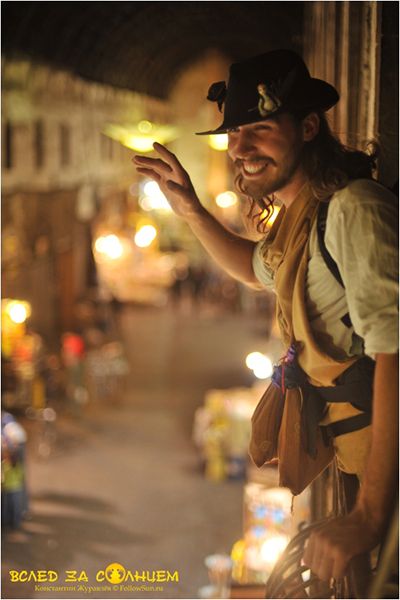
После отъезда Абу Мухаммада получать информацию из Сирии стало еще сложнее — теперь приходится задействовать посредников. В последний раз о том, что Журавлев жив, Абу Алдждаилу говорили в январе 2015 года, но анонимно и без всяких видеоподтверждений.
О захвате Журавлева в плен его родители узнали 12 октября 2013 года. Таким образом, к 8 июля 2015 года он находится в заложниках, как минимум, 634 дня.
Вестей от Константина Журавлева не было уже шесть месяцев.
Daniil Turovsky
Moscow