
Translated material
"What is it - not to apply, but to take a blow"
The historian, who offered the children to write denunciations, told Medusa why he did it
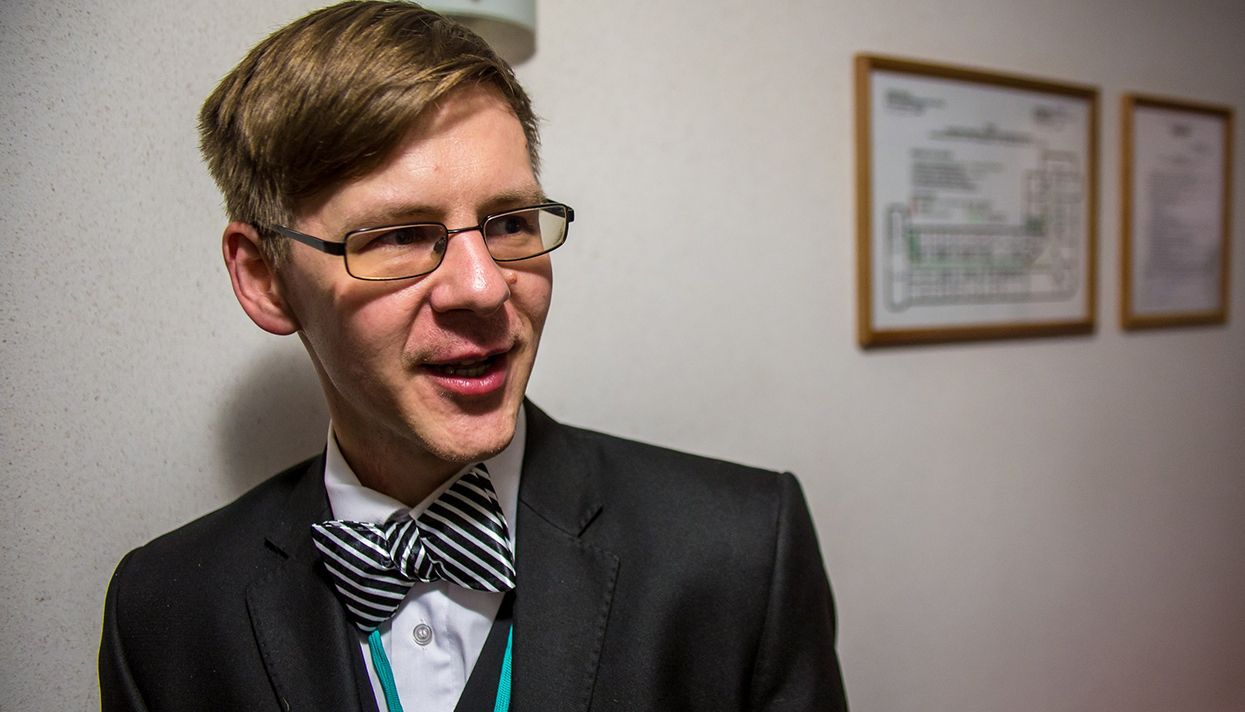
The 32-year associate professor of the Historical and Philology Faculty of Chelyabinsk State University Alexander Fokin during classes with children of 10 and 11 grades asked them to write denunciations-in an arbitrary form. Fokin specializes in Soviet history; At that moment, he and the students passed the repression of the 1930s. The children did not refuse, and Fokin on such an occasion left an ironic entry on Twitter: “We pass Stalinism, gave schoolchildren the task of writing a denunciation, only one out of 16 refused to do this, and one of the denunciations was on me.” In a day, the post has collected more than a thousand retweets, and Fokin became the hero of the Day of the Russian Internet. He was praised for a bold experiment and criticized that he humiliates children. About how everything was really, the teacher told Andrei Kozenko in an interview with the Medusa specialist.
- Alexander, tell us what kind of lesson, the children of what age were there and why did you offer them these denunciations to write?
- In general, I work at Chelyabinsk State University, so it was not a lesson at school, it was a course of additional classes for those who want to get more knowledge about history and prepare better than the school curriculum. Naturally, we go through different topics. And, of course, when we pass the 30s of the twentieth century, we first talk about repressions.
I talked about the fact that there are two main approaches to those events. Some have guilty of the Soviet system, they say that society has become a victim of that regime. Other authors say that the population itself was involved in the process of writing denunciations, using them to satisfy their material needs, for example. I printed them part of the denunciations of that era, we analyzed them, tried to understand the language. We watched what arguments the scammers used, how they formulated their claims. And there it was possible to conclude that people were really willing to join in the processing process. Then I suggested that students try to reproduce the text of the denunciation of that time to see how interesting they will be how much they succeed.
- We are talking about students of which classes now?
- There were tenth graders and eleventh graders.
- How did you form a task for them?
- I just suggested that they write a denunciation in free form, not limiting themselves to the choice of funds. In fact, I now think about whether I did the right thing or not. It was still necessary to reformulate the task and ask them to write a denunciation on themselves. So that they feel the reverse power of this phenomenon, feel like this - how it is not to apply, but to take a blow. And it so happened that they wrote denunciations on those with whom they communicate, whom they constantly see.
- Did the children have an option to refuse and not to do this task?
--- This was not a classic school task, and his failure did not have any consequences- no doubles or reprimands. This was proposed to do it at will.
- Children approached the task with interest?
- In general, yes. True, some of them followed the path of the least resistance. Then I found out that there is such a site on the Internet - "Stalin is not on you." There you score in a special form the name and surname of the one you come to, and the site generates a little stereotypical text with the wording of that time. Children from phones and tablets opened this site, then rewritten what happened on paper. And some approached the question creatively.
- Who was reported to?
- Mostly on friends and those people with whom they are constantly communicating. The arguments from the series were brought: my acquaintance of the book in German, and, probably, he is a spy.
By the way, the denunciation of me was best formulated. The language of the Soviet era is very competently. Like, I tell anti -Soviet jokes, in other ways I can evolve the surrounding reality. It turned out to be quite high -quality text. Realistic.
- On the same Twitter, you ran into the sea of criticism for such a task. Agree with her?
- Partly. Both with colleagues and in social networks, we already discussed this. I agree that it was necessary to formulate the task in another way, to approach the topic more neutral. As for the tweet, from which the whole reaction began, then two things need to be understood. Firstly, a limitation of 140 characters; Secondly, I am engaged in stand-ups, participate in comedy television projects. And on Twitter I test my jokes - funny or not. This tweet was also conceived as a future joke. Those who know me understood this - and they retained as a sign of what they like. But then ...
- Beautiful. The joke was a success - this must be admitted.
- Then I look: people are already answering both me and [Alexei] Navalny ( a politician who has more than a million subscribers on Twitter, also retweeted Fokin’s entry - approx. Medusa ). Streams of insanity began on the Old Testament scale. The joke became an anti -noise. And you know, I agree that it is radical, but all this should be considered in the context of time. If we wrote a petition to Ivan IV in that lesson, people would react much less to this. And such a reaction to Stalin is a sign of our days. We already have the state of society reaches the scope of the civil war. Only then they fought with checkers and nagans, and now retweets and memes.
- And you yourself what conclusions from this story draw from this story?
- For the future - when you are joking, it is necessary to write in brackets - “joke”. So that everyone understands exactly. But seriously, and experiments should be approached more carefully. But the reaction must be brought up in itself, responsibility, to think. Here I have some inadequate people on Twitter said that they themselves wrote on me in the FSB. And now it’s very interesting how it all ends - nothing will happen or will still be called for a preventive conversation. This will be the story of how much society has changed since the 30s and how far we have gone from there.
Andrey Kozenko
Moscow