
Translated material
Two episodes were removed, two added
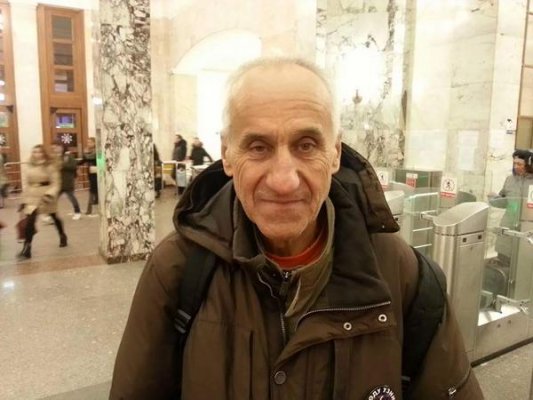
Activist Vladimir Ionov on the evening of July 10 was a final charge under Art. 212.1 of the Criminal Code (repeated violation of the procedure for holding a meeting or picket). The investigation in his case is completed.
According to the prevailing practice of applying this article included in the Criminal Code in the summer of 2014, to initiate a case, it is necessary that the accused should be held four times to administrative responsibility for violations of public activities. The criminal case against Ionov was instituted on January 16, 2015, and then violations were mentioned in the investigation documents, allegedly committed activists at the events onSeptember 13 and 14 , 2014 and January 10 and 15, 2015. In the first three cases, it was about single pickets. At the same time, on January 10, when Ionov stood with a poster in support of the editorial office of the French magazine Charlie Hebdo, which was attacked by radical Islamists, a provocateur stood next to him, thereby turning his single picket into a massive one, requiring coordination with local authorities. On January 15, Ionov entered the Manezhnaya Square - earlier on this day, the sentence was planned for this day in the case of Oleg and Alexei Navalny, but it was postponed to December 30, 2014; On January 15, representatives of the Anti -Maidan movement entered the square, but the police detained mainly not them, but the small protesters.
The lawyer of Ionova Olga Chavdar told the OVD-Info that both September episodes are currently excluded from the prosecution, but two later were added on single pickets on March 21 and May 11, 2015.
According to the ATS-Info, March 21, Ionov was detained on Pushkinskaya Square at the moment when he was not in the picket, but was on the sidelines (at the same time, Mark Halperin, another accused under Article 212.1 of the Criminal Code, was detained in the picket). On this episode, Ionov refused to testify.
On May 11, Ionov, along with other picketers, was detained near the SIZO Sailor Silence, where activists stood with posters in honor of the birthday of Nadezhda Savchenko in the conclusion of the Ukrainian pilot. Ionov was delivered to the Sokolniki police department, where he was greatly beaten . As Maria Ryabikova, the two policemen, who were beating Iona, was told by him, “pushing him into a cage ... They tore off his boots and threw them out, leaving him barefoot.” According to Chavdar, the activist had bodily harm, which they stated.
“From the defense side, applications were filed to make evidence from the police departments, where Vladimir Ivanovich was delivered, as well as interrogations of witnesses,” says Chavdar lawyer. - At present, as far as I know, only two defense witnesses have been questioned. The material was collected in two volumes. The preliminary investigation bodies said they requested documents from the police departments. Until we get acquainted with them, we will not know what is in the case, except for the materials of administrative cases. ”
Ion and the lawyer will have to get acquainted with the materials of the ions next week. They can make various petitions and complaints. After that, as Chavdar says, an indictment must be drawn up, along with the case file, it will be sent for approval to the prosecutor’s office and, if the prosecutor’s office approves, the criminal case will be submitted to the court.
Ionov as a “55-year-old man” falls under the amnesty adopted in April 2015 on the occasion of the 70th anniversary of the Victory. However, according to Chavdar, the 75-year-old activist “does not consider it necessary to submit an application for the application of an amnesty act against him, since he does not admit and believes that perhaps the judicial authorities will figure out and, possibly, will pass an acquittal against him.” However, even if the verdict turns out to be accusatory, but will be issued before the amnesty comes into force for six months, the ions can still be amnesty, the lawyer notes. Chavdar believes that the judicial investigation will not last long: “Now let's see which of the witnesses will be declared the prosecution, we will declare our own. There is nothing more to explore there. ”