
Translated material
Domestic dull
Alexander Mindadze, Andrey Proshkin, Alexey Fedorchenko, Vladimir Khotinenko, Vasily Sigarev, Irina Evtheeva - the films of these directors will soon appear on the country's screens. The New Times Film Overall talks about the most interesting domestic new products of the year
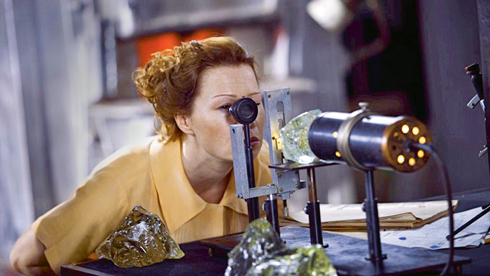
The film by Alexander Mindadze “Dear Hans, Dear Peter” was accused by the Ministry of Culture of falsifying the history of the scandal with the film by Alexander Mindadze two years ago. “Dear Hans, Dear Peter”-his third directorial work after “separation” and “on Saturday”, and before that the almonds were famous as a screenwriter-primarily (until 2003) as a representative of the seemingly inseparable creative pair of Abdrashitov-Mindadze. In the late USSR and modern Russia, only Kindara Sokurov, Arabs, competed with it. Why do we need these Fritz in mid-2013, the Ministry of Culture, justifying the censorship expectations of the Kremlin authorities, refused the “sweet Hans, to the dear Peter” to state support, since he did not undergo an examination of the military-patriotic and socio-psychological councils (it turns out that there are such people under the Medinsky department!, Probably, the Council of the Holy Inquisition will also arise). The script was charged with falsification of history on the eve of the 70th anniversary of Victory. But there are no military operations in the film. And there is a very unexpected story based on real facts in the confusing and conflicting Soviet-German relations of 1939-1941. The bottom line is that on the eve of the Great Patriotic War, after the signing of the Molotov -Ribbentrop Pact, between the USSR and fascist Germany, a strange -beneficial trade was established. The USSR delivered raw materials to Germany, which was soon used for the war against us. Germany is to us - equipment and specialists who can use it. In May 1941, four German engineers continue to work at one of our factories, trying to create a new-sample optical glass suitable for binoculars, sights, etc. They have failure for failure, which leads the German team to scandals and almost fights among themselves. Starring - actors from Germany, three quarters of conversations - in German.
The characters are freaking out, because they expected a quick result and have already planned how to spend a future fee in Germany. As a result, one of the Germans (the same Hans that is mentioned in the name) in a fit of hysteria overheats the stove where they melt the glass - this, according to Mindadze, the shell of the upcoming war has already exploded in his soul. Later it turns out that this particular overheating will lead to the creation of the desired optical glass, which will be used by the Hitler army. But the furnace also explodes, which leads to the terrible death of two Soviet workers - men and a young girl. The only witness is our Peter (also mentioned in the name), who does not know what to do: you admit the authorities - they will declare an accomplice. And it is not known either a labor feat, or a spy sabotage. The peculiarity of Mindadze is that he does not explain anything to the viewer. Annotations to his directorial work are only confused. He puts films not about events, but about people - about their feelings and about their psychoses. “Dear Hans ...” - in essence, a film about the foreboding of war.

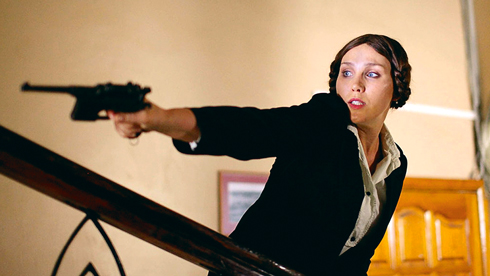
Elena Lyadova, playing in the film by Andrei Proshkin “Orlean”, received at the MMKF prize as the best female role almost Bulgakov “Orlean” Andrei Proshkin won a prize for the best female role at the Moscow film festival, which was awarded Elena Lyadova. Andrei Proshkin, among the luck of which - “Moths of Moths”, “Soldier Decameron” and “Horde” - before “Orleans” shot Minnesota, also included in the list of his best paintings. Made according to the script, you know who? Alexandra Mindadze. “Minnesota” is not about Minnesota, but “Orlean” is not about Orleans. The last two films of Proshkin, the Horde and Orlean, were made according to the scenarios of Yuri Arabov. The old proprietary domestic cinemas (Abdrashi -Mindadze, Sokurov -Arabov) decompose, new ones are formed. Alas or cheers, it is still difficult to predict. After the Orleans show, the Arabs at the MMKF stated something almost scandalous: his scenarios were always grotesque, but the directors (it turns out that, first of all, his former friend Sokurov) did not understand this and brought them to ordinary dramas. But the truth: is it really possible to assume that Sokurov is inclined to farce, grotesque, generally to humor? Andrey Proshkin is different. Arabov said about him that he dared to build a film of bad taste on the basis of Orleans. Bad, if, according to Arabov, to compare with the "horde" - a tape, relatively speaking, high taste. “Orleans” is about the domestic deafomani, which can be perceived as a mirror of modern Russia and its ideology. The characters of the hairdresser are discussing the upcoming wars with America (which we will pull) and China (this one, they have no more population). The doctor cannot feel the patient’s pulse, who just had an abortion, but comforts it with the argument: “Now there should be no heart. Time is such. " In this surrealist reality, where the Kaliningrad sprats managed to replace the Latvian, abolished due to sanctions, a punisher-explorer with the face of Viktor Sukhorukov appears. Either an angel, or a newly -wound Woland. He uses the main human weakness - an awakened conscience. The demon torments not the last scoundrels, but ordinary people, and this is significant in the film. Who is his victims? A hairdresser who has so many abortions that would have enough for a nursery. A surgeon who not only makes abortion to women, but also, a womanizer, embarrasses them for children. The head of local cops. In the film, it is easy to find obvious links to “Masters and Margarita” - in particular, on the stage in the Variet (but everything happens in the circus). Bottom line: Some critics accused the film in Bulgakovshchina. What is the problem, gentlemen? We have in literature, cinema, theater, for example, Dostoisans. This does not bother anyone. Why is the Bulgakov embarrassed you, whose followers do not rejoice?

Irina Evtheeva, an “Arventur” - a mixture of playing and animated cinema aesthetic and social cinema is becoming more social, and on the screens you will almost not find “art for art”, which is also bad - after all, in this case, national cinema is incomplete. A rare example of a film made of pure love for art is Irina Evtheeva, who received a special prize of the jury MMKF this year. The action takes place in the fictional country of Arventur, where the hero is tolerated by the power of imagination from the hungry Petrograd 1921. The ingenious Evteeva makes paintings what no one is capable of. First removes them in the traditional way using actors. And then, on the basis of the shot material, the firmly draws the film on the glass. She took off “Arventur” for two weeks, and then drawed for years. And no computer. "Arventur" was made according to the books of Alexander Green and Chinese mythology. And this is not just a mixture of animation and cinema. This is a special type of creativity, combining cinema, painting and music.
The heroes of the “Angels of the Revolution” are ready to fight for the victory of communism in the “angels of the revolution” by Alexei Fedorchenko, too, a lot of fantasized. They are immersed at about the same time that the Greenovskaya part of Arventur, and he is inhabited by similar characters - art people in a situation after October. But Fedorchenko shot much more social cinema. This is one of the most famous to the world of domestic directors. Its pseudo -documentary “first on the moon”, and especially “oatmeal”, received as many international awards as his other colleagues did not dream of. “Angels of Revolution” is an aesthetic farce about artists who sincerely believed in communism and in radical reconstruction of the world, thanks to which a genuine artistic avant -garde will be born. These naive angels of the revolution - a poet, artist, actor, film director - are ready to go even to the north to re -educate shamans. But they do not assume that the revolution itself will pass through them with a steel rink.
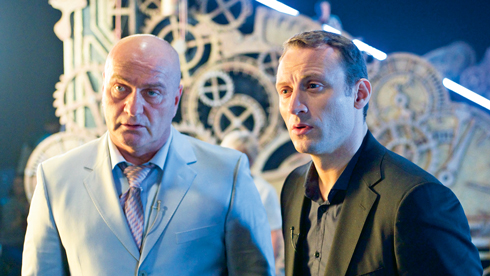
Patriot (Alexander Baluev) and a political scientist (Anatoly Bely) in Vladimir Khotinenko’s film “Heirs” by Rush Tuday, already relevant films about the country and the people tried to make such famous directors as Vladimir Khotinenko and Vasily Sigarev. It is impossible to write a short review of the “heirs” of Vladimir Khotinenko: the film is evil, ironic, very ideological, multi -layer. But ignoring it in the review of the most interesting domestic new products of the year would be strange. Heirs are, in fact, we, modern Russians who had great ancestors - for example, Sergius of Radonezh. In connection with the 700th anniversary of his birth, a talk show is organized on TV with the participation of a traditional set of speaking goals: political scientist, historian, patriot, priest, pop-diva and even a children's doctor. In the course of the case, the host learns that his program is being closed, and since there is nothing to lose, he is on the attack on all invited. The television ORs familiar to Russia begins. It is not surprising that it was Khotinenko who decided to make a tough film about the past and present country - this topic was always visible with him. In addition, Khotinenko knows the cuisine of the talk show (and the film is partly about it), since it is the only intelligent talk show about the cinema on our TV.

The main role in Lake Lake was played by Gosha Kutsenko “Country Oz” Vasily Sigarev, the author of the gloomy “top” and the ironic short film “#Crimeanash”, mounted from an advertising tourist tape - a comedy about our everything. Namely: about the celebration of the New Year, in which, as in nothing else, the national character is revealed. The main object of Sigarev hatred was the so -called good New Year's movie. Many famous actors decided to participate in the project up to Inna Churikova - it is expressed from the screen by truly Russian words, which are now prohibited by the State Duma. Photo: kinopoisk.ru, ruskino.ru, naslednikino.ru