Date
Author
Source

Preserved copy
Translated material
America through the eyes of Russian writers
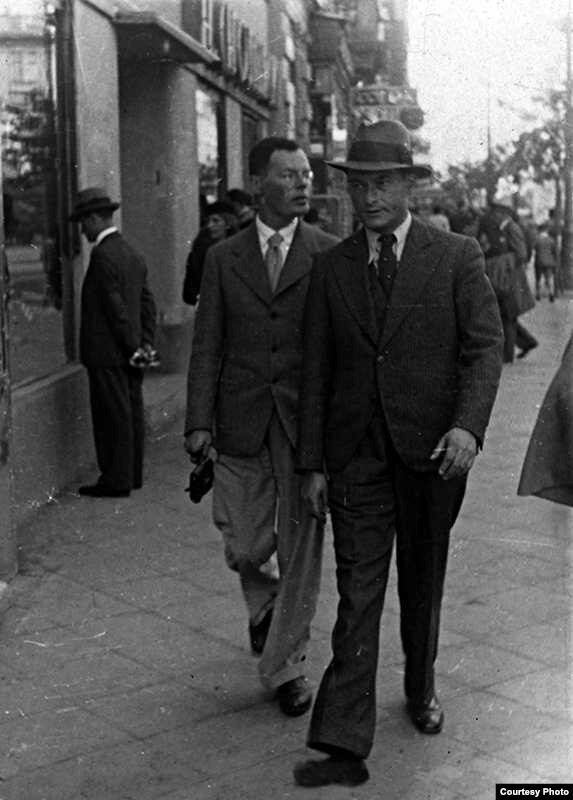
Ilf and Petrov in the USA. The historical report of Vladimir Abarinov. Epilogue: how to open America
Alexander Genis: Today, when relations between Russia and America, have become the most intense from the time of the First Cold War, Ach decided to recall how it all began. In a series of programs, we talk in detail about how the USA our famous writers saw.
Listen and read the fourth program of the cycle of historical reports by Vladimir Abarinov “Russian writers in America”. The hero of the first episode was Maxim Gorky, the second was Sergey Yesenin, the third was Vladimir Mayakovsky.
(Completely these materials can be found here: Gorky , and here Yesenin , and here Mayakovsky ).
In the fourth and last historical reporting of the author of the entire cycle of Vladimir Abarinov, we will talk about the most successful Russian book about America - “one -story America” Ilf and Petrov.

Vladimir Abarinov: “Happiness wanders around the country in long white clothes, singing a children's song:“ Ah, America is a country, they walk there and drink without a snack. ” So says Ostap Bender to the Antelope crew to the crew. In September 1935, the authors of the "Golden Calf" showed the opportunity to personally check whether this is so. On a business trip of the newspaper Pravda, they went to Europe, and from there to the United States. My interlocutor today is a Moscow journalist, historian and the same as me, fan of Ilf and Petrov Nikolai Rudensky.
Nikolai, the daughter of Ilf Alexander Ilf, is now the deceased, writes in the preface to the latest edition of “one -story America” that he does not know what task to Ilf and Petrov then the then editor -in -chief of Pravda Lev Mehlis. However, her preface is entitled as follows: "Stalin sends Ilf and Petrov to the country of Coca-Cola." There is an assumption that this business trip is associated with the establishment of diplomatic deletions with the United States, the need to insulate the image of America. We can also recall that in Washington they were accepted at a high level, a reception was arranged at the embassy on the occasion of their arrival, and the Consulate General of Consulate with them rushed with them as a written trading. Does this say that the task came from the leader himself?
Nikolai Rudensky: It is unlikely that we are talking about some kind of task from the very top. It was still the 35th year. This is a slightly different time, not 37th and subsequent years. They were quite famous writers, and a trip to Kapstran for this time was not something exceptional. Apparently, initially it was about the book, but some essays were printed in Pravda while they were still in America. As for the precious currency, they had to get something there and received novels for the publication, then they wrote even a sketch of the script in Hollywood.
And besides, we know from the documents that the Soviet government, even in the most difficult years, did not skimp on currency for people such as, say, Alexey Tolstoy or Vladimir Nemirovich-Danchenko, who went abroad to improve health.
With the restoration of diplomitions, I would not directly associate it. Still, this is a somewhat different time-the diplomaticity was restored in 1933, and the trip-the 35th, the beginning of the 36th. And this assumption that it was necessary, well, or something, it is unlikely that it is also unlikely to tint the image of America, it seems to me thoroughly. In the period of preparation of the restoration of relations, such a task would make sense, and rather, it would still be about to embellish the image of the Soviet Union in the eyes of the American public.
One way or another, even before the restoration of relations, the American novel by Pilnyak “O'Kay” was written, of course, much more ideological and evil than “one -story America”. And Alexander Ilyinishna herself, acting as the publisher, the full version of the book with the application of the letters of Ilf and Petrov from there, she says carefully - that she does not know if the task was, but in any case the book was clearly written on the assignment.
And I, in general, is inclined to agree with her, although, of course, there are some places there, which, perhaps, were written insincerely and in the calculation of the ideological, or something, acceptability to facilitate passage through censorship. But in general, the book turned out to be quite sober, impartial and benevolent in relation to America.
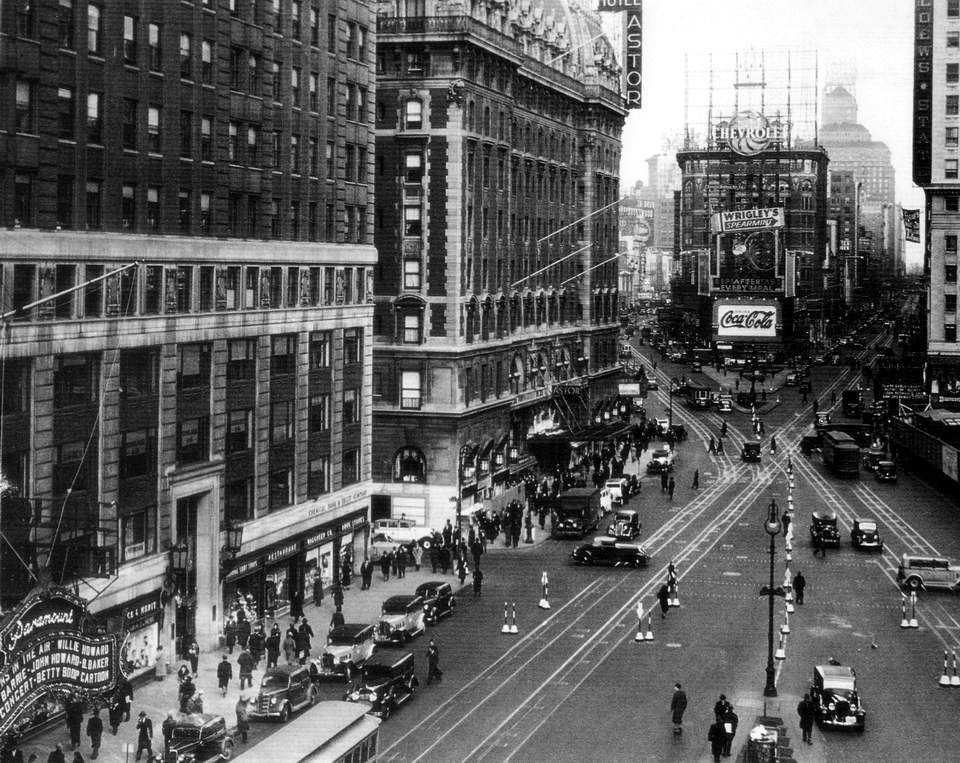
Vladimir Abarinov: Once a teenager I read a book with enthusiasm-it was very different from the Soviet agitprop. With new interest, I opened it when I myself first visited America. And there was an amazing thing. Much of it was perceived as if I wrote it myself, sensations coincided-here, for example, about New York:
"This is a painful city. It makes you look at itself all the time. From this city, eyes hurt. But it is impossible not to look at it."
For my taste, it is said perfectly. And very well conveys the first impression of New York. Moreover, in my case, the similarity was absolute: I stopped exactly at the same hotel in which Ilf and Petrov stopped, only then it was called “Shelton”, and in my time it was called “Marryotes East Side”. And just like them, I went out on my first evening in New York on the street, admired the Waldorf-Astoria hotel across the road, went down the lexington-Avenue, turned onto the 42nd and went to the time screenshire-he repeated their route exactly. And you had such coincidences when you read the book after you yourself visited America?
Nikolai Rudensky: Yes. I completely agree with you. For the first time I read the book of years, probably at 13-14, then I did not re-read for a long time and undertook to re-read, having already visited America. And here I want to literally repeat what you said. This accuracy of observations is simply amazing. Perhaps, if you choose one thing, then this is observations regarding the nature of the Americans. What struck them struck me at one time and, probably, many are a feature, indicated by the word “obligation” already out of use. So I am simply used to my experience that if an American says that he will do it, then that's it. No wonder there is an expression of Consider It Done ...
Vladimir Abarinov: It is said - done.
Nikolai Rudensky: In Russia, everything is just beginning with this. If it so happened that you are forced to ask for something from someone, this is only the beginning, you need to constantly work on it-to remind, ask again and again. In America, you quickly get accustomed to just forget about it. And this is an amazing difference from the customs of our country, Russia. That help, the good attitude that in America can be counted from people who are few of you know, sometimes not familiar at all, higher than what you can hope for in Russia even from other friends. Ilf and Petrov write about this, and this is very accurate. Well, the mass of other, of course, observations, not only positive, but also critical. They struck me with their accuracy and, if you like, durability: so much time has passed, it would seem, everything changes, but, apparently, there is a lot in America that has not changed over 70 years.
Vladimir Abarinov: At the same time, it seems to me, the book became the source of many stamps about America - well, at least about the same catering. Or about the conveyor of Ford. Or standardization - all houses are the same, and in them all the furniture is typical. “New York is a city of contrasts” - also from there, from “one -story America”. At the same time, the authors do not notice internal logical contradictions in their position: they admire the “man of labor” who created skyscrapers, but where did this proud man come from, if industry in the USA is such a terrible soulless machine, squeezing all the juices from the employee? How is the Soviet conveyor so favorably different from the American? They write about the same houses, but there are 6-7 rooms in the houses, and in the USSR at that time there is a slope and a tenant issue. Do you think this tribute to ideology was forced or sincere? Were these 6-7 rooms a fig in a pocket or a random perspective?
Nikolai Rudensky: This is a difficult question. Before our conversation, I still turned the book again. And I was striking what I did not pay attention to once. You remember that in Soviet times, ideological stamps have already ceased to pay attention, as visible agitation. And here, if you look closely, this is, of course, very annoying and, alas, draws his favorite writers in the best light. Indeed, these complaints that there are a lot of food, of different, impeccable quality, but you, you see, does not satisfy their need for a variety of tastes-nevertheless to write it in the mid-30s, when the country has barely recovered from the monstrous hunger of the early 30s, caused by collectivization ... Well, even in the 30s, we are unlikely to remember the quality of food in the 30s. It was better if you take not expensive restaurants, but ordinary dining rooms. All this, of course, looks like it is not even very true, but not very ethical. Well, what you mentioned about housing ...
And from a completely different area: very critical, even evil was written by the chapter about Hollywood. This is not to say that everything is wrong there. Indeed, in the mass films of that time there was a lot that did not satisfy the demanding taste. But again: it is written by people from the Soviet Union, whose then cinema was incomparable with the American not only quantitatively, but also qualitatively, in my opinion, despite the fact that outstanding Soviet directors did then. Or laugh, say, over the American musical comedies of that time, while dealing in Russia with Grigory Alexandrov - a wonderful phrase from Ilf's notebooks: “Warsaw shine. Night Knock lights. Grishkino happiness ” - after all, there is, as it were, as if, some, mildly, skew, some addiction. And after all, they specifically say in some place of the book: we constantly thought about our country, about the Soviet Union, constantly compared, compared-we don’t have this, but we have better.
But somehow, apparently, they were not very correctly compared, and if they were compared, then it was not quite true that they reflected it. The question of subjectivity is extremely complicated. On the one hand, both of them were smart people, looking quite soberly at Soviet life. And on the other hand, they, of course, were not anti -Soviet. Rather, on the contrary. So to answer the question of how much sincerity here, and how many cynical adaptation for censorship, the ideological requests of the system is difficult. Often it merges so that one is not distinguishable from the other. It is difficult for a person to be a conscious hypocrite. From some point, he begins to sincerely believe in this, the assimilation of these norms occurs, so it is difficult to say here.
Vladimir Abarinov: Well, they had a biased attitude towards Grigory Aleksandrov: as you know, they removed their names from the caption of the “circus” painting, shot according to their scenario (she was ready just for their return from America), and thereby deprived themselves of the Stalinsky Prize. Although, frankly, I did not notice cardinal changes in the film compared to the play. But it is hardly possible to argue with the fact that Alexandrov’s comedies are made according to Hollywood patterns - this is such a “Hollywood for the poor”. It is possible that it was this similarity that Ilf and Petrov did not like.
Well, in the continuation of the topic of stamps. In their two famous novels, America, except for the phrase with which I started, it seems to be twice - in the person of Wanderbildihi, with which Ellochka Schukin’s unequal duel leads (it is more likely, this is consuer Vanderbilto, the Duchess of Malboro - it was she who shone in breathtaking outfits) and in the person of the Americans exhausted by the dry law, who are looking for a moonshine recipe. In both cases, there is a motive for spirituality. In “one -story America” this motive is deployed: let we are poorer than America, but it’s spiritual. The authors really do not like primitive, vulgar American spectacles like a burlesque, and their descriptions are distinguished by desperate sexism, which they simply do not notice, then there was no such word. Well, when it comes to classical music, it becomes a shame for the authors. Rakhmaninov, according to some composer who is familiar to the authors, whom they do not call by name, poisoning jokes before the performance, and when the time comes to go on stage, "rises from the place and, letting the great sadness of the Russian exile on the face, goes to the stage."
The bourgeois audience, they say, remains indifferent to the art of such luminaries, but in Moscow they would have arranged a standing ovation. The question is: if Rachmaninov has a mock sadness, for what kind of ovation? It is clear that this stamp is much older than Ilf and Petrov, but the Soviet government somehow especially persistently promoted this myth about the special spirituality of the Soviet man. And how, we see, he lived to today and gained a second wind.
Nikolai Rudensky: Yes, of course, they paid tribute to this. Moreover, as for classical music, this is one of the very few places where some kind of unreasonable, irrational anger is generally unusual for the book. For example, they are at a Cruisler concert, and here are some meat kings and some almost planters-they write Ilf and Petrov, are now fond of Bach, Brahms and Shostakovich, and tomorrow they will begin to get carried away by Mozart, Tchaikovsky and someone else.
Vladimir Abarinov: And Prokofiev.
Nikolai Rudensky: What would look stupid in the book even much less smart and observant authors. Well, there is also rather superficial reasoning that commerce drives everyone, so the cinema in America is developing violently, while the theater in the corral, although the American theater in artistic terms is much more significant than the cinema. American cinema at that time, as later, had much more world importance. Again, some observations are fair-about the dictate of the producer, for example. In those days, this, of course, was, only a few had the right to the final version of the film - it seems, Chaplin and a short time, but later Orson Wells. But further, when it is said that all sorts of social criticism and some kind of serious motives are being careful from American cinema-this is simply not true. It’s just not true, where is the case when you can prove that this is not true. They saw, for example, the amazing picture of John Ford “Inverse” - Ilf calls her “scammer”. So what is it, or what, a light, entertaining sight in their opinion?
Vladimir Abarinov: Frank Kapra was already working then. He has not yet created his main socio-political films, but has already shot, for example, “American madness”-a picture of the great depression and on the customs of Wall Street.
Nikolai Rudensky: Yes, of course. Or there “I am a fugitive convict” of Mervin Leroy. Yes, a mass ... And the same John Ford, after a while, had to take off both the “clusters of anger”, and “how green my valley was.” What can I say, the 30s in the cinema, and in literature, and in the theater, and in the visual arts, and in the art of photography is a time of the most powerful rise in social criticism, realism. And it is written by people who allegedly constantly compare, compare with what is happening in the Soviet country. In Soviet art, they see truthfulness, denunciation of existing orders? Well, not to honor, these are favorite writers.
Vladimir Abarinov: For Porga and Bess, Ilf made an exception, but not in the book, but in a private letter: “I just came from the play“ Porga and Bess ”. This is an opera from Negro life. The performance is wonderful. There are so many Negro mysticism, fears, kindness and trusting that I have experienced great joy. The Armenian Mamulian put it, the Jew Gershvin wrote music, the scenery was made by Judeikin, and the blacks played. In general, the triumph of American art. "
Nikolai Rudensky: Well, yes. Well, about the movie there is something like that, a rather stupid phrase: they say, sometimes especially outstanding directors, producers throw a bone so that they can take something at their discretion. And why, if such a dictate, why throw them these bones, is asked?
Vladimir Abarinov: In one place - this is just the chapter about American fast food - they write with commendable self -irony:
"We all the time felt an insurmountable desire to complain and, as it is characteristic of Soviet people, to make proposals. I wanted to write in Soviet control, and in party control, and in the Central Committee, and the Pravda. But there was no one to complain. And there was no" Books for sentences "in America in America."
It seems to me that they talked about a lot in the book, apparently in the hope that the Soviet Union could adopt some reasonable, facilitating life forms of life - let's say the same self -service dents. And it is not without reason that among the readership responses to the book there is such a phrase: "If America were Soviet, it would be a paradise." The opinion, in our opinion, is absurd: it is therefore such that it is not Soviet. But Mayakovsky also thought in the same way: to clear America from any bourgeois badge - and there will be an excellent country.
Ilf and Petrov, upon returning, tried to contribute to the transformation of the Soviet Union into socialist America. They wrote a letter to Stalin. They read in the newspapers about the Kino-city project in the Crimea-Soviet Hollywood-but they believed that Soviet cinema needed not a movie town, but modern studios that they saw in Hollywood American. They knew that the leader was very interested in the organization of film industry in the United States and made a bet on this. But the leader called them talkers. And Ilf and Petrov have not turned anywhere with other proposals.
Nikolay, what happened to the book in the future? Ведь она подвергалась цензурной правке, в какой-то период была вообще запрещена?
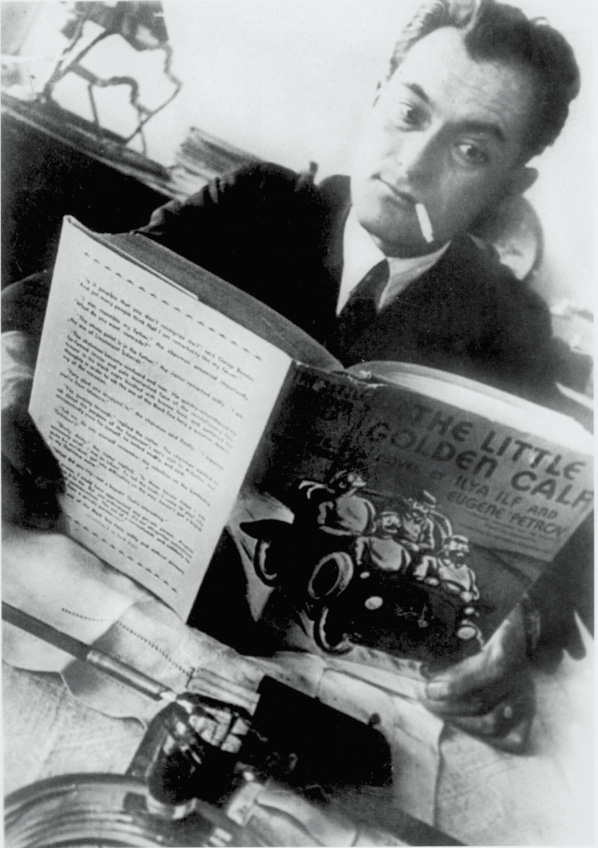
Николай Руденский: Книга была издана – сначала в журнале «Знамя», затем вышло отдельное издание, первые экземпляры появились буквально в день смерти Ильфа в апреле 37-го года. Официальная реакция была скорее негативной. Сначала короткий благожелательный отзыв появился, по-моему, в журнале «Книга и революция», но уже и там было замечание, что авторы чрезмерно увлекаются американским сервисом. А затем в «Известиях» появилась разгромная рецензия под названием в духе времени: «Развесистые небоскребы». Но тем не менее книга была вскоре переиздана в составе собрания сочинений, правда, уже с несколькими цензурными изъятиями, особенно в главе, которая называется «Американская демократия».
А дальше судьба «Одноэтажной Америки» повторила в какой-то степени судьбу романов. Беда на них обрушилась уже после смерти обоих авторов, после войны, когда были переизданы «12 стульев» и «Золотой теленок». Это было в 48-м году, а в 47-м была переиздана «Одноэтажная Америка». Я, кстати, видел это издание, даже с фотографиями Ильфа в качестве иллюстраций. На эти переиздания реакция была очень жесткой. Они были объявлены ошибкой – не ошибкой в смысле неточности, а политической ошибкой. Ильф и Петров подверглись посмертной заушательской критике в духе времени.
Кто-то писал более доброжелательно – зря, мол, переиздали книги, которые уже устарели и тематика которых преодолена жизнью. Но были и куда более злобные и серьезные по тем временам обвинения. В частности, Александр Дементьев, которому впоследствии предстояло стать заместителем Твардовского в «Новом мире» и одним из ведущих критиков либерального направления и, кстати, членом редколлегии собрания сочинений Ильфа и Петрова, вышедшего в начале 60-х годов, в те времена он написал, что Ильф и Петров принадлежат к так называемой одесской школе литераторов, – достаточно понятно, что имеется в виду – которая особенно отличалась низкопоклонством перед иностранщиной.
Так что до 1956 года, до ХХ съезда Ильфа и Петрова никакие произведения не переиздавались вообще, а в годы оттепели пошли, конечно, переиздания романов и «Одноэтажной Америки». Ну, разумеется, она переиздавалась не так часто и не так массово, как романы, но была вполне доступна читателю. Приходится, правда, пожалеть, что художественная сторона книги остается до сих пор, на мой взгляд, недооцененной. «Одноэтажная Америка» существует в тени романов, даже отчасти в тени фельетонов. Не хочу принижать ни то, ни другое, но книга блестящая, в том числе как художественное произведение.
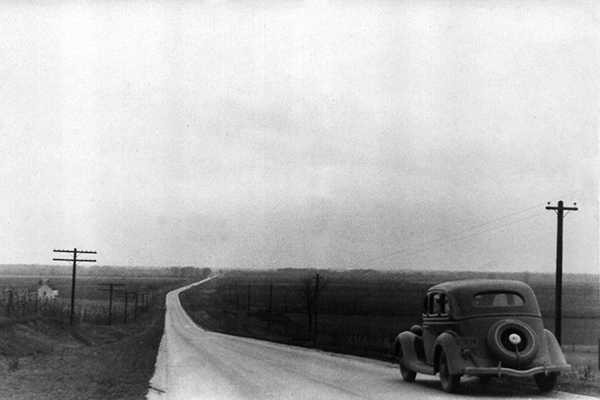
Владимир Абаринов: Мне хочется закончить цитатой из письма Ильфа – оно написано в Эль-Пасо 29 декабря 1935 года:
"Опять еду через пустыню... Понимаешь, милый мой друг, это очень географическая страна, если можно так выразиться. Здесь видна природа, здесь нельзя не обращать на нее внимания, это невозможно. Последний раз я видел Тихий океан, когда ехал в Сан-Диэго. Мы ехали поездом через апельсиновые рощи знаменитой долины салатов, дынь и апельсинов Импириэл валли, мимо нефтяных вышек по берегу. Заходило солнце, красное, помятое, комичное, потерявшее достоинство светила. Красиво и грустно. Стал бы я писать о заходах солнца при моей застенчивости...".
Илья Эренбург свидетельствует: «Ильф не раз говорил еще до поездки в Америку: «Репертуар исчерпан» или: «Ягода сходит». Но по этому короткому отрывку видно, что в творчестве Ильфа и Петрова начинался новый этап. Друзья были убеждены, что смерть Ильфа стала результатом тяжелой, напряженной автомобильной поездки по Америке, обострившей болезнь. Лучшая советская книга об Америке стала последней для их авторов.
В США «Одноэтажная Америка» была издана в том же 37-м году, что и в Советском Союзе. Она привела в восторг американцев. Рецензенты дружно назвали ее одной из лучших книг, написанных иностранцами об Америке. На критику американцы не обиделись, а иронию оценили. Книга переиздается по сей день: последнее издание вышло в 2010 году.
Александр Генис: Завершая сегодняшний АЧ и вместе с ним чрезвычайно популярный исторический цикл Владимира Абаринова “Русские писатели в Америке”, я хочу подвести итог этим сюжетам, поделившись собственными размышлениями на неизбежную для каждого жителя Русской Америки тему.
Разбирая отношения наших прославленных авторов с Америкой, Владимир Абаринов вынужден признать, что посетившим ее писателям-соотечественникам страна не понравилась - ни Горькому, ни Есенину, ни Маяковскому, ни ни Ильфу с Петровым (к ним еще можно прибавить Пильняка, Эренбурга и многих других).
Why? Возможно, потому, что в Новый Свет все они ехали за новыми впечатлениями. Из ветхой Европы путешественник прибывал в царство машины, где по словам Есенина “каждый окурок вырастал в фабричную трубу”. Не заметить в Америке машину было так же трудно, как не найти Эйффелевую башню в Париже.
Как относиться к машине - другой вопрос. Одни стонали от зависти, другие - от ужаса, третьи только морщились, но все помнили, что Америка - страна технической цивилизации, подмявшая под себя человека, культуру, природу и индейцев. Тем не менее, русские путешественники отдавали должное индустриальному Молоху.
Поэтому Маяковский описывал Бруклинский мост как монумент грядущему сверхчеловеку:
Как глупый художник
в мадонну музея
вонзает глаз свой,
влюблен и остр,
так я, с поднебесья,
в звезды усеян,
смотрю на Нью-Йорк
сквозь Бруклинский мост.
Хрестоматийные безработные, которые кидаются с Бруклинского моста вниз головой - жертвы языческому кумиру. Упоенный, как он писал, умным “расчетом суровым гаек и стали”, поэт упоминает о них бегло, вскользь. Поэтому, наверное, он и перепутал Гудзон с Ист-ривер: безработным, в сущности, все равно, где топиться.
Тот же пафос пронизывает и ту книгу, которая обсуждалась сегодня. Она названа в полемике с традицией “Одноэтажной Америкой”, но спора не вышло. Подлинные герои Ильфа и Петрова - шоссе, бензоколонки, конвейер, автомобиль, плотина, электричество и, конечно мост (на этот раз в Сан-Франциско). Все это они хотели бы завернуть и увезти домой, чтобы побыстрее добраться до светлого будущего.
Что касается “одноэтажной” Америки, то авторы, как и многие другие русские путешественники, пришли к неприятному выводу: большую страну населяет маленький народ - меркантильный, мещанский, ограниченный, не достойный американской технической мощи.
И тут пора задать вопрос: почему машина, которую неизбежно обнаруживали в Америке русские писатели отсутствует у писателей американских? Без техники обходились и Хемингуэй, и Фолкнер, и Сэлинджер, и Стейнбек, и Генри Миллер, и, отступая в прошлое, Джек Лондон, Марк Твен, Мелвилл, Эмерсон, Генри Торо. Почему самих американцев не завораживала их техническая цивилизация? Почему здесь не возник производственный роман? Почему, как спрашивали те же Ильф и Петров, инженер не стал национальным героем?
Да потому что Америка - принципиально не городская страна. И этого странники Старого Света не заметили. Они искали Америку не там, где она предпочитает жить. Города в Америке - исключение из правила, и часто, как это сейчас случилось с Детройтом, - несчастный случай.
Оставив небоскребы офисам и приезжим, сами американцы всегда предпочитали жить на первом этаже собственного дома, подальше от технических гипербол. Обменяв цивилизацию на географию, культуру на природу, естественный рельеф на искусственный, Америка оказалась в выигрыше. Но оценить эту сделку можно лишь тогда, когда научишься путешествовать по-американски.
Секрет этого искусства лежит на поверхности: он в - дороге, которая сама цель пути. Жадно покрывая милю за милей, путник растворяет себя в первозданной пустоте, огромные запасы которой все еще содержит в себе Новый Свет. Под автомобильными колесами пространство обретает почти физическую осязаемость. Карта оживает, отрывается от бумаги, выходит из двухмерной абстракции в реальную жизнь.
Понять Америку можно только на ходу. При этом гостю-иноземцу надо постоянно держать в памяти:
- что в Старом Свете вы куда-то едете, а в Новом вы едете откуда-то;
- что в Старом Свете преобладает центростремительной движение, в Новом - центробежное;
- что в Старом Свете все дороги ведут в Рим, в Новом - ”из Рима”;
- что только тот путник, который сумеет влиться в поток бегущих из городов американцев, только тот, кто услышит ритм этого вечного движения, только тот, кто войдет во вкус освоения Нового Света, так не похожего на Старый, может с чистой совестью сказать, что ему удалось не увидеть, а открыть Америку.