
Translated material
The disappearing intermediary
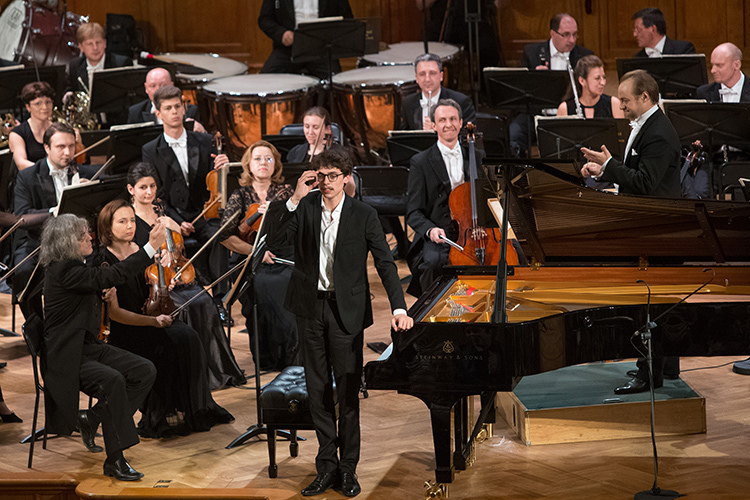
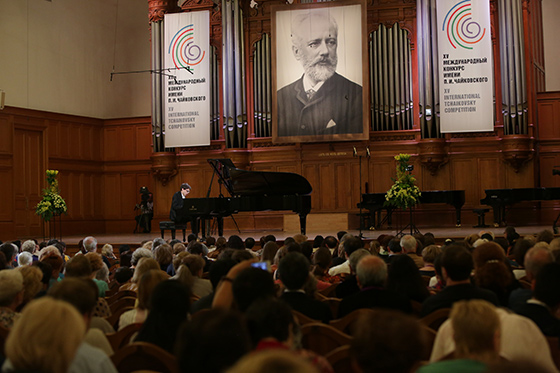
Those who want to hear Luke Debarg, the recent laureate of the IV Prize of the Tchaikovsky contest, in St. Petersburg turned out to be much more than the Mariinka concert hall could accommodate almost a thousand seats. Such a hype in the academic musical life of the city has not happened for a long time, even at rare concerts of Grigory Sokolov. In a few seconds required to get a vigorous step from the street of the Decembrists to the door of the hall, three people rushed across me, with hope in their eyes asking an extra ticket; The fourth stood with the sign “I will buy two tickets”. The girl in line begged the administrator: "Well, I am jeopardized, a-a-Auly, I really need it!" Other people who did not get on the treasured list asked to draw a Noler or two to my press right (it seems, no longer joking). The desperateness, which was in these attempts, gave out a deep conviction that something extremely important would happen tonight, and it was necessary to be present.
Both in the tense discussions of the competition, and in the ingenuous comments to the “genius” characteristic of the “genius” laid out on YouTube broadcasts, perhaps the most often flashed. A unique 24-year-old musician, professionally engaged in a piano game for only four years, with natural technology and disarmers, shaking sincere interpretations-such an image of a debarga has developed on the network. The life circumstances of the pianist and his artistic manner turned out to be a key in which each groove coincided with the popular idea of genius - and the doors of popular love opened with the noise of an enthusiastically roared hall.
The concept of “ vanishing mediator”, borrowed by musicologists from political sciences, is perfect for the occasion of Debarg. Clearing the development of early sound recordings, musicologist and theoretician Media Jonathan Stern analyzes High philosophy Fidelity , according to which the intermediate link between the original and the copy, should be as transparent as possible between the source and the perceiving. The more noticeable it is, the less authenticity. Ideally, the illusion is created that he simply does not. (By the way, advertising of audio equipment is often based on the reality of a sound object, as, for example, in this classic video .)
 © International Competition named after P.I. Tchaikovsky
The profession of a performer as a medium between the Classical texts and the listener follows the same philosophy: all of us who are somehow in the Academic Music field are nourished on the German romantic ideal of Werktreue (fidelity to the text) and educated in Benjamin’s fear of losing authenticity. So, the performing manner and the media -image of the Luke of Debarg correspond to the ideal of the “disappearing intermediary” at several levels at once.
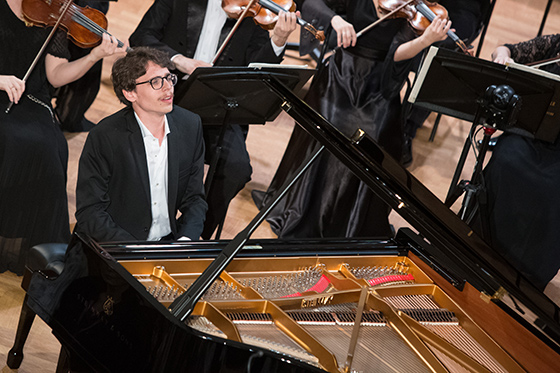
Debarg builds a phrase and shape unequivocally, logically, without a doubt and according to all the rules of rhetoric - as a monologue addressed personally to everyone. When this monologue becomes confessional, as in the late -romantic maximalist suffering of the second part of the Seventh Sonata Beethoven, which is ultra -vested over the region, the concert situation itself disappears: not a thousandth hall, but a confidential conversation alone. Therefore, the pianist is so committed to a moderate pace: in them, speech sounds more intelligible. The endless string of timbres serves the same goal - rhetorical diversity and persuasiveness.
There is such a pianistic trick: in order to play a particularly inconvenient distant leap, you need to want this note, hear it in advance, and this will work out bypassing rationalizations and exercises. It seems that in this way - by hearing - Debarg plays not individual difficulties, but in general everything: its neurons and synapses work bypassing the inert matter of pianistic cuisine. Otherwise, how to explain the clarity of the balance between different floors of the texture in Ravel’s Night Gaspar - the pharmaceutical accuracy of gradations between Pianissimo, Piano, mysterious piano, flight piano, piercing piano, coexisting in the same chorda vertical. The resistance of the material disappears - the depth of the keys and the features of the rehearsal mechanism at the beginning of the “Scarbo”, the insidious applique in the transcendental study of the leaf and the trill in the Menuet from Beethoven’s sonata, for which the third hand is needed, disappear.
Such lightness is almost always achieved for years of hard work. Indeed, in the current system of education of performers (and especially in a three -stage Russian), if the pianists do not engage in six or more hours a day from the age of six, access to the highest professional rank was ordered to them. Luke Debarg broke the stereotype, and on the fact of his short performing career, his image was based - a nugget from a nature, not dried for two decades of daily multi -hour drum. Thus, a professional art, which usually stands an invisible wall between the self -expression of the musician and the emotions of the listener, disappears.
 © International Competition named after P.I. Tchaikovsky
The Russian -speaking discourse about the debarge shamelessly cultivates the topic of direct contact with the original source. For example, the teacher of Luke Rena Shereshevskaya reports that her student selects Skarbo - the most difficult play of the piano repertoire - by hearing, has “virtuosity from God”, and in the process of execution is “with composers, not even with the hall” . Planned in the epithets of immediacy, before our eyes, a textbook idea of a genius is constructed, autumn for nothing from above, which cannot be learned. How popular it is, one can imagine, not only reading an interview with academic musicians, but also watching Hollywood films (for example, “Clever Will Hunting” ).
It is hardly worth asking a rhetorical question whether Luke Debarg is fully consistent with this representation. The real student of Rena Shereshevskaya admits more false notes than he wants to admit the fascinated ear of the listener, and still does not always know how to take stage excitement under control: the first part of the seventh sonata-lubricated and hasty-could not be compared with his competitive record, a sharp and equanimous anti-Bethchoven.
But hunger in authenticity is a powerful force that lies in the root of the Russian success of Luke Debarg, an disappearing intermediary. According to Richard Taruskin , in repressive societies, academic music gains relevance that is unyielded in a more prosperous political climate. It seems that the warm welcome that Debarg received in Russia was another confirmation of this theory. Drawing through lies, fear and hatred in TV and newspapers, on social networks, in relations with former allies, who suddenly turned into Krymnash, having expanded the truth, we go to get her at the concert of the genius of Luke Debarg, which is more in Russia than Debarg.